One of Six Views of Atsugi — History & Analysis
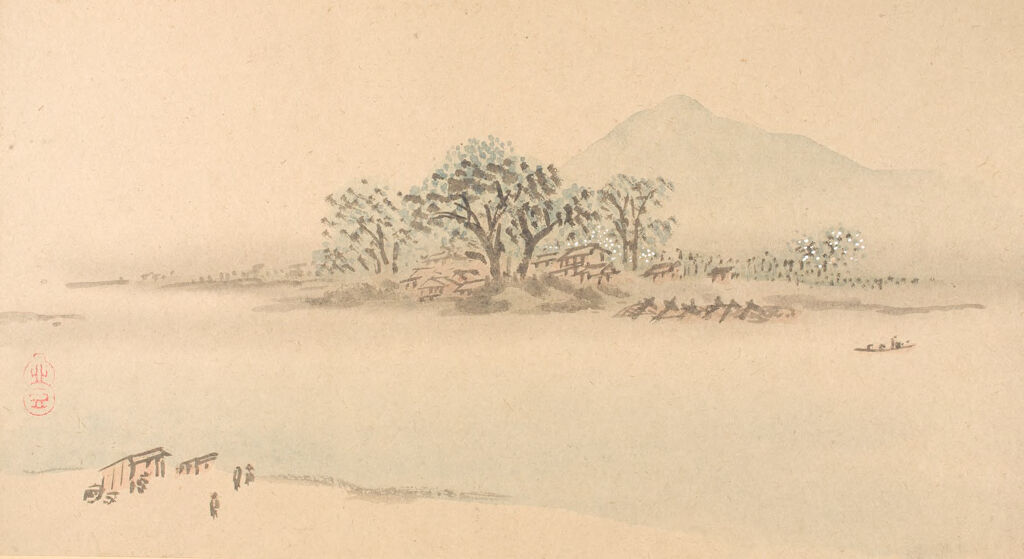
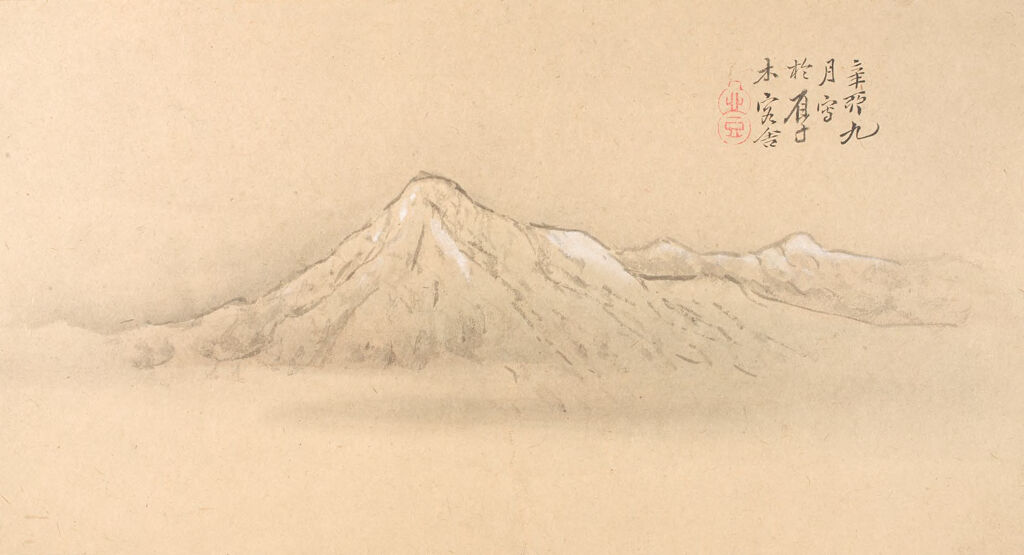
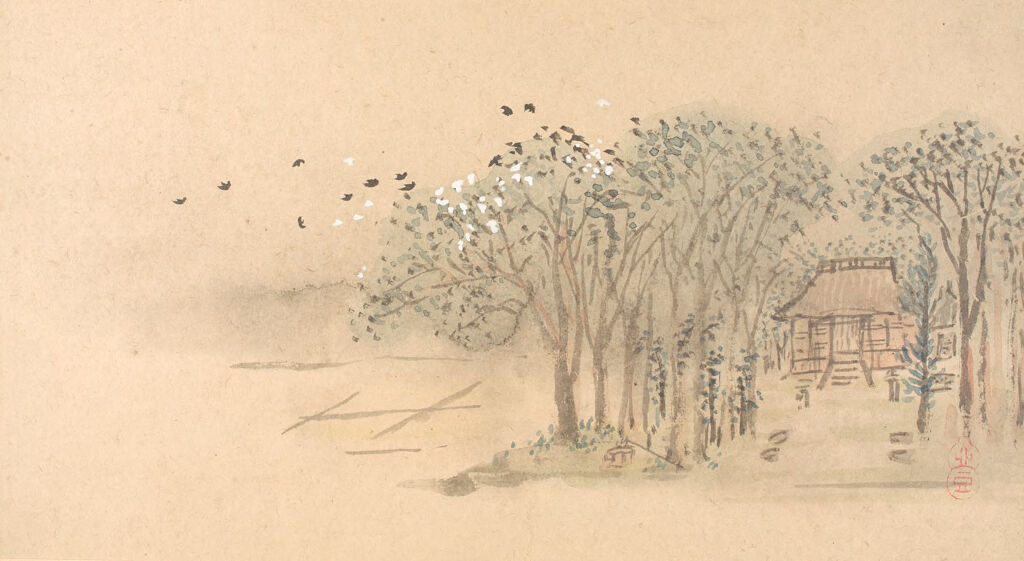
Could a single brushstroke hold eternity? In Watanabe Kazan's One of Six Views of Atsugi, this question takes on new life as the images unfold, revealing the intertwining of beauty and violence. The scene invites contemplation, urging the viewer to explore the tension between serenity and the tumultuous undercurrents that threaten to disrupt it. Look to the left where delicate cherry blossoms emerge, their soft pink hues whispering of spring’s transient beauty. As your gaze travels across the canvas, notice how the mountain range looms menacingly in the background, its sharp peaks a stark contrast to the gentle petals.
The careful layering of ink and color creates a sense of depth that draws you in, while the meticulous brushwork reveals the artist’s precise control over nature’s chaos. The comparative tranquility of the foreground against the harshness of the landscape hints at an underlying narrative of conflict, one that goes beyond mere representation. Beneath the surface lies a complex interplay of themes. The blossoms, often symbols of fleeting life, are juxtaposed with the imposing mountains, suggesting the inevitability of violence that comes with existence. The tension between fragility and strength encapsulates both the beauty of nature and the potential for destruction that looms silently in every moment.
This duality prompts reflection on the human condition, urging viewers to confront the fragility of peace amidst the threats of upheaval. Watanabe Kazan painted One of Six Views of Atsugi in 1831 during a pivotal time in Japan's history, marked by the final years of the Edo period. As Western influence began to seep into Japanese culture, the artist found himself at the crossroads of tradition and change. His work reflects not only the aesthetics of the time but also the internal struggles faced by a society on the brink of transformation, evoking a sense of nostalgia for what was and anxiety for what was to come.