Ornamenteel ontwerp voor een dolk en schede — History & Analysis
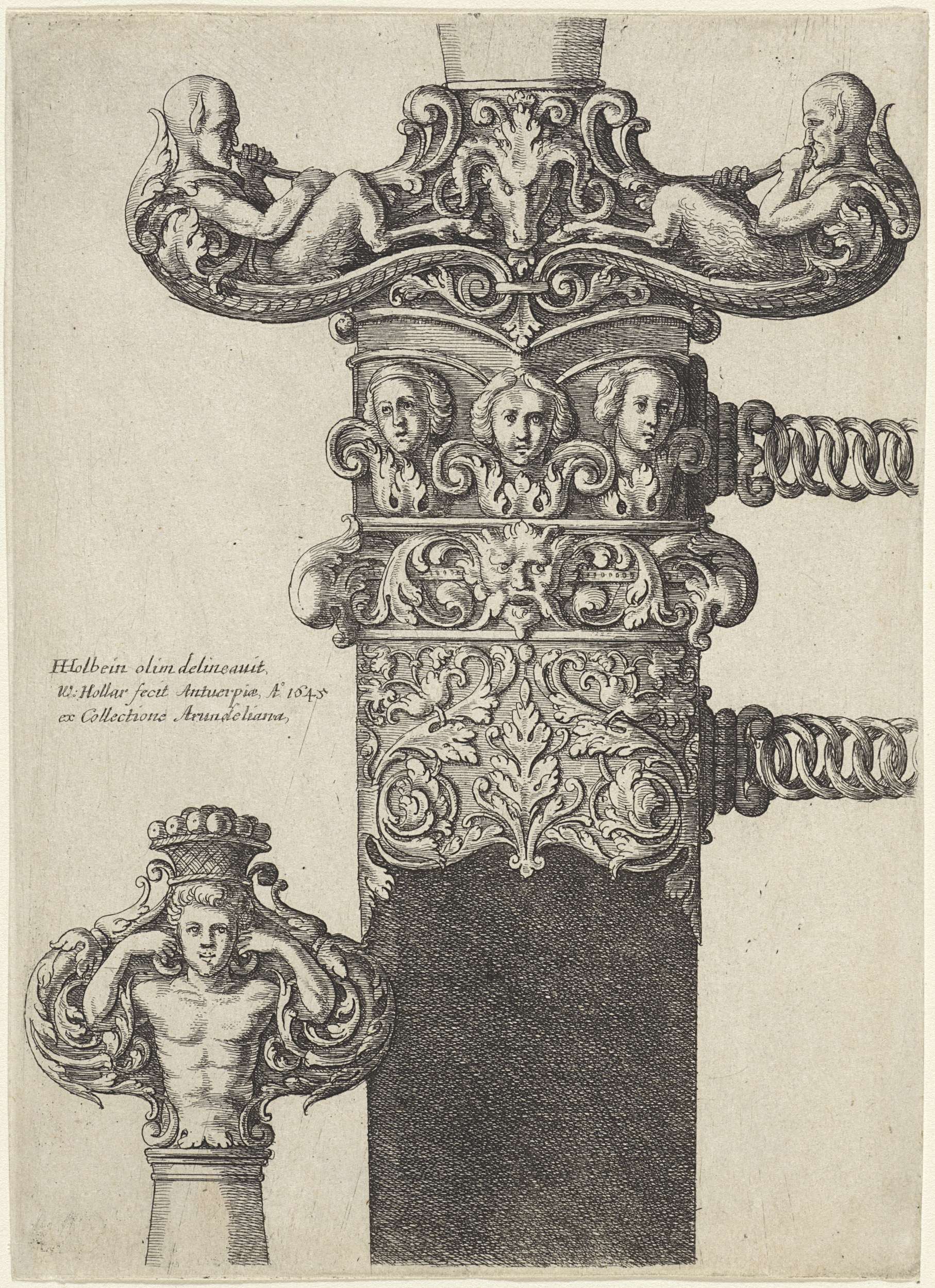
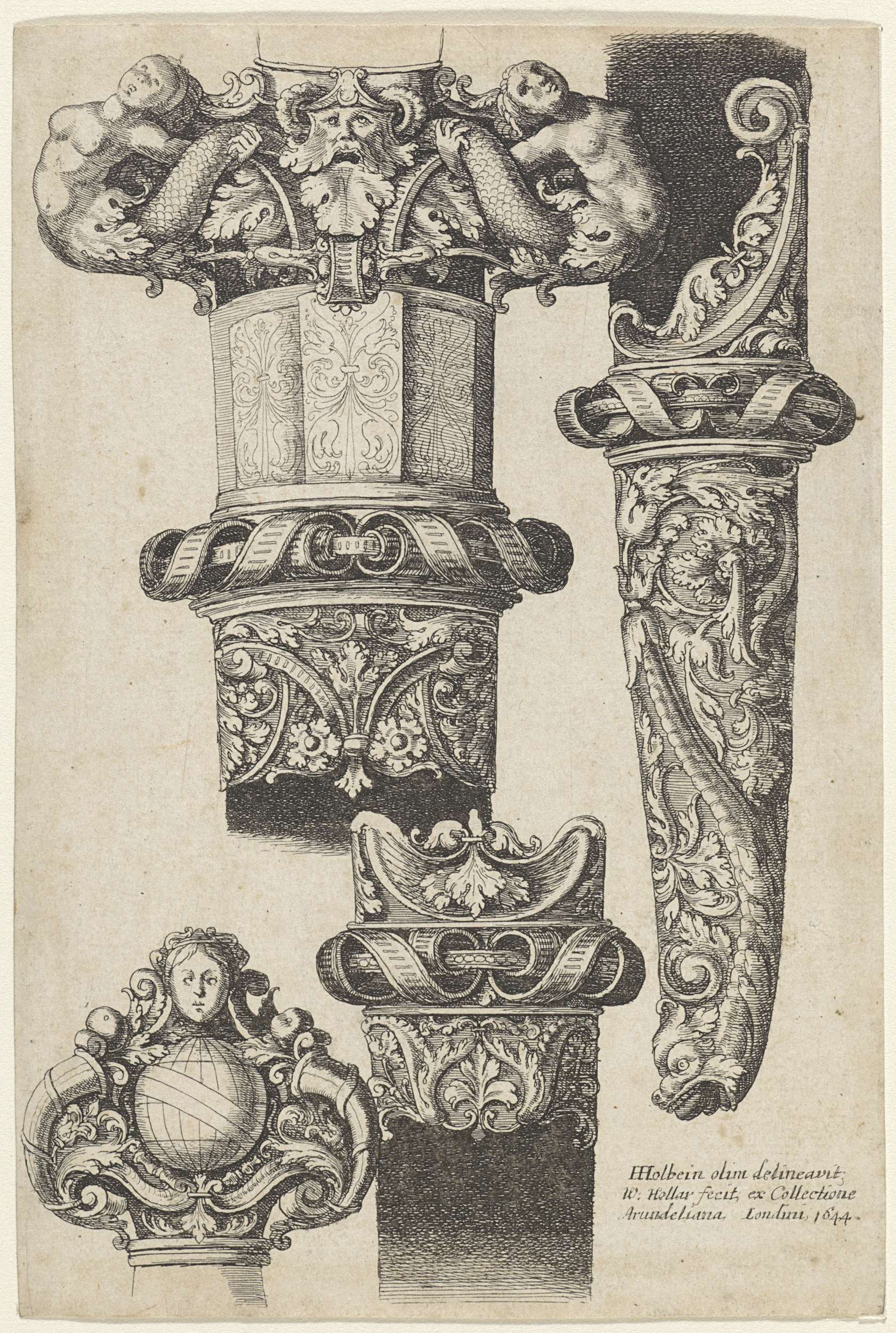
“Between color and silence, truth hides.” In the intricate dance of design, madness often lurks just beyond the surface, waiting to be unveiled. Focus on the delicate filigree that weaves through the composition, inviting your eyes to trace its path. The ornate design for a dagger and sheath bursts forth with elaborate curlicues, evoking a tension between ornamentation and functionality. Notice how Hollar employs a restrained palette, allowing the subtle play of light and shadow to heighten the intricacy of each detail, creating a visual dialogue that breathes life into metal.
As you delve deeper, consider the interplay of motifs woven into the design. The jagged edges of the blade contrast sharply with the fluidity of the scrolling vines, suggesting the madness inherent in conflict—beauty residing within the threat of violence. The choice of ornamental patterns may also reflect the cultural tensions of the time, wherein artistry served both as a celebration of craftsmanship and a reminder of the darker urges that seethe beneath civilization’s surface.
In 1644, Wenceslaus Hollar was immersed in the artistic milieu of London, having fled his native Prague as political turbulence unfolded. This period marked a significant evolution in his work, as he adapted his techniques to resonate with both the English court and emerging collectors. Amidst personal challenges and a changing world of art, he captured the duality of beauty and madness in this exquisite design, merging functionality with the ornamental spirit of his era.