Pakhuizen aan een Amsterdamse kade in de sneeuw — History & Analysis
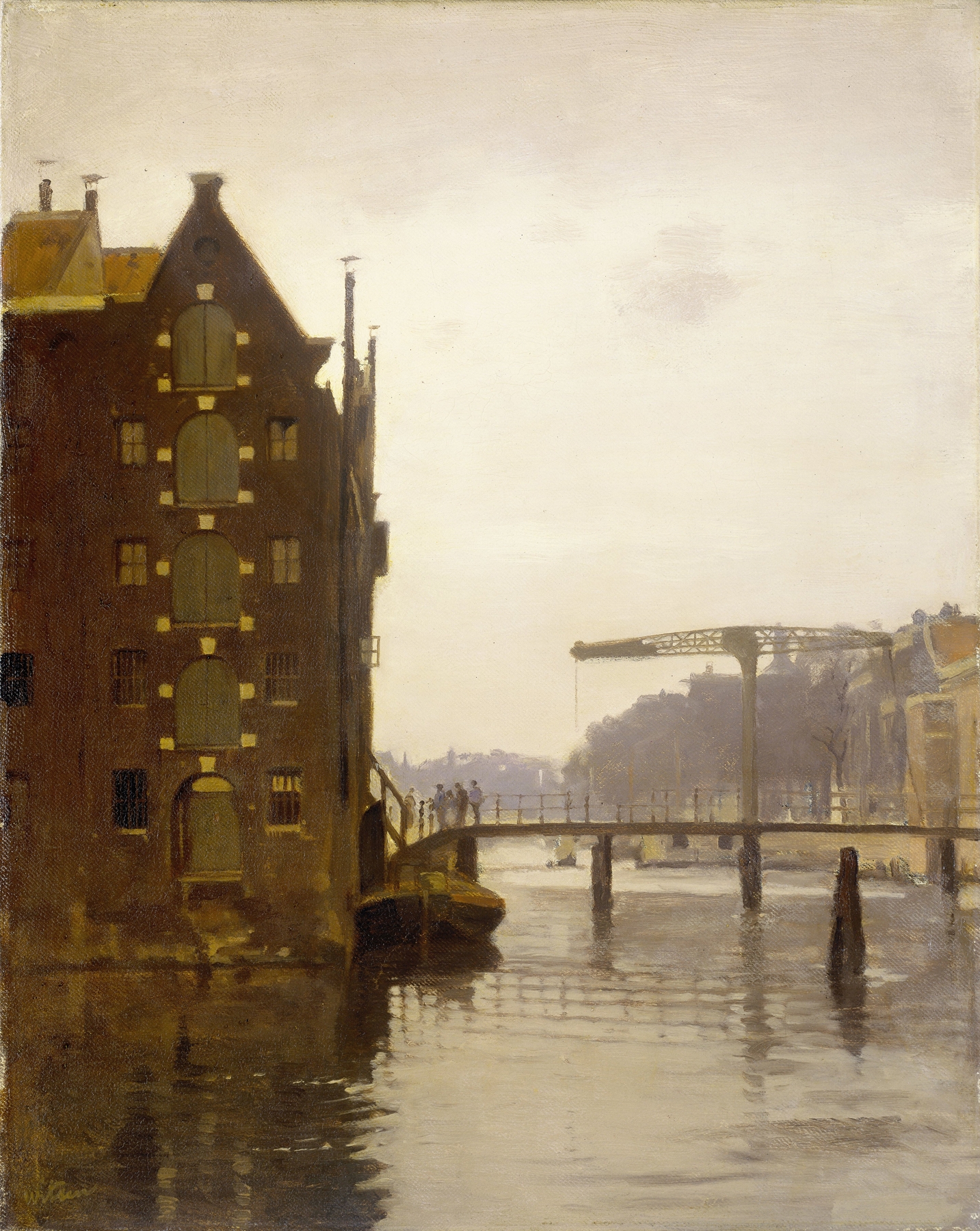
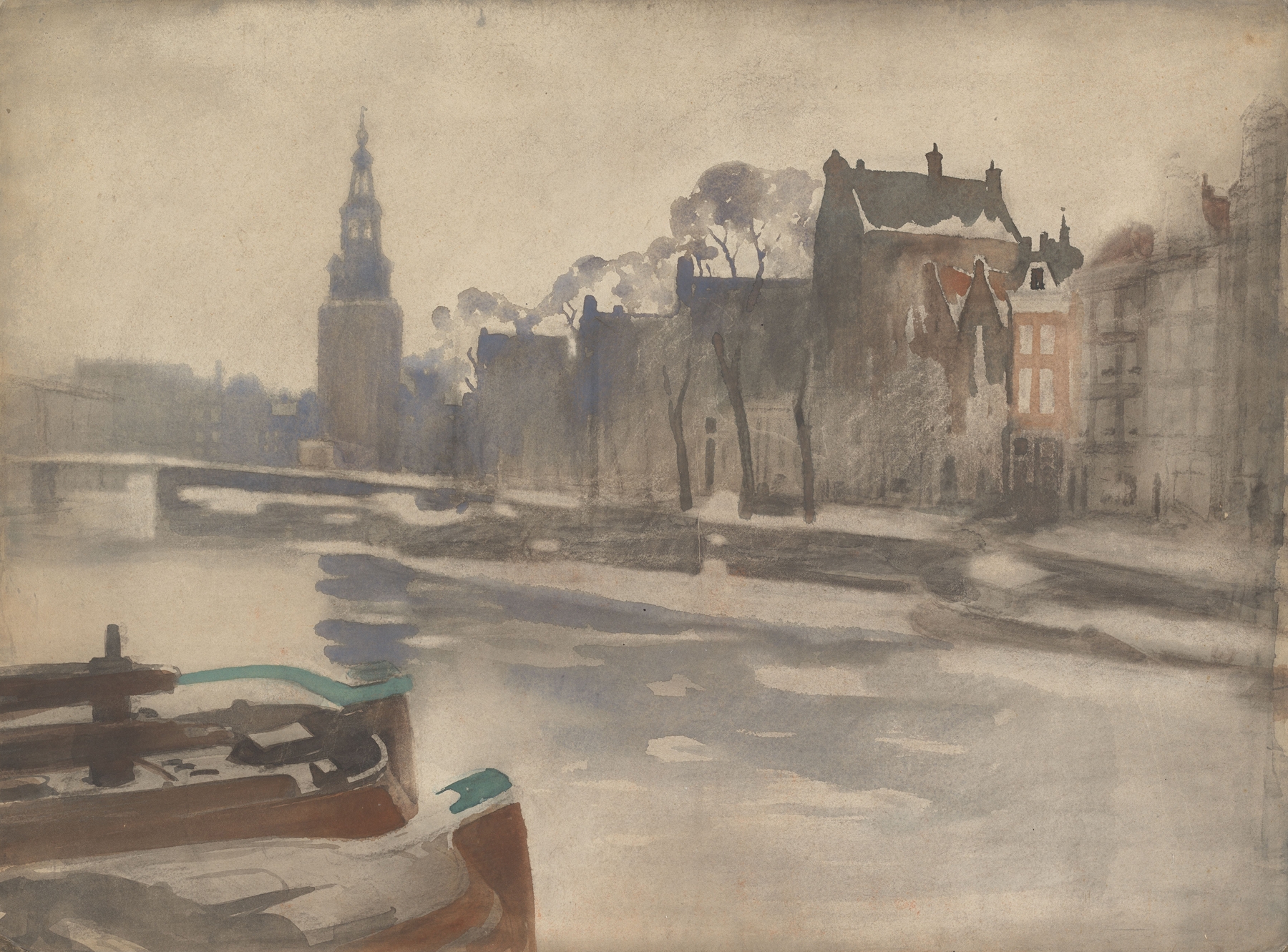
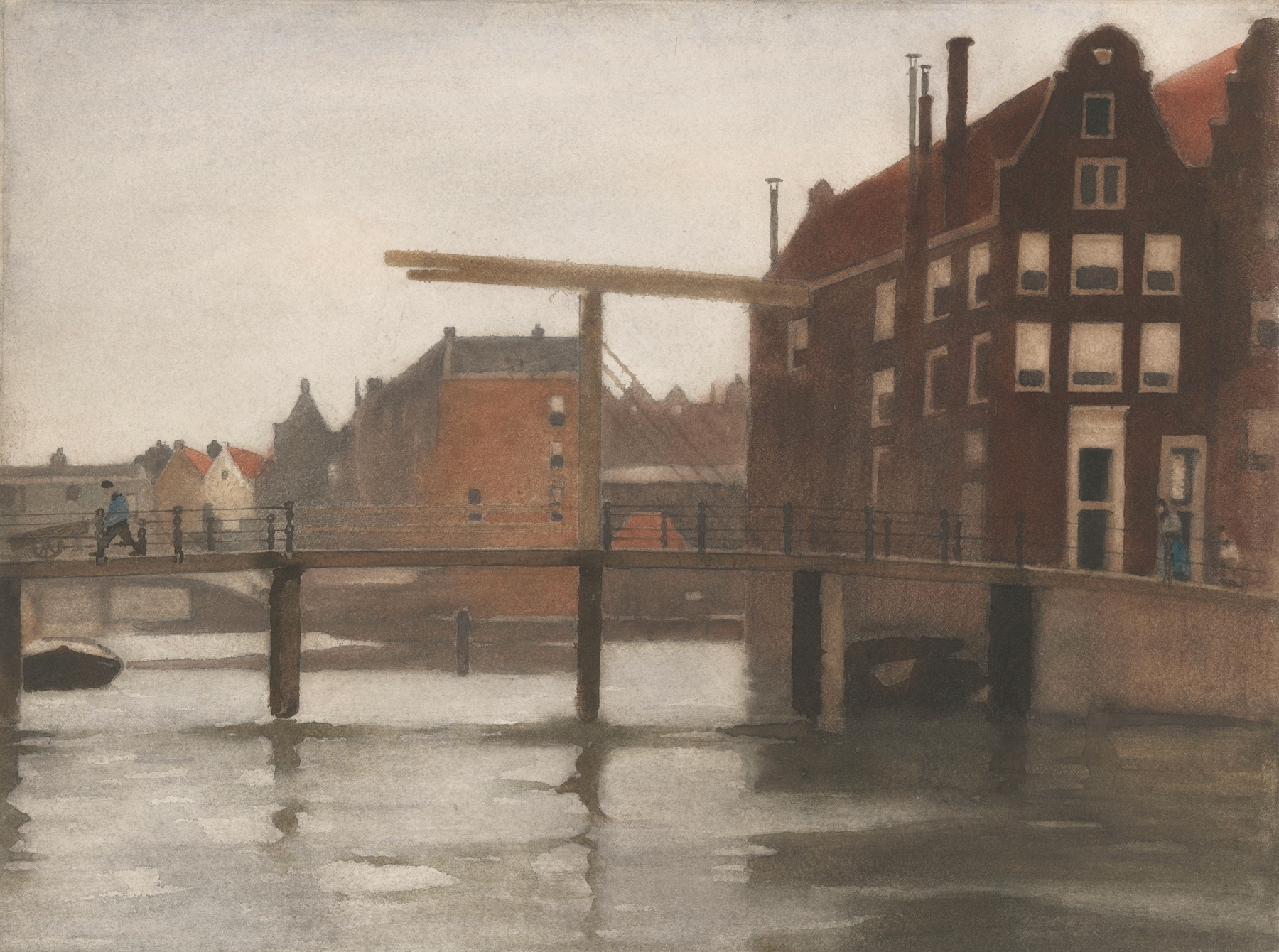
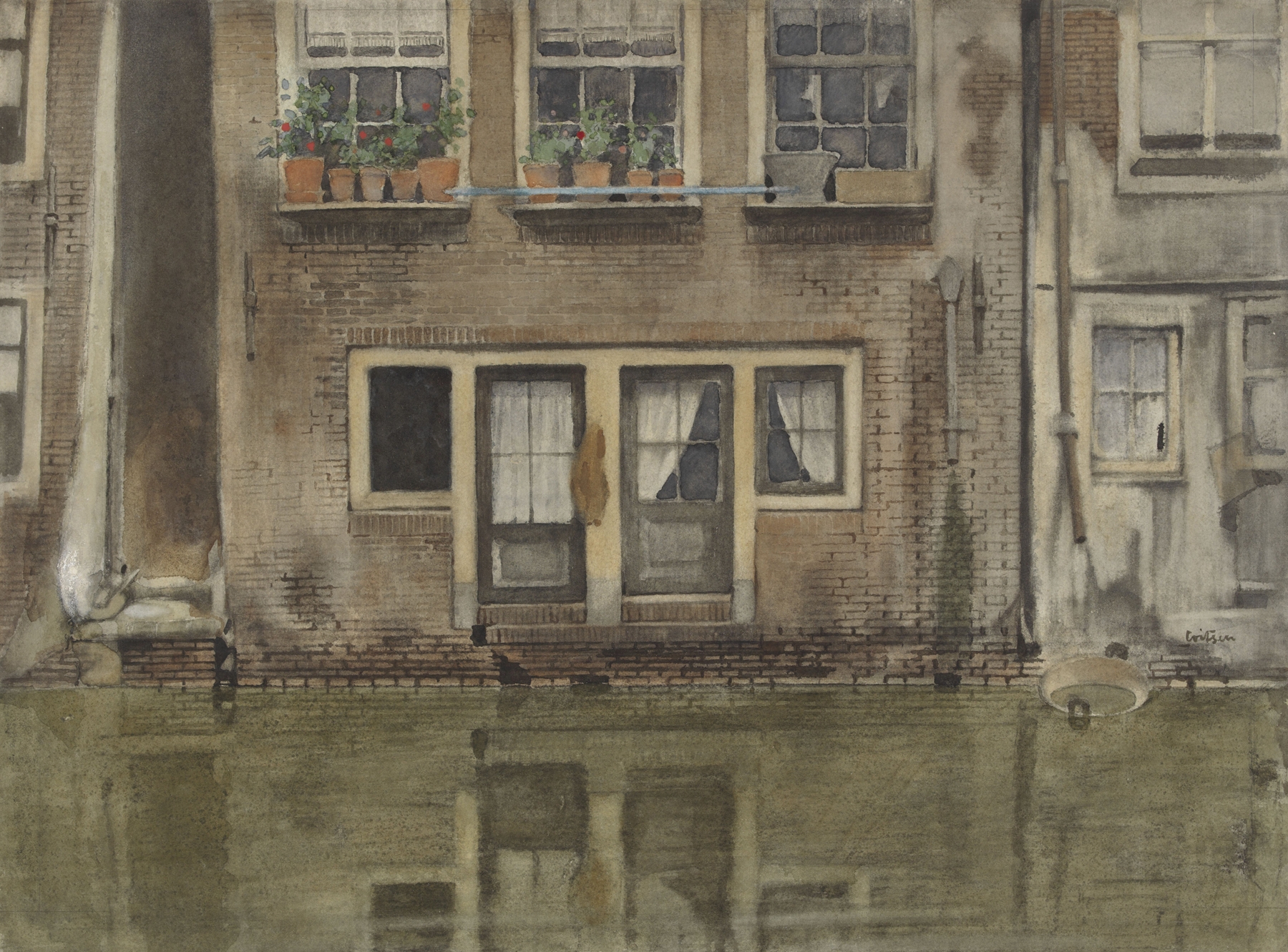
Could a single brushstroke hold eternity? In Pakhuizen aan een Amsterdamse kade in de sneeuw, the delicate interplay of color and texture suggests a world both serene and tumultuous, capturing the essence of change amidst stillness. Look to the left at the gentle outlines of the warehouses, their stoic presence framed against a backdrop of soft, swirling snow. The brushwork here is both confident and loose, inviting the viewer’s eye to explore the subtle variations in hue that define the scene.
Notice how the cool blues and whites contrast with the hints of warm ochre, embodying the duality of coldness and warmth — a testament to the artist's command over light and shadow. Beneath the surface, there lies a poignant tension: the stark beauty of winter juxtaposed with the warmth of human habitation. The serene snowfall serves as a reminder of nature’s quiet dominance, while the presence of the warehouses signifies resilience and industry. This duality reflects a period of revolution in thought and form, where the emergence of modernity intertwined with the past.
During the years 1870 to 1923, Witsen painted this piece while living in Amsterdam, a city ripe with artistic innovation and social change. The late 19th and early 20th centuries were marked by a shift towards impressionism in the Netherlands, allowing artists to experiment boldly with color and form. It was a time of personal exploration for Witsen, as he navigated both his artistic journeys and the evolving landscape of a bustling city.