Partenkirchen. — History & Analysis
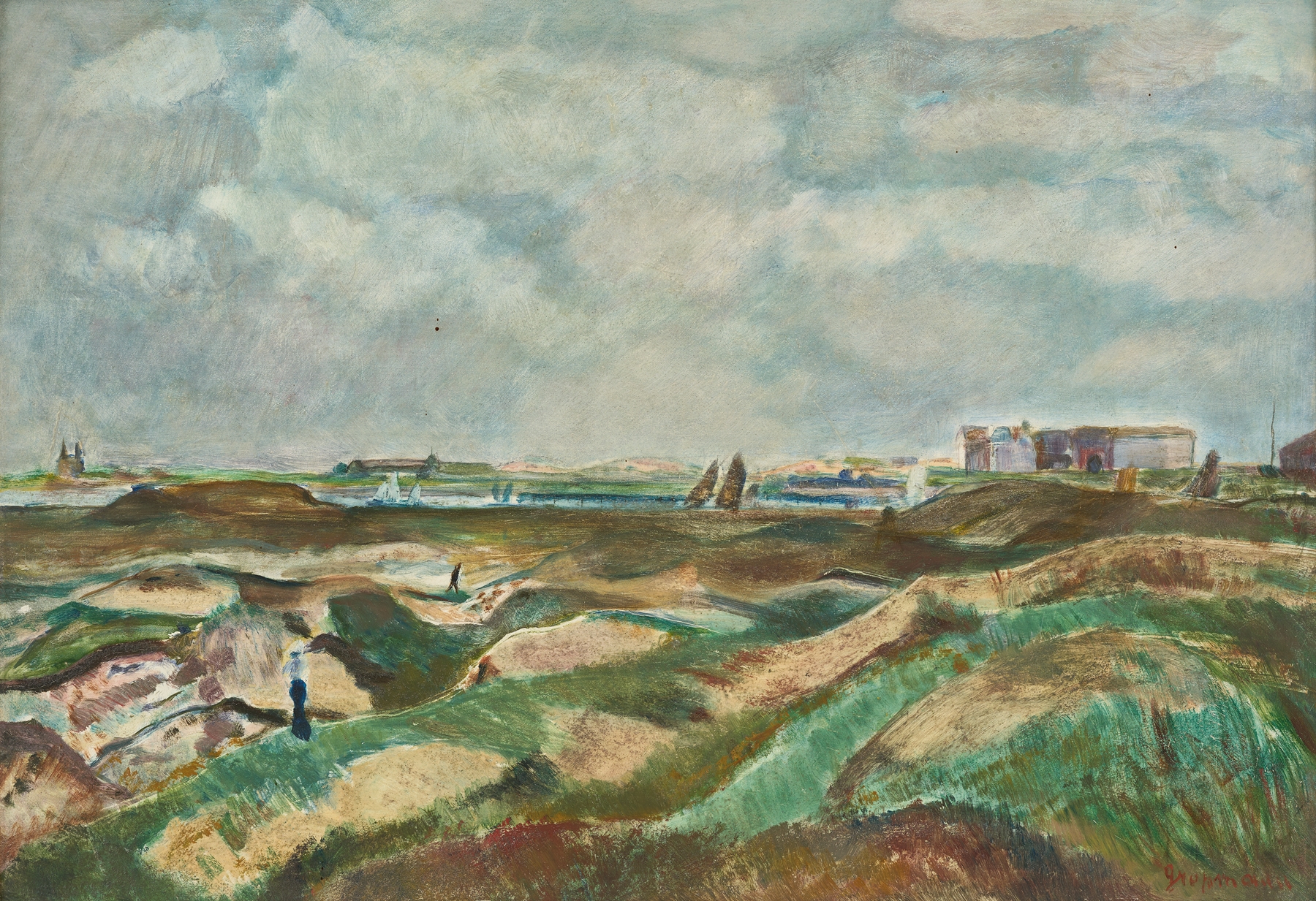
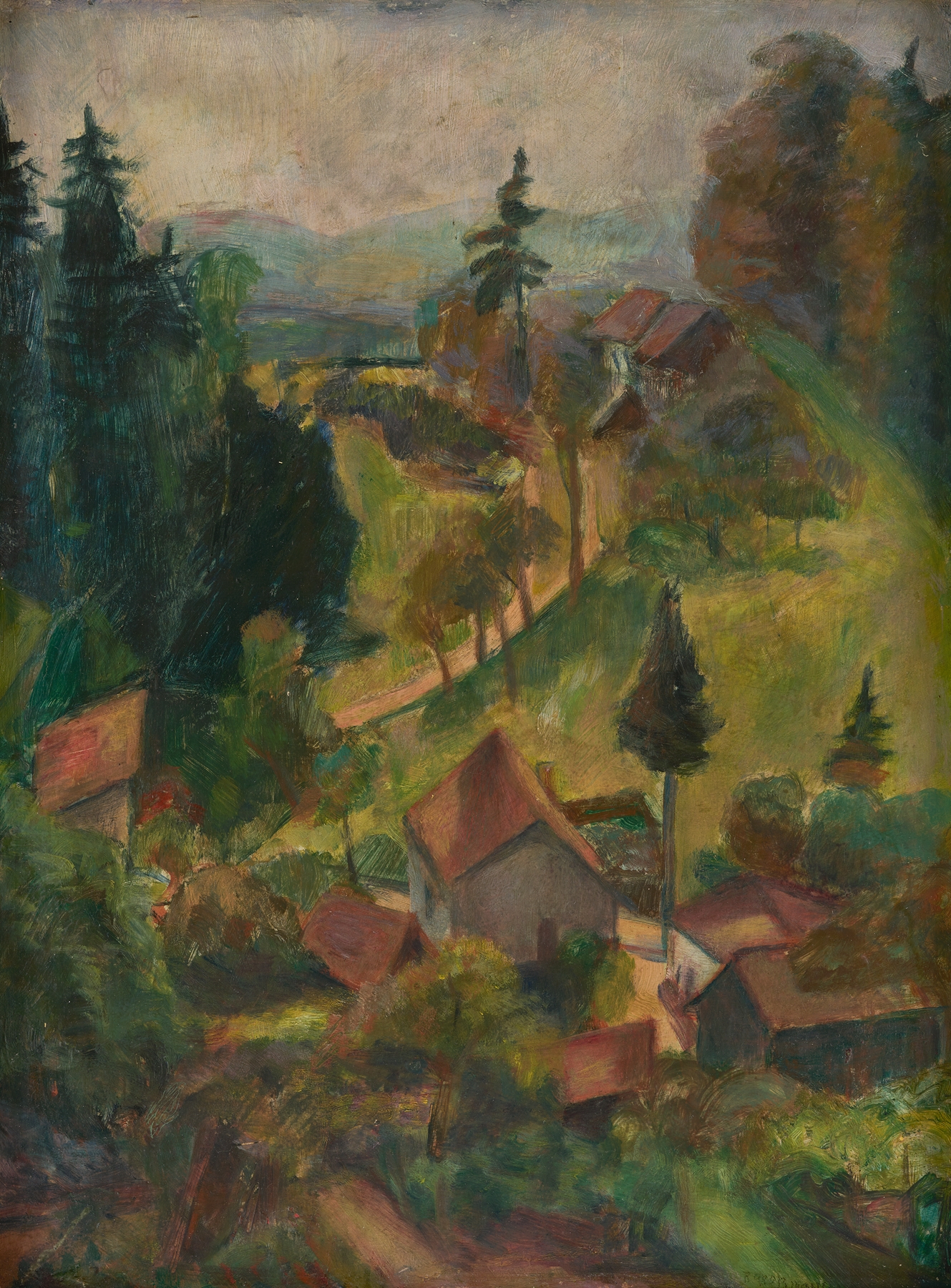
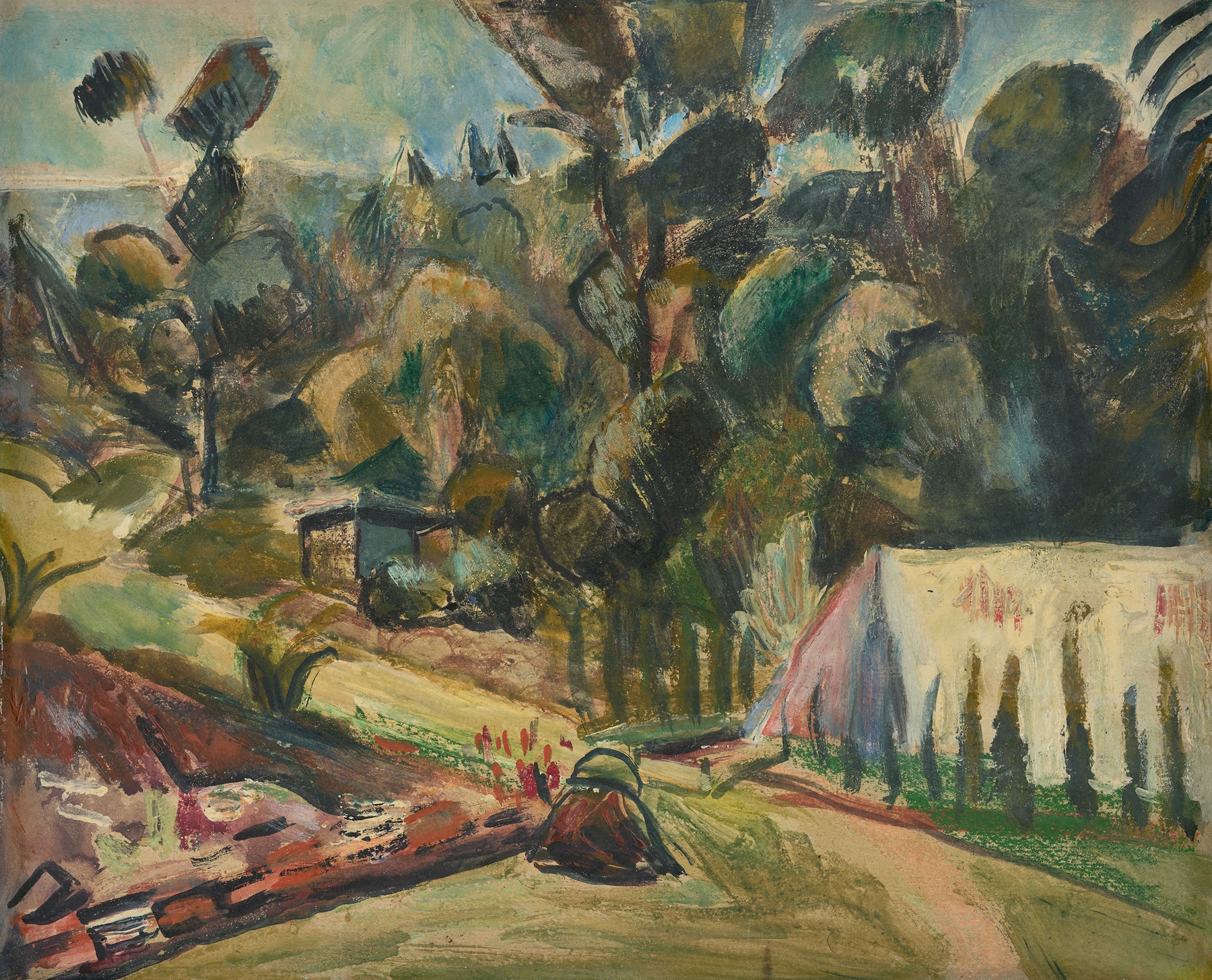
Did the painter know this moment would outlive them? As the world teetered on the brink of chaos, the stillness captured in Partenkirchen speaks of a fragile sanity amidst encroaching madness. Look to the left at the serene alpine landscape, where the gentle slopes cradle quaint houses, their warm hues contrasting against the cool, shadowy mountains. The artist’s brushstrokes evoke a sense of harmony—yet there’s an underlying tension in the uneven, almost frenetic strokes of the sky, swirling with a myriad of blues and greys.
Notice how light filters through the clouds, illuminating select areas while leaving others shrouded in uncertainty, a reflection of the tumultuous times in which it was created. This tranquil, pastoral scene belies deeper emotional currents. The interplay of light and shadow suggests a duality; the idyllic setting juxtaposes the artist’s possible inner turmoil, hinting at the madness of the Great War and its impact on society. The houses, appearing stable and secure, are also isolated, mirroring the solitude individuals often felt in times of crisis.
Here, the innocence of rural life collides with the broader specter of conflict. Rudolf Grossmann painted Partenkirchen in 1916 during a time of great upheaval in Europe, as World War I raged on. Living in Munich, he grappled with the chaos around him, influenced by both the war and the burgeoning Expressionist movement. This work reflects his desire to find solace in nature while trying to grasp the shifting realities of his world, encapsulating a poignant moment of beauty amidst discord.