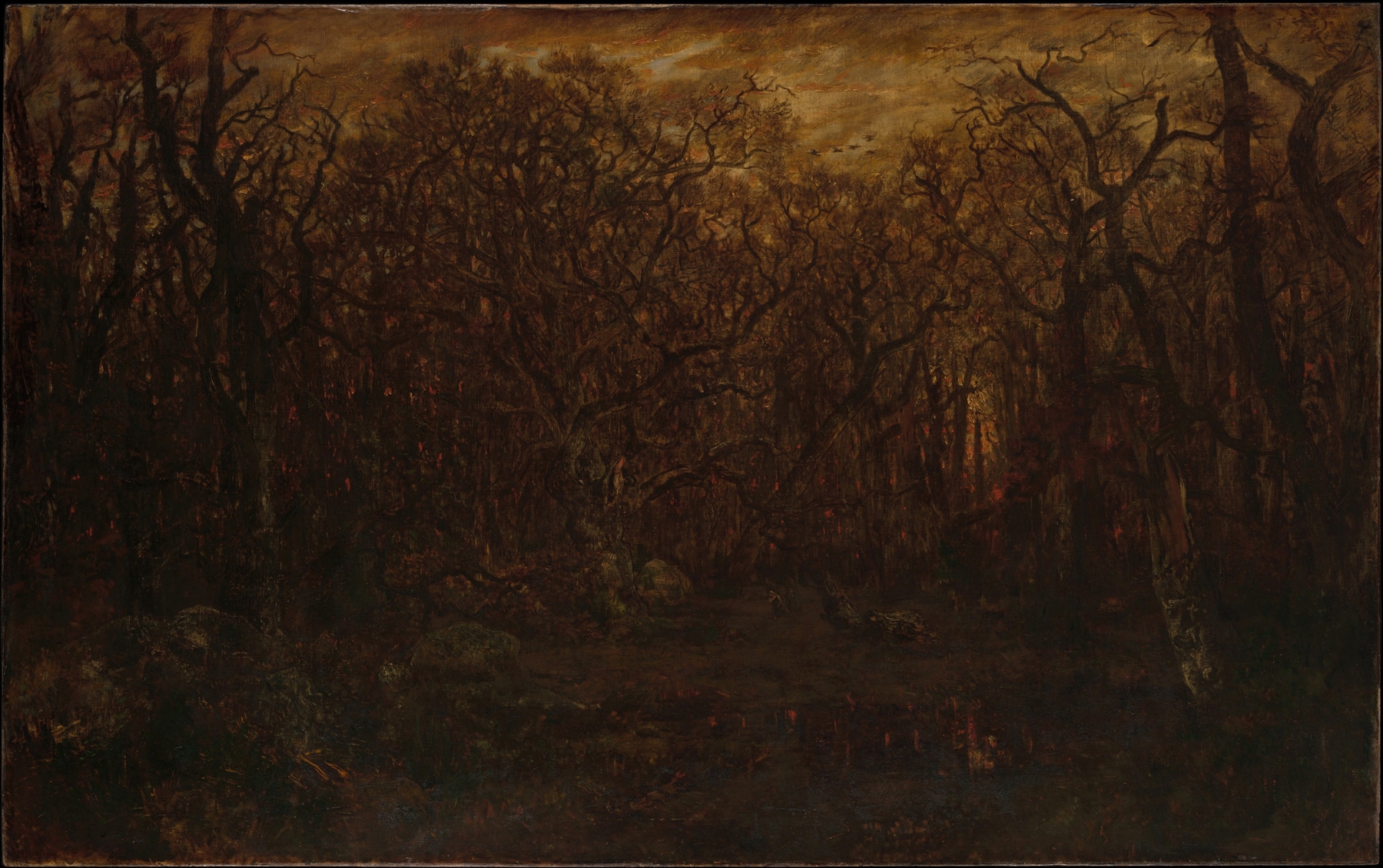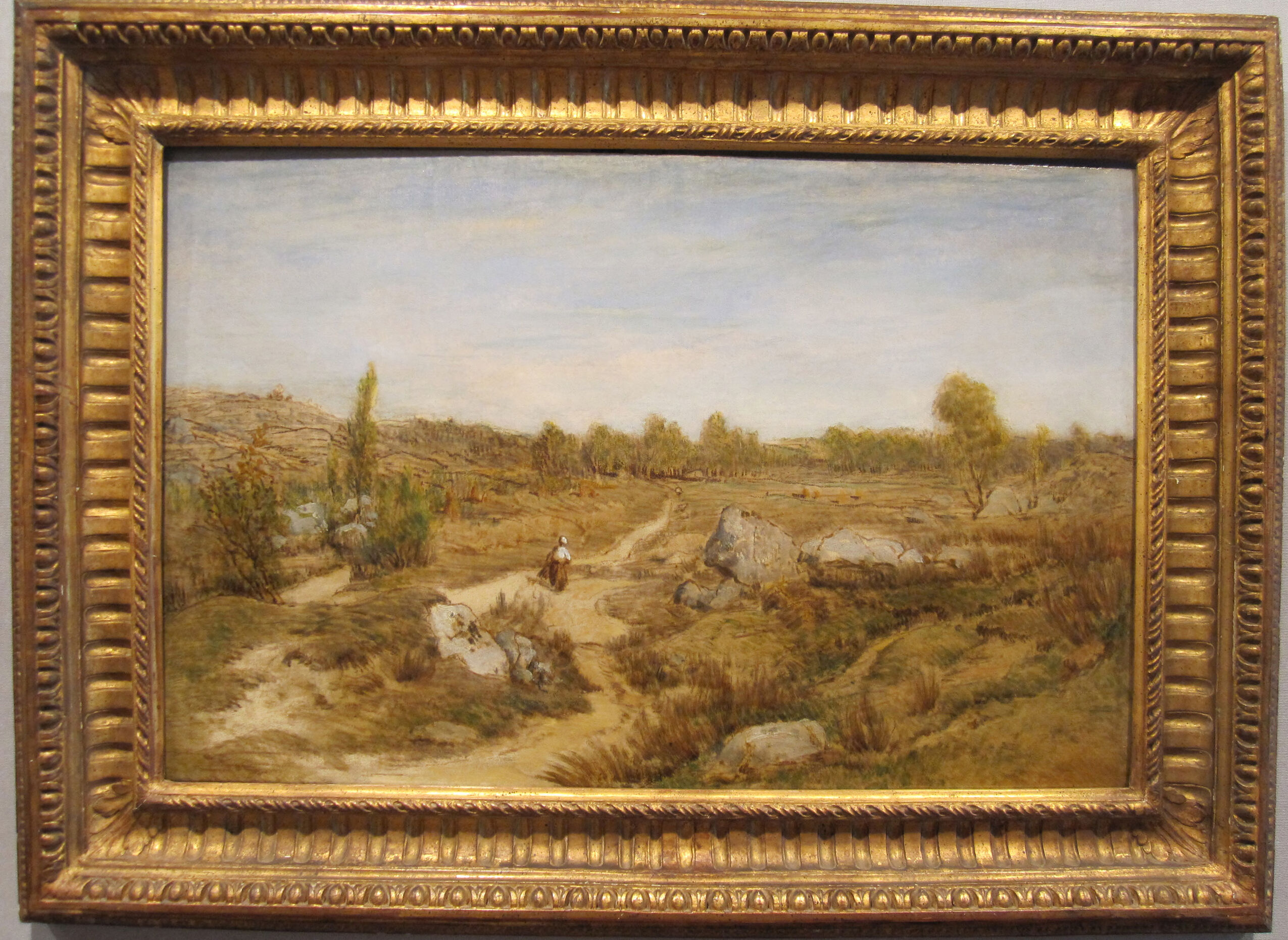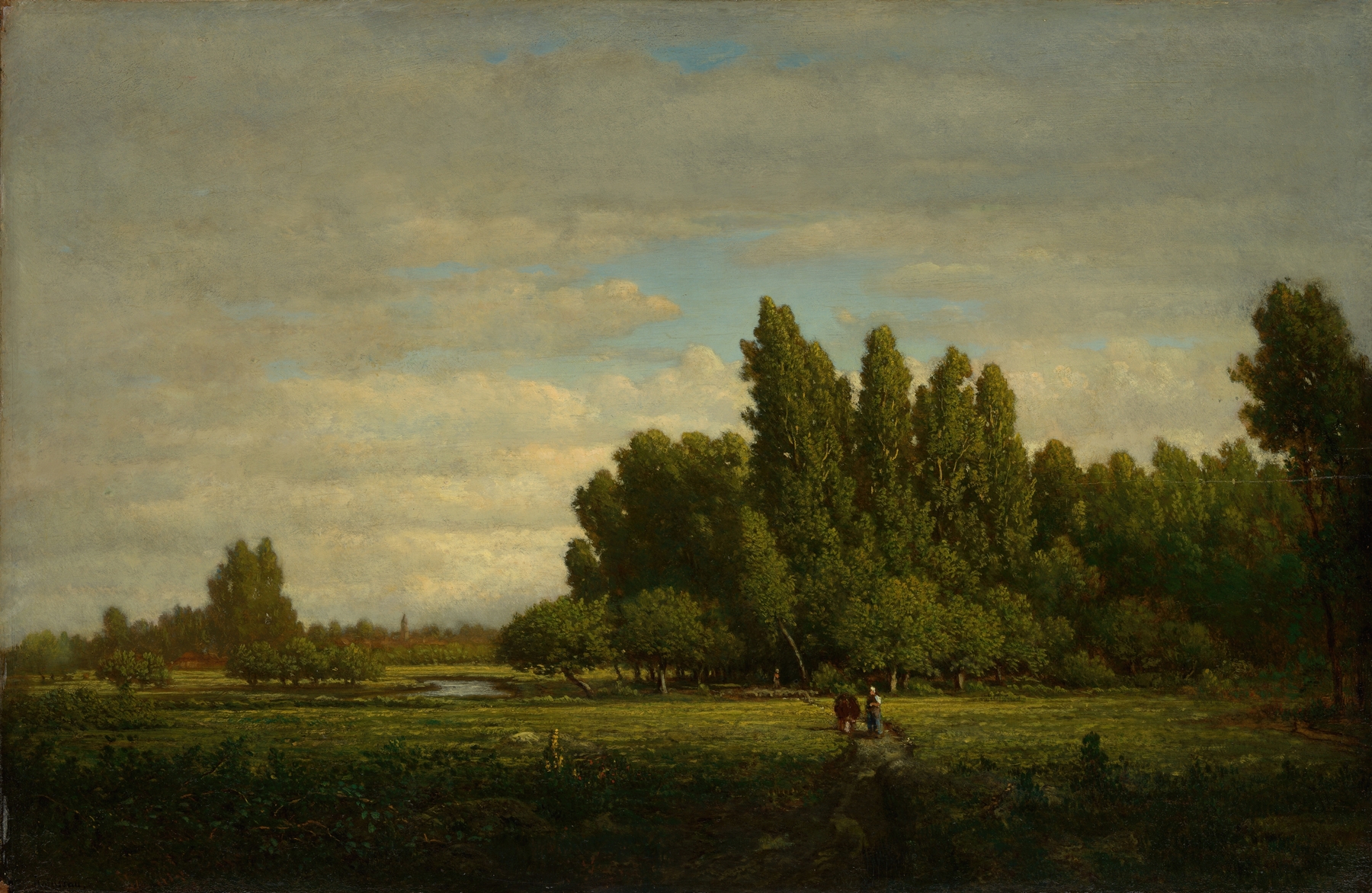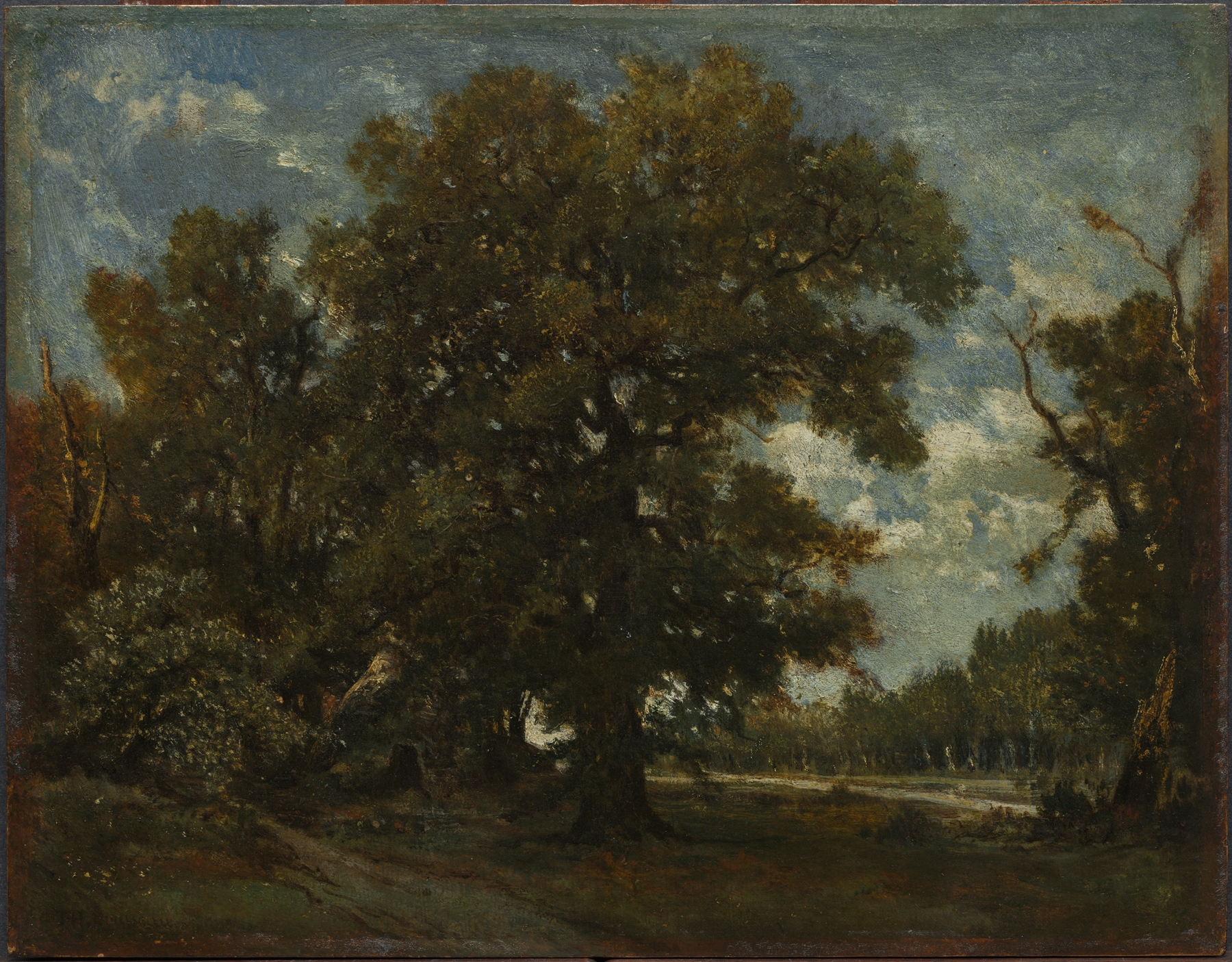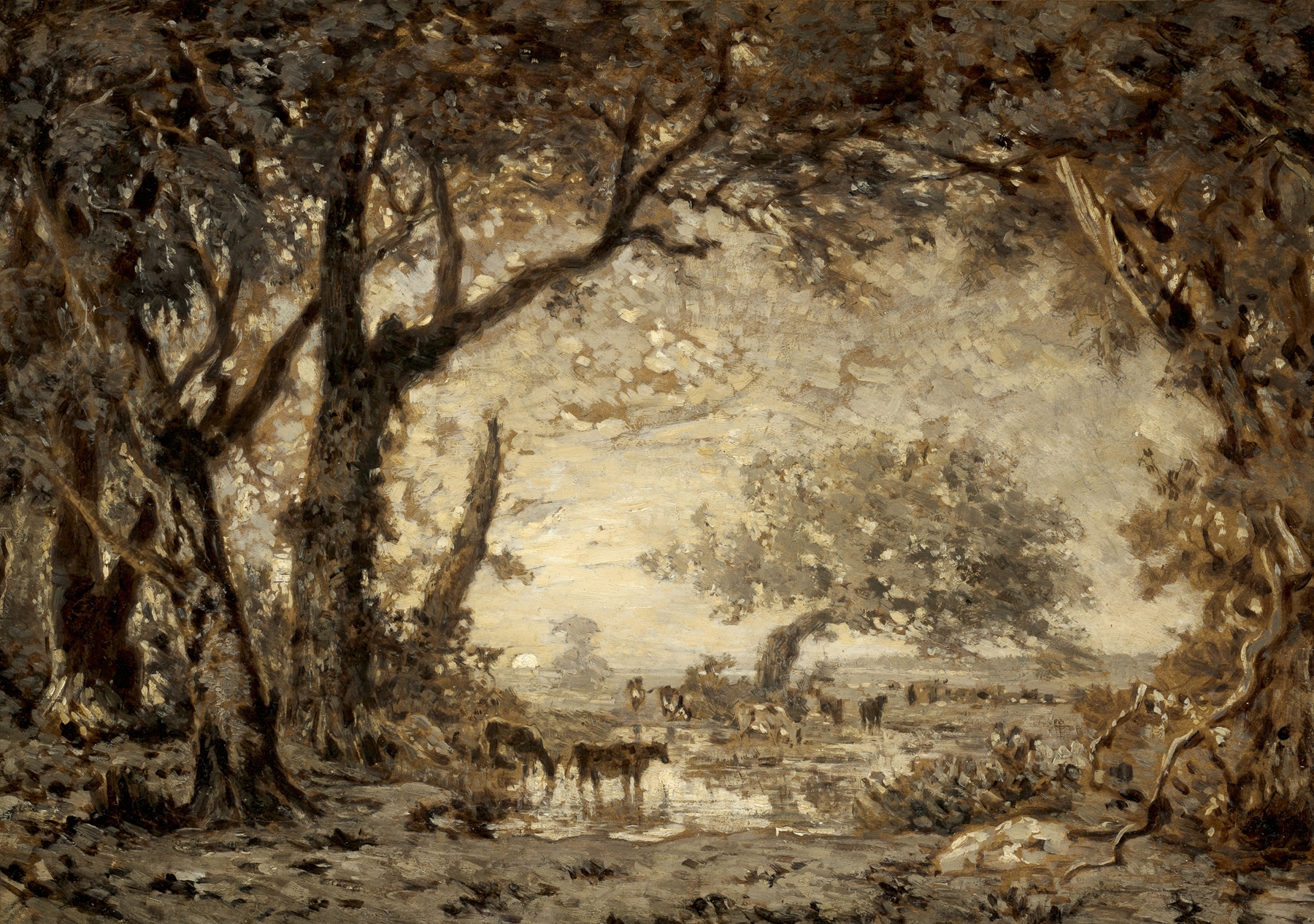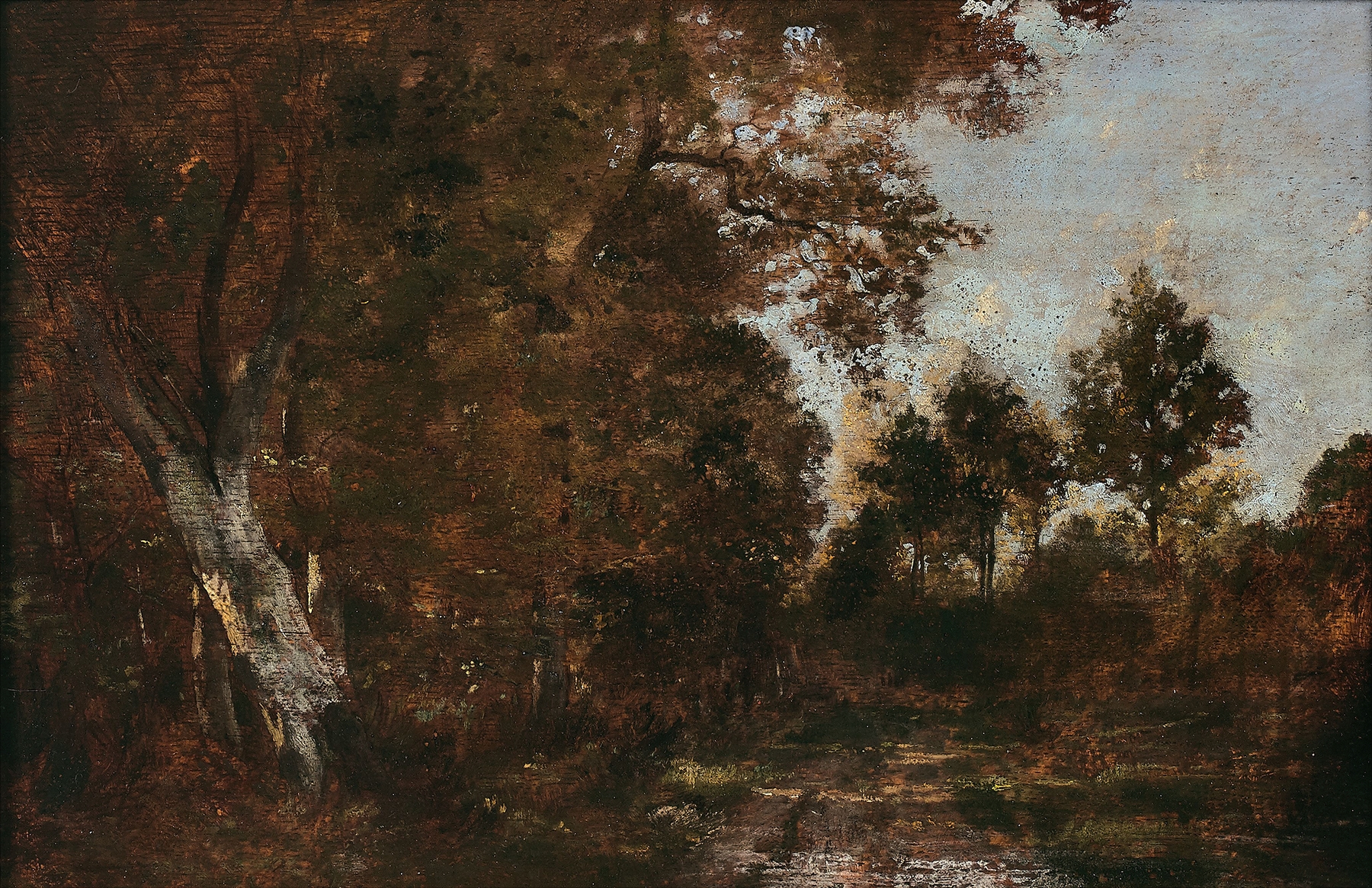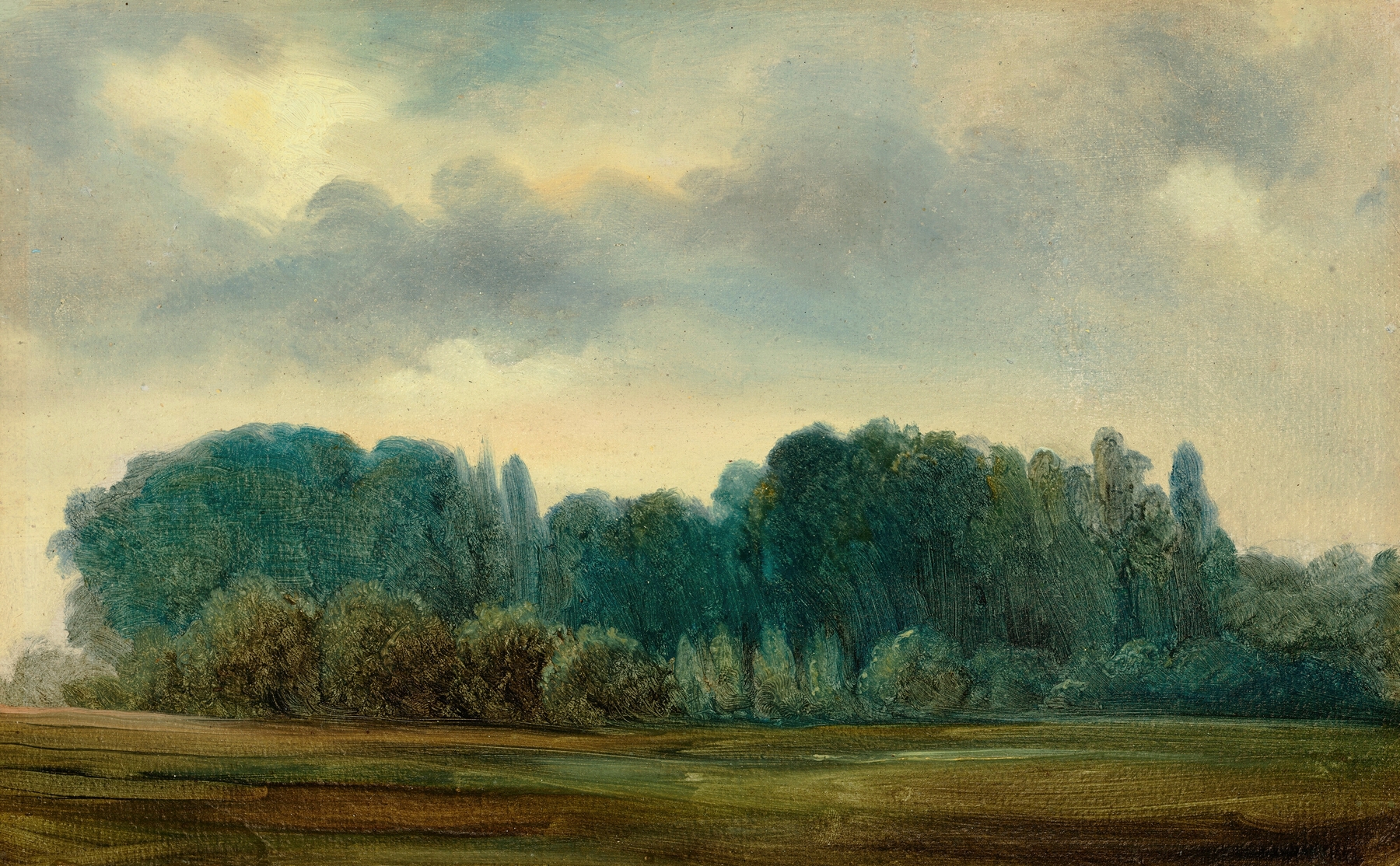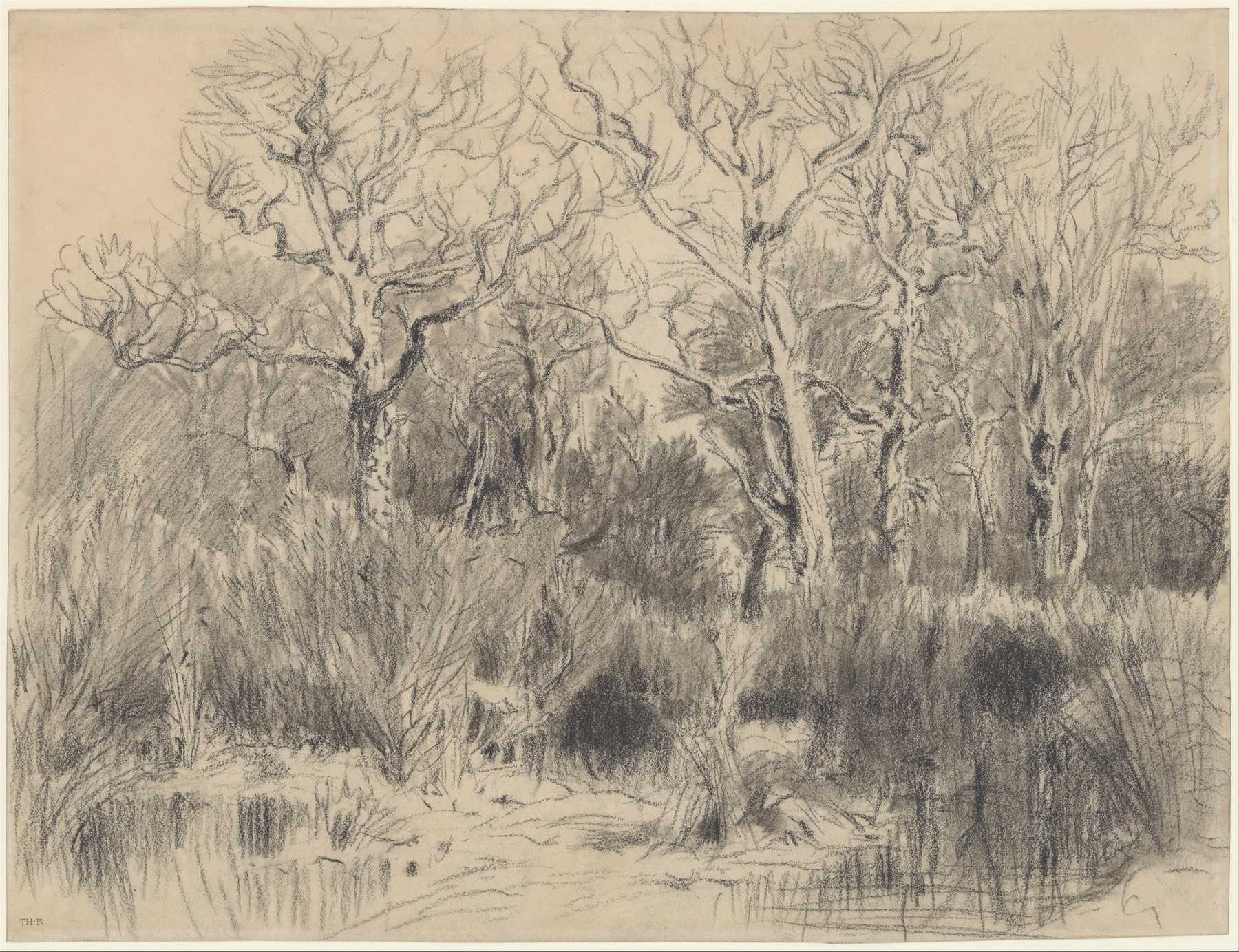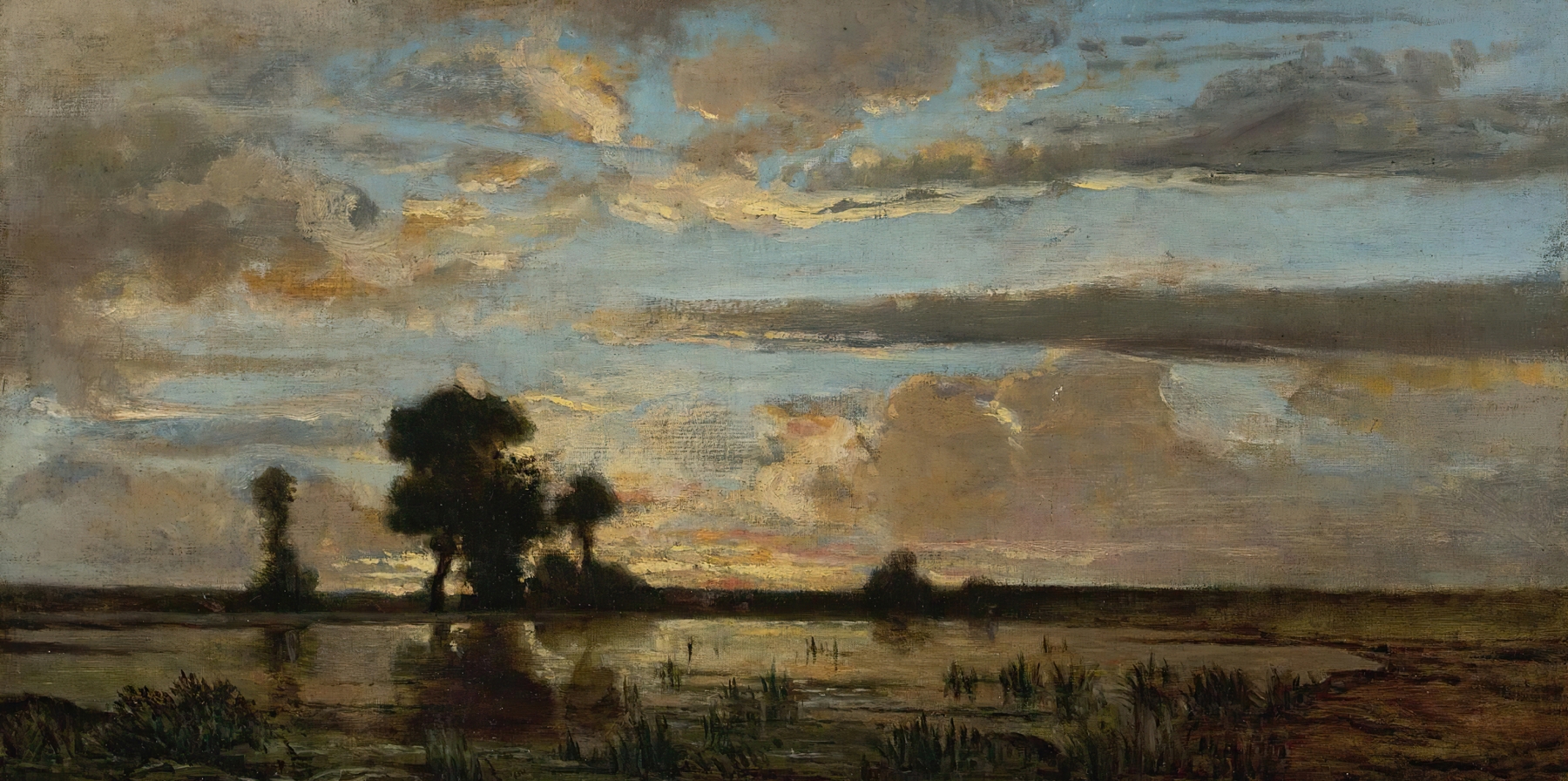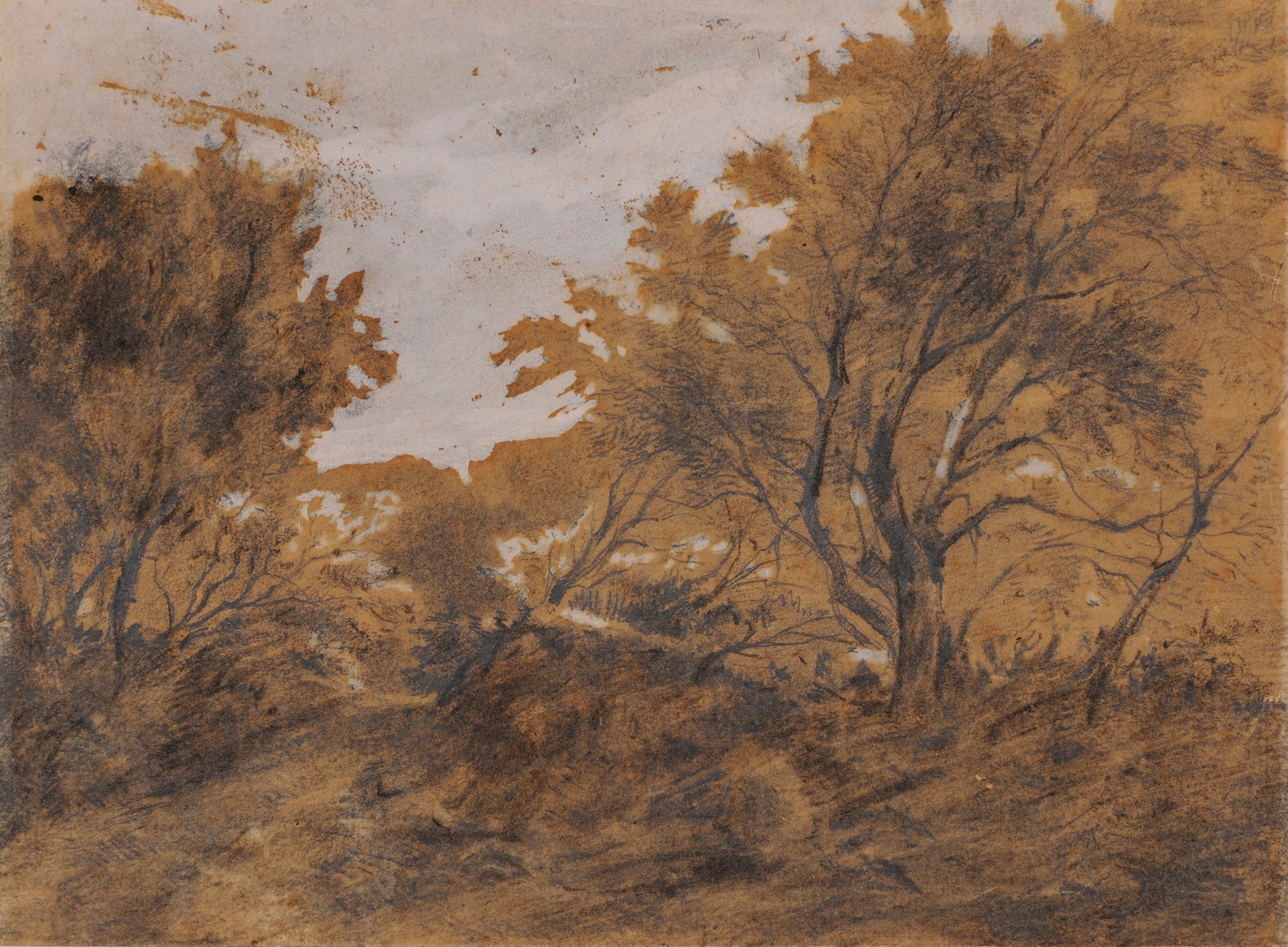
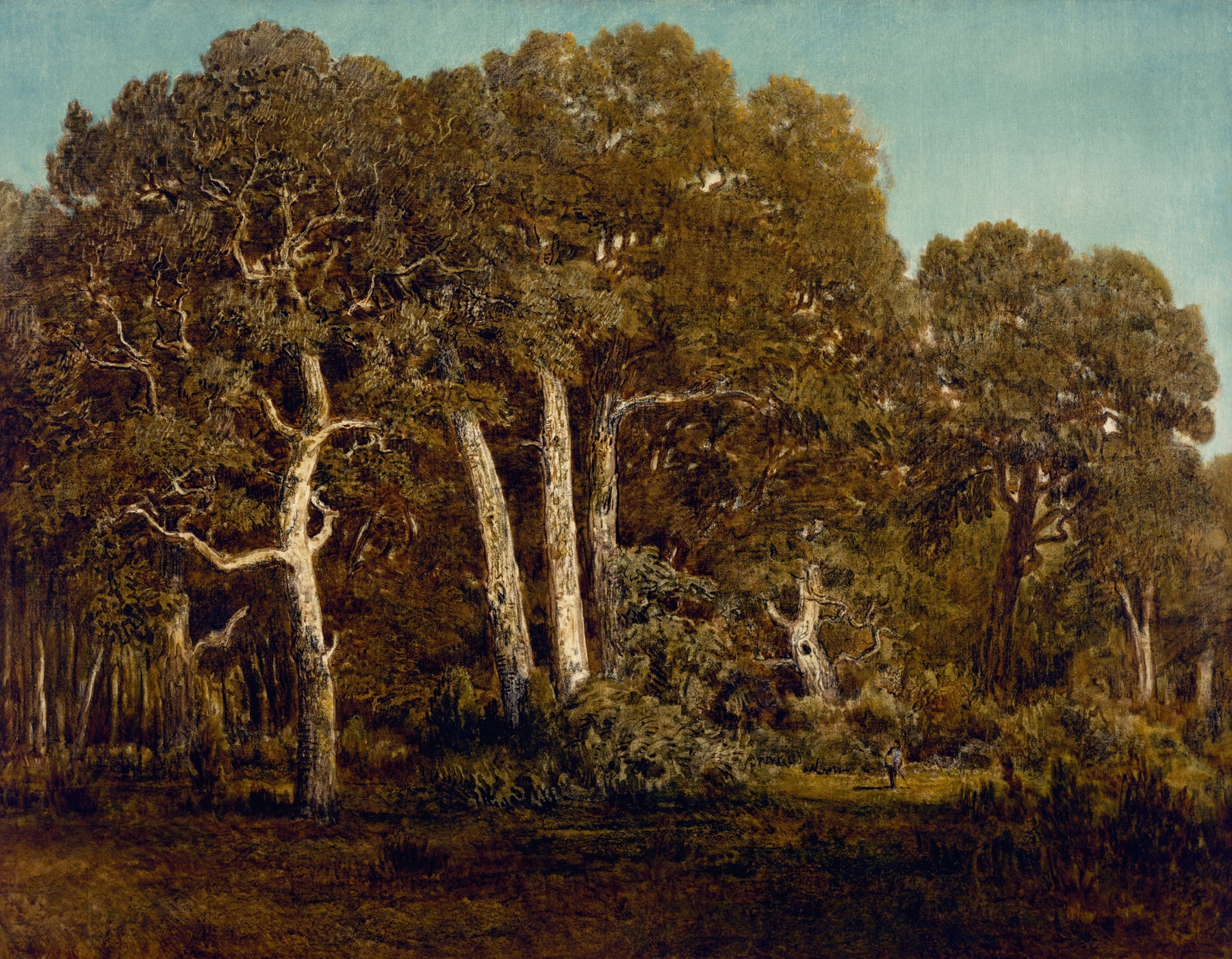
“Between color and silence, truth hides.” In the fleeting moments of nature, we often encounter a profound stillness that whispers of time's passage. Look to the foreground where gnarled trees stand resolutely against an unseen wind, their branches twisted and stretched as if caught in a powerful embrace. Notice how the brushstrokes vary in thickness, creating a textured play between the vibrant greens and the muted browns, conveying both the life of the forest and the tumult of nature’s energy. The light filters through the foliage in dappled patches, guiding your gaze upward toward the expansive sky that threatens to unleash its fury. The emotional tension of this piece lies in its contrasts—between the calm of the earth and the suggestion of impending storm, between the solidity of the trees and the fluidity of the wind. Each detail, from the curling leaves to the shifting shadows, tells a story of resilience, as the landscape stands defiant against the chaos of nature. Here, time feels suspended; one can almost sense the heartbeat of the forest, as if it exists in two moments simultaneously—stillness and motion intertwined. Painted before 1868, Rousseau was deeply engaged with the Barbizon School, a movement that championed painting natural scenes en plein air. During this period, he was exploring the interplay of light and landscape, often inspired by the forests near his home in Fontainebleau. The art world was shifting, with Romanticism giving way to a growing appreciation for realism, and Rousseau's commitment to depicting nature with honesty and emotion was a significant part of that evolution.