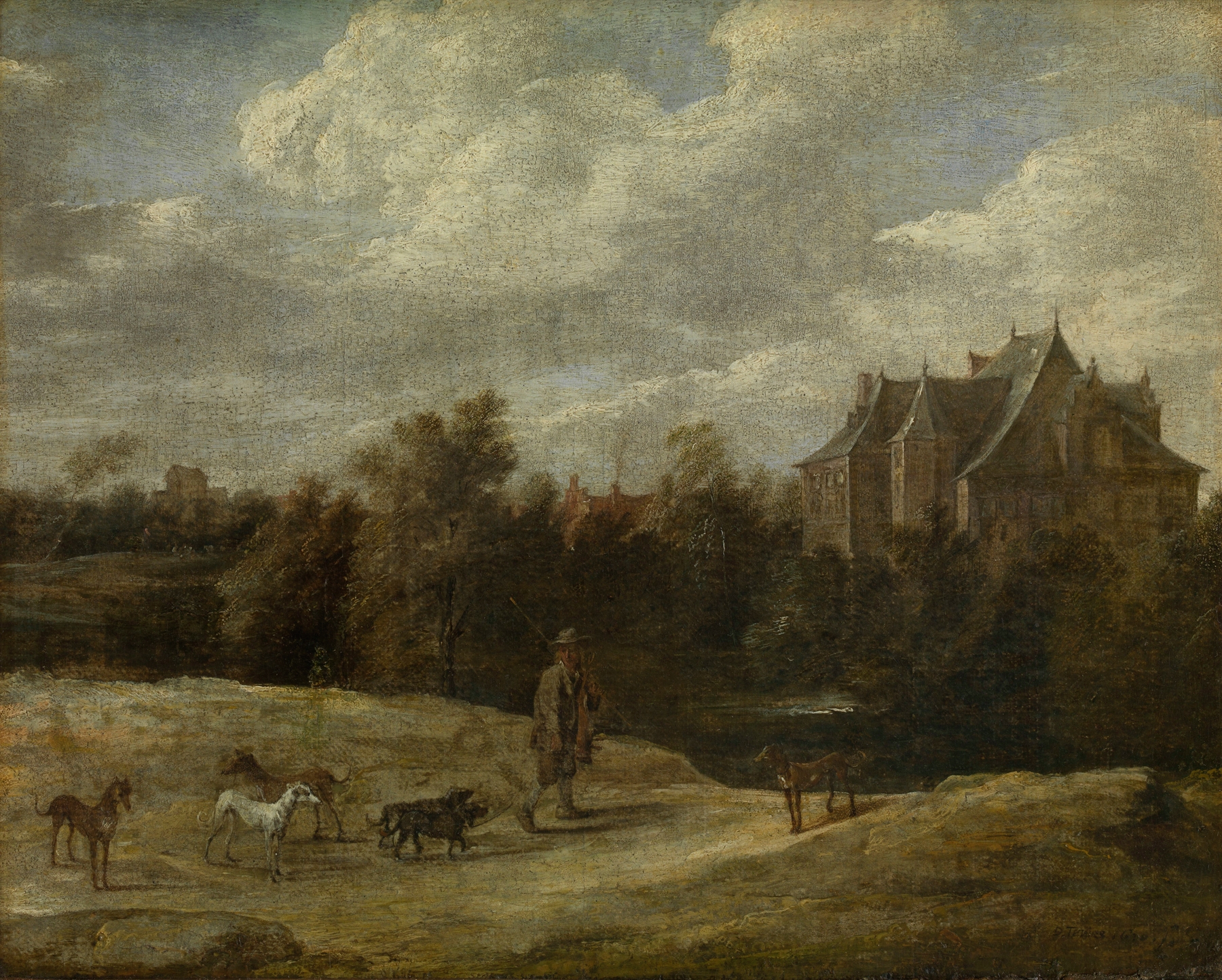
Peasants playing Bowls outside a Village Inn — History & Analysis
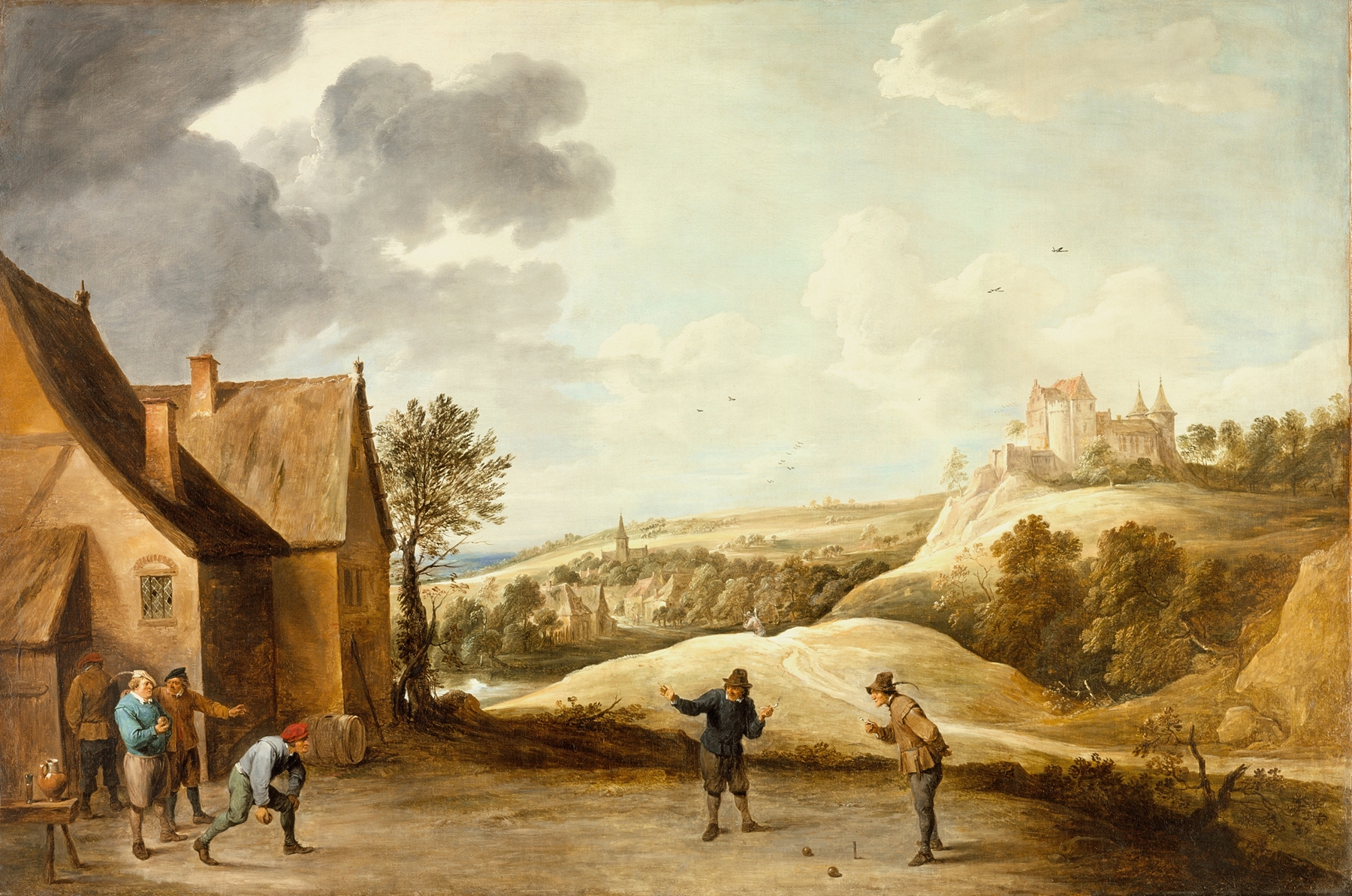
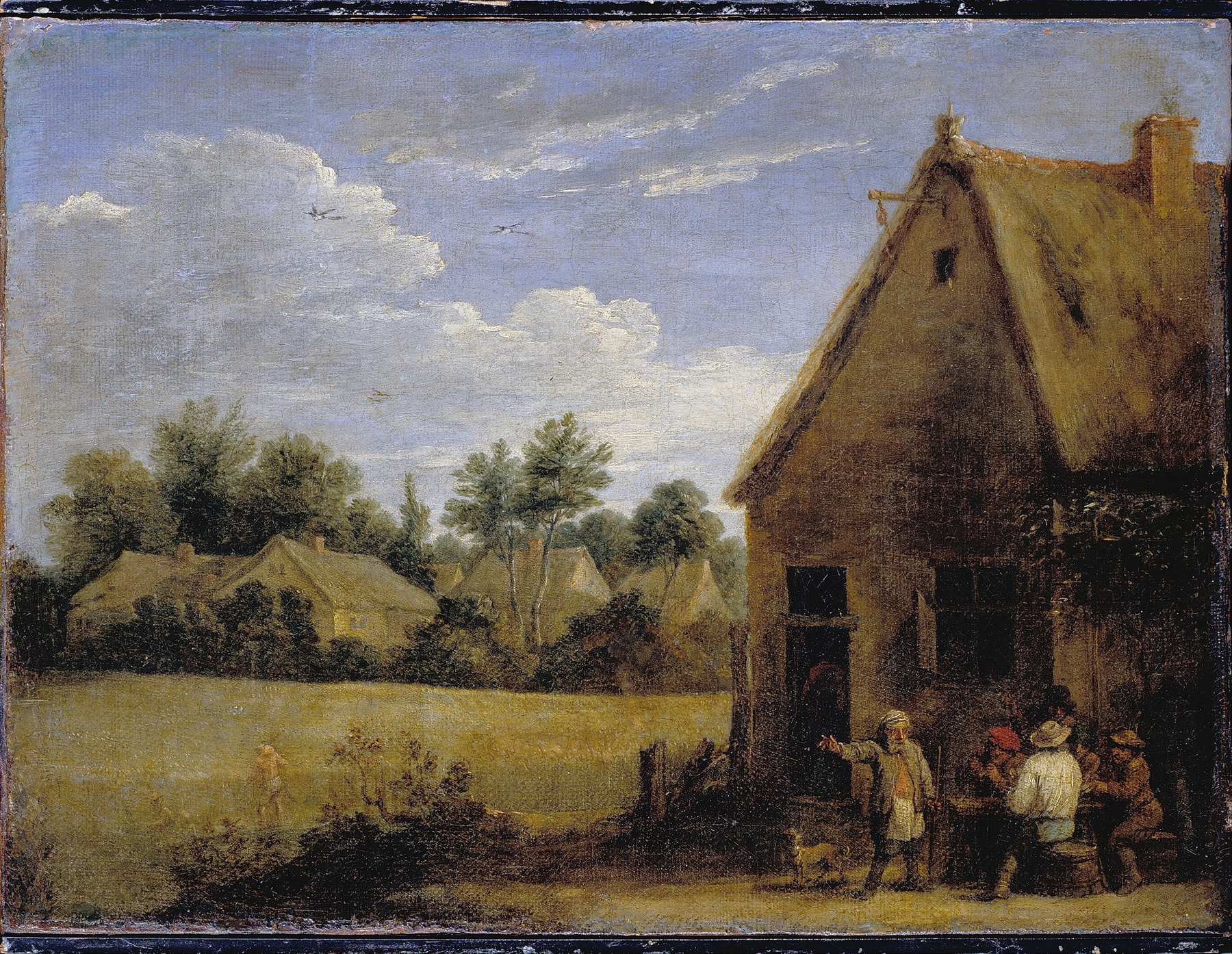
Who listens when art speaks of silence? In Peasants playing Bowls outside a Village Inn, tranquility unfurls like a gentle breeze through the canvas, inviting the viewer into a serene world of simple joys and rustic camaraderie. Look to the left at the village inn, its wooden beams radiating warmth under the sun's tender caress. The harmonious balance of earthy hues – rich browns and soft greens – envelops the scene, grounding it in reality.
The bowl players, poised in concentration, capture your gaze, their gestures frozen in time, creating a rhythmic pulse that draws you deeper into their leisure. Notice how the light elegantly dances across their faces, illuminating the shared laughter and companionship that define this moment. Beneath the surface of this seemingly idyllic gathering lies a poignant contrast between the simplicity of peasant life and the deeper social realities of the time. The act of play becomes a fleeting escape, a momentary respite from the burdens of labor and poverty.
The village inn, both a refuge and a social hub, embodies the duality of community life — the fragility of joy in an era marked by hardship. Each player’s expression hints at unspoken desires and dreams, resonating with a collective longing for connection and contentment. David Teniers the Younger painted this work in 1660 during a period of flourishing Baroque art, marked by a keen interest in genre scenes that captured the daily lives of ordinary people. Working in Antwerp, amidst the shifting tides of the art market, Teniers was deeply influenced by his contemporaries, seeking to elevate the humble peasant experience while showcasing the beauty of everyday life and the latent emotions within it.