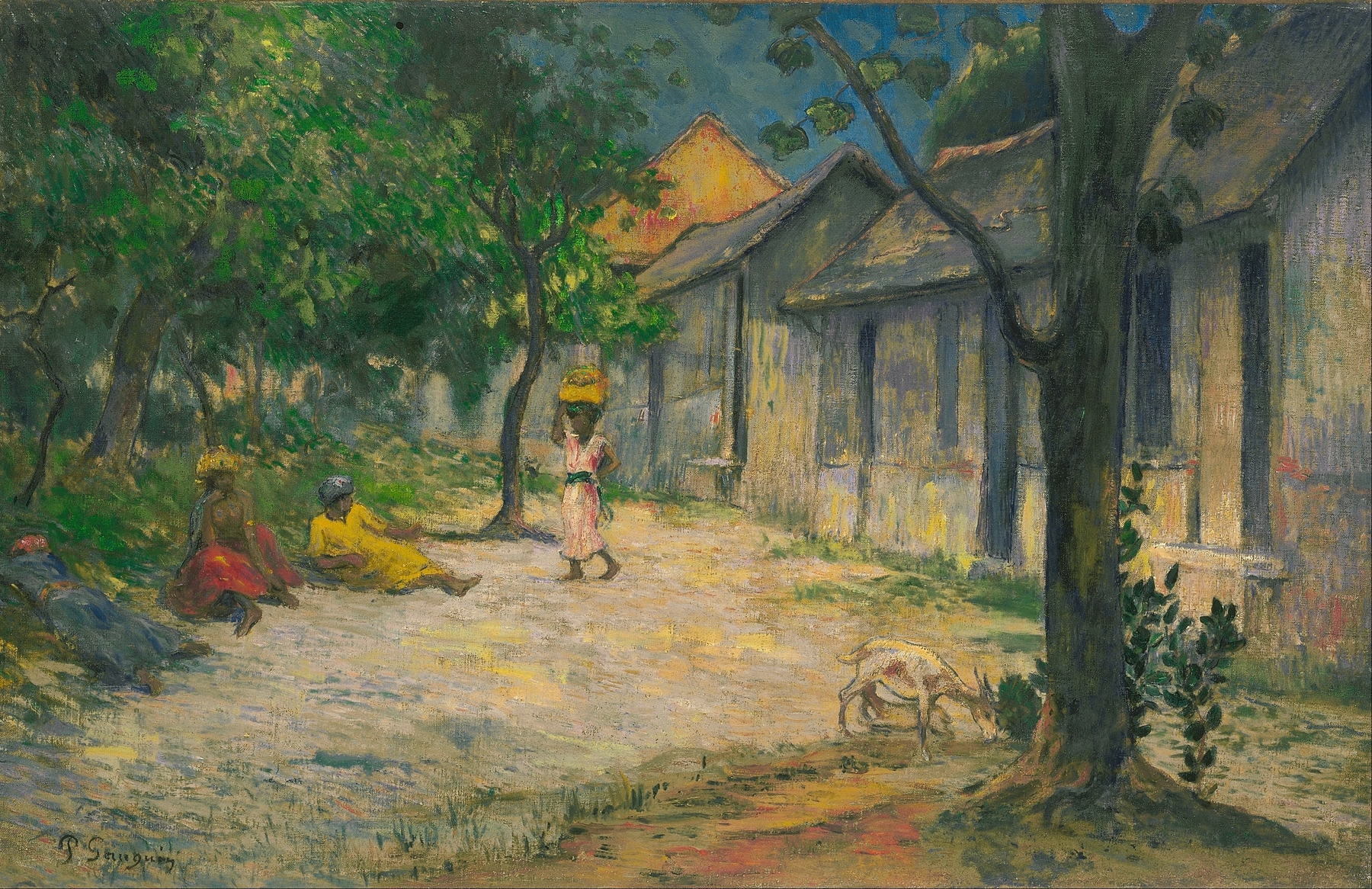
Petit Breton À L’oie — History & Analysis
“Art reveals the soul when the world turns away.” In the quiet embrace of a single moment, hope flickers, often unnoticed, waiting for its chance to shine. Look closely at the vibrant hues that envelop the figure of the boy cradling the goose. The rich greens and deep blues create a lush backdrop, while splashes of yellow and orange evoke warmth and vitality. Notice how Gauguin’s bold, expressive brushstrokes bring the scene to life, capturing not just the boy's pose but the very essence of youth and innocence.
The careful placement of the animal beside him draws a connection between the two, uniting them in a realm of simplicity and companionship. In this piece, contrasts abound: the tension between the vibrancy of childhood and the looming shadows of the world. The boy, with his earnest gaze, embodies hope, while the goose serves as a symbol of domesticity and the cycle of life. The background hints at a world beyond their immediate reality, one that is both inviting and distant, suggesting the narrative of a life yet to unfold and the weight of expectations that accompany it.
Painted in 1889, the artist found himself in Pont-Aven, a picturesque village in Brittany, France, during a time of profound change in the art world. Gauguin was part of a burgeoning movement that sought to break free from traditional representation, and this work reflects his deepening exploration of color, symbolism, and the emotional depth of everyday subjects. As his own life shifted, so too did his artistic vision, fostering a longing for the authentic and the untouched in a rapidly modernizing world.