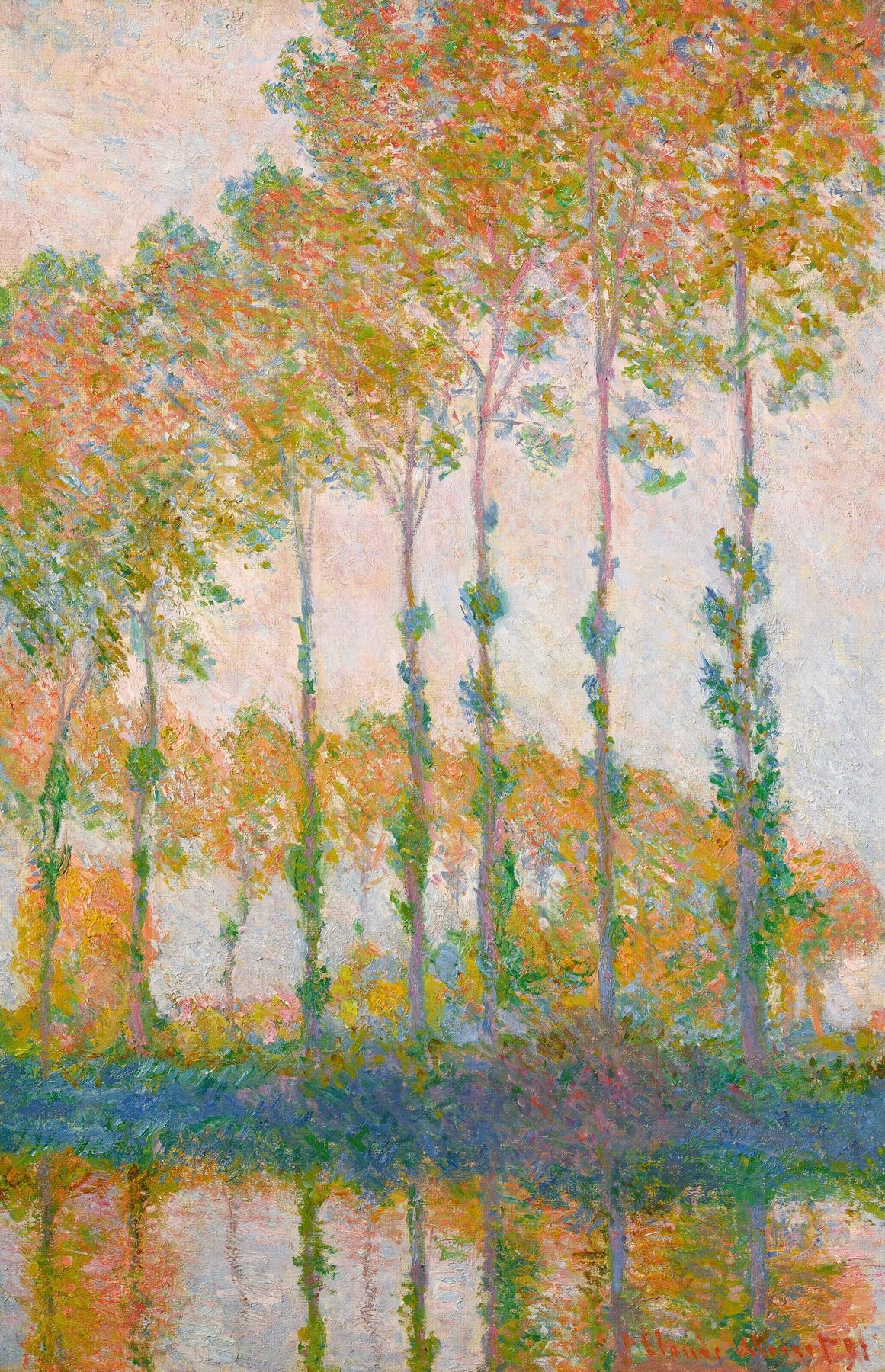
Who listens when art speaks of silence? In *Peupliers au bord de l’Epte, automne*, light becomes a language of its own, whispering secrets of the fleeting season. Look to the left at the tall, slender poplars, their leaves a shimmering gold against a backdrop of soft blues and greens. Notice how the dappled light dances across the water's surface, blurring the boundaries between land and sky. The gentle brushstrokes create a rhythmic wave of color, imbibing the scene with a tranquil yet ephemeral atmosphere, inviting you to linger in its quiet embrace. Beneath the surface of this idyllic landscape lies a tension between permanence and transience. The poplars, sturdy and upright, seem rooted in place, yet their autumn foliage signals change, a reminder of time’s relentless march. The shimmering reflections hint at the fragility of nature, with the water transforming the scene into a fleeting moment captured in eternity, stirring emotions of nostalgia and the bittersweet passage of time. In the autumn of 1891, Monet painted this piece in Giverny, a time when he was deeply immersed in his exploration of light and color. The artist was experiencing a shift in his career, moving toward more abstract representations of nature, while also grappling with personal loss. This painting reflects both his mastery of the impressionist technique and his profound connection to the changing seasons—an intimate dialogue with nature during a period of transformation in his life and the broader world of art.