Pheasant Shooting — History & Analysis
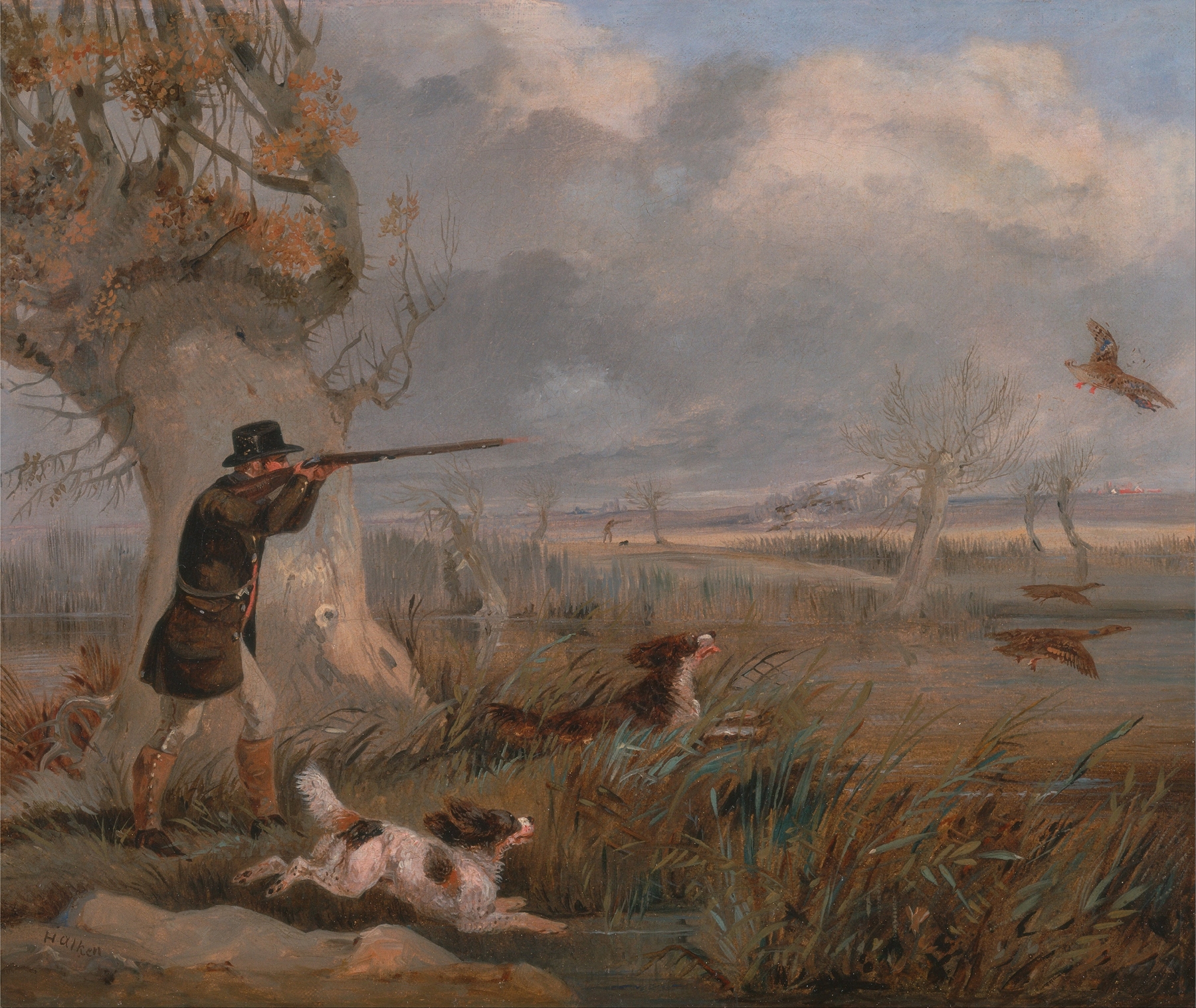
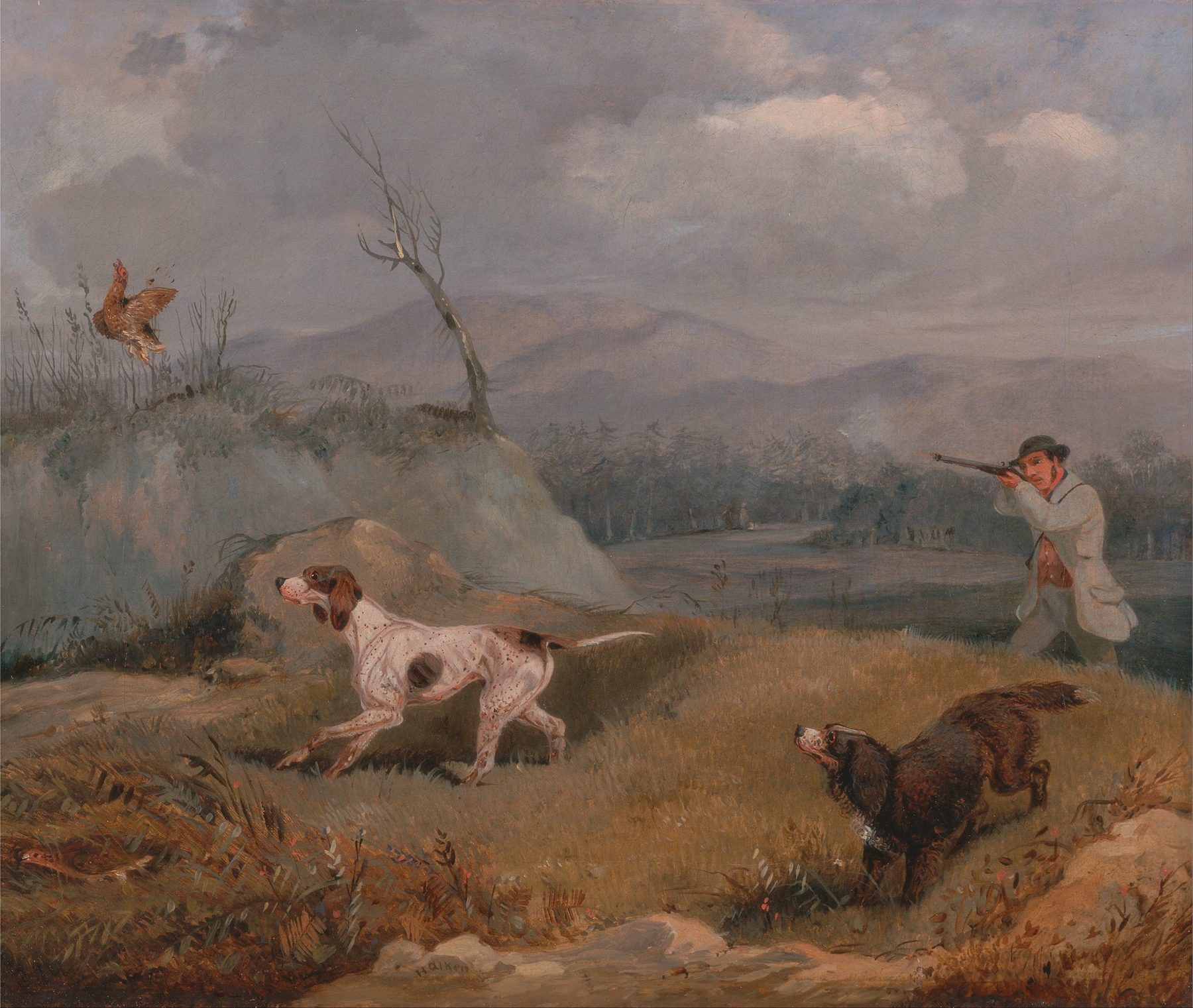
“To paint is to remember what time wants us to forget.” In a world where fleeting moments slip through our fingers, capturing balance becomes an art form of its own. Notice how the center of Pheasant Shooting beckons your gaze with a poised hunter, rifle raised, embodying both tension and tranquility. The soft, muted palette of earth tones contrasts strikingly with the vivid blues and greens found in the surrounding foliage, creating a harmonious balance. Look closely at the intricate details of the pheasants taking flight, their feathers rendered in exquisite precision, while the dappled light filters through the trees, casting delicate shadows that dance across the scene.
Beneath the surface, the painting reveals the intricate interplay of power and nature. The hunter, with his poised stance, represents humanity's interaction with the wild, a dance of dominance and respect. Yet, notice the subtle expression on the dog's face; it hints at a deep instinctual understanding of the balance between hunter and prey. The scene encapsulates a moment of stillness before chaos—a tension that mirrors the delicate relationship between man and the natural world.
Created during a time when sporting art was gaining popularity, Pheasant Shooting reflects the cultural fascination with hunting in the 19th century. Alken, known for his keen observations of outdoor life, painted this work amidst an era of social change and evolving artistic movements, where the application of realism and romanticism began to intertwine. His mastery in capturing these moments solidifies his legacy in the realm of English art.