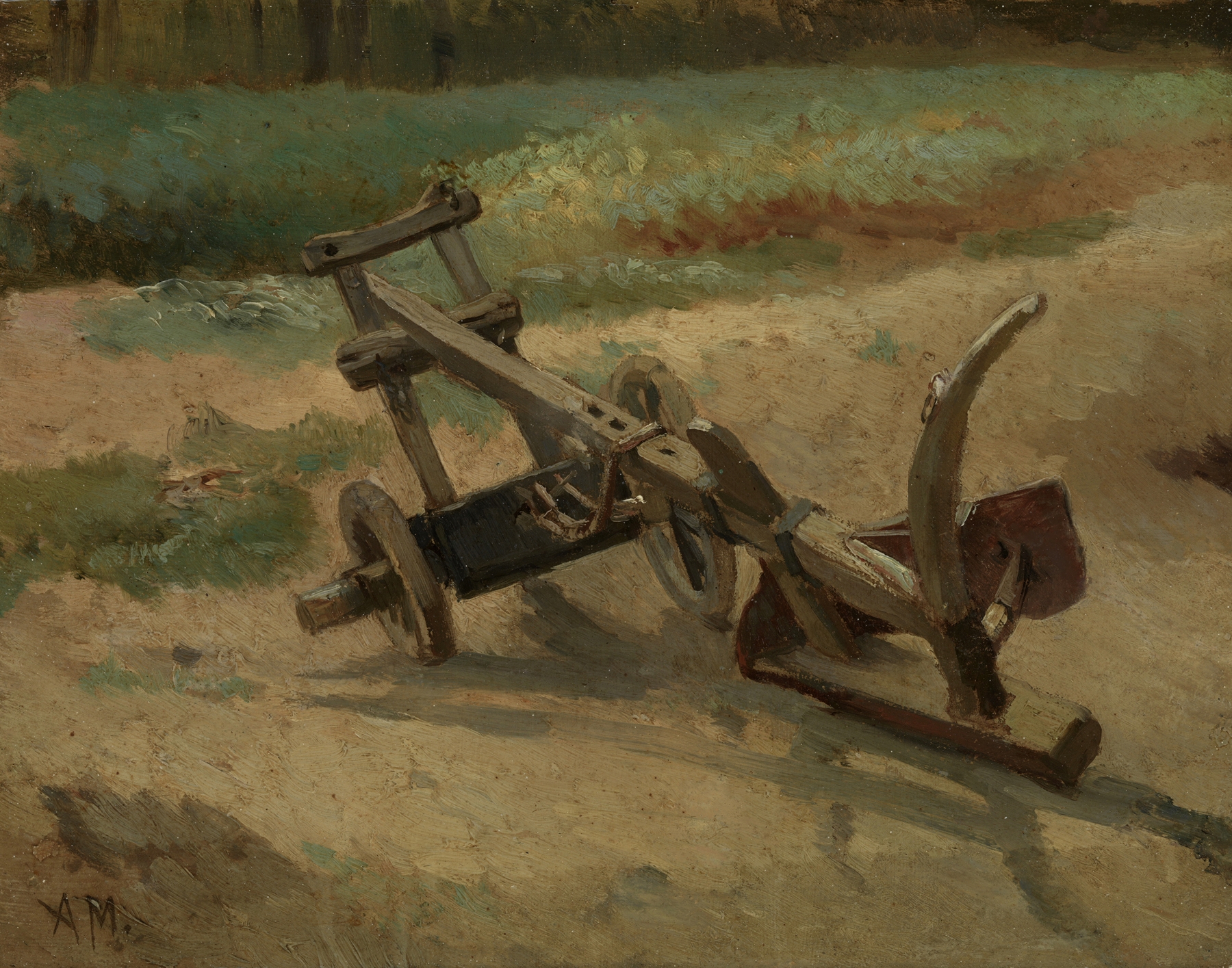
Plough — History & Analysis
“To paint is to remember what time wants us to forget.” In the quiet solitude of a ploughing field, a moment immortalized in paint reveals more than just the labor of its workers; it invites us to confront the illusions of time and effort, woven into the fabric of existence itself. Look to the center of the canvas, where the ploughman’s figure stands resolute against the backdrop of an expansive sky. Notice the way light cascades across the ochre earth, emphasizing the contours of his labor while casting long shadows that hint at the day's passage.
The rich, earthy tones juxtaposed with the soft blues of the sky create a harmony that speaks to the relationship between man and nature, while the textured brushstrokes bring a sense of movement, as if the very soil beneath his feet is alive. Delve deeper into the scene, and you’ll discover the delicate interplay between toil and tranquility. The ploughman’s posture, both strong and weary, evokes the weight of his labor, while the distant horizon calls to mind aspirations and dreams that lie just beyond reach.
This tension between the immediate act of ploughing and the broader cycles of life reflects an unspoken understanding of the fleeting nature of human endeavor, a reminder that every moment of toil holds both promise and impermanence. Painted between 1886 and 1888, this work emerged during a period when Anton Mauve was deeply engaged with rural themes and the challenges faced by agrarian life. Living in the Netherlands, he was part of a movement that sought to capture the essence of everyday existence, at a time when artists were increasingly turning their gaze to the struggles of working-class individuals as a response to the rapid industrialization enveloping Europe.