Poèmes Barbares — History & Analysis
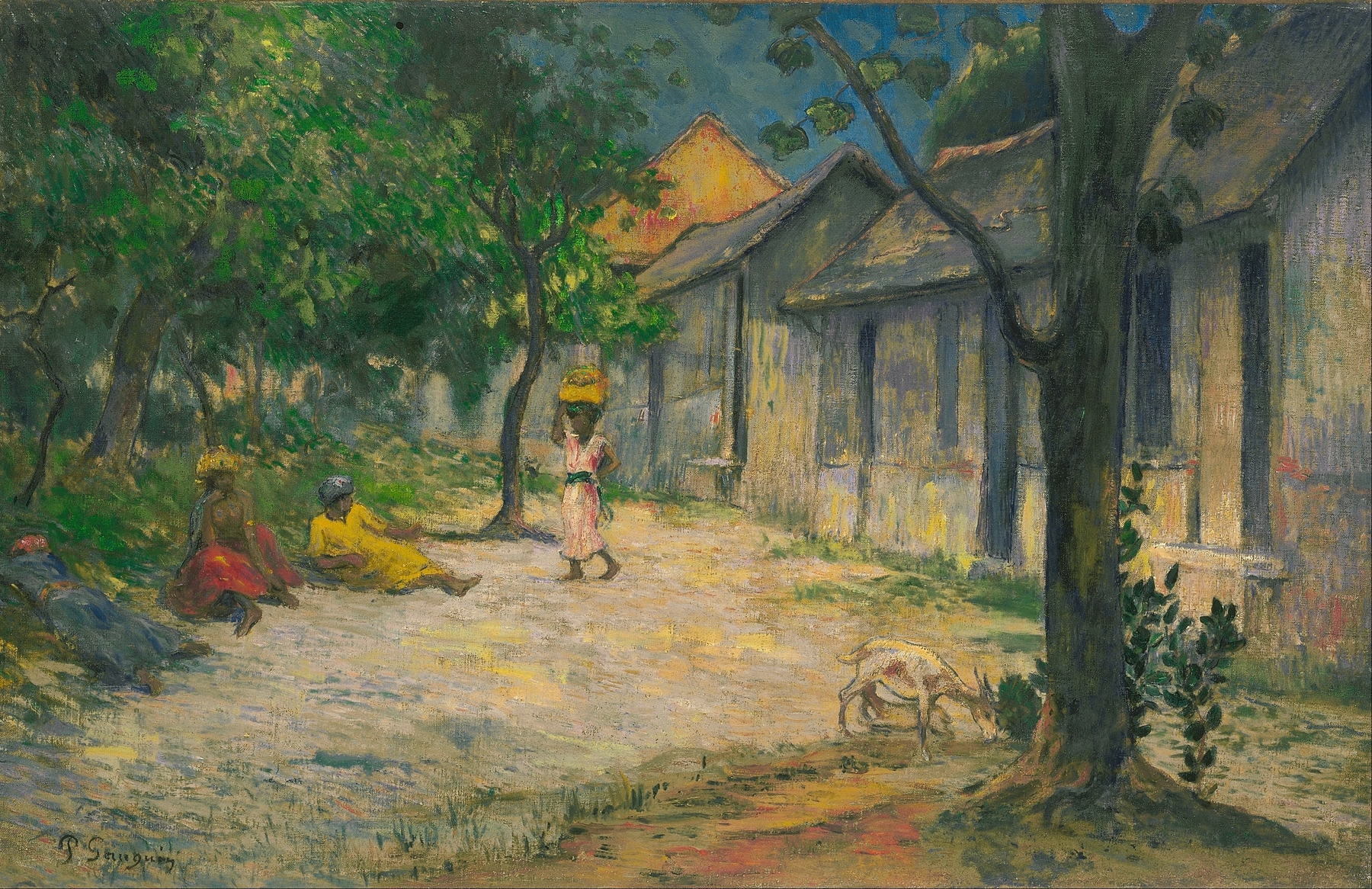
“Art reveals the soul when the world turns away.” In the quiet corners of our existence, where the chaos of life melts into the background, art becomes the sanctuary of unspoken thoughts and emotions. Look to the left at the striking blue tones, where deep cerulean washes evoke the sea’s embrace. Notice how a solitary figure emerges from the rich, earthy palette, their stance poised yet contemplative, embodying a moment suspended in time. The juxtaposition of vibrant colors against the muted background forms a harmonious balance, inviting you to explore the depths of their stillness, while the intricate patterns weave a narrative that speaks of solitude and introspection.
Within this composition lies a profound tension between silence and expression. The subtle play of light upon the figure’s skin contrasts sharply with the surrounding darkness, suggesting an internal struggle or yearning. The patterns that adorn the scene hint at cultural narratives, intertwining personal identity with broader themes of existence. Each brushstroke resonates with the weight of stories left untold, revealing the layered complexity of human emotion.
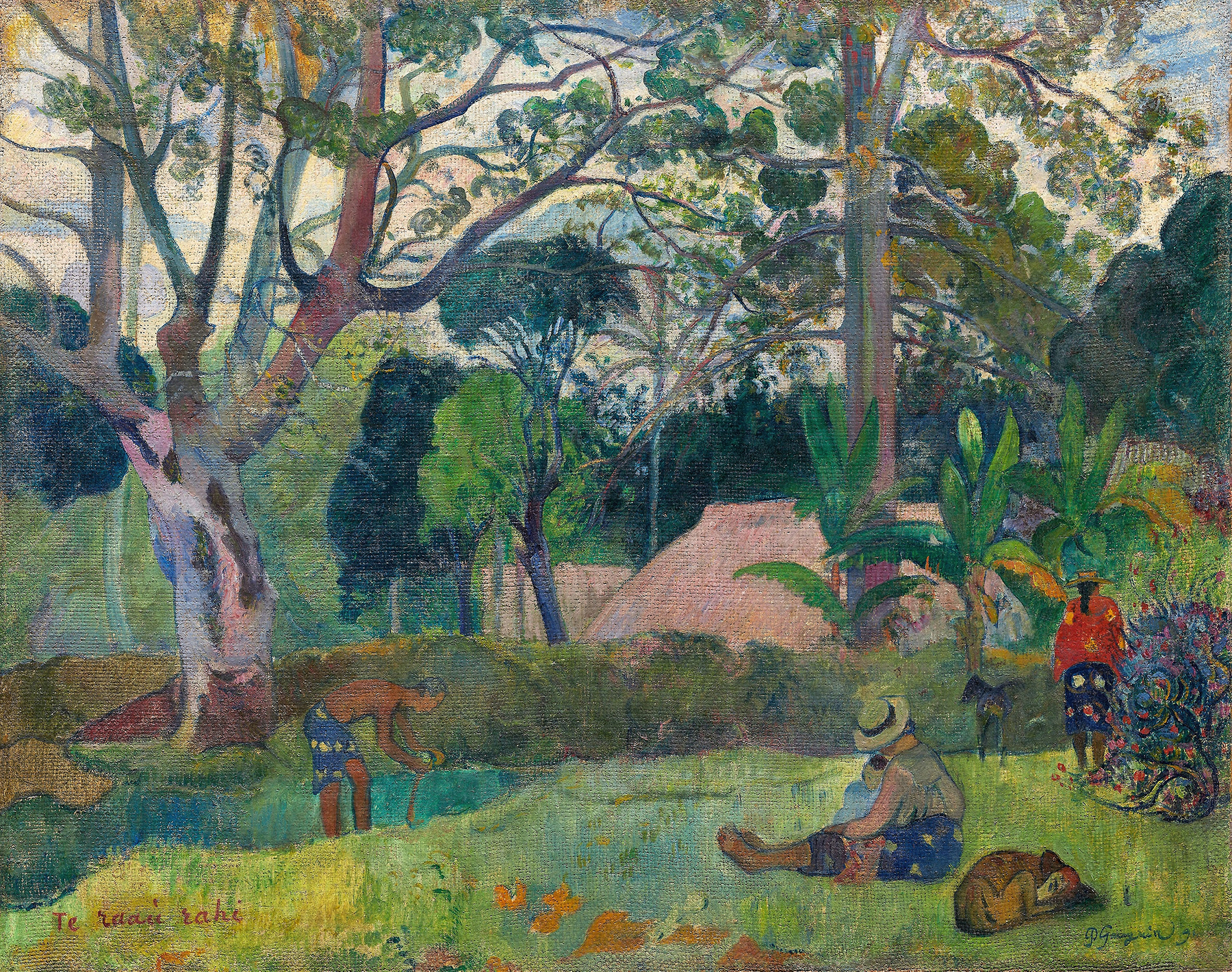
In 1896, Gauguin was residing in Tahiti, striving to break free from the constraints of Western art. This period marked a pivotal moment in his career, reflecting his restless search for authenticity and a deeper connection with nature. While the world around him grappled with modernity, he turned to the simplicity of the islands’ beauty, capturing something timeless and raw.