Pompton Plains, New Jersey — History & Analysis
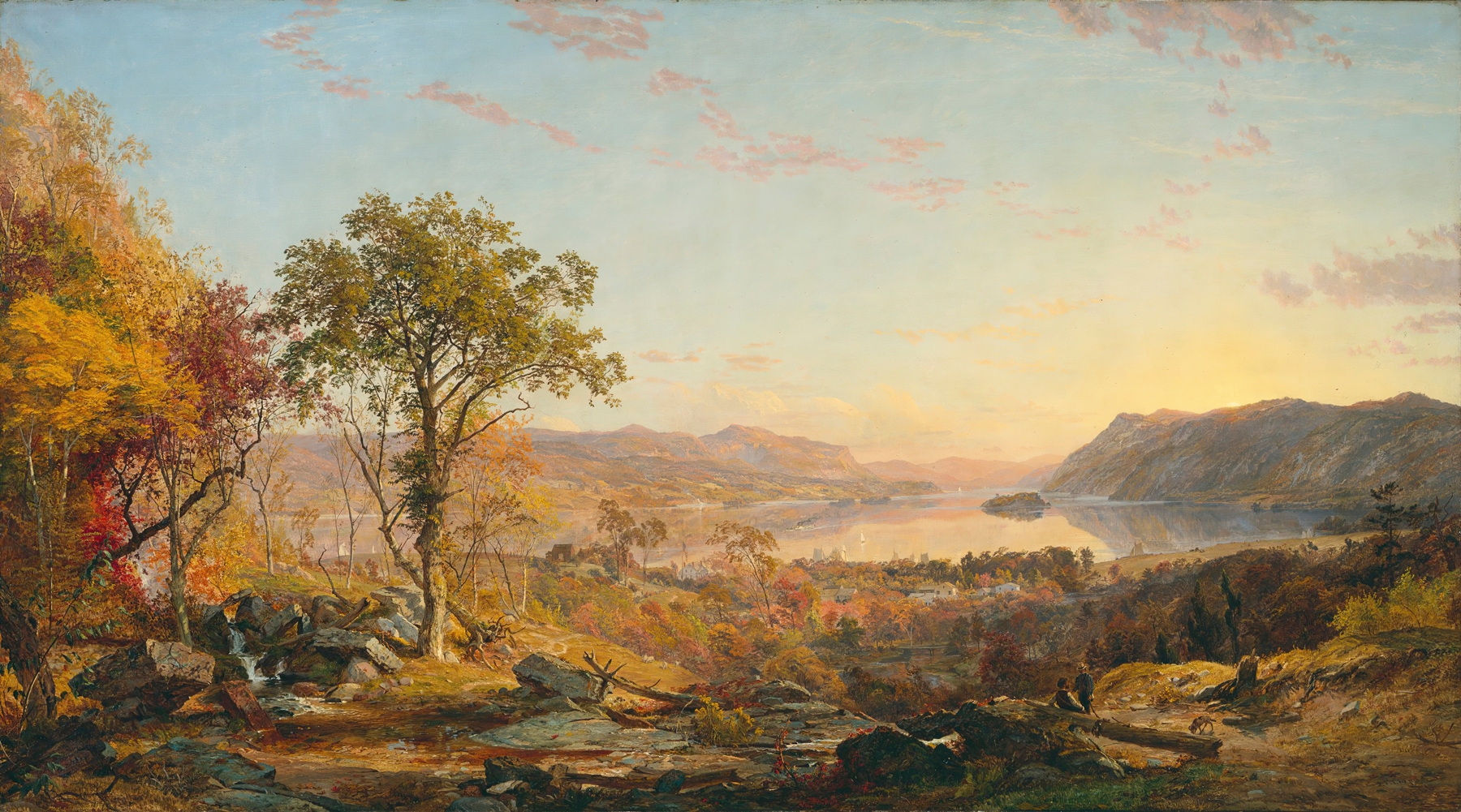
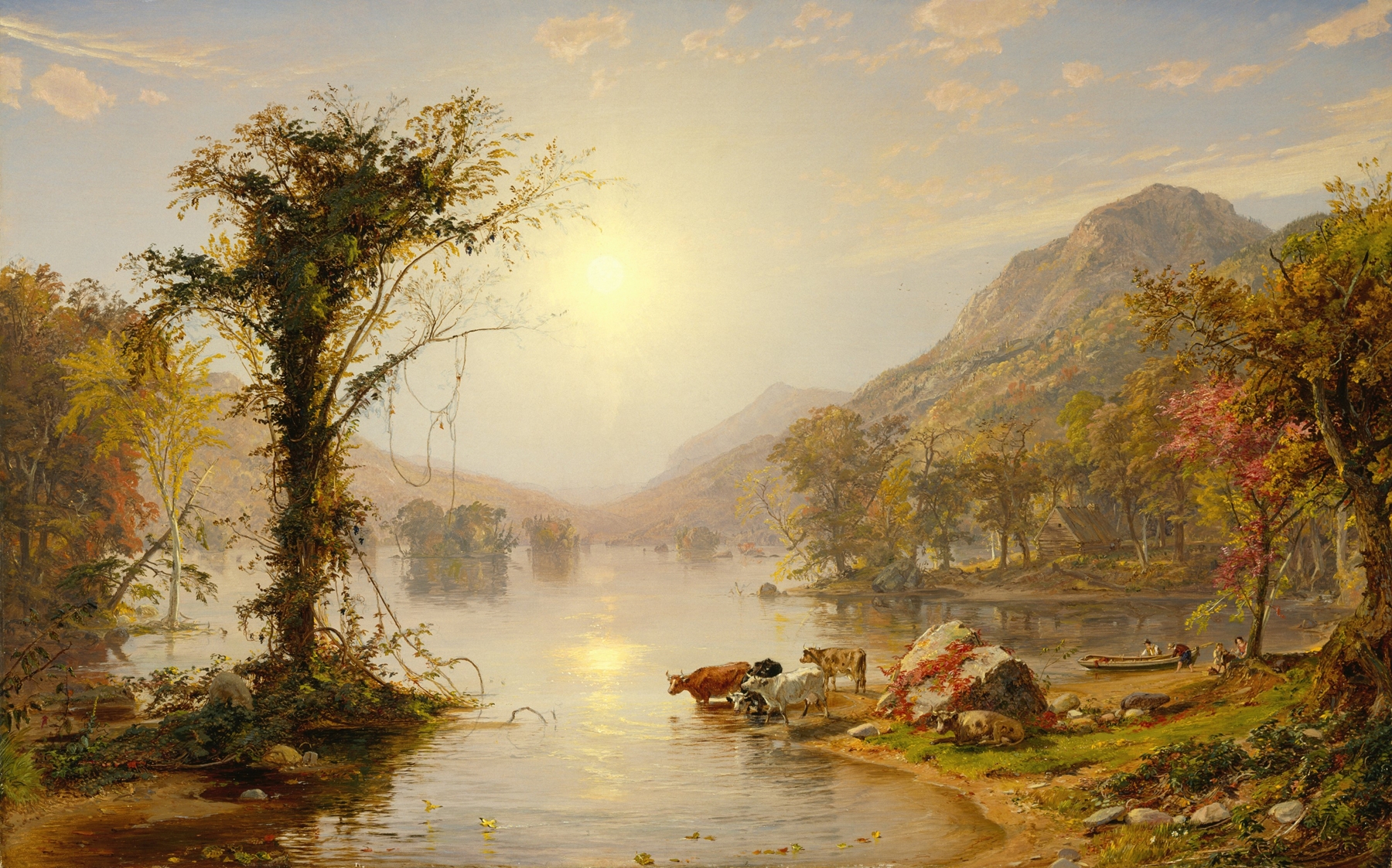
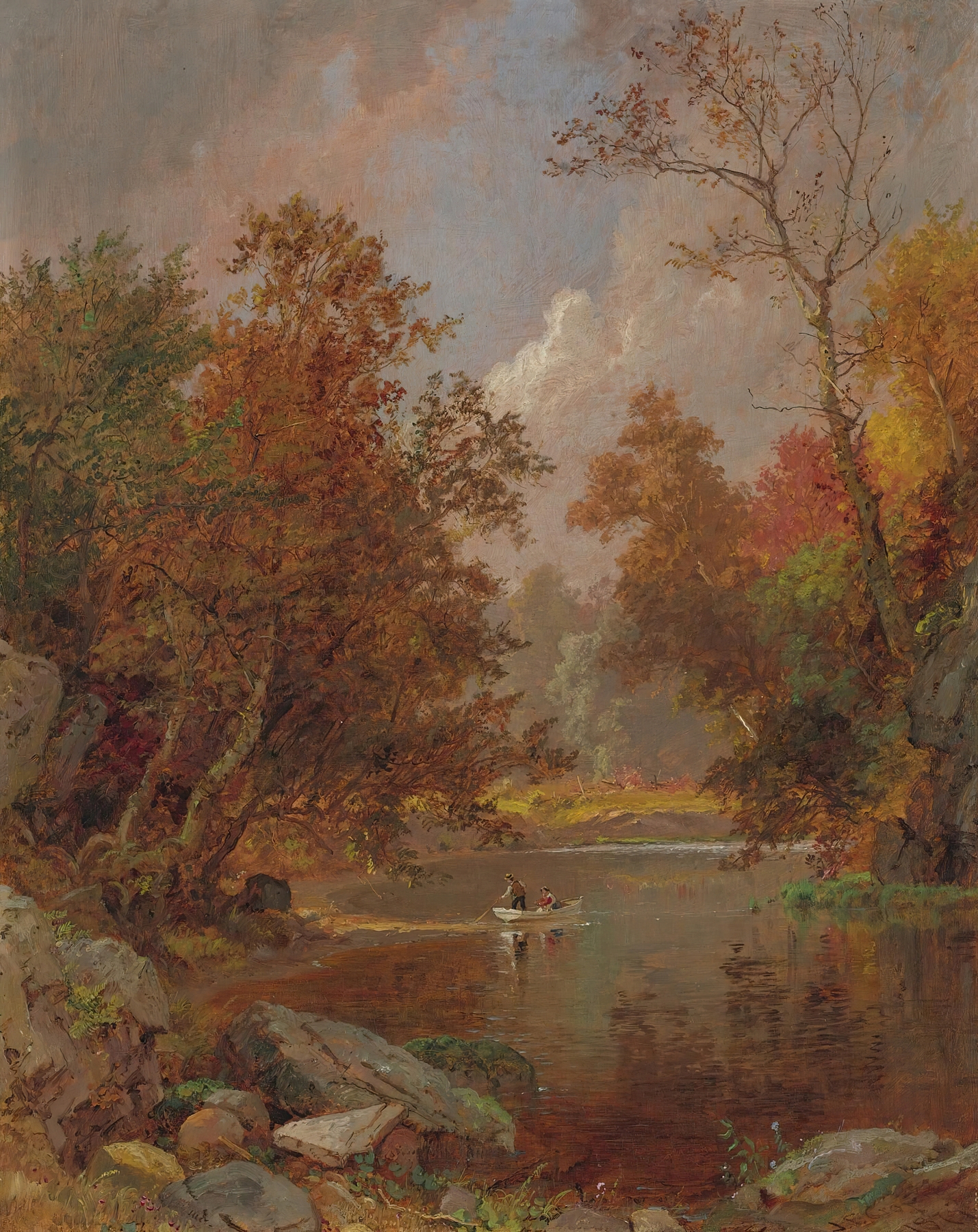
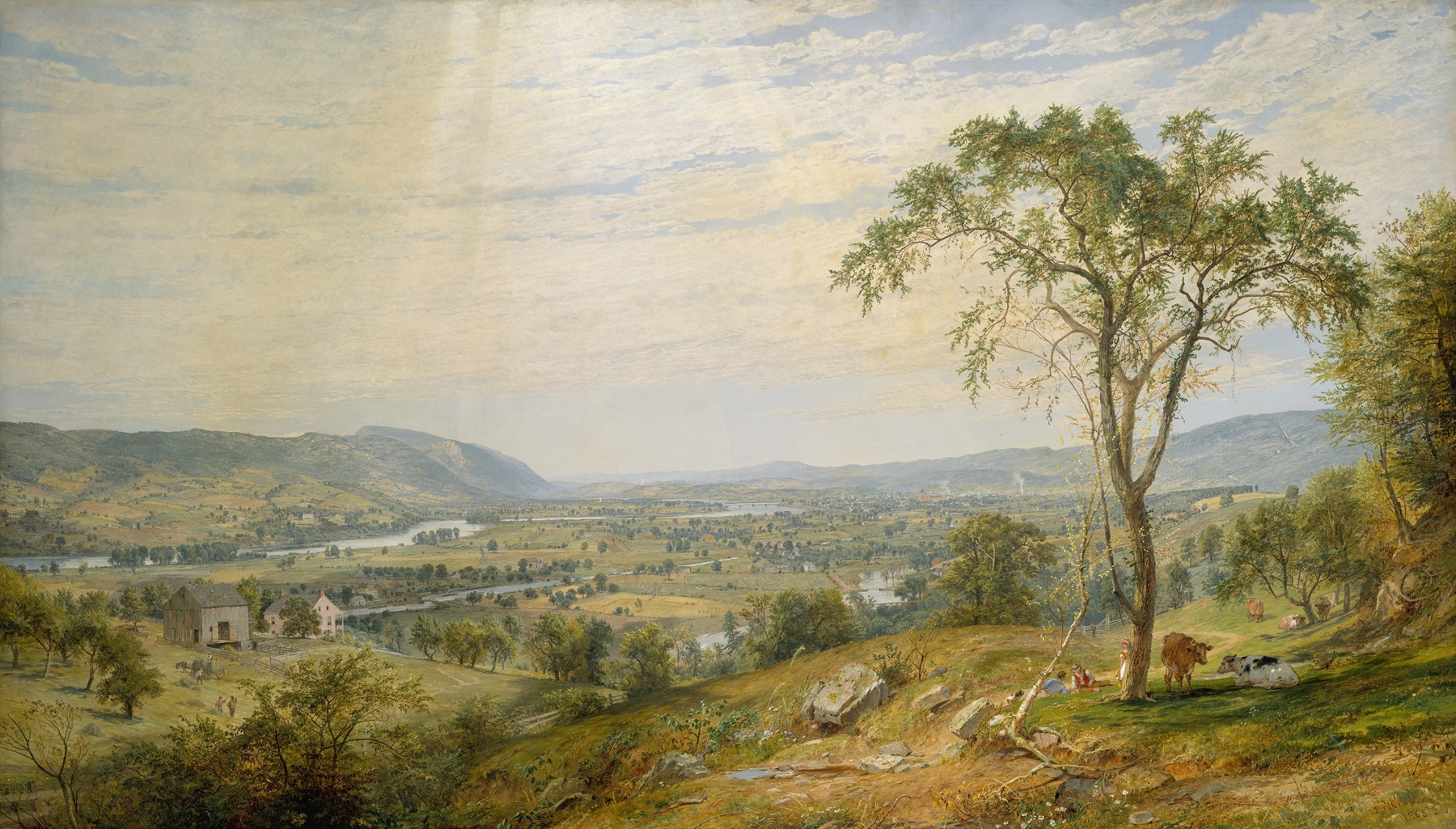
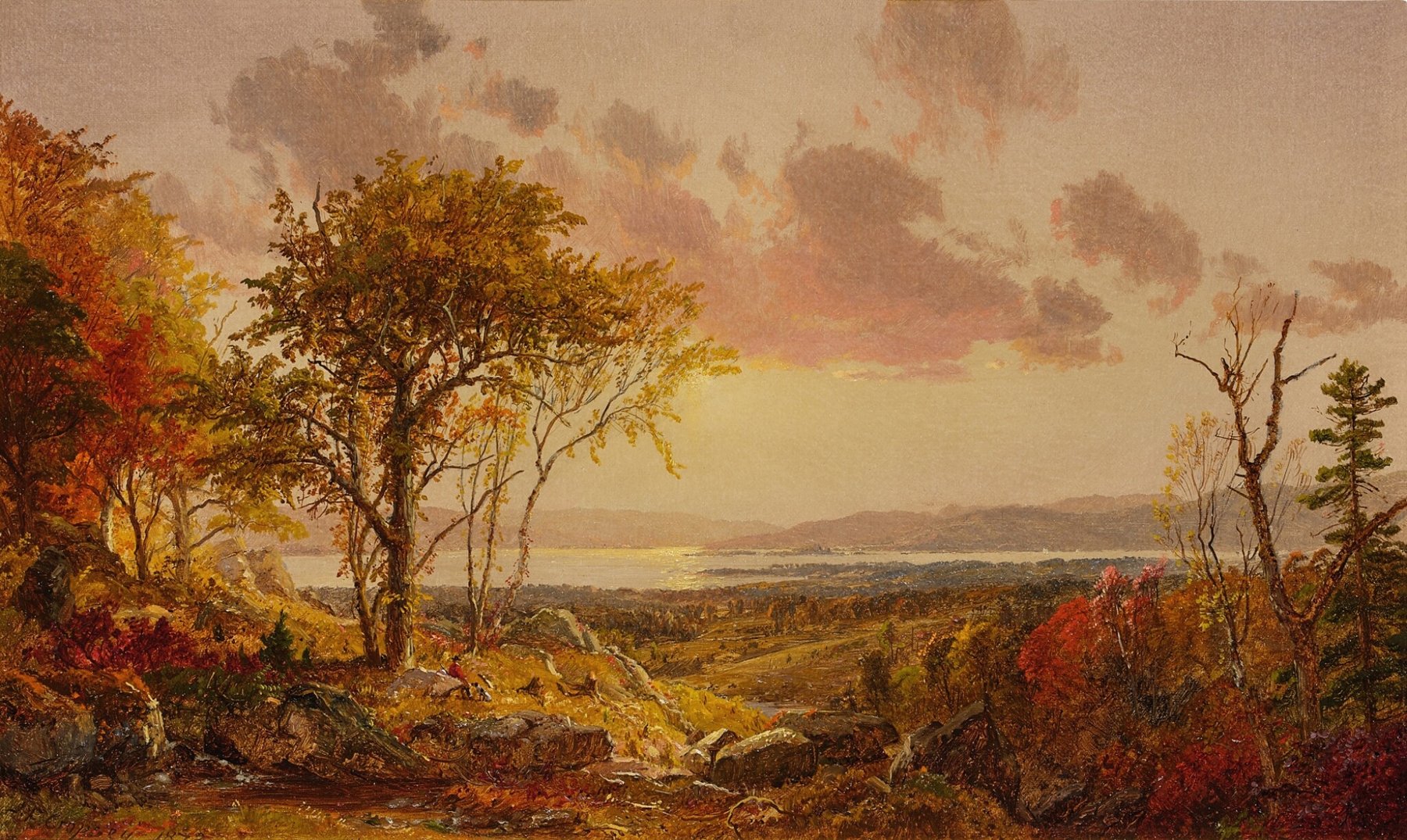
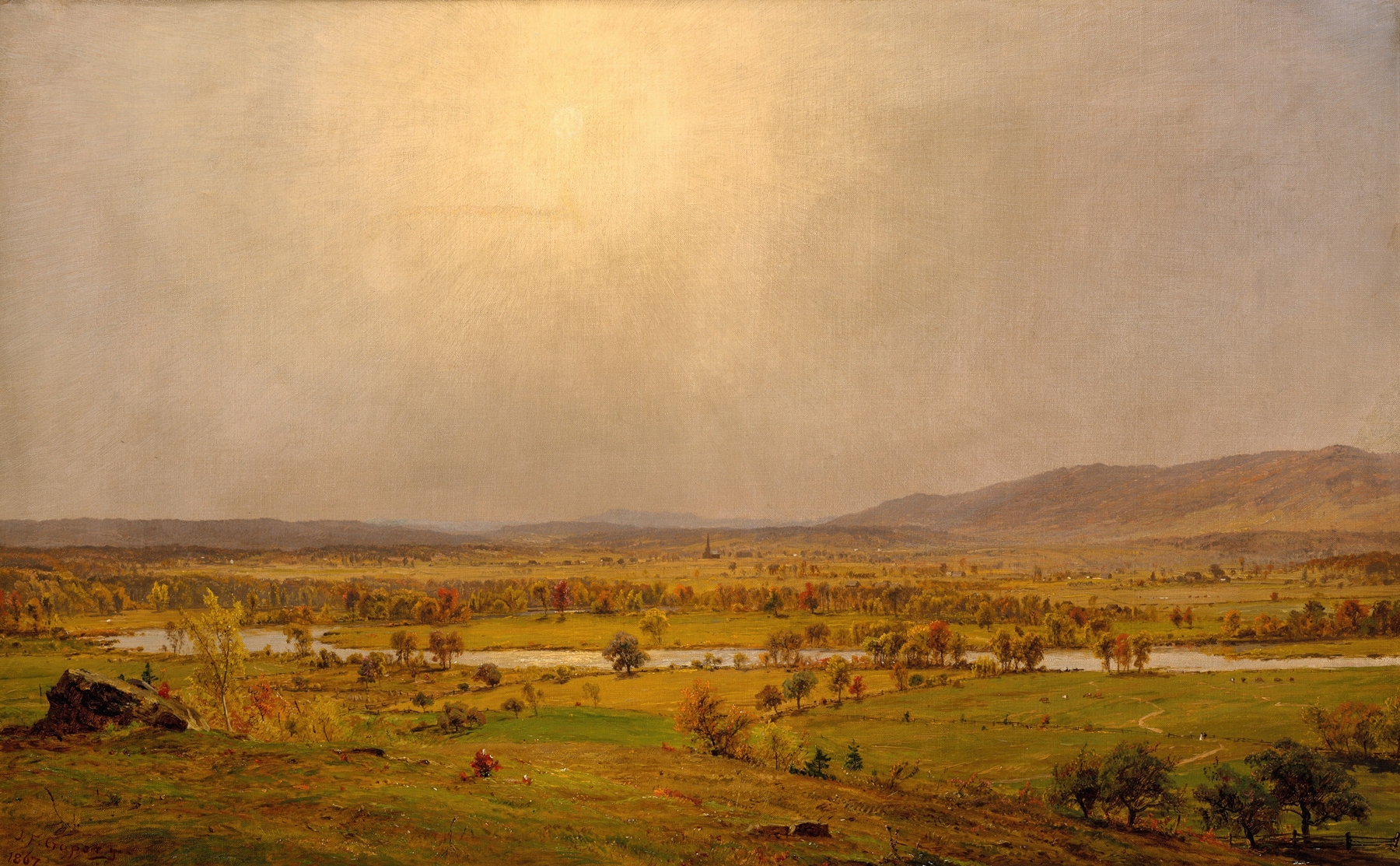
Can paint confess what words never could? In the stillness of a quiet autumn day, the landscape breathes a profound melancholy that whispers to the soul. Look to the left at the gentle curve of the river, its surface a reflective mirror capturing the muted colors of the season. The vibrant oranges and yellows of fallen leaves contrast sharply with the cool blues of the sky, while the distant hills recede into a soft haze.
Notice how the light plays upon the treetops, casting dappled shadows that dance across the water's edge, creating a serene yet haunting atmosphere that evokes a sense of fleeting time. Delve deeper into the composition and you’ll discover a tension between the idyllic beauty and a subtle sense of decay. The trees, radiant yet shedding their leaves, speak of life’s transient nature, while the winding river symbolizes both passage and permanence. This juxtaposition highlights the artist's reflection on the bittersweet nature of existence—moments of beauty forever entwined with the inevitability of change.
In 1867, Cropsey painted this piece during a time when American landscape painting was gaining prominence, embracing the romantic ideals of nature. He was deeply influenced by the Hudson River School, which celebrated the beauty of the American landscape. As he created Pompton Plains, New Jersey, Cropsey was navigating his own personal challenges, grappling with the tension between optimism and the melancholic truths of life, a theme that resonates throughout his body of work.