Port de Rotterdam — History & Analysis
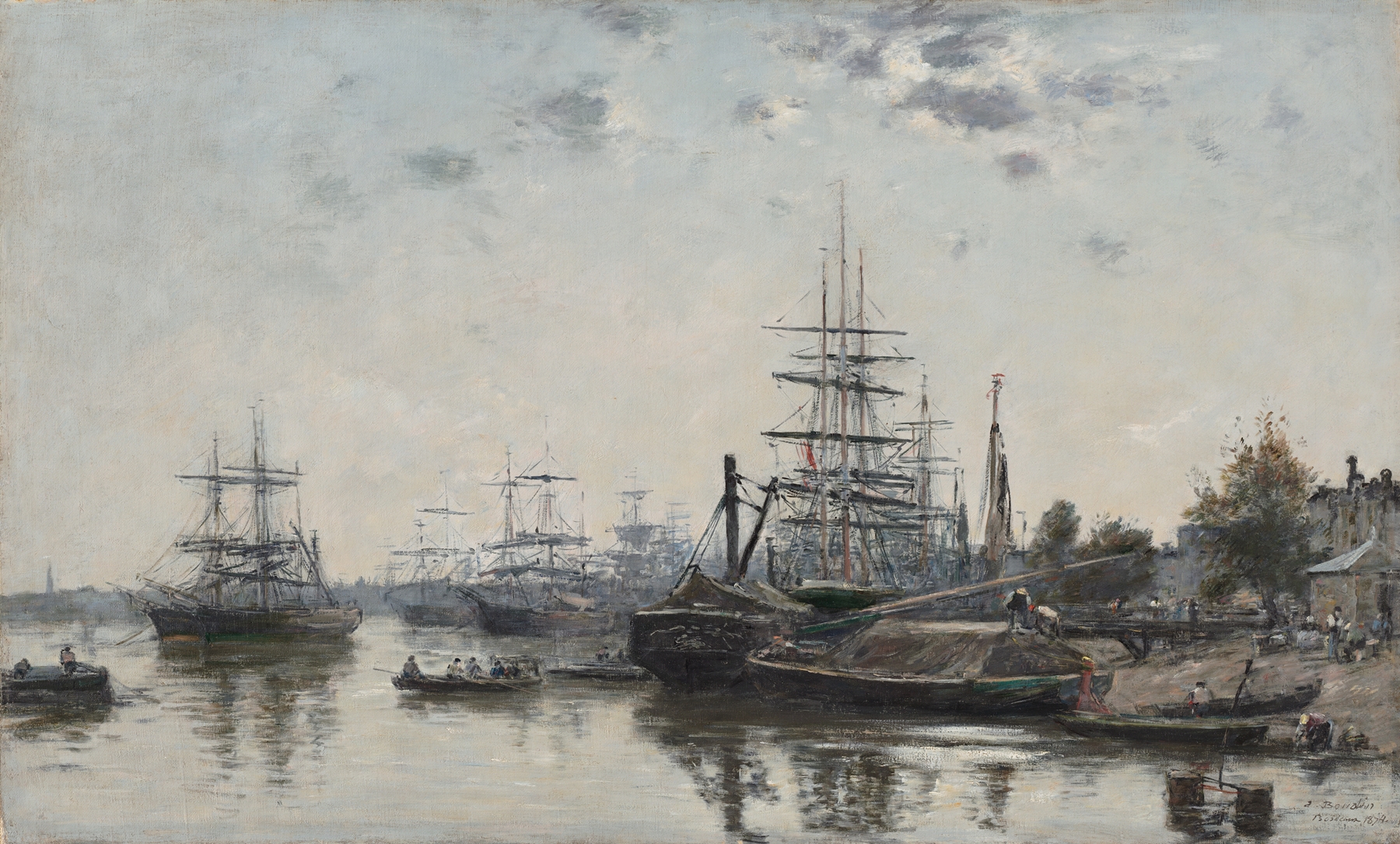
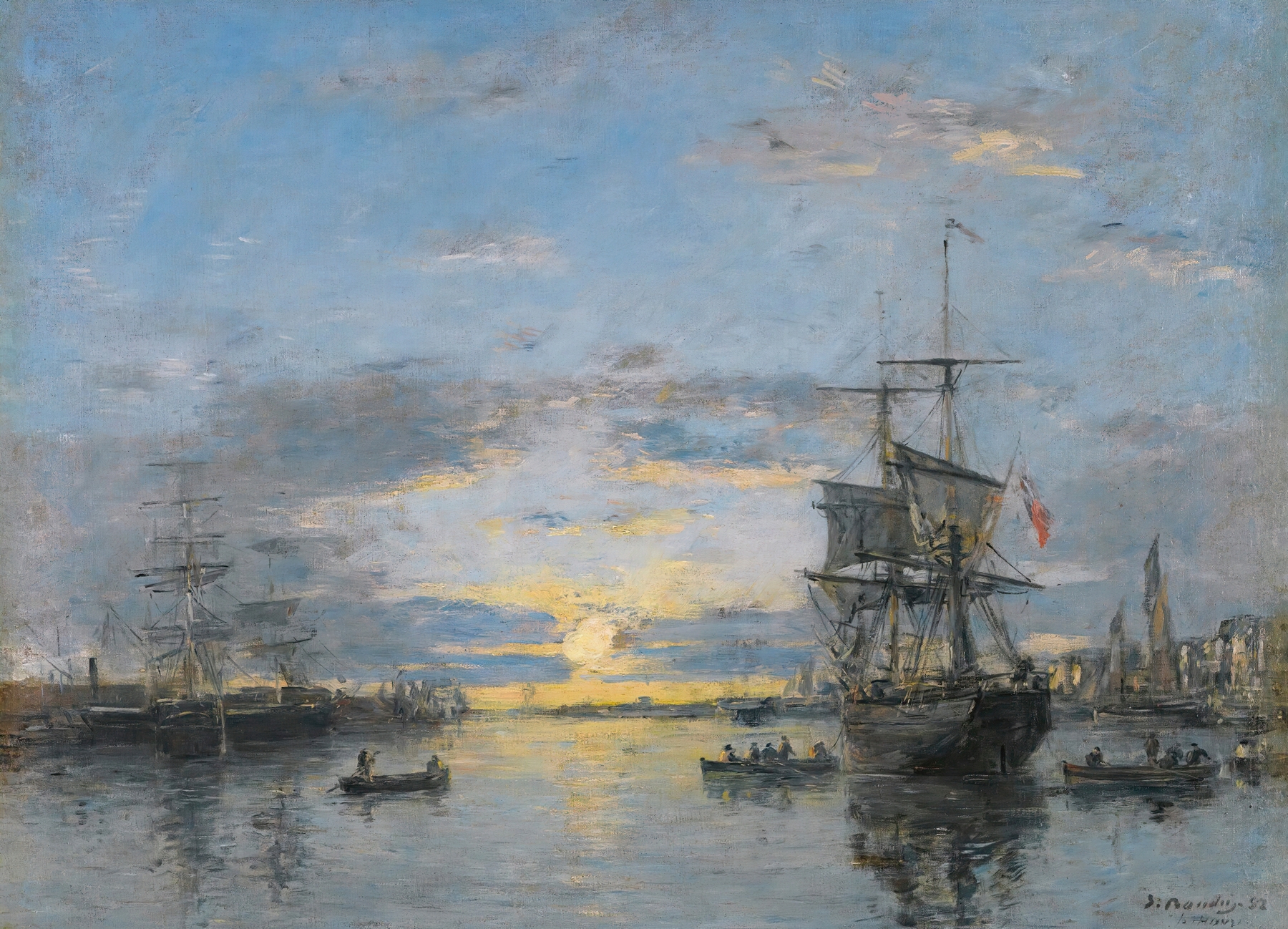
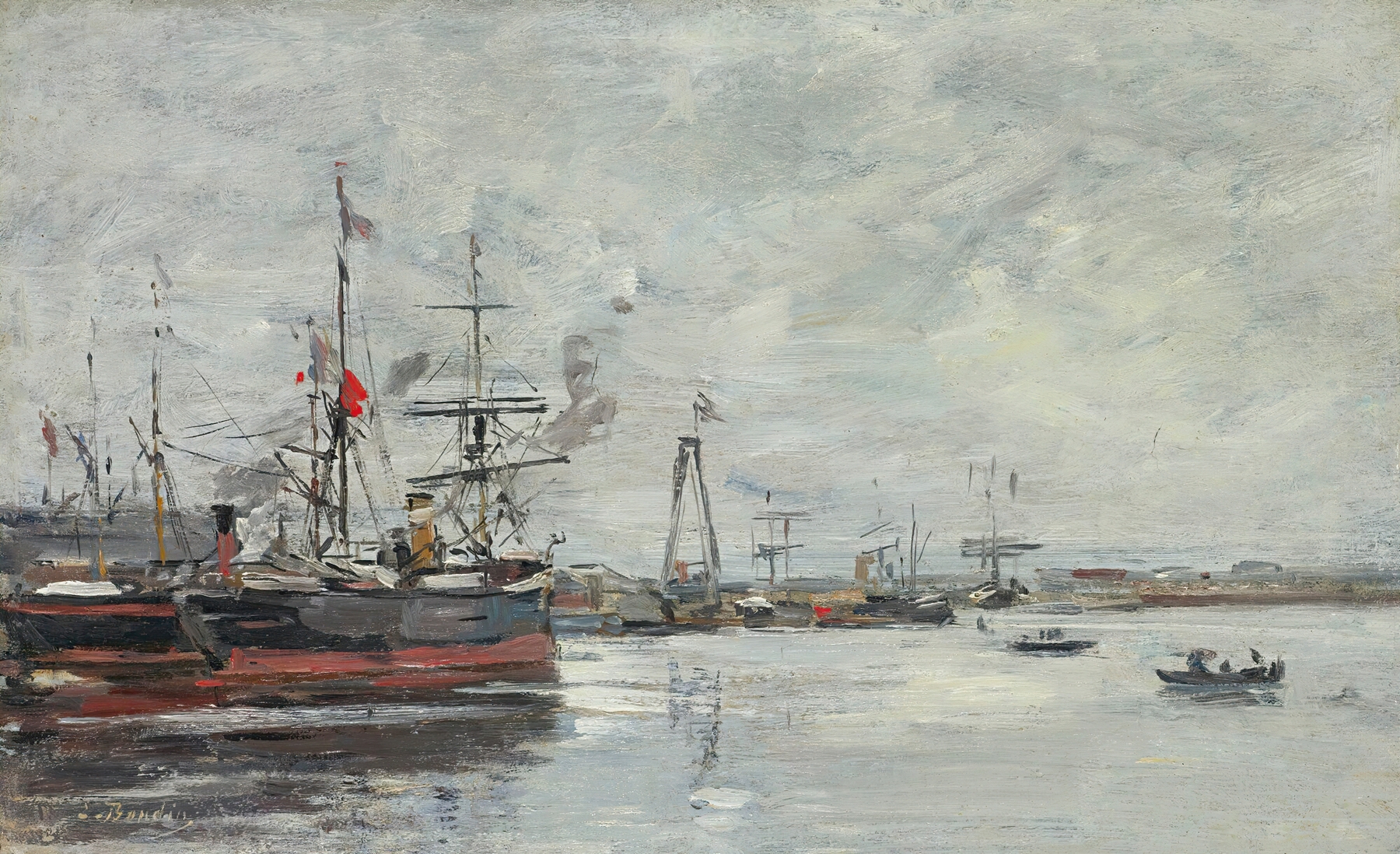
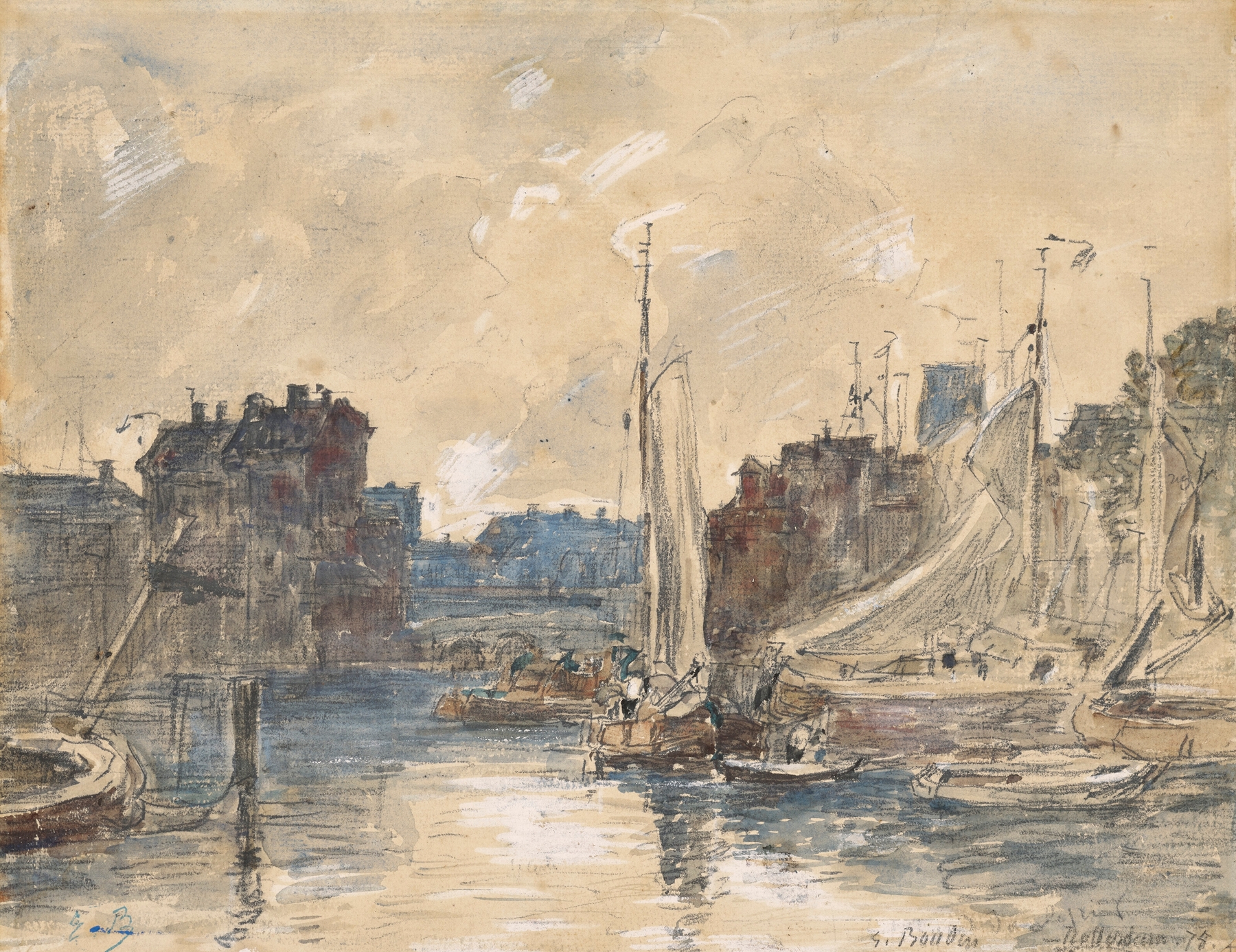
Can beauty exist without sorrow? The gentle waves reflect the bustling activity of the harbor, a delicate dance between commerce and chaos, inviting contemplation of the heart's complexity. Focus first on the foreground, where fishermen in modest boats unload their catch against a backdrop of bustling docks and distant ships. Notice how the light filters through the clouds, casting a soft glow over the scene, highlighting the figures with a tender touch.
Boudin’s palette, rich with earthy browns and vibrant blues, breathes life into both the water and the sky, creating a harmonious tension that envelopes the viewer. Beneath the surface, the painting whispers of duality—each figure engaged in their labor seems both hopeful and weary, a reflection of the human condition. The contrast between the stillness of the boats and the frenetic energy of the port suggests an underlying madness, where beauty coexists with strife. The gentle swells in the water carry the weight of untold stories, each wave a reminder of the fleeting nature of joy amid the toil of daily existence.
In 1875, while painting Port de Rotterdam, Eugène Boudin was immersing himself in the vibrant life of the French coastal scene. His career was marked by a deep appreciation for the interplay of light and atmosphere, and this work embodies his fascination with maritime activities. As an early pioneer of plein air painting, he was part of a broader movement that sought to capture the essence of landscape and life, laying the groundwork for future Impressionists.