Portret van Erasmus — History & Analysis
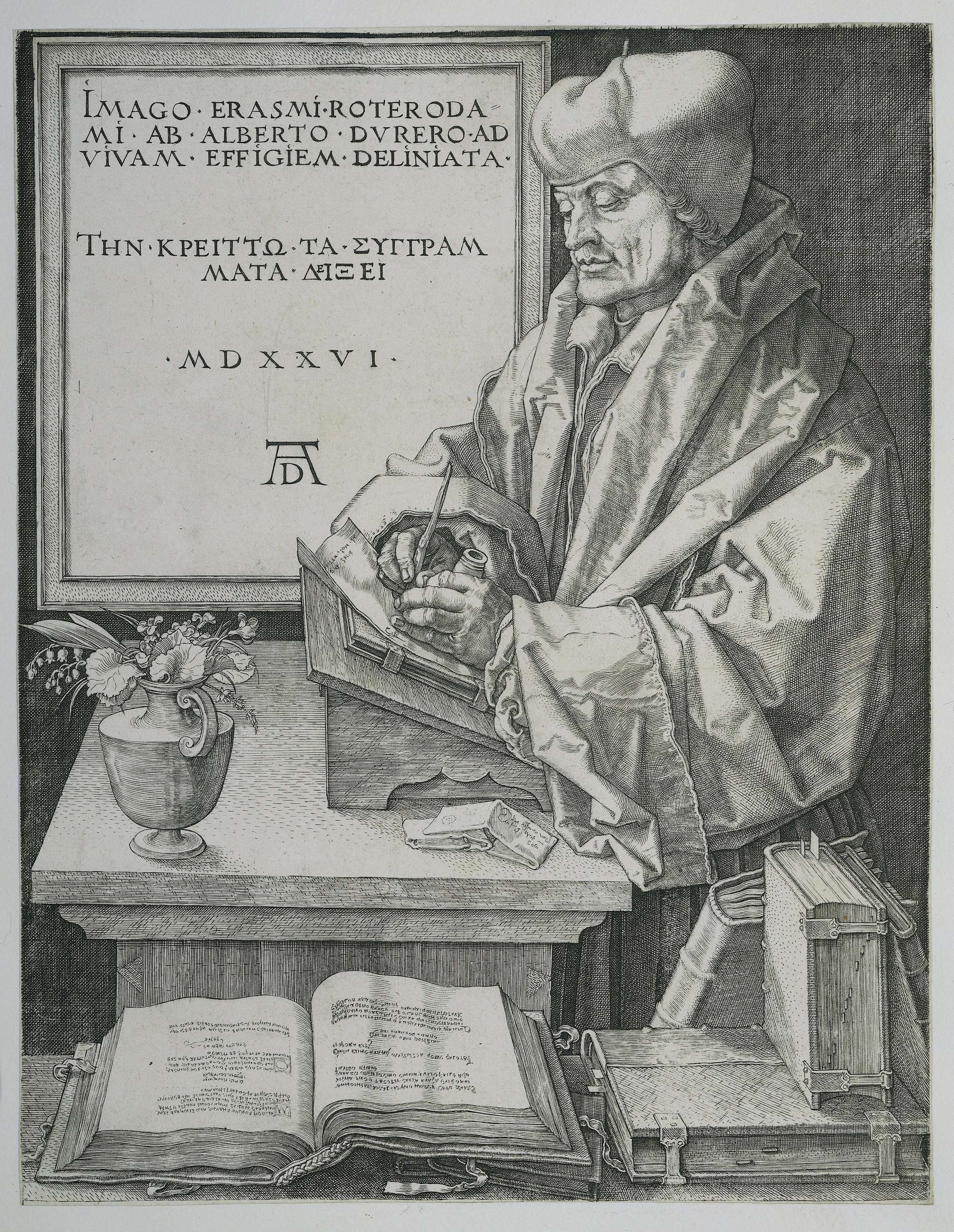
“Art reveals the soul when the world turns away.” In the stillness of Portret van Erasmus, a profound emptiness resonates, inviting viewers to engage with the depths of human intellect and vulnerability. Look to the left at the solemn expression on Erasmus's face, his eyes piercing through time with an unwavering gaze. Notice how the light softly illuminates his fur-lined robe, contrasted against the dark, muted background, drawing your attention toward his contemplative presence. The intricate details of the fabric and the gentle shadows on his skin emphasize the artist’s meticulous technique, while the warm hues evoke a sense of intimacy and warmth, celebrating the essence of this remarkable thinker.
Beneath the surface, the painting speaks to the tension between enlightenment and isolation. Erasmus, a pivotal figure of the Renaissance, appears as both a scholar and a solitary man, lost in thoughts that seem to echo in the empty space surrounding him. The absence of physical adornments or distractions in the composition reinforces a sense of introspection, highlighting the paradox of intellectual brilliance amidst personal solitude—a reflection on the burdens of knowledge and the longing for connection.
Created in 1526, Dürer painted this portrait in Nuremberg, a time when he was deeply engaged in exploring humanism and its implications on art and society. The Renaissance was blossoming, and artists were increasingly focused on individualism and the human experience. Dürer, burdened by personal tragedies and the shifting tides of his art world, sought to capture not just the likeness of Erasmus, but the very essence of his thoughts, forging a timeless dialogue between the viewer and the portrait.