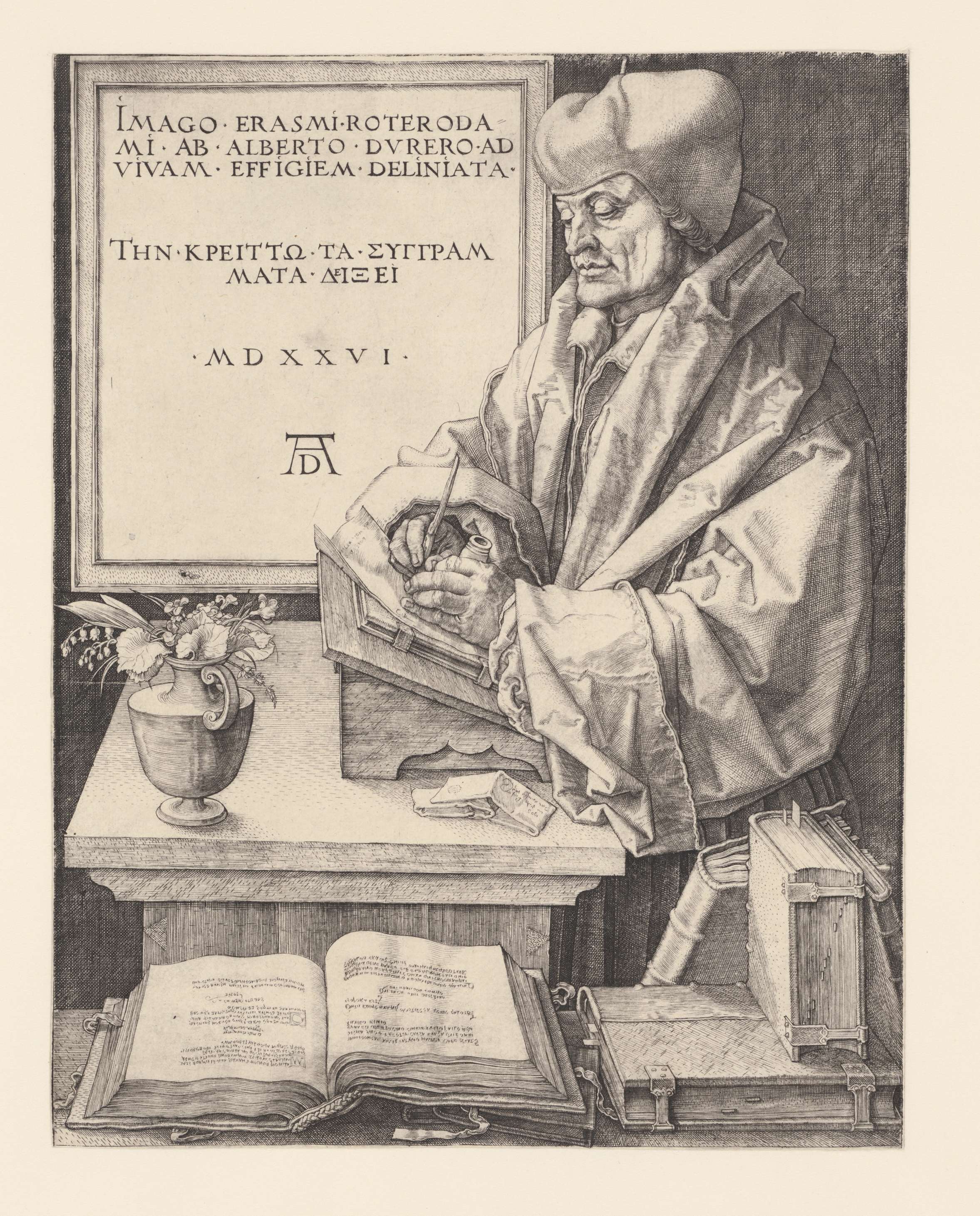
Who listens when art speaks of silence? In *Portret van Erasmus*, a profound stillness hangs in the air, inviting contemplation of beauty and intellect intertwined. Focus first on the piercing gaze of Erasmus, the humanist scholar, who seems to transcend the canvas. Notice how Dürer skillfully captures the texture of his garments, with deep, rich colors that suggest depth and gravity. The soft light falls across his face, accentuating the delicate details of his features and the subtle lines that tell of wisdom and experience. Each brushstroke has been meticulously crafted, drawing our eyes to the contemplative expression that speaks volumes despite the absence of sound. Yet, beneath this serene exterior lies a tension between the scholar’s intellectual pursuits and the societal turbulence of his time. The dark background isolates Erasmus, highlighting his isolation in thought, while also suggesting the weight of the Reformation era—a time of shifting beliefs and contradictions. The juxtaposition of light and shadow in the portrait symbolizes the duality of knowledge: its brilliance and its burdens. One can sense the beauty in his wisdom, yet there is also a palpable sorrow in the solitude that often accompanies such pursuit. Dürer painted this work in 1526, during a pivotal period in both his life and the world of art. Having established himself as a master in Nuremberg, he was deeply engaged in the humanist ideals that shaped Renaissance thought. The painting reflects his dialogue with the intellectual currents of the time, as he sought to elevate portraiture to a form of intellectual and spiritual expression.