Portret van Frederik III de Wijze, keurvorst van Saksen — History & Analysis
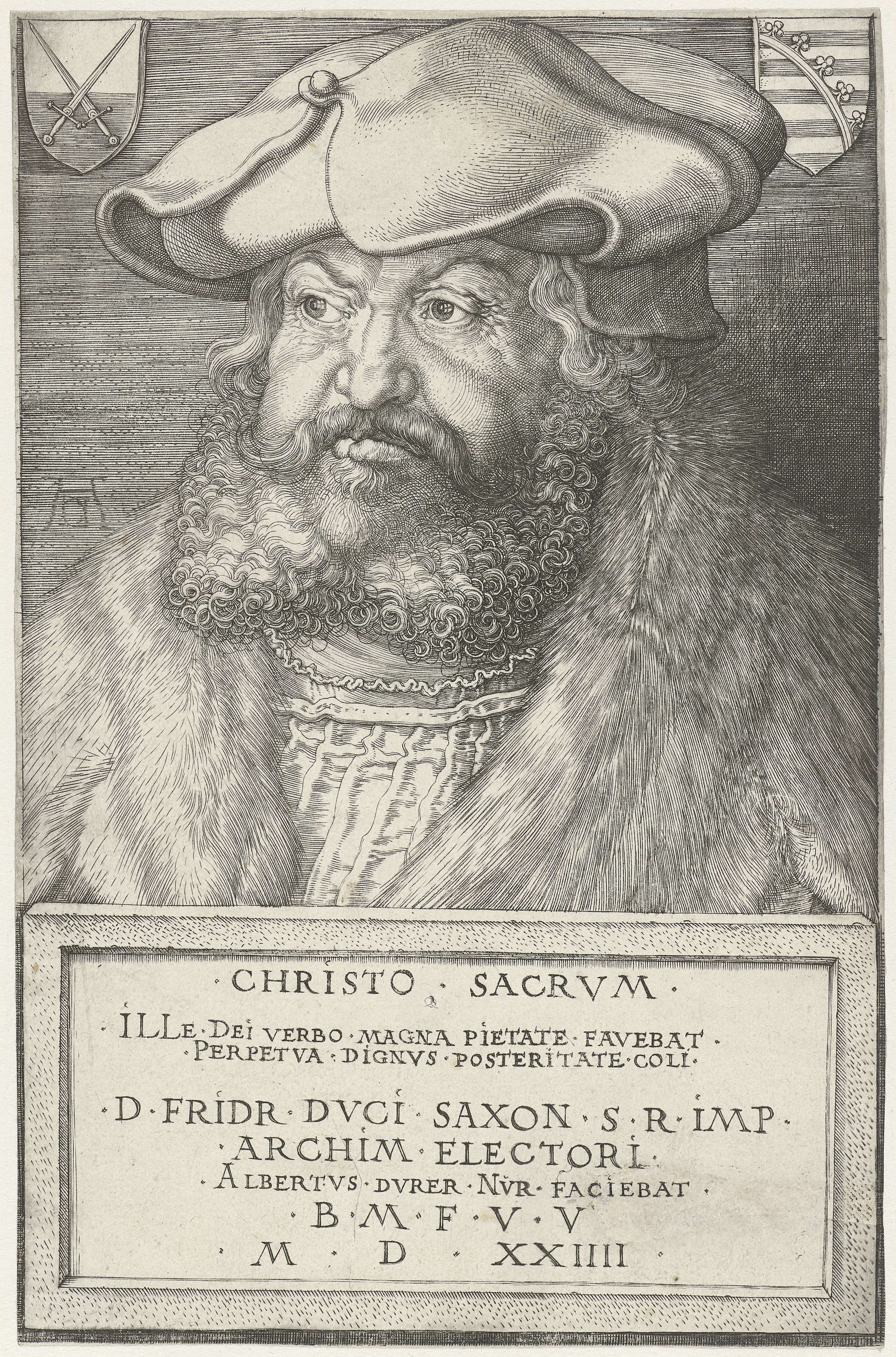
“Every silence here is a confession.” In the stillness of Portret van Frederik III de Wijze, keurvorst van Saksen, the air hangs thick with an unspoken obsession — a fixation on lineage, power, and the weight of legacy. Look closely at the eyes of the subject, where Dürer’s meticulous brushstrokes give life to a gaze that holds both authority and introspection. Notice how the light falls softly on the left cheek, illuminating the contours of Frederik's face, while shadows deepen the furrowed brow, hinting at burdens unshared. The rich, dark robe envelops him, its texture so palpable you can almost feel its weight, symbolizing the heavy mantle of governance and expectation he bears.
Delve deeper into the contrasting elements: the regal attire juxtaposed with the subdued expression conveys a tension between the public persona and the inner turmoil of the elector. The subtle inclusion of the ornate background reminds us of the splendor of his status, yet the simplicity of his presentation reveals a man more concerned with the gravitas of his role than the trappings of power. This dichotomy speaks to a larger conflict in the human experience, where obsession with reputation often leads to isolation.
Dürer created this portrait in 1524, during a time of significant transition in Europe, marked by the Renaissance's flourishing ideals. Residing in Nuremberg, he was immersed in a vibrant art scene influenced by humanism and naturalism. As he painted Frederik, the political landscape was shifting with the rise of Protestant Reformation ideas, reflecting a growing tension in leadership and faith — themes that resonate deeply in the intricate portrayal of the elector before us.