Portret van hertog Willem van Kleef, Gulik en Berg, graaf van Mark, heer van Ravenstein te paard — History & Analysis
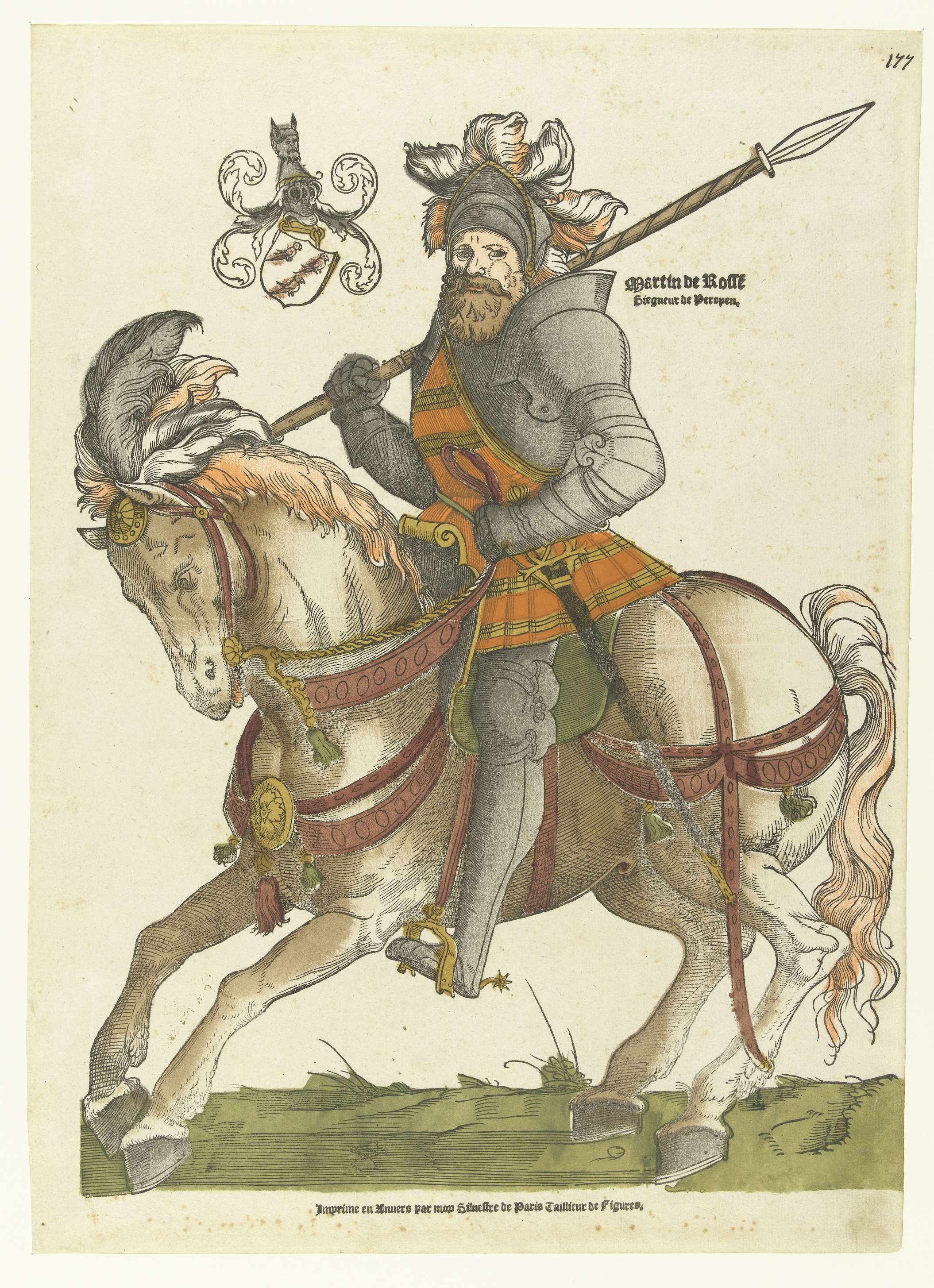
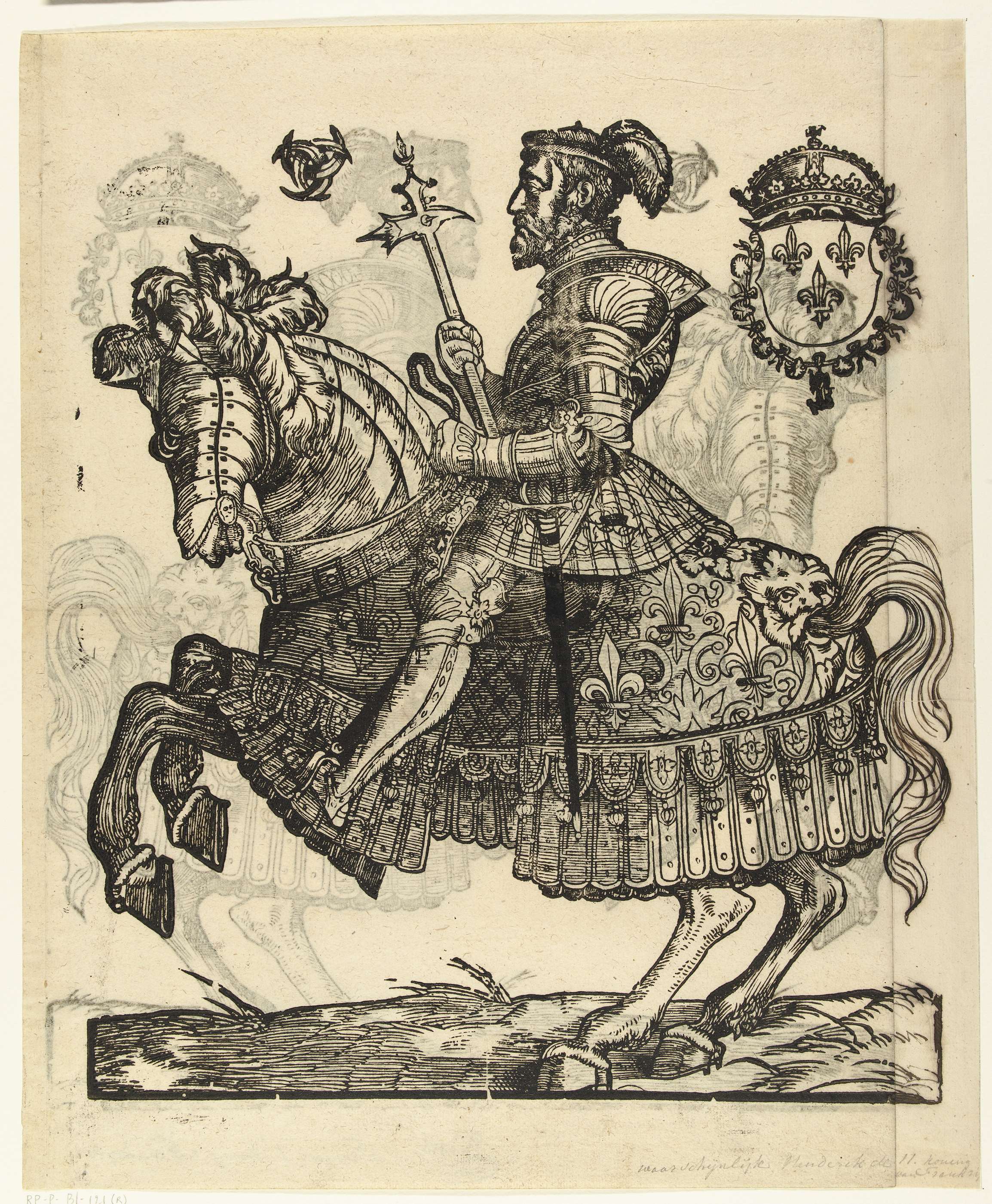
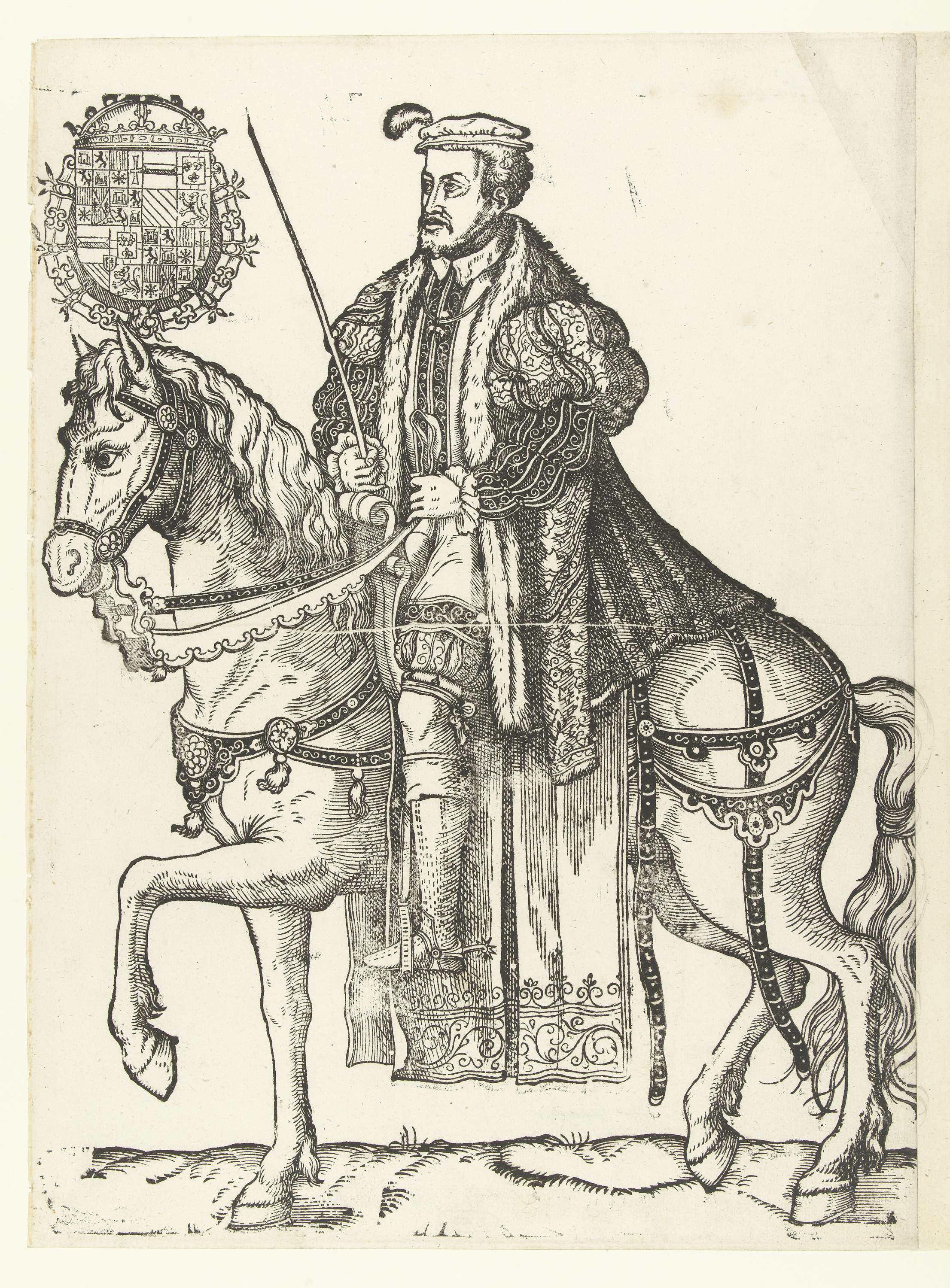
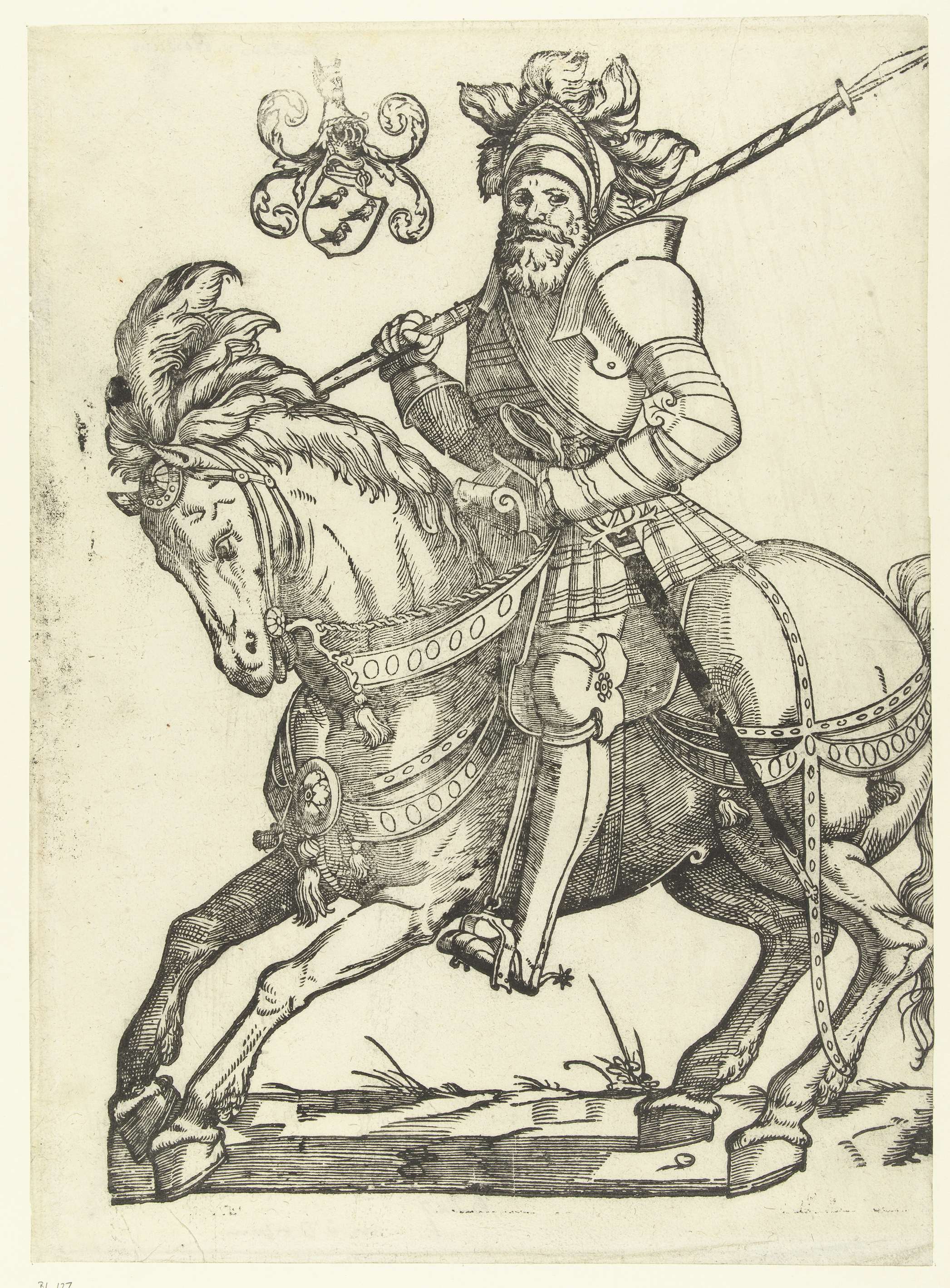
Where does light end, and longing begin? In the stillness of Portret van hertog Willem van Kleef, Gulik en Berg, graaf van Mark, heer van Ravenstein te paard, the answer whispers through layers of paint and shadow. The figure of the duke, poised astride his noble steed, suggests an elegance that hints at untold stories of loyalty and betrayal. Look to the left at the majestic posture of the horse, its muscular form glistening in hues of deep browns and blacks, grounding the composition with strength. The duke sits tall in his elaborate armor, the intricate details shimmering under a soft, golden light that frames his face with an ethereal glow.
Focus on the delicate embroidery of his garments, crafted with precision, hinting at his status and the wealth he represents. The background fades into a soft, muted landscape, drawing attention back to the regal figure at its center. Beneath the surface glamour lies a tension of contradictions. The duke's confident stance suggests authority, yet his gaze looking off into the distance betrays a flicker of vulnerability—perhaps reflecting the weight of his responsibilities or an internal struggle. The contrast between the ornate details of his attire and the simplicity of the backdrop evokes a sense of isolation within his grandeur, illuminating the loneliness often intertwined with power and duty.
Cornelis Anthonisz. painted this portrait between 1538 and 1542, a period marked by political intrigue and shifting alliances in the Dutch territories. Working in Amsterdam, he captured the essence of a man who was not only a noble leader but also a figure navigating the tumultuous waters of betrayal and loyalty that characterized his era. Anthonisz., known for his ability to convey both strength and introspection, brings to life the complexity of a duke caught in the interplay between duty and personal longing.