Portret van Willibald Pirckheimer — History & Analysis
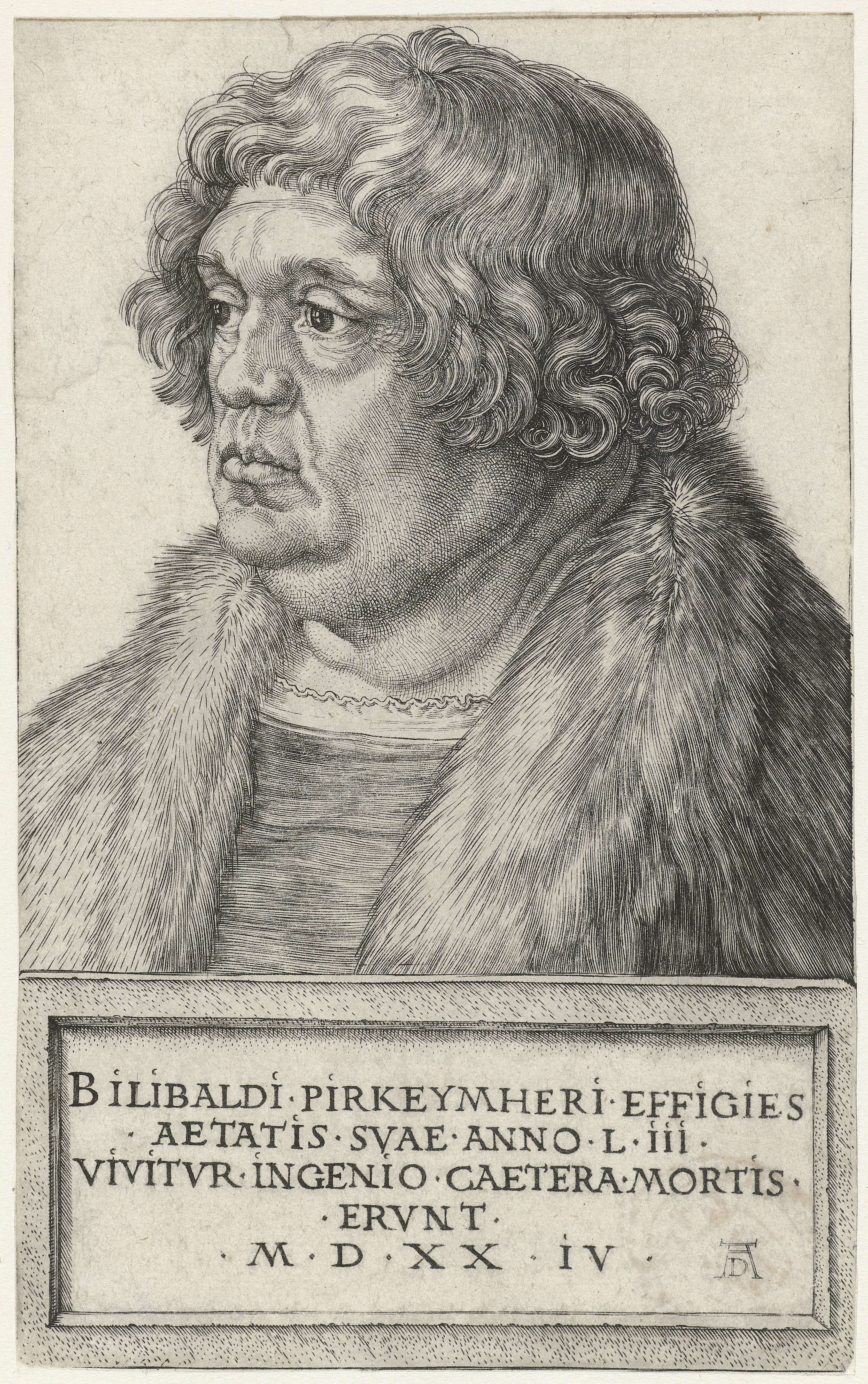
Can beauty exist without sorrow? In the work of Albrecht Dürer, this question resonates deeply, echoing through the meticulous strokes that define character and emotional depth. Look closely at the figure's gaze; the subject, Willibald Pirckheimer, stares out with a mixture of confidence and contemplation. The details in his finely embroidered robes, rendered in rich, earthy tones, draw the eye. Notice how the light delicately illuminates his features, highlighting the furrowed brow and the subtle lines around his mouth that speak of wisdom and experience. Dürer’s mastery of chiaroscuro imbues Pirckheimer with a tangible presence, as if he might step forth from the canvas. Yet, deeper meanings lurk beneath the surface. The portrait's somber palette hints at the complexities of human existence, suggesting an inner void, a silent struggle that contrasts with the apparent calm of Pirckheimer’s expression. The ornate, almost decadent attire juxtaposed with the weight of his gaze invites reflection on the nature of identity and the burdens of intellect. Dürer captures a moment of stillness, yet within it lies a narrative fraught with the heavy threads of history, ambition, and perhaps unfulfilled longing. Created in 1524, this portrait emerged during a prolific period for the artist in Nuremberg, where Dürer was deeply engaged with the intellectual currents of the Renaissance. This was a time of great personal and artistic introspection; the artist had recently returned from his travels in Italy, grappling with the influences of humanism and the emerging complexities of the world around him. The painting stands not only as a testament to Pirckheimer's significance but also as a reflection of Dürer's own search for meaning amidst the beauty of form.