Powiśle (Bank of the Vistula in Warsaw) — History & Analysis
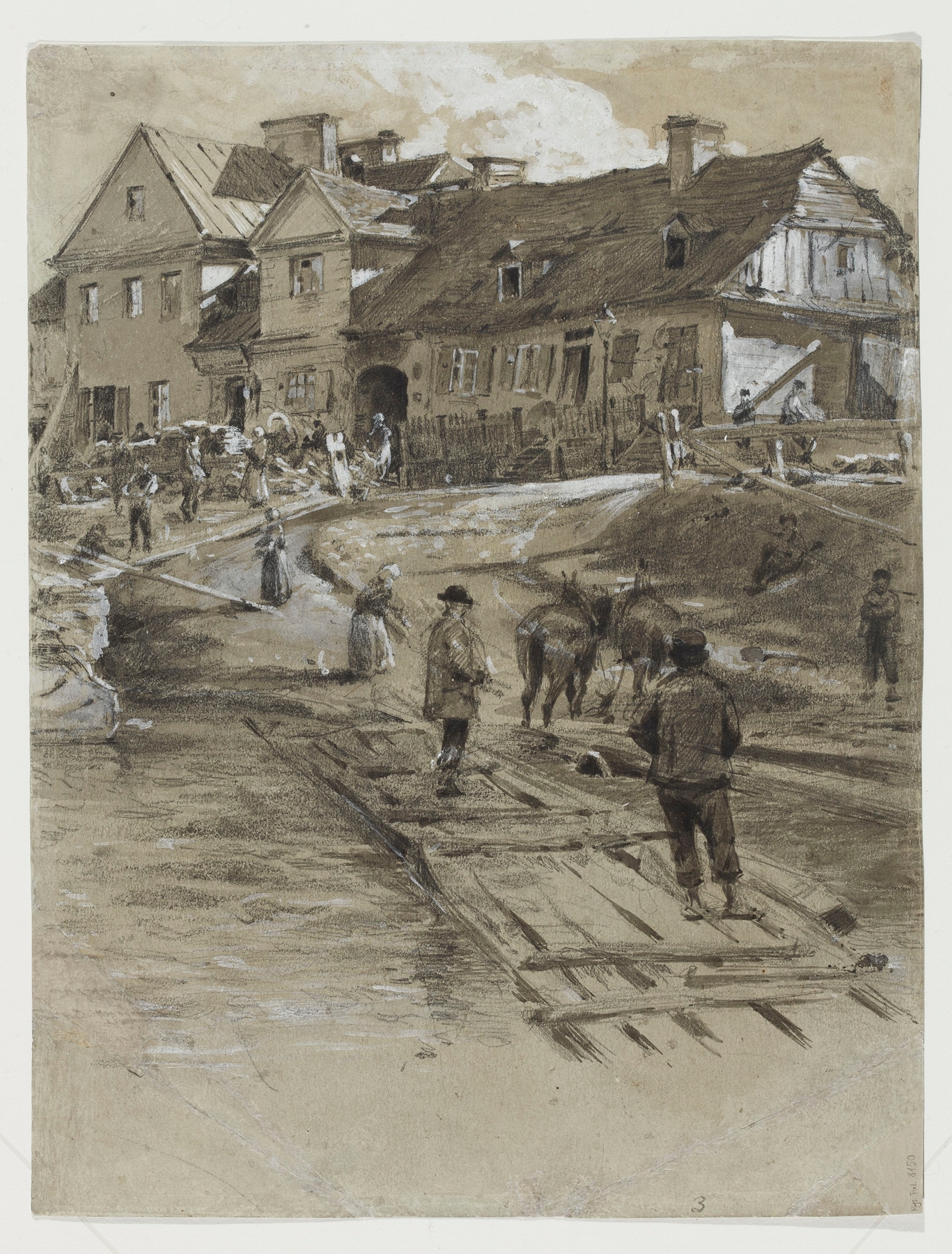
When did color learn to lie? In Powiśle, vivid hues capture a world teetering on the edge of sanity, portraying a landscape where reality blurs into the fantastical. Through the interplay of light and shadow, the canvas transforms into a dialogue between perception and madness. Focus on the bold strokes of blue and green that dominate the water, where the shimmering surface reflects a cacophony of colors.
Look to the left, where the industrious figures toil against the backdrop of the imposing bank, their movements almost frantic, suggesting an inner turmoil that resonates beyond their physical labor. The diagonal composition draws the eye towards the horizon, where a chaotic blend of urban life and nature converges, hinting at the complexities of society. Within the painting lies an emotional tension; the juxtaposition of the serene river and the laborious figures evokes a sense of struggle against an unforgiving backdrop. The serene colors paradoxically amplify the madness of existence, as if the beauty of the scene belies the chaos beneath.
Each stroke seems to question the viewer's own understanding of reality, beckoning them to explore the thin line between beauty and despair. In 1883, Aleksander Gierymski painted Powiśle while grappling with his own artistic vision in Warsaw, a city burgeoning with industrialization yet steeped in tradition. This period marked a significant evolution in his approach, moving towards a more expressive use of color and form as he sought to capture the raw essence of life. At the same time, the tumult of society left its mark on his work, echoing the broader shifts in the art world as modernity began to shape new narratives.