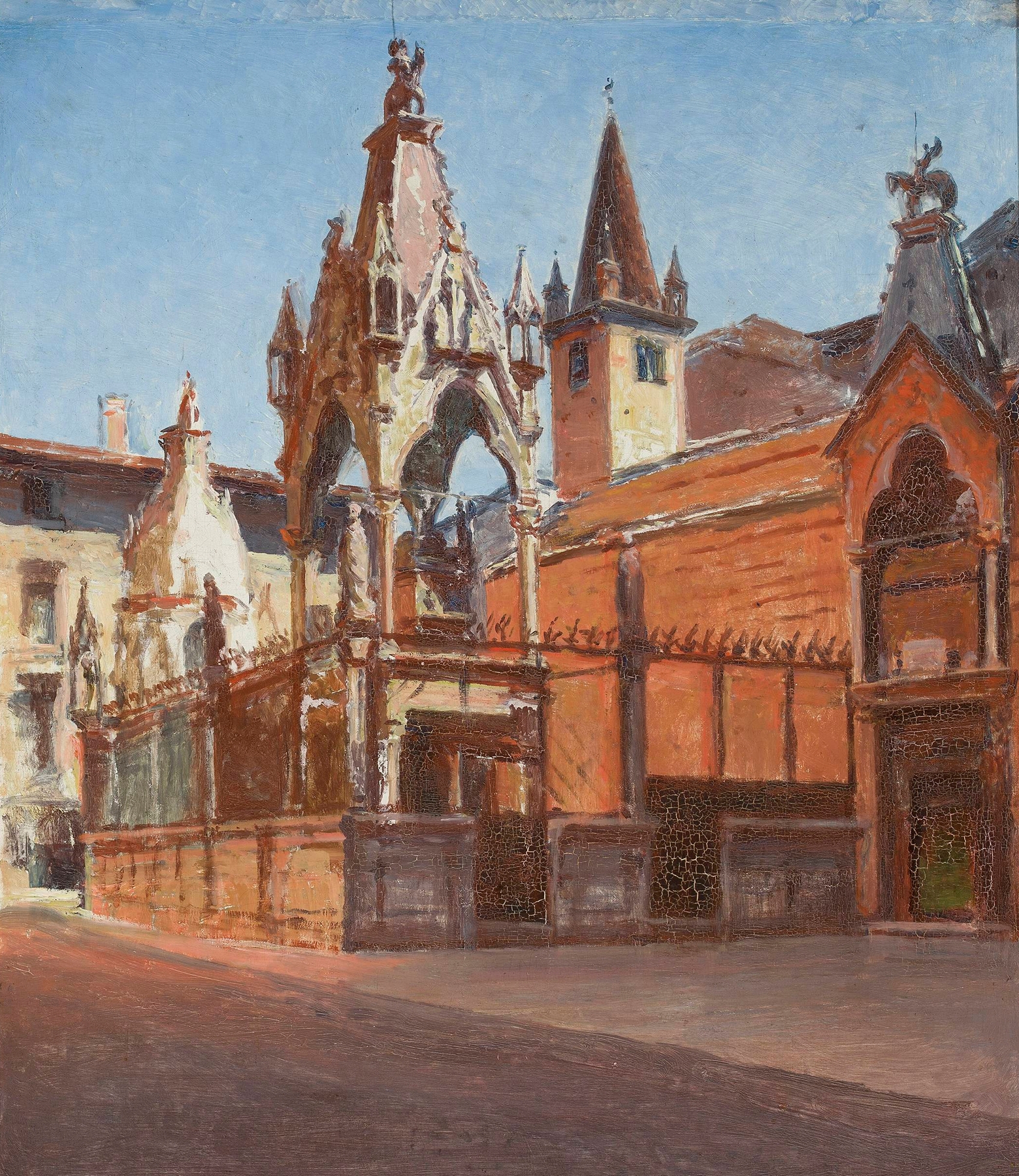
Piazza di Dante in Verona — History & Analysis
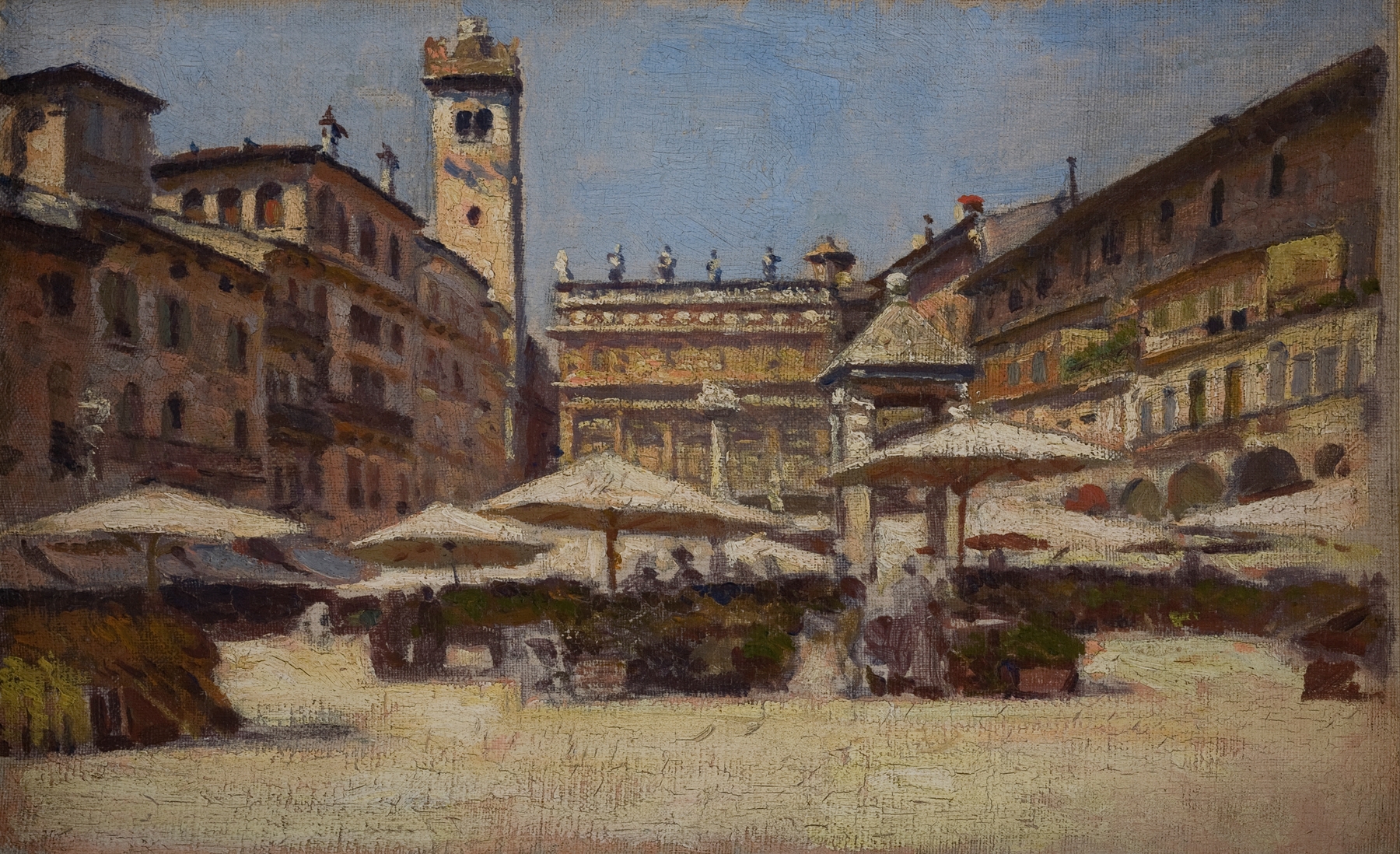
“Under the brush, chaos becomes grace.” In the heart of a bustling city, the canvas breathes life into the awakening moments of everyday existence. The viewer is invited to step into a world where art captures the pulse of life, revealing the beauty hidden in the ordinary. Look to the left at the interplay of light and shadow, where the warm golden hues dance upon the weathered stones of the piazza. The figures, caught in conversation and movement, guide your gaze through the composition with their dynamic poses and subtle gestures.
Notice how the artist employs a muted yet rich color palette, evoking the warmth of a late afternoon sun that beckons passersby to linger just a moment longer. Hidden in the details, the viewer can sense the contrasting emotions of the scene: the joy of laughter juxtaposed with the solemnity of the ancient architecture. The slight tilt of a hat or the flicker of a hand signals a deeper connection among the figures, hinting at stories untold. This complex web of interactions and the vibrant atmosphere reflect not only a social moment but also an intimate snapshot of life’s delicate balance between chaos and harmony.
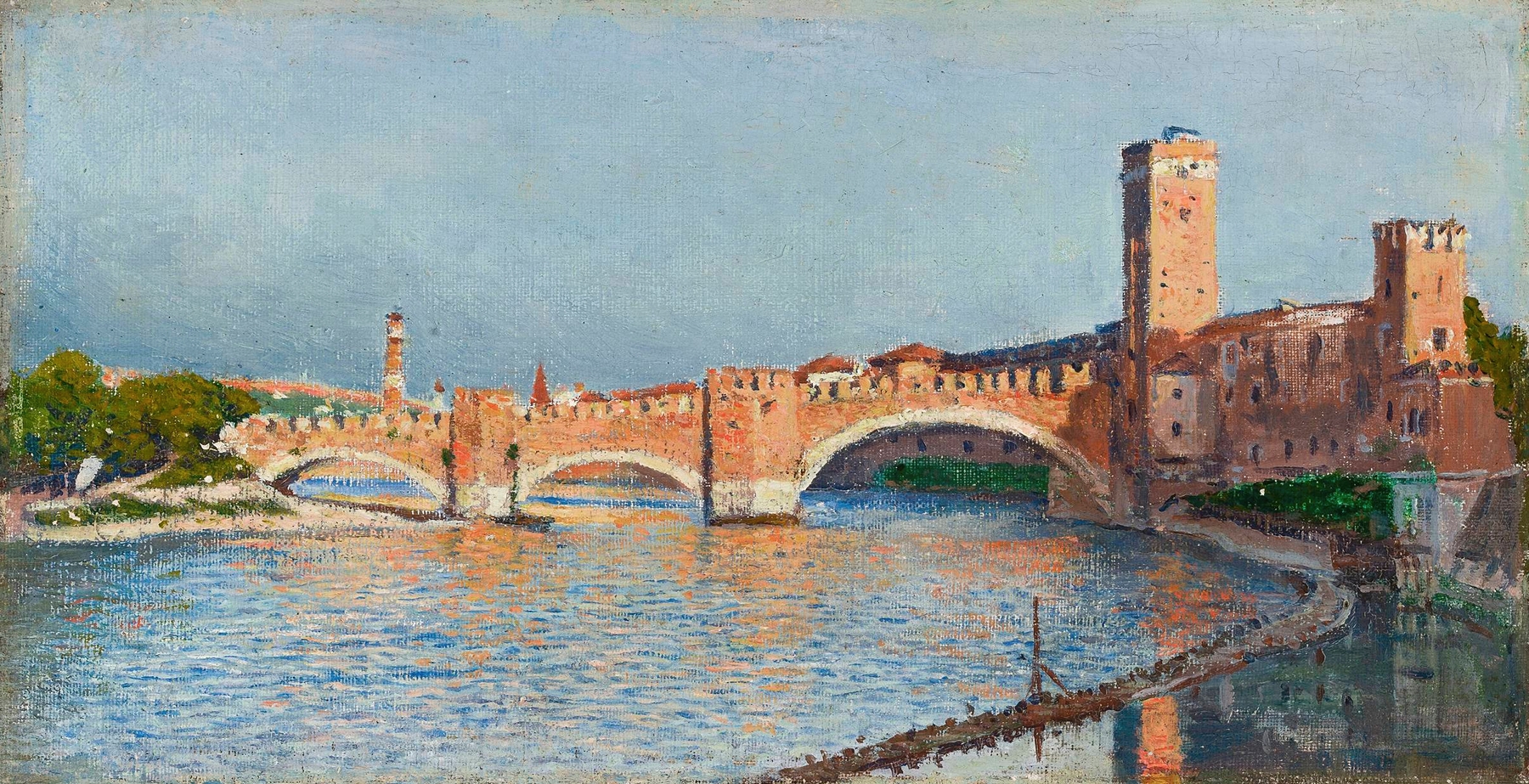
In 1901, Gierymski painted this piece in Verona, where he was inspired by the city’s rich cultural tapestry. At this time, he was navigating the challenges of establishing his reputation while deeply engaged with the Impressionist movement’s influence. His dedication to capturing the essence of urban life laid the foundation for a unique artistic voice, bridging the styles of his predecessors with his own evocative interpretations.