Scaliger Tombs in Verona — History & Analysis
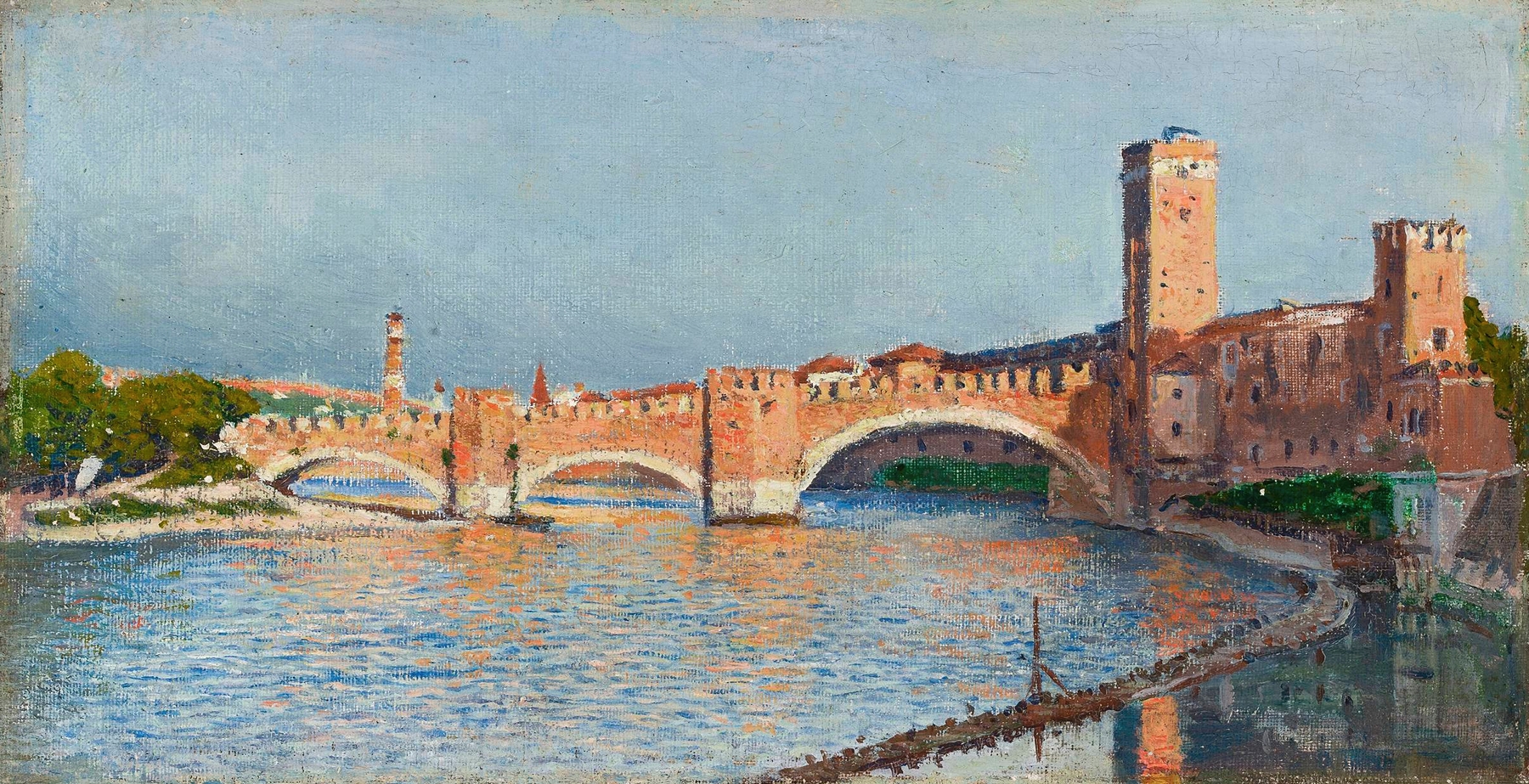
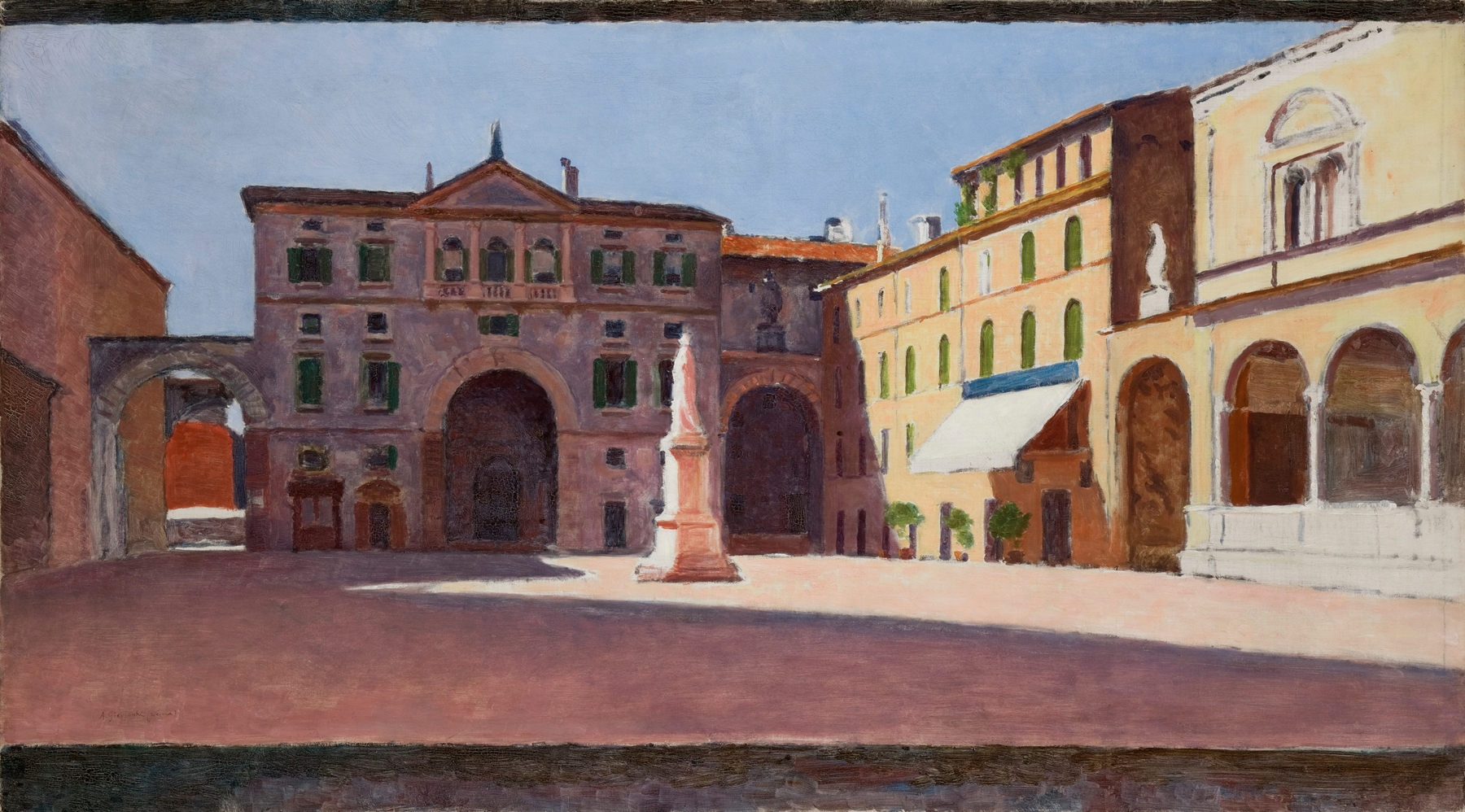
Could a single brushstroke hold eternity? In the delicate stillness of Scaliger Tombs in Verona, silence envelops the viewer, inviting contemplation of time and memory. Look to the center of the canvas, where the majestic Gothic tombs rise like whispered secrets against a fading sky. The artist employs a muted palette of grays and blues, allowing the intricate sculptures to emerge from the shadows. Notice how the light dances across the stone, illuminating fine details while casting deeper shadows, creating a rich interplay of form and texture.
The careful composition draws the eye upward, replicating the soaring architecture and evoking a sense of awe. Yet, beyond the grandeur lies a poignant contrast of life and death. Each figure carved into the tomb not only honors the deceased but also speaks to the ephemerality of existence. The silent guardians of history embody the weight of time, capturing that fleeting moment where beauty meets sorrow.
This tension resonates throughout the work, suggesting that though life may fade, art preserves its essence in eternal stillness. In the summer of 1900, Gierymski found himself in Italy, deeply influenced by the atmospheric quality of light and shadow that permeated the landscapes. At this time, he was immersed in a cultural movement that valued realism and emotive depth, seeking to reflect the profound connections between humanity and its historical legacies. His exploration of these tombs was not merely an artistic endeavor; it was a personal meditation on memory, heritage, and the passage of time.