Prospect reservoir — History & Analysis
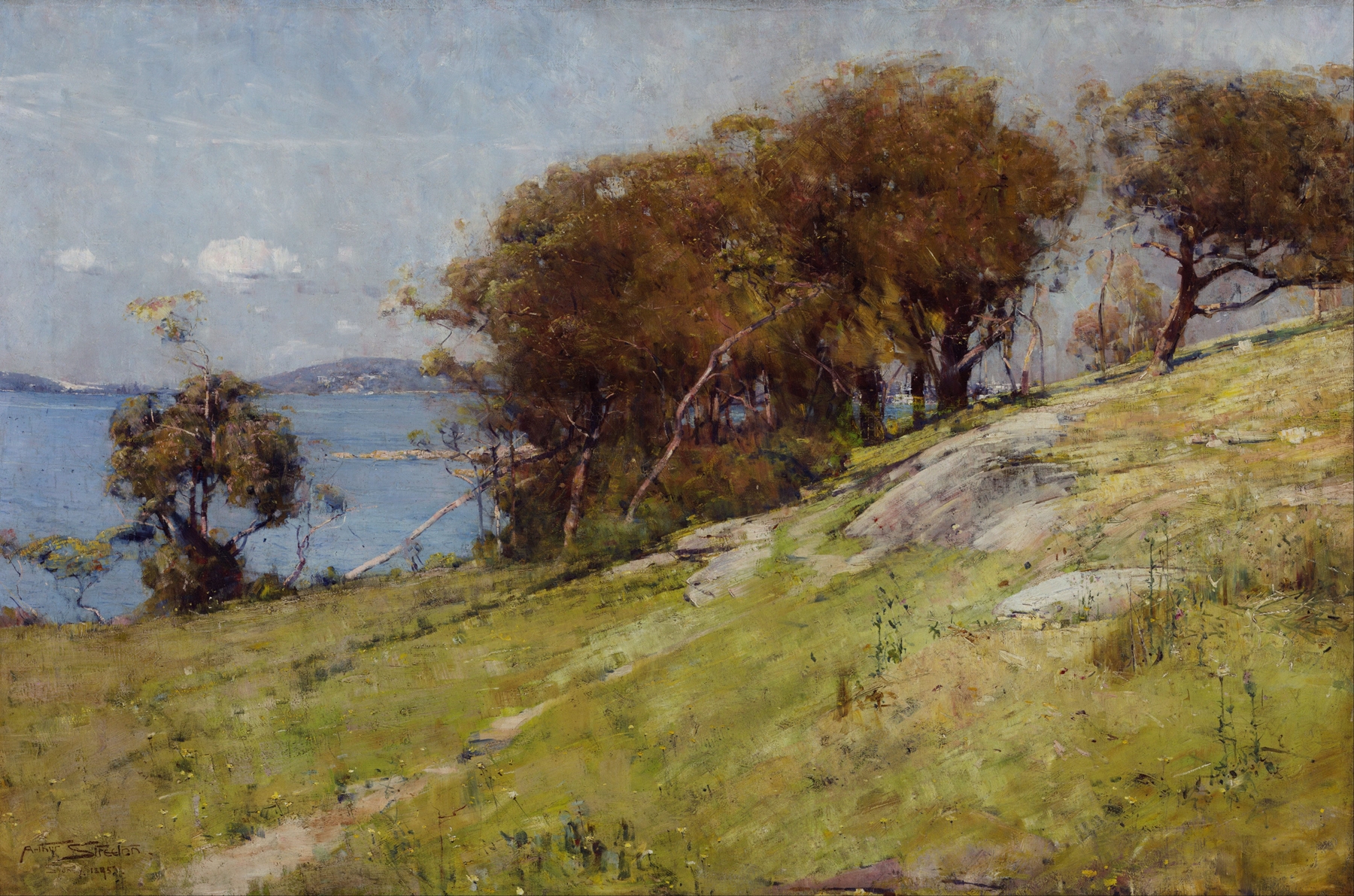
Did the painter know this moment would outlive them? In Prospect Reservoir, the essence of beauty is captured in hues of blue and gold that seem to conspire against the passage of time itself. Look to the left, where the shimmering waters of the reservoir stretch out, reflecting a sky brushed with delicate clouds. Notice how the light dances across the surface, creating a vibrant interplay of color. As your gaze travels to the right, the lush greenery seems to cradle the water, the subtle gradients of green and yellow suggesting the warmth of a sun-drenched afternoon.
Every stroke of the brush invokes not only the physicality of the landscape but also the atmosphere, inviting the viewer to linger in this tranquil embrace. In the foreground, wildflowers sway gently, their vibrant petals contrasting with the cool tones of the water. This juxtaposition symbolizes the fleeting beauty of nature, a reminder of life’s transience amidst its splendor. The composition, with its balance of light and shadow, evokes a sense of harmony and peace, yet whispers an underlying tension — the inevitability of change.
Each element is a note in a larger symphony, compelling us to reflect on our place within this vast tapestry. Arthur Streeton painted Prospect Reservoir in 1895 while residing in Australia, amidst a burgeoning Impressionist movement. During this period, he sought to capture the unique Australian landscape, aiming to reflect both the beauty of nature and the changing light conditions. His work came at a time when the nation was exploring its identity, and this piece exemplifies Streeton’s commitment to portraying the serene elegance of his homeland.