Rocky Coastline, Cornwall — History & Analysis
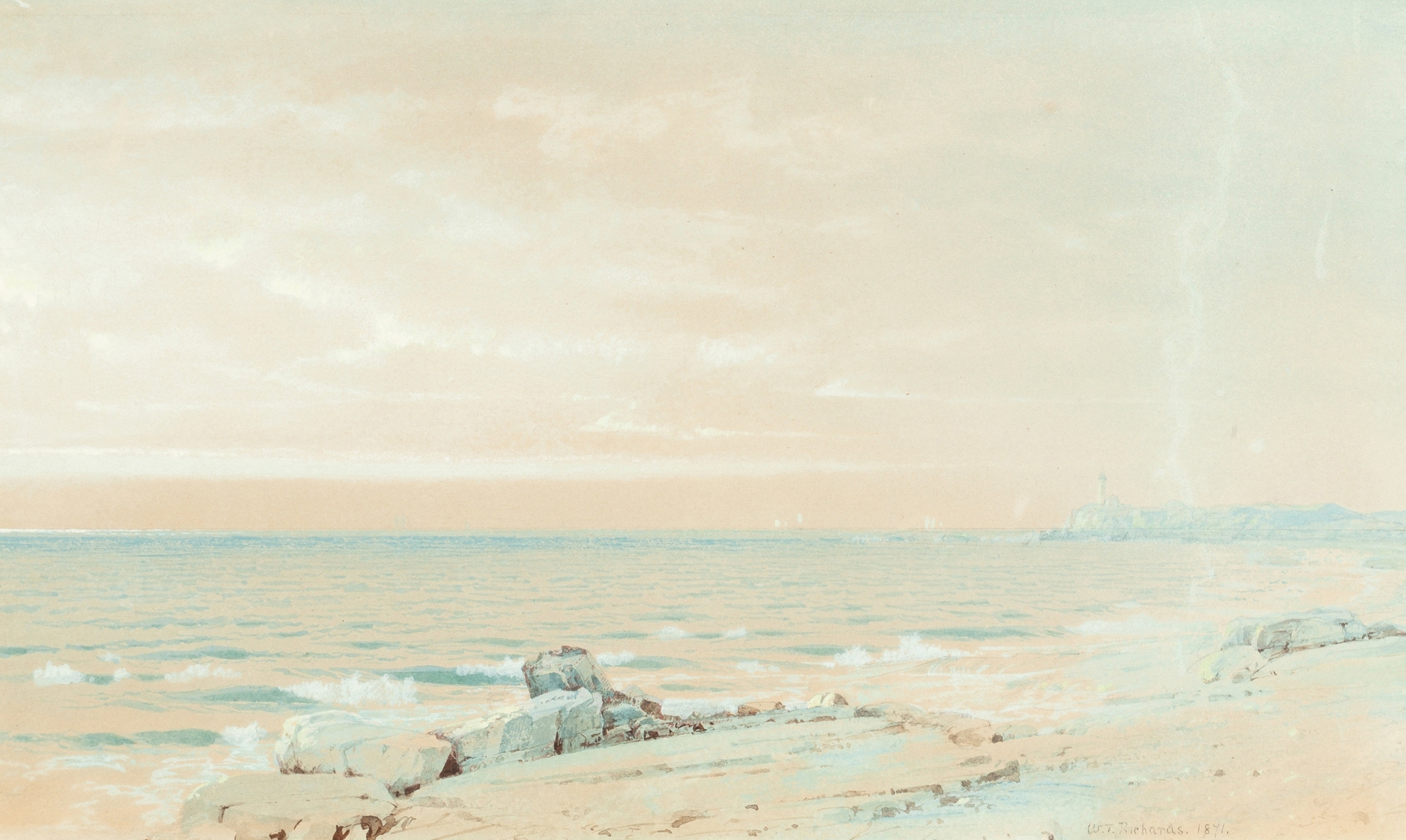
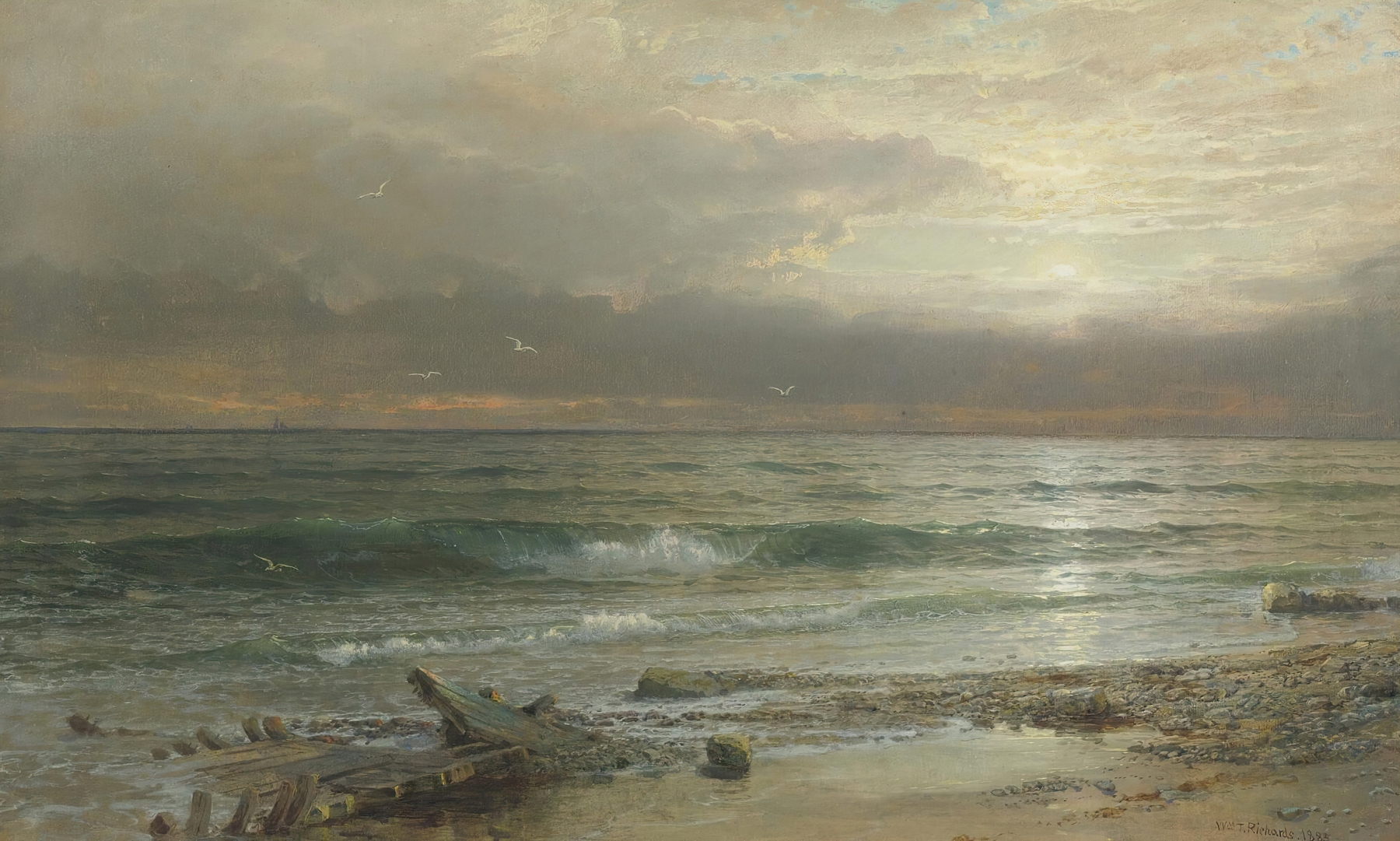
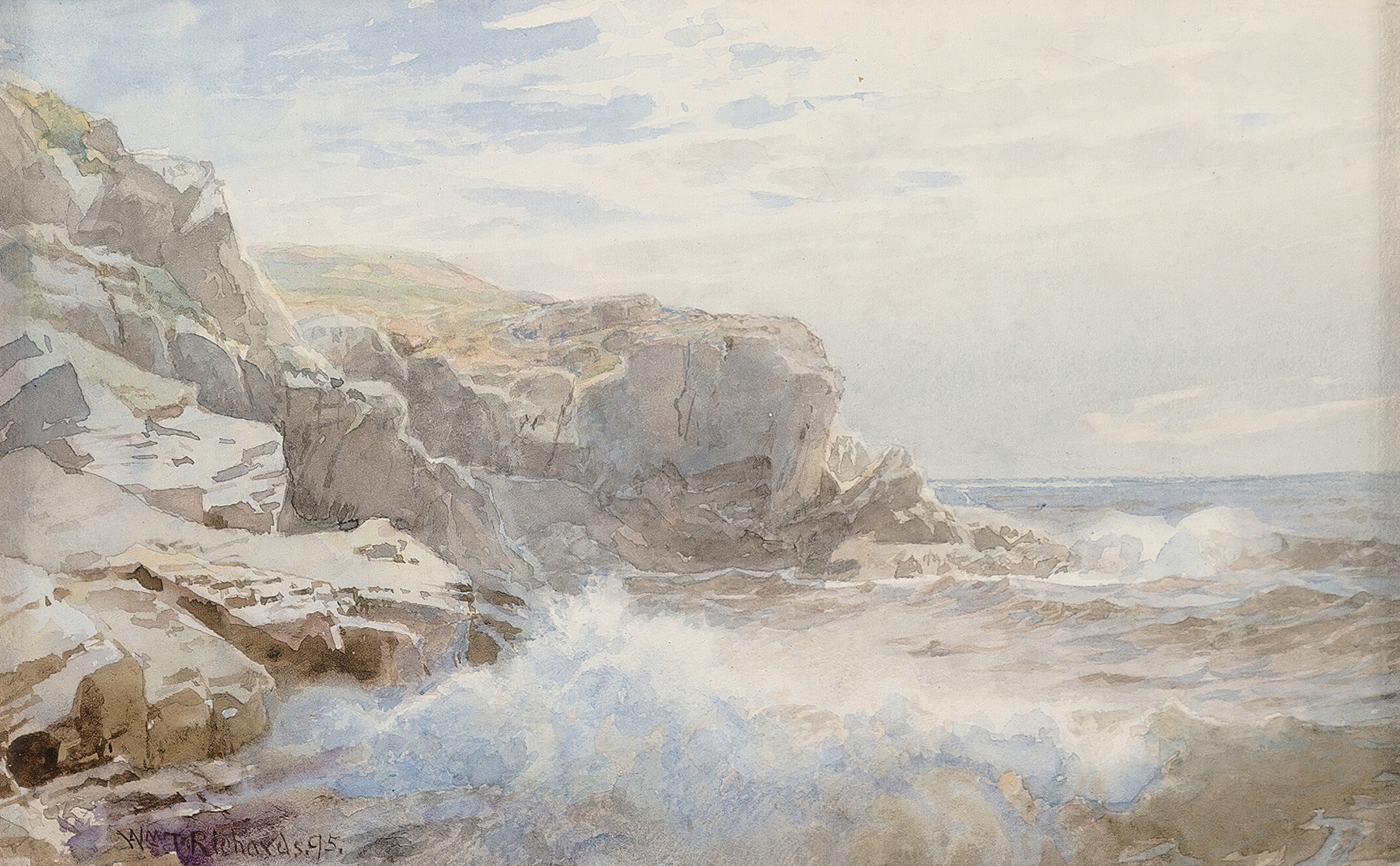
Where does light end, and longing begin? In William Trost Richards' Rocky Coastline, Cornwall, the viewer is invited to explore the ecstatic interplay of nature and emotion. Look to the left at the jagged cliffs, their rough-hewn surfaces catching the midday sun, which bathes them in a warm, golden hue. The crashing waves below create a dynamic contrast, with foamy white crests that echo the tumult of the ocean. Notice how the artist employs a rich palette of blues and greens, creating a sense of depth and movement, as if the very air pulses with vitality.
Each stroke delineates not just the physical landscape but also a profound connection to the elemental forces at play. Delve deeper, and you'll find hidden tensions within the serene beauty. The rugged terrain suggests both the strength of nature and its unpredictable temperament, while the luminous skies hint at fleeting moments of tranquility. These contrasts evoke feelings of both solace and longing, as if the viewer stands on the brink of both awe and melancholy.
The painting captures the essence of ecstasy, revealing an eternal dialogue between the observer and the majestic coastal scene. In 1886, Richards painted this masterpiece in Cornwall, a region known for its dramatic coastline. At this time, he was an established figure in the American landscape painting movement, focusing on the sublime aspects of nature. The artist's life was marked by a commitment to capturing the raw beauty of the natural world, and this work stands as a testament to that dedication, reflecting the romantic ideals prevalent in both his life and the broader artistic context of the late 19th century.