Roman Market Scene in the Piazza Navona — History & Analysis
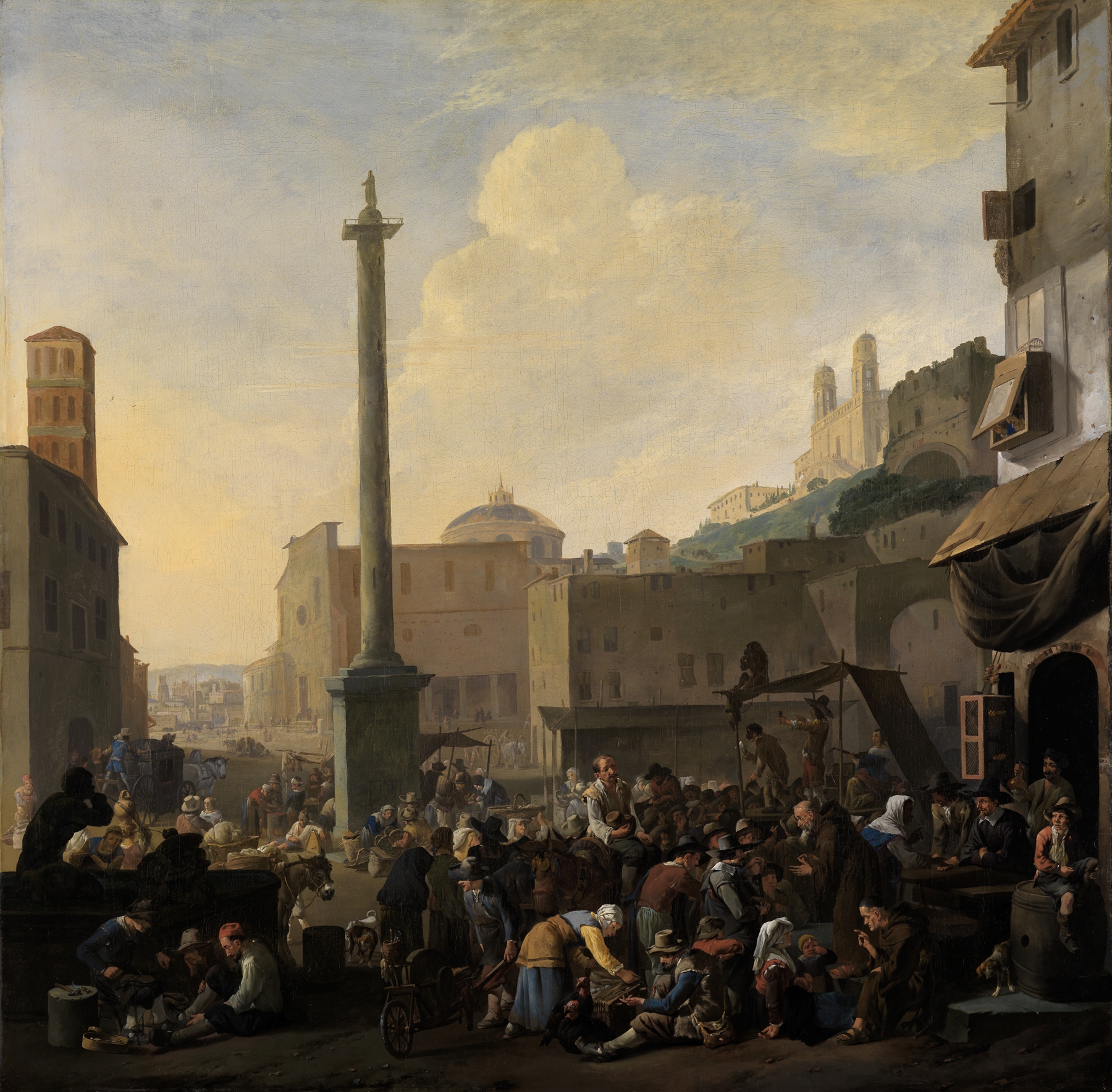
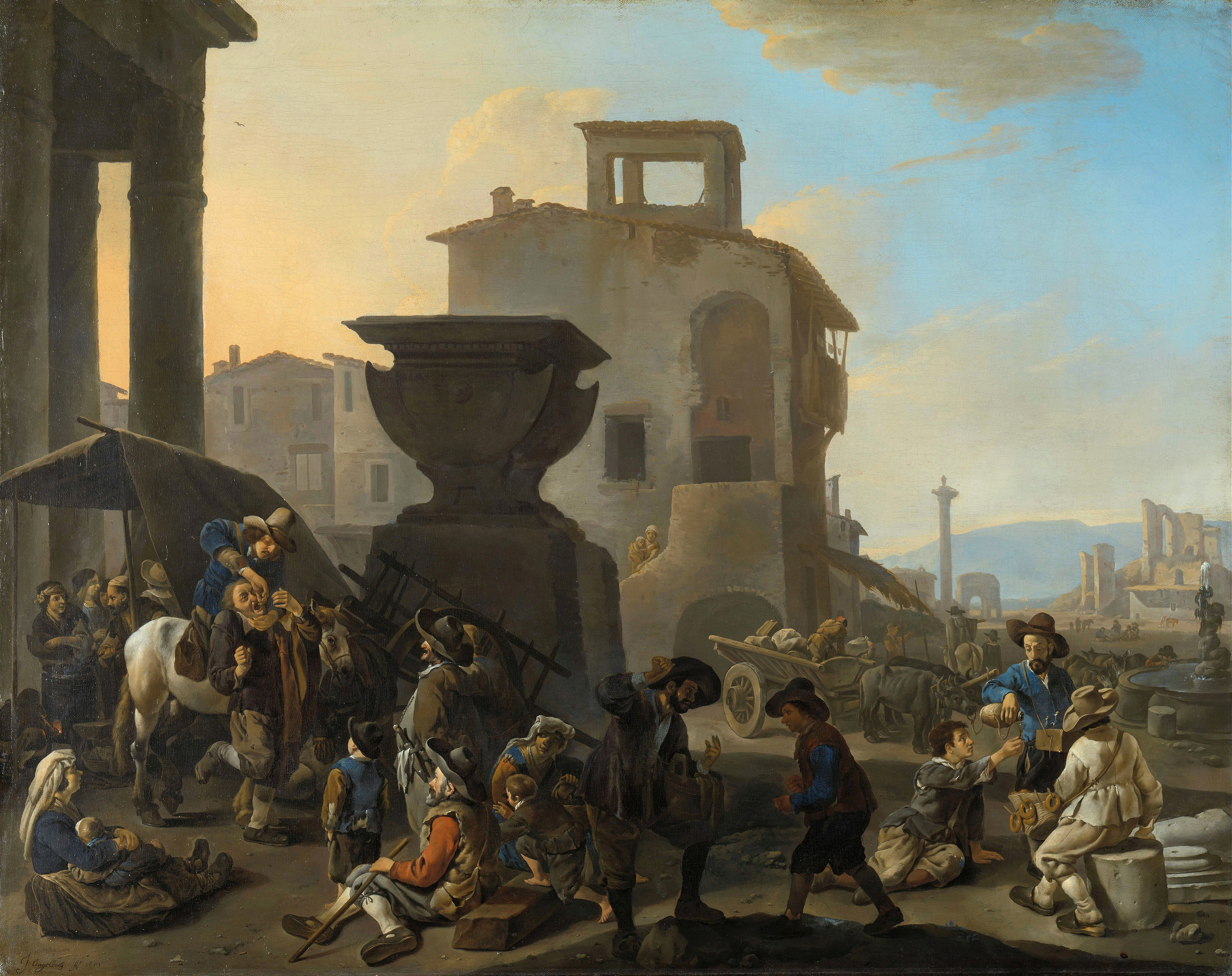
Who listens when art speaks of silence? In the vibrant chaos of Roman Market Scene in the Piazza Navona, the echoes of life and death intertwine, reminding us of our fleeting existence amid the bustling energy of daily life. Look to the center of the canvas, where merchants display their wares, a tapestry of color and movement. The glistening fruits and vivid fabrics draw the eye, each meticulously rendered, revealing Lingelbach's dexterity in capturing light and texture.
Notice how warm sunlight bathes the stalls, creating a stark contrast with the cool shadows that creep into the edges, symbolizing the thin line between vitality and mortality within the market's lively exchange. Beneath the surface of this seemingly joyful scene lies a poignant tension. The busy vendors and animated patrons may represent the vigor of life, yet the distant, partially obscured figures in dark clothing suggest loss and remembrance, encouraging viewers to reflect on those who are absent.
The vibrant atmosphere doesn't drown out the silence of stillness; instead, it amplifies the awareness of inevitable change, urging us to contemplate the ephemeral nature of existence. Johannes Lingelbach painted this work in Amsterdam during the late 1650s, a time marked by a flourishing Dutch art scene that celebrated both everyday life and its deeper meanings. As he navigated artistic success, Lingelbach found inspiration in the Italian market scenes he encountered, blending his observations with a reflective lens, ultimately creating a dialogue between life’s exuberance and its inherent transience.