River with Bathing Gypsies near an Italian Town — History & Analysis
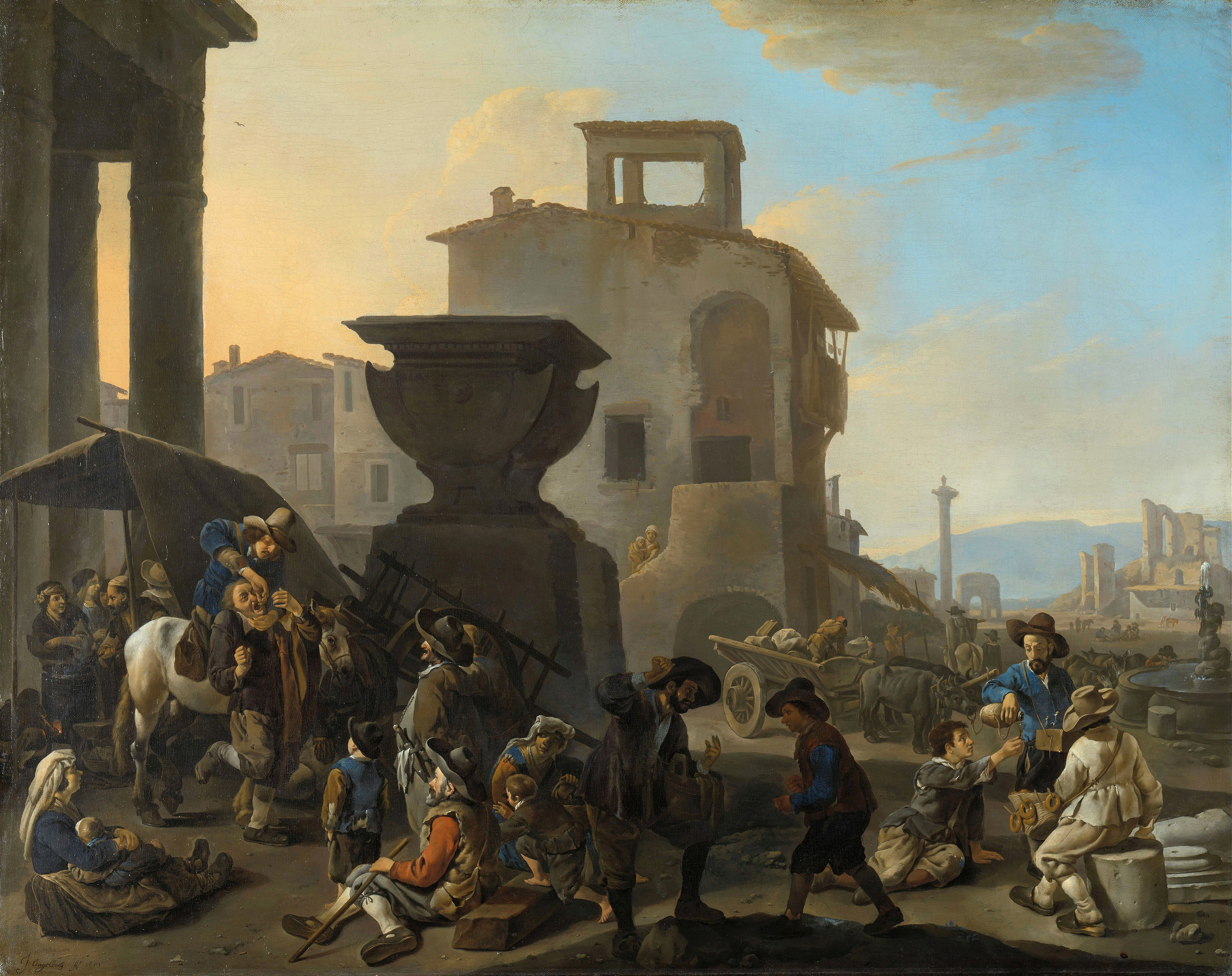
Could a single brushstroke hold eternity? In River with Bathing Gypsies near an Italian Town, the answer glimmers through the vibrant hues and delicate details, inviting viewers to ponder the profound revelations captured within the canvas. Look to the left, where the riverbanks embrace a group of figures bathed in sunlight, their laughter seemingly echoing through time. Notice how Lingelbach masterfully blends earthy tones of ochre and green, rendering the landscape alive with shimmering vitality.
The water glistens with hints of blue and white, reflecting both the sky's luminance and the fleeting moments of life. Your eyes are drawn to the dynamic poses of the bathing gypsies, their gestures conveying a sense of joy and freedom, set against the tranquil backdrop of the Italian town that looms in the distance. Delve deeper, and contrasts emerge; the carefree, vibrant figures juxtaposed against the serene, historical architecture of the town hint at the tension between nature and civilization. Each gypsy is adorned in colorful attire, representing the richness of culture amid societal constraints.
The soft ripples of the river symbolize the transient nature of joy, capturing not only a moment in life but also a revelation of human experience—each drop of water a testament to the passage of time and the essence of freedom lost and found. In 1650, Lingelbach painted this scene during an era marked by artistic exploration and the Baroque movement's embrace of vibrant storytelling. Living in Amsterdam at a time when Dutch art flourished and embraced themes of everyday life, he translated the vitality of his surroundings into this work. The integration of light, color, and figure marks an essential moment in his career, reflecting the shifting tides of both personal and artistic discovery.