View of the Port of Livorno — History & Analysis
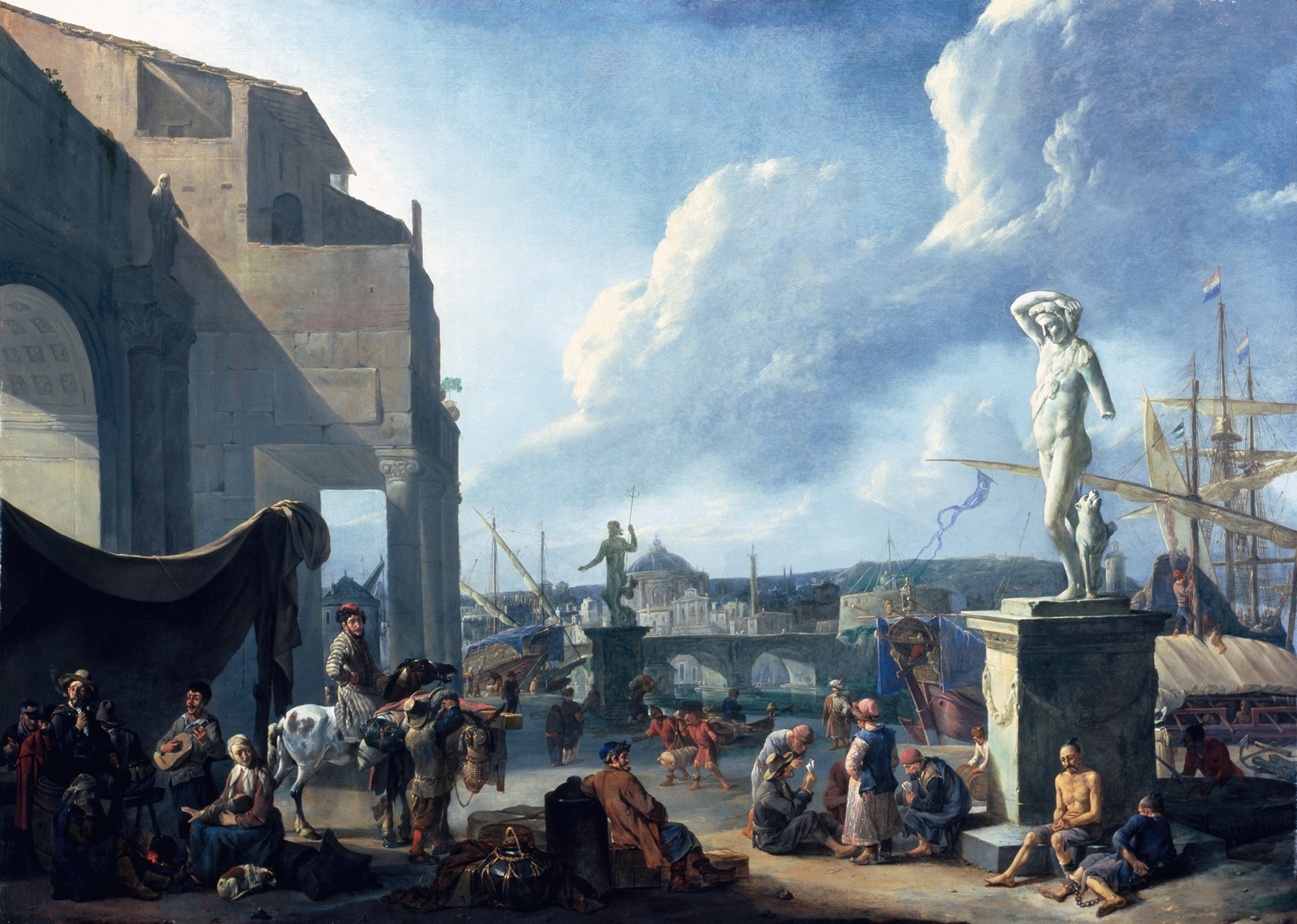
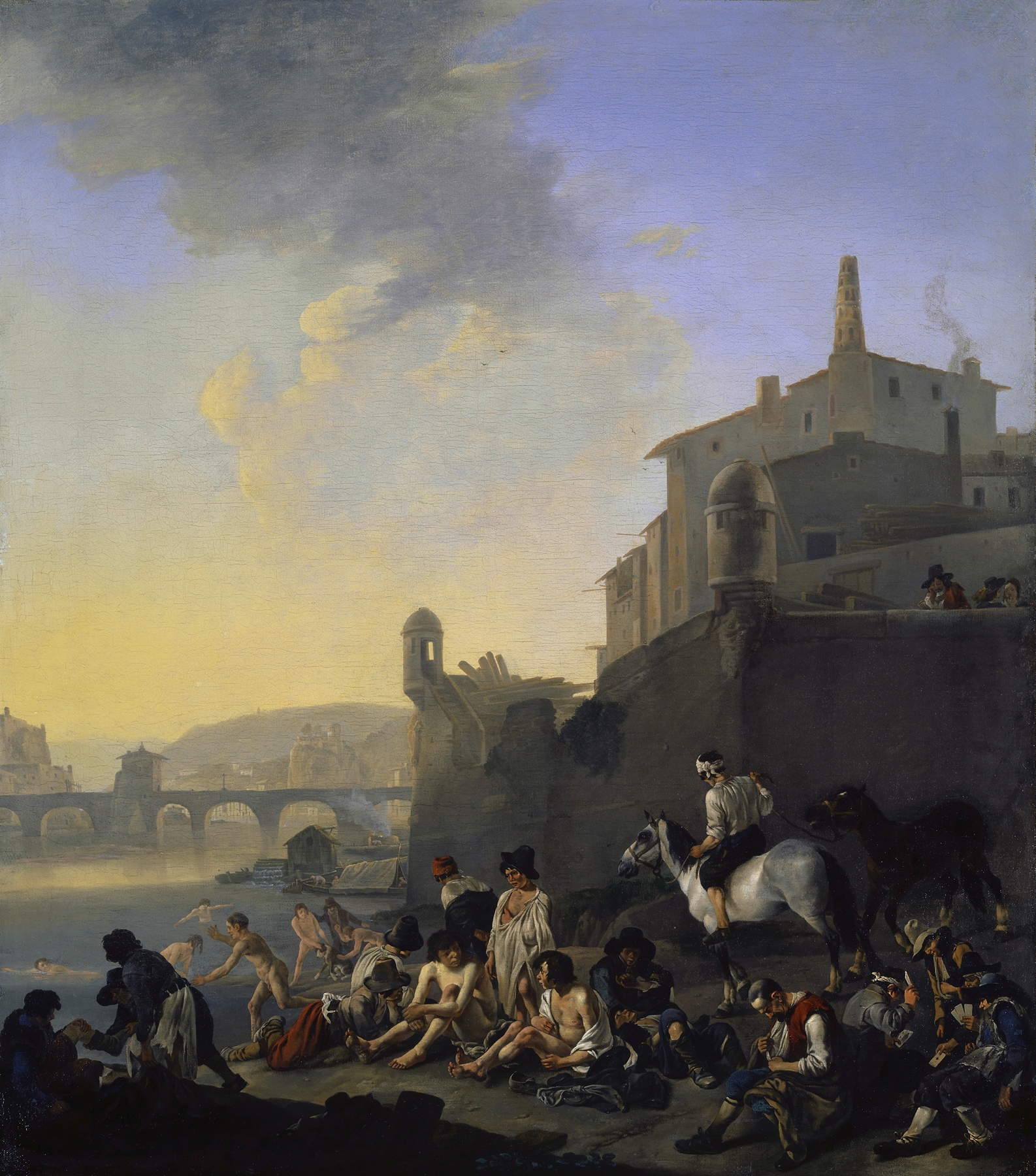
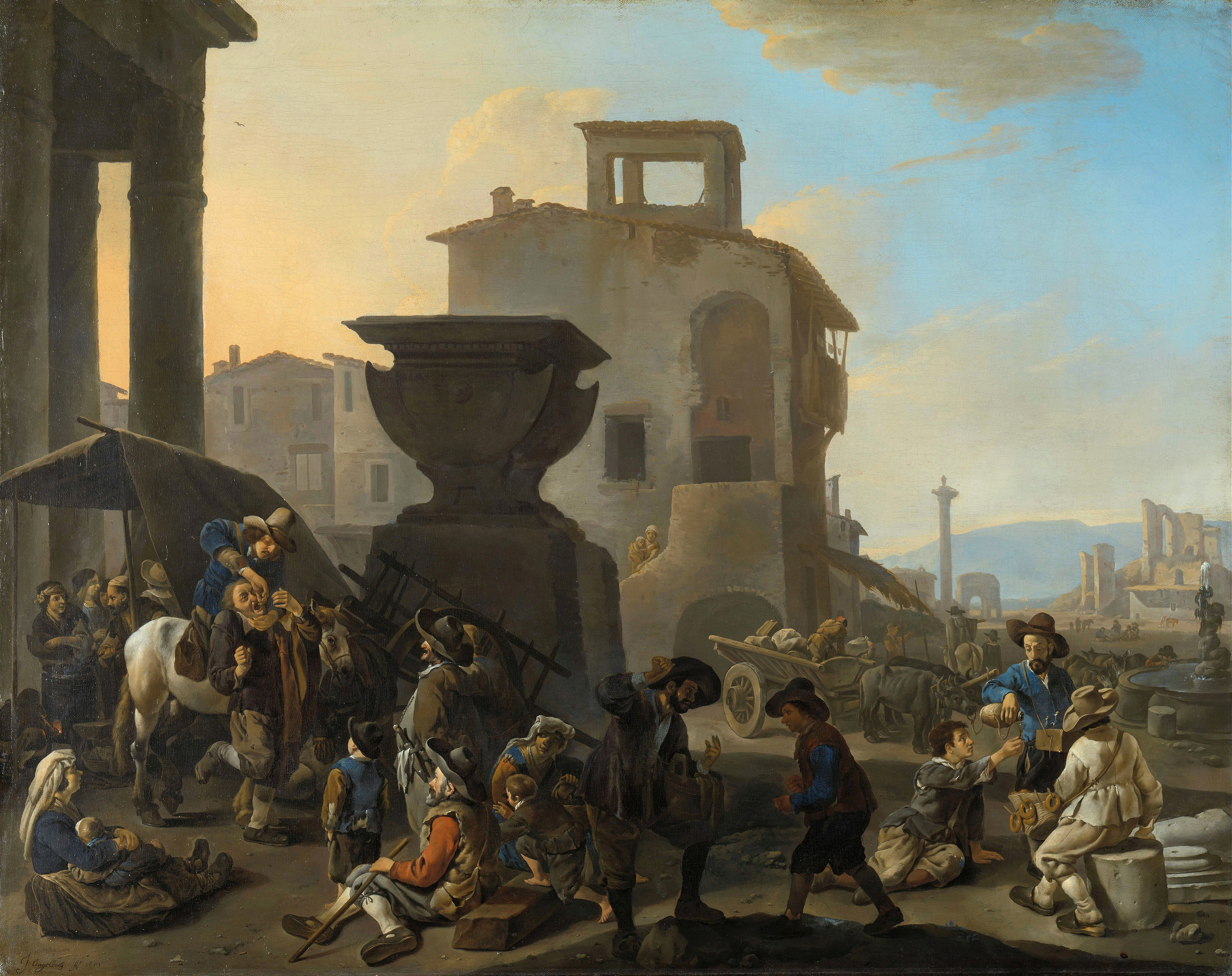
“Under the brush, chaos becomes grace.” In View of the Port of Livorno, a vibrant tableau unfolds, capturing the bustling energy of coastal life where every stroke teeters on the brink of madness. Focus on the foreground, where ships sway gently in the harbor, their sails billowing like whispers caught on the wind. Notice how the sunlight dances on the water’s surface, creating a shimmering pathway that draws your eyes deeper into the composition. Lingelbach employs a symphony of blues and golds, each hue revealing layers of movement and life, from the merchants exchanging goods to the fishermen casting their nets.
The chaos of the scene is beautifully orchestrated, a testament to the artist's deft hand. Beneath the surface of this lively moment, tension simmers. The frenetic activity of the port contrasts starkly with the calmness of the distant hills, suggesting a balance between human endeavor and nature's steadfastness. The varied expressions of the figures hint at individual stories amidst the collective energy, celebrating both the mundane and the extraordinary.
Each element, from the lively boats to the quiet shoreline, intertwines to evoke a sense of harmony born from chaos. Lingelbach painted during a time marked by economic growth and exploration in the 17th century, a period when the port cities of Europe flourished as centers of trade and culture. View of the Port of Livorno reflects this vibrant atmosphere, capturing the essence of a bustling harbor in an era ripe with opportunity and change. Living in Amsterdam, the artist was influenced by the mercantile spirit of his time, channeling both beauty and bustling life through his art.