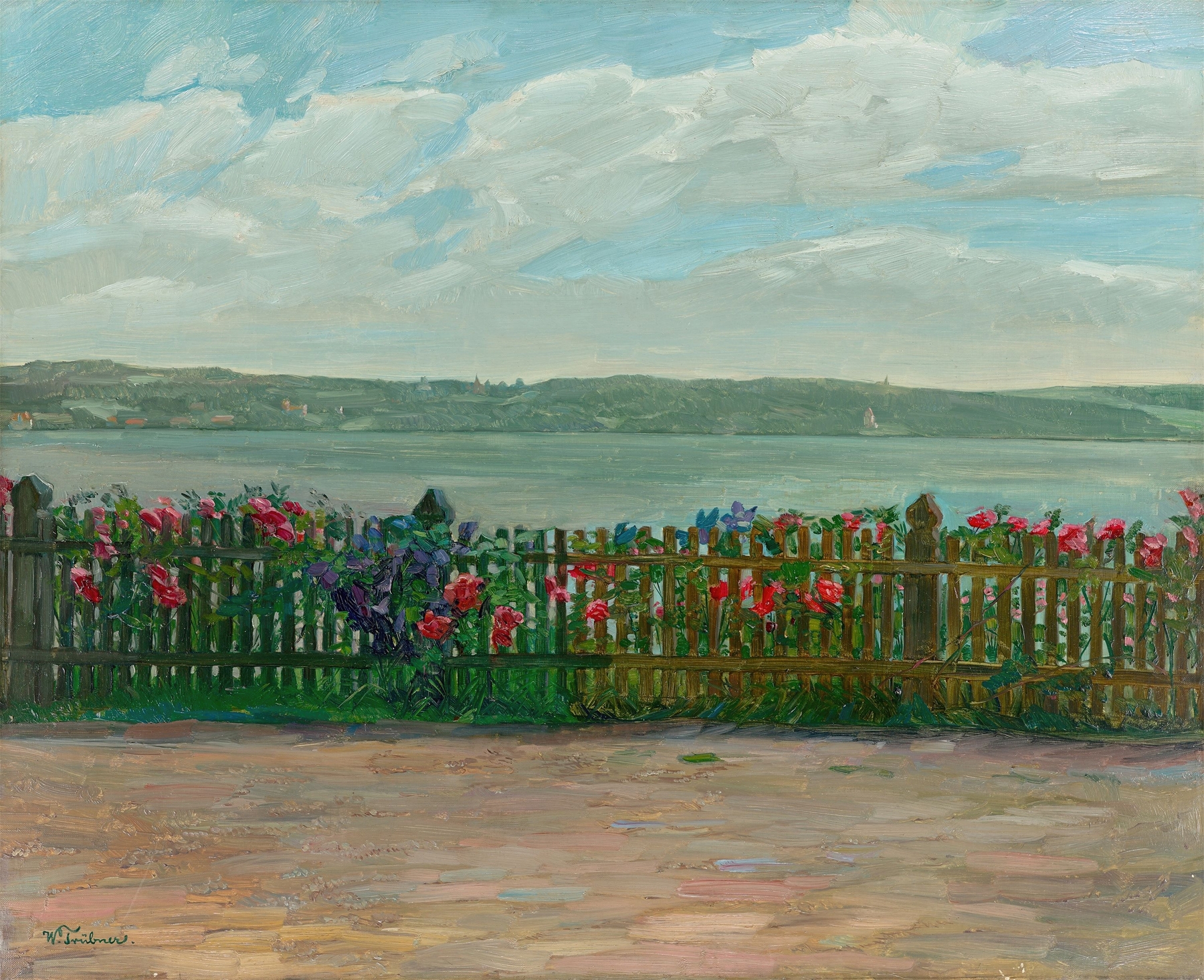
Rose fence with view of the Berg Castle at Lake Starnberg — History & Analysis
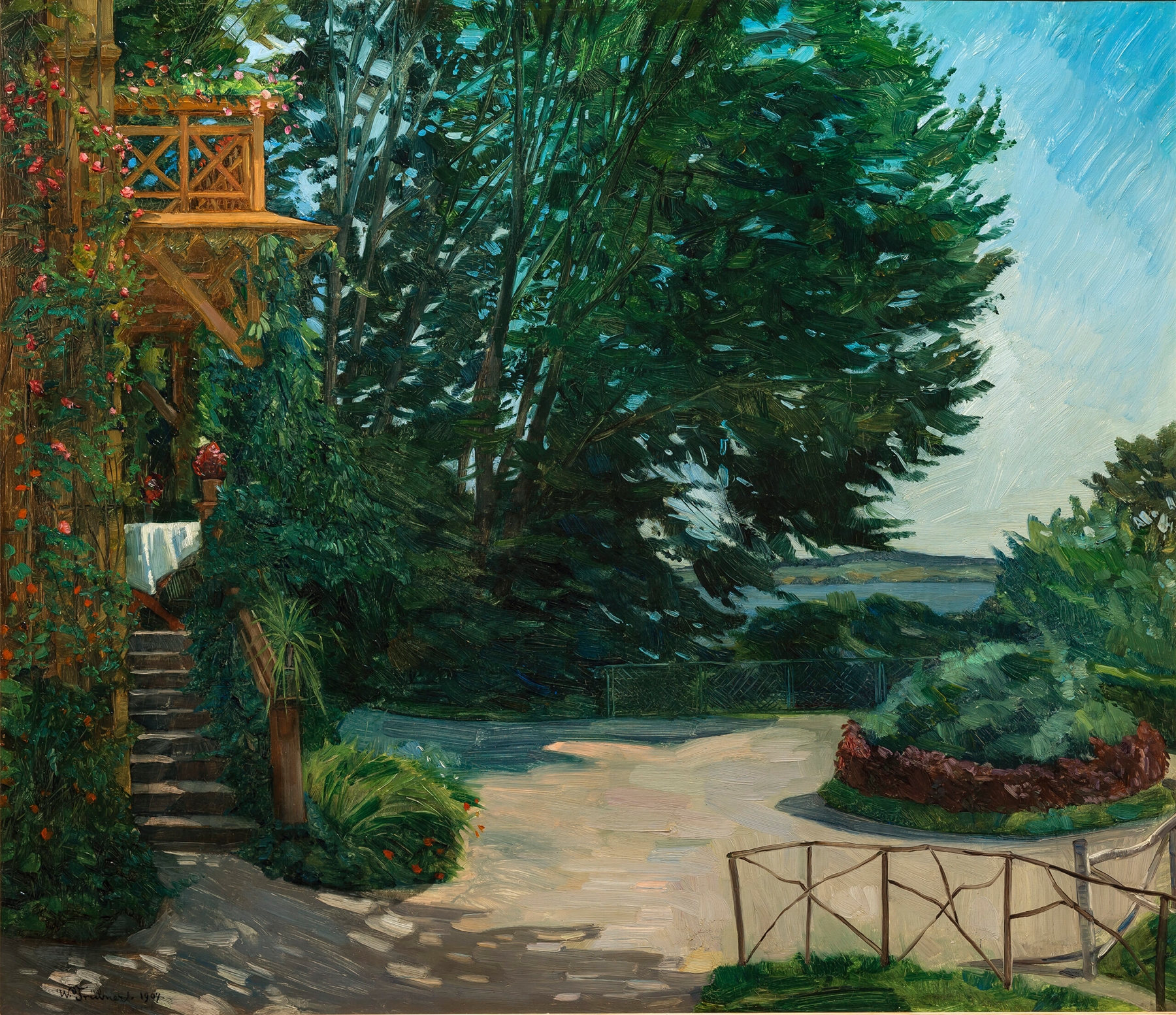
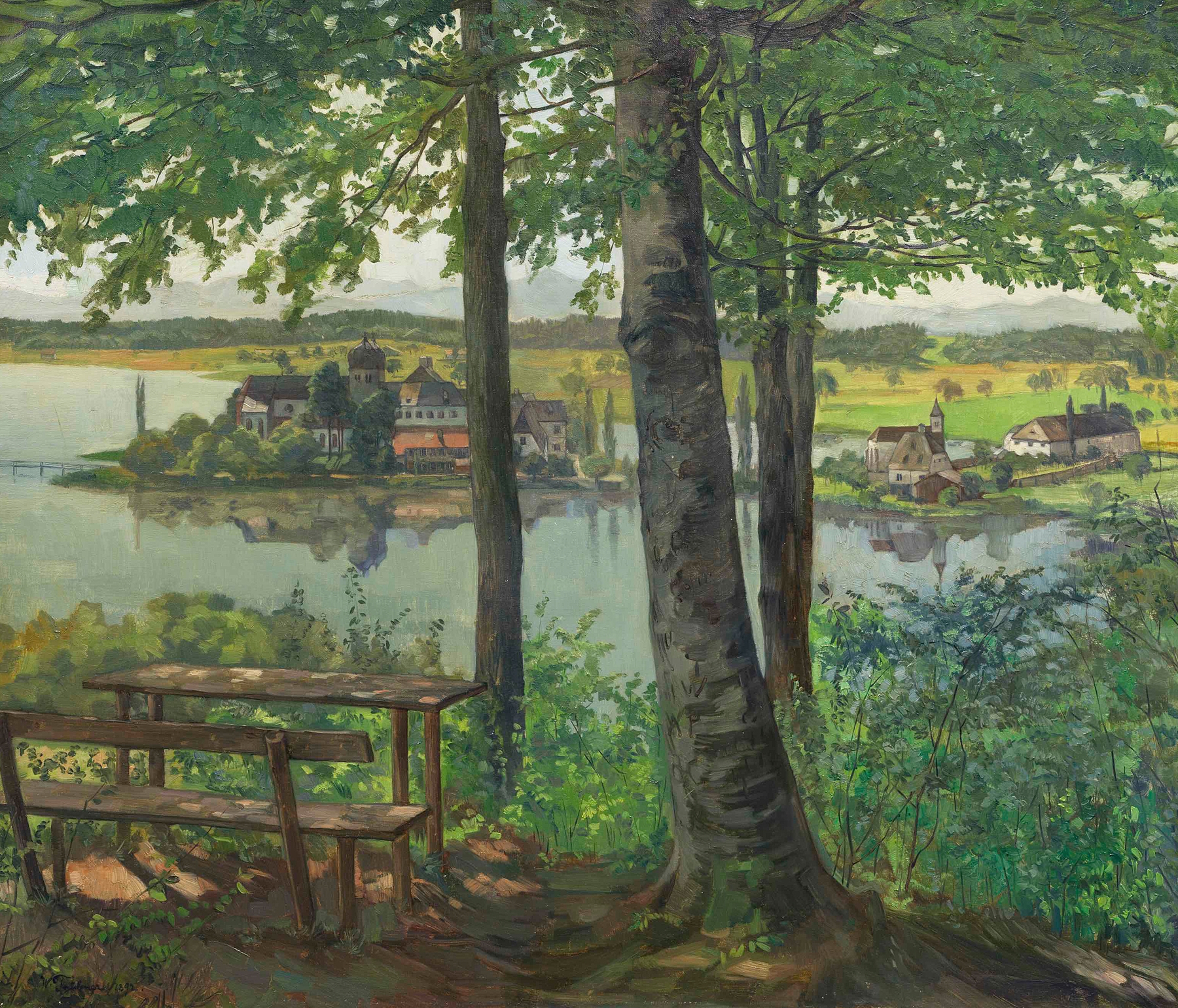
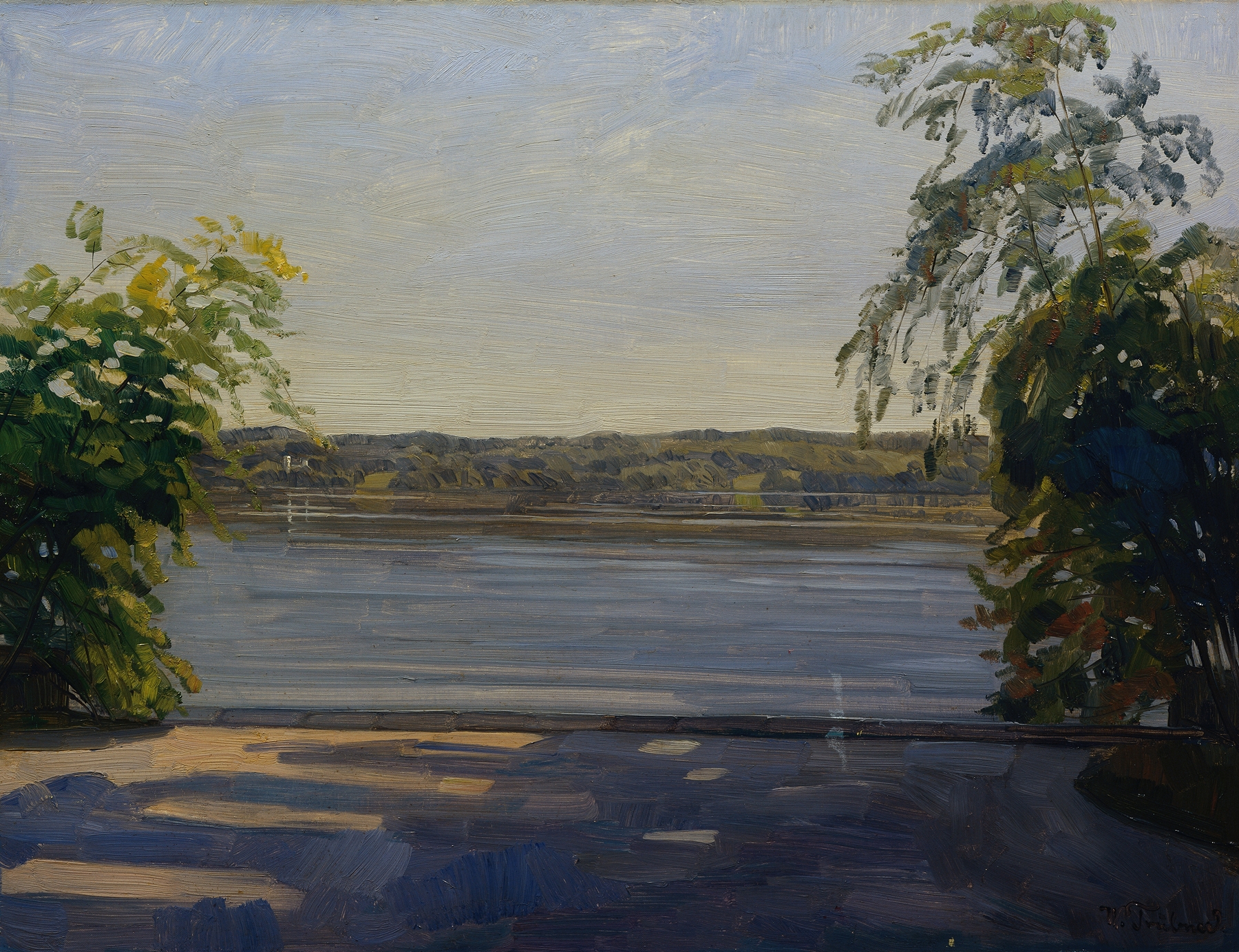
“The canvas doesn’t lie — it simply waits.” In a world often filled with noise, this artwork invites contemplation of the spaces left untouched. The absence of bustling figures and vibrant chatter draws the viewer into a realm where silence speaks volumes. Look to the left at the lush rose fence, its blooms reaching toward the sky, drenched in soft hues of pink and cream. The blossoms form an inviting frame, guiding the gaze across the serene lake toward the distant silhouette of the Berg Castle. Notice how the delicate brushstrokes create an ethereal quality, blending the vibrant colors of nature with the muted tones of the castle, establishing a harmonious dialogue between the foreground and background.
The light dances gently across the surface, illuminating key elements while leaving others in shadow, highlighting the tension between presence and absence. Upon closer inspection, the juxtaposition of the flourishing roses and the solitary castle stirs emotional complexity. The roses signify life, vibrancy, and growth, while the castle, shrouded in distance, evokes solitude and the passage of time. This contrast invites reflection on the nature of human existence—how beauty often flourishes in the face of an unseen void, urging us to consider what lies beyond the frame.
The emptiness surrounding the castle echoes a yearning for connection yet simultaneously offers a space for introspection. In 1912, Wilhelm Trübner painted this piece during a period when he was exploring the balance between nature and architecture in his works. Living in Germany amidst societal shifts, he focused on capturing the serene landscapes that surrounded him, reflecting the broader growth of modernism in the art world. This work, infused with his personal insights and observations, encapsulates a moment of stillness amidst a rapidly changing environment.