Rheinüberschwemmung bei Karlsruhe im Jahre 1887 — History & Analysis
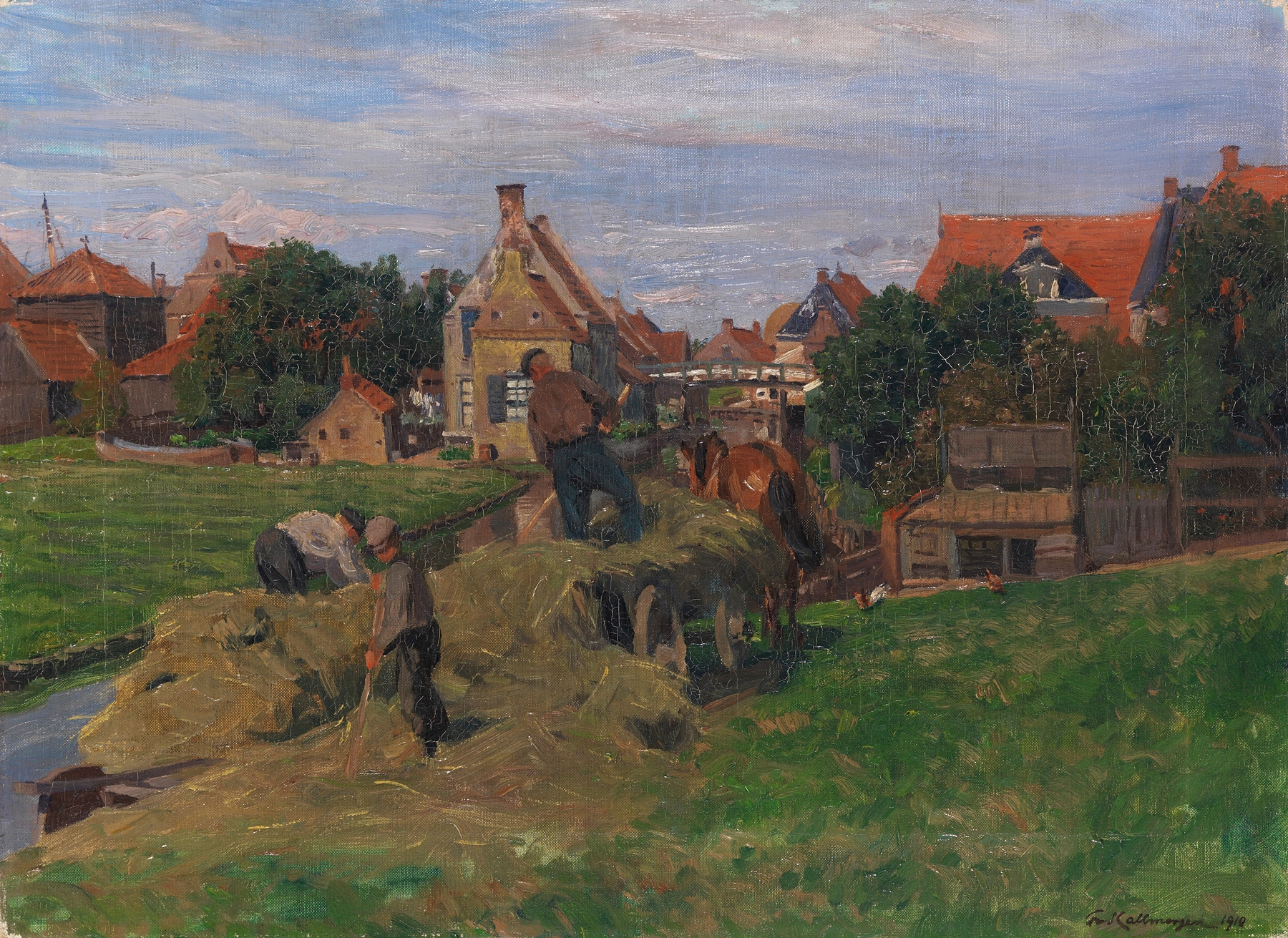
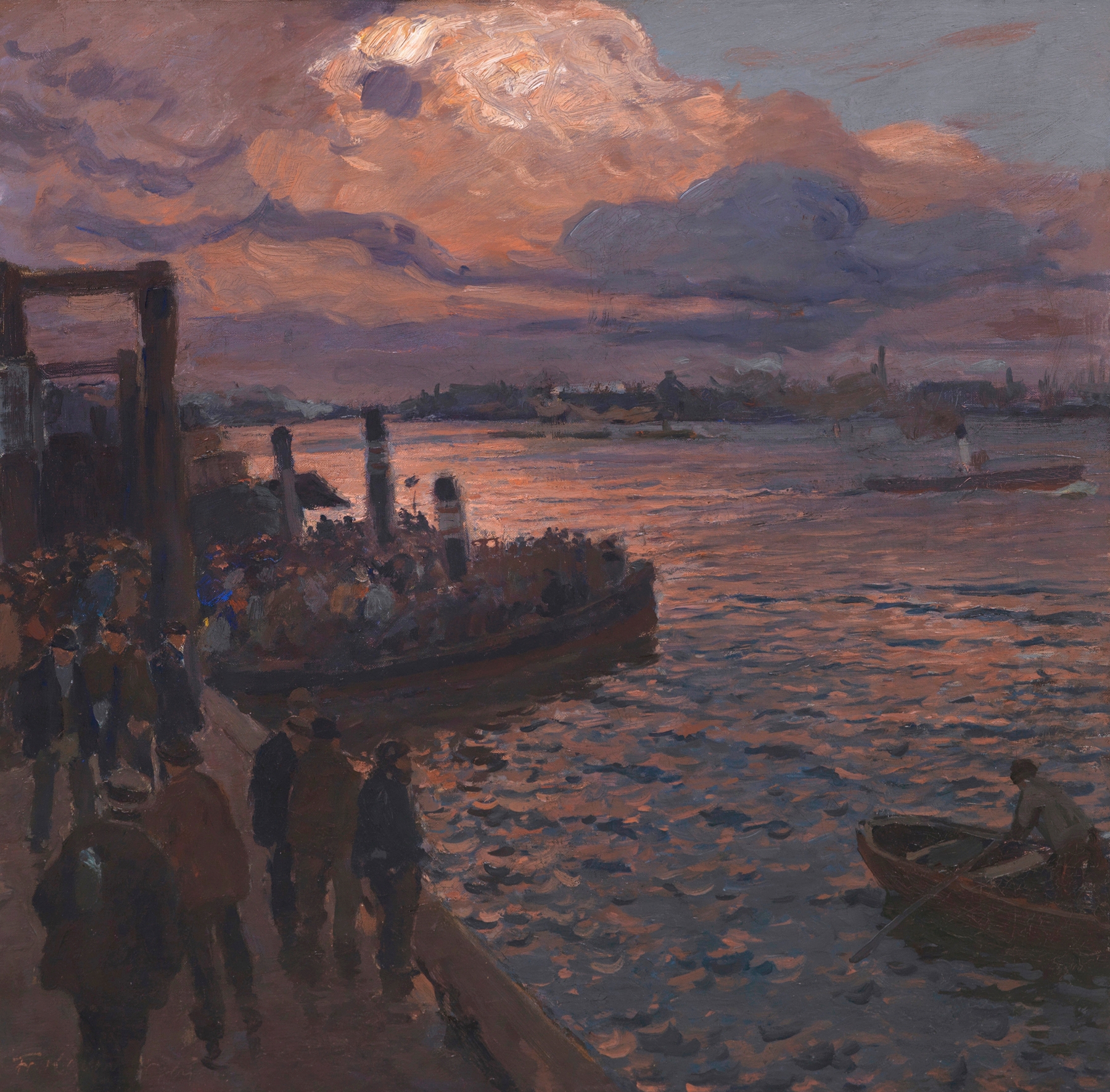
Did the painter know this moment would outlive them? In the stillness of a flood's aftermath, memory collides with nature's relentless power, leaving echoes of a world transformed. Look to the center of the canvas, where the murky waters of the Rhine swell and encroach upon the landscape. The delicate, muted greens of the trees stand in stark contrast to the tumultuous browns and grays of the flood. Notice how Kallmorgen employs striking brushstrokes to convey the chaos of the water as it laps against the remnants of civilization—dilapidated structures and uprooted trees emerge, marking the boundary between man-made order and nature's unpredictable fury.
The gloomy sky, laden with heavy clouds, casts a somber light that saturates the scene with tension and foreboding. Within this portrayal lies a poignant juxtaposition of fragility and resilience. The flooded terrain, while devastating, also connects with the human spirit's capacity for endurance. The remnants of the landscape and the distant figures navigating the waters hint at a narrative of loss that transcends the immediate chaos, encouraging viewers to reflect on the traces of life that persist even in calamity.
Each brushstroke captures not just a moment in time but a collective memory of struggle and the fight to reclaim what was lost. Friedrich Kallmorgen created this work in 1888, shortly after a devastating flood struck Karlsruhe the previous year. At this time, Kallmorgen was deeply influenced by the shifting dynamics of realism and impressionism in the art world. As he documented this natural disaster, he was simultaneously navigating his own artistic journey, grappling with how to convey both beauty and tragedy in the landscapes he held dear.