Sea and Cliffs — History & Analysis
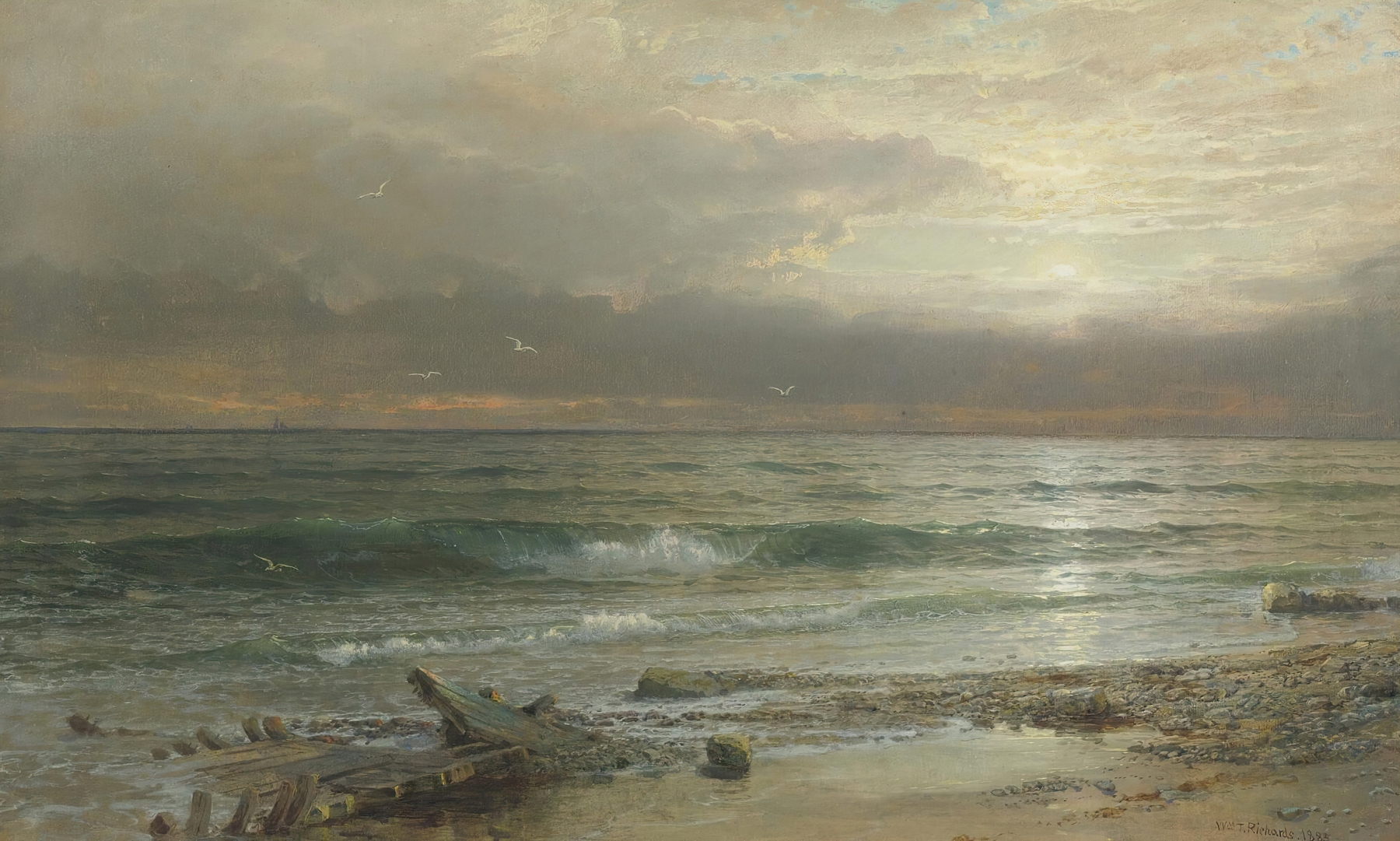
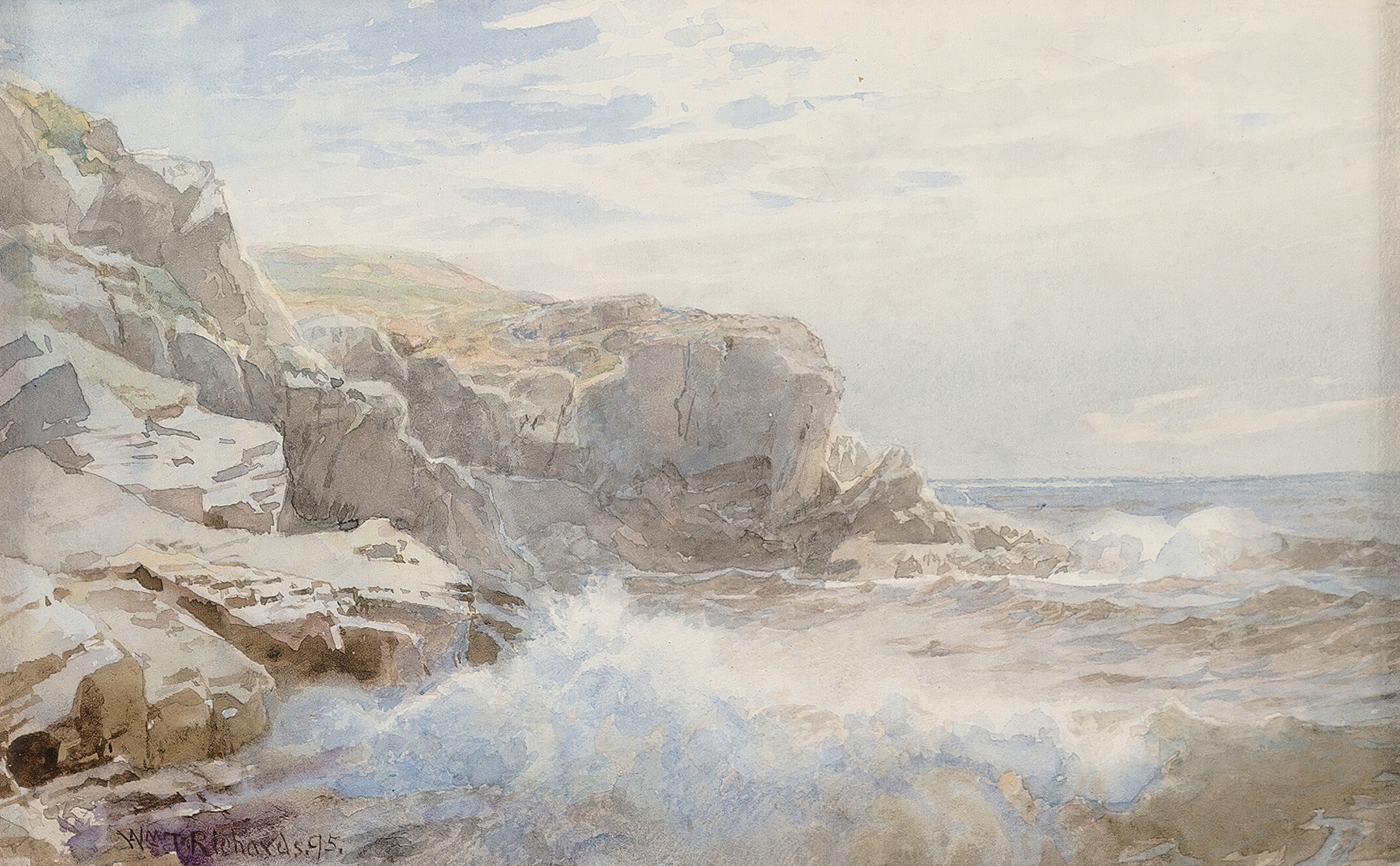
Can paint confess what words never could? In Sea and Cliffs, the viewer is invited into a landscape that speaks softly of memory, where the meeting of land and sea evokes a profound sense of nostalgia. Look to the left at the rugged cliffs, their textured surfaces layered with earthy browns and grays. The vibrant blues of the ocean crash against them, creating a dynamic contrast that draws the eye and suggests the relentless passage of time.
Notice the delicate wisps of clouds above, reminiscent of fleeting thoughts, while the sun breaks through, illuminating the scene with a warm golden hue that enhances the emotional depth of the painting. Richards captures a harmonious tension between the serene sea and the imposing cliffs, symbolizing the struggles between vulnerability and strength. The strokes of the waves appear almost restless, mirroring the inner turmoil of recollection, while the steadfast cliffs stand as guardians of the past. Here, the balance of light and shadow hints at moments of clarity intertwined with darkness, making memory a complex and layered experience.
In 1892, the artist painted this work amidst a resurgence of interest in naturalism and the American landscape. Living in Pennsylvania, Richards was influenced by the Hudson River School, yet he sought to infuse his own emotional resonance into his landscapes. At this time, America was grappling with changes brought by industrialization, and his focus on nature served as a poignant reminder of what was being lost in the modern world.