Shipka Pass — History & Analysis
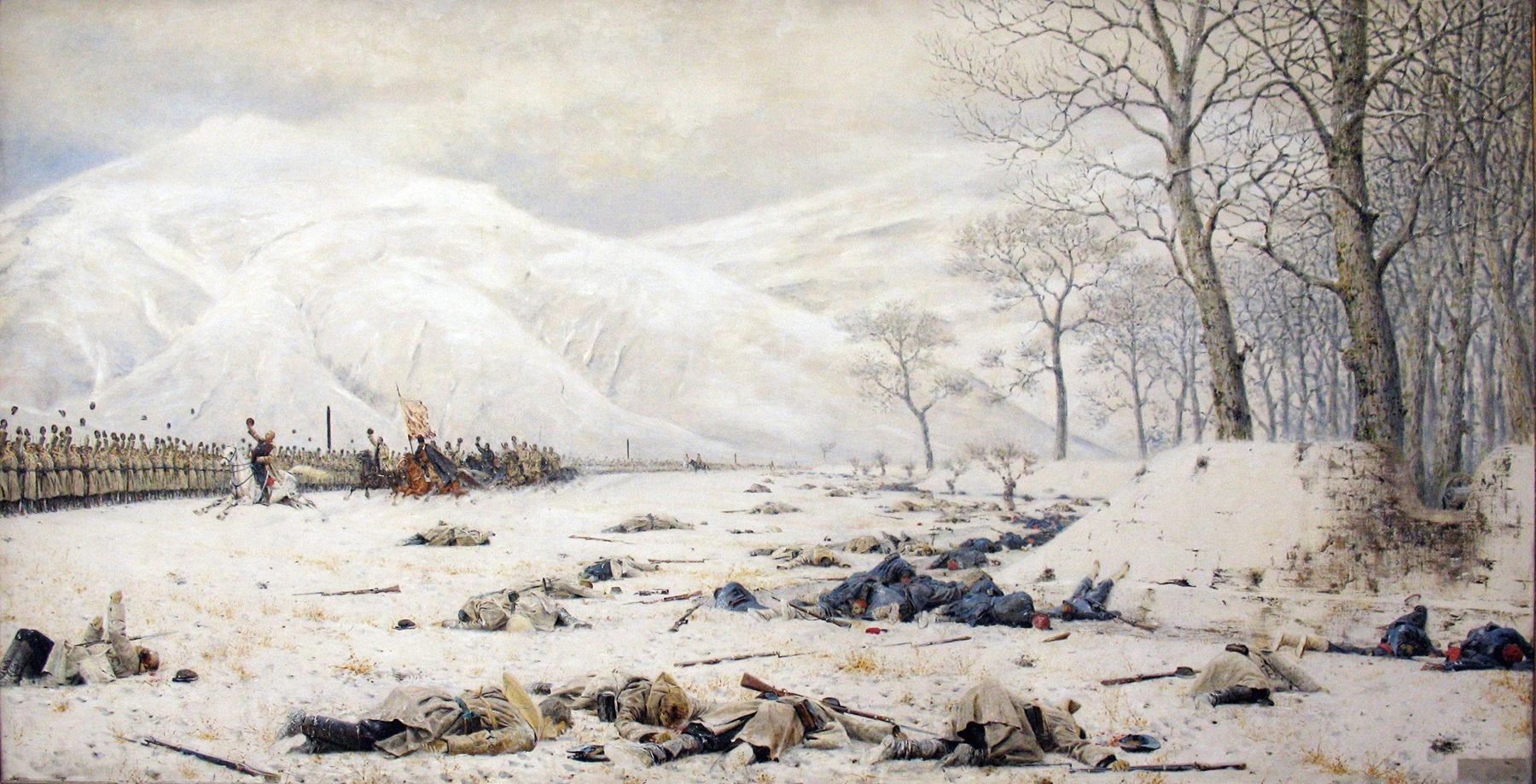
Could beauty survive in a century of chaos? In an era marked by turmoil and strife, this question lingers like a haunting melody, echoing through the folds of history. Look closely at the vast expanse of Shipka Pass, where the tumultuous landscape tells a story of both desolation and resilience. The foreground captures a rocky terrain, stark and unforgiving, while the distant mountains rise majestically against a brooding sky. A muted palette of grays and browns evokes a sense of melancholy, inviting us to ponder the weight of the struggles that have unfolded here.
The brushwork conveys a raw energy, with expressive strokes that breathe life into the rugged cliffs, almost as if they are whispering tales of the past. Amidst the harshness, subtle details emerge that reveal deeper truths. Notice the interplay of light and shadow; the way the sun casts fleeting rays upon the land hints at hope amidst despair. The quiet presence of the mountains suggests endurance, a silent witness to the passage of time and the relentless cycles of conflict.
Each element—stone, sky, and shadow—reflects the artist's contemplation of nature's beauty, even in moments of sorrow. During the time this piece was created, Vereshchagin was deeply engaged with themes of war and its impact on humanity. While the exact date is unknown, he often painted scenes inspired by his travels and the conflicts he witnessed firsthand, particularly during the late 19th century. This was an era of significant upheaval, where artistic expression began to reflect the darker realities of existence, leading the artist to capture both beauty and melancholy in his work.