Shipwreck on the Coast of Norway — History & Analysis
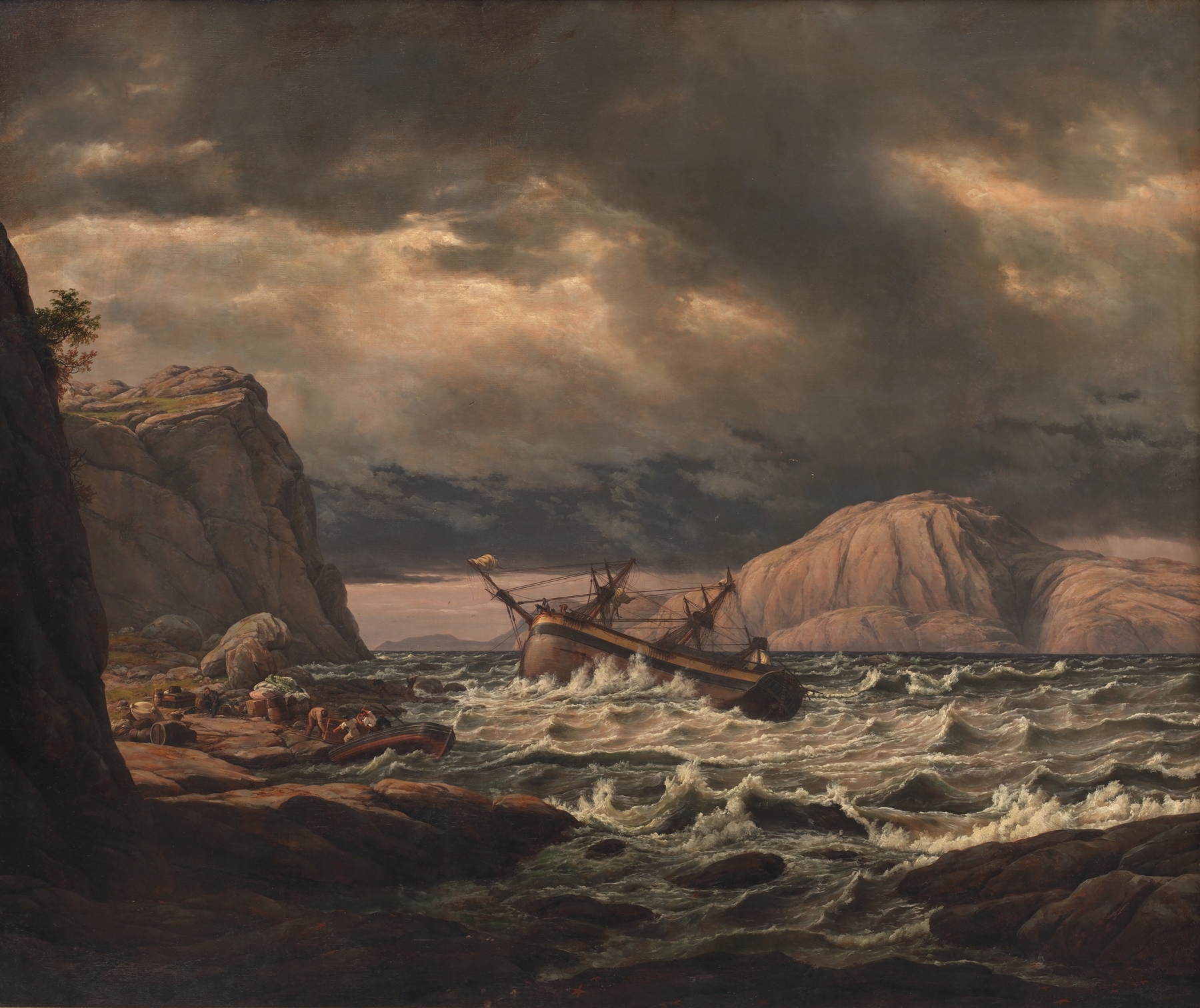
What secret hides in the quiet of the canvas? In Johan Christian Dahl's Shipwreck on the Coast of Norway, the stillness of the scene invites contemplation, urging us to listen to the whispers of nature and the echoes of human struggle. Look to the left where jagged cliffs rise sharply, silhouetted against a tumultuous sky. The dark, brooding clouds seem to press down upon the scene, while a muted palette of blues and grays dominates the composition. Your gaze is drawn towards the shipwreck, its skeletal remains perched precariously on the rocks, a reminder of human vulnerability against nature’s power.
Notice how the light subtly glimmers off the water’s surface, hinting at both danger and beauty. Each brushstroke captures the chaotic clash between man-made desperation and the eternal calm of the sea. Delve deeper into the emotional undercurrents at play; the shipwreck is not just a physical ruin but a symbol of failed aspirations. The shoreline, while breathtaking, showcases relentless waves crashing against the remnants of human endeavor. In the distance, a figure stands alone, possibly a survivor or a spectator, embodying the isolation and melancholia associated with loss.
This tension between the raw force of nature and the fragility of human existence evokes a profound sense of empathy and reflection. Dahl painted this work in 1832 during a time when Romanticism was flourishing in Europe. Working in Norway, he was influenced by the dramatic landscapes of his homeland and sought to capture both their beauty and treachery. This period marked an evolution in his artistic style, where he began to embrace themes of nature’s sublime power, aligning his vision with the broader shifts occurring in the art world, as artists increasingly turned to emotional expression and the natural environment for inspiration.