Norwegian Mountain Landscape — History & Analysis
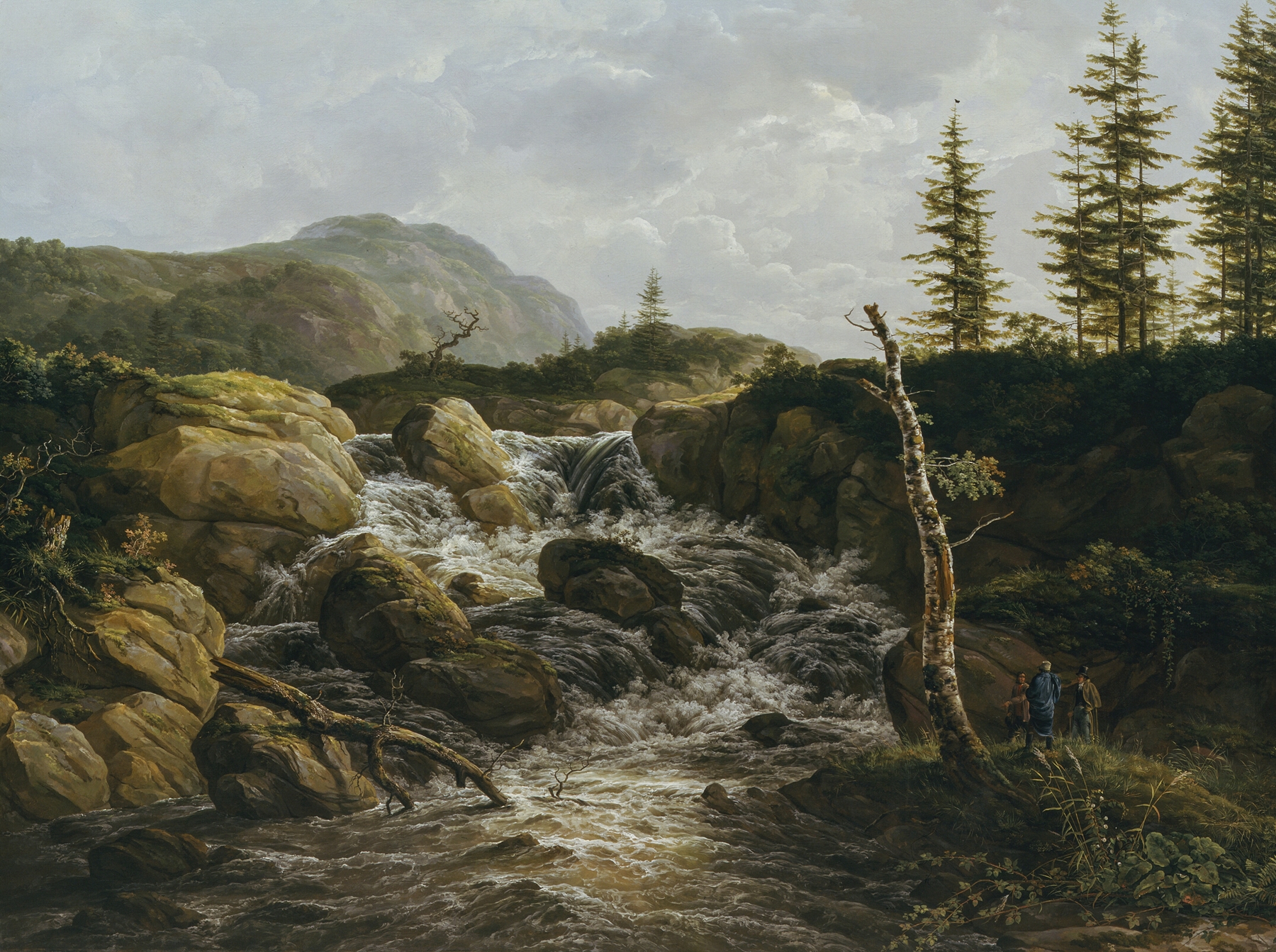
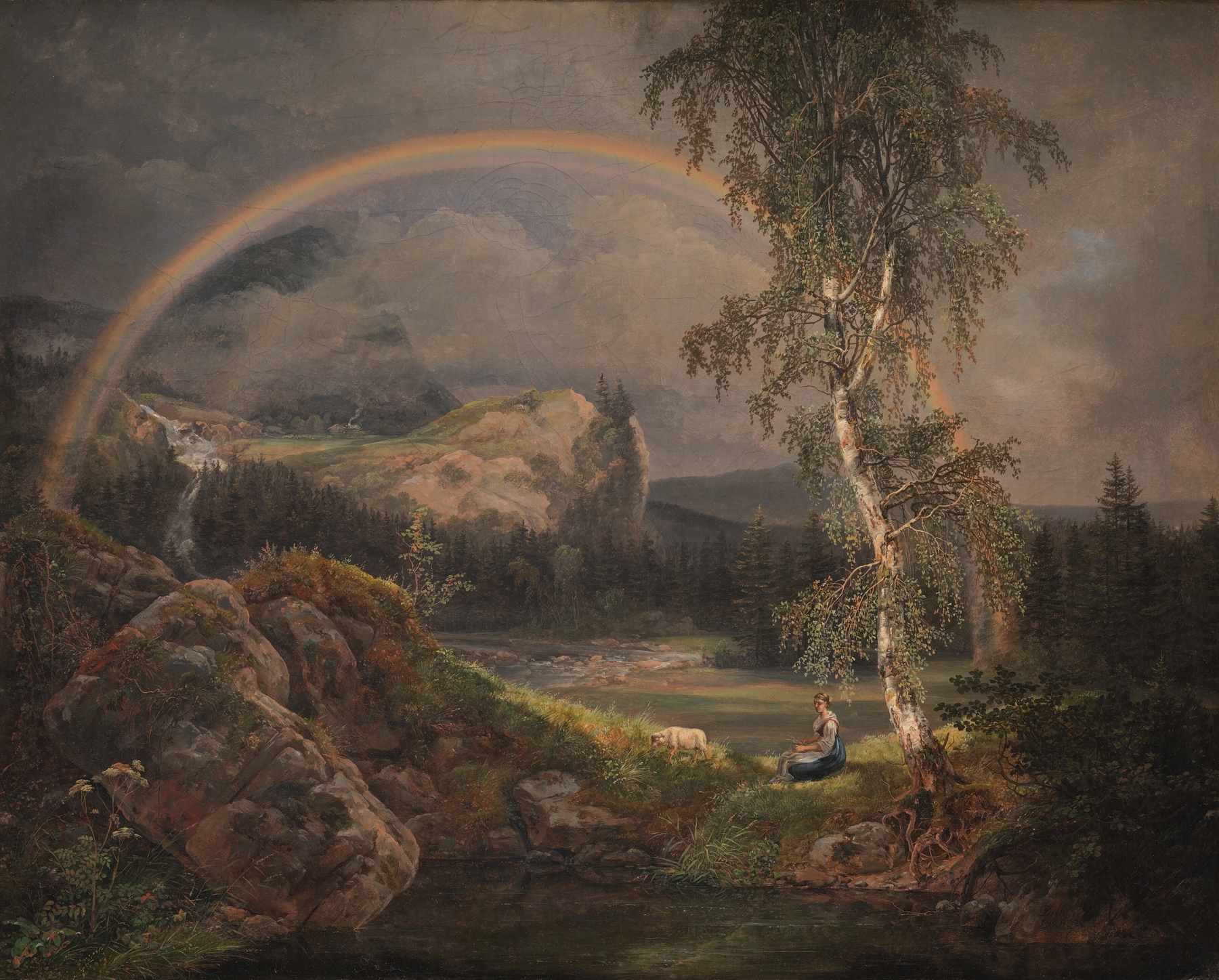
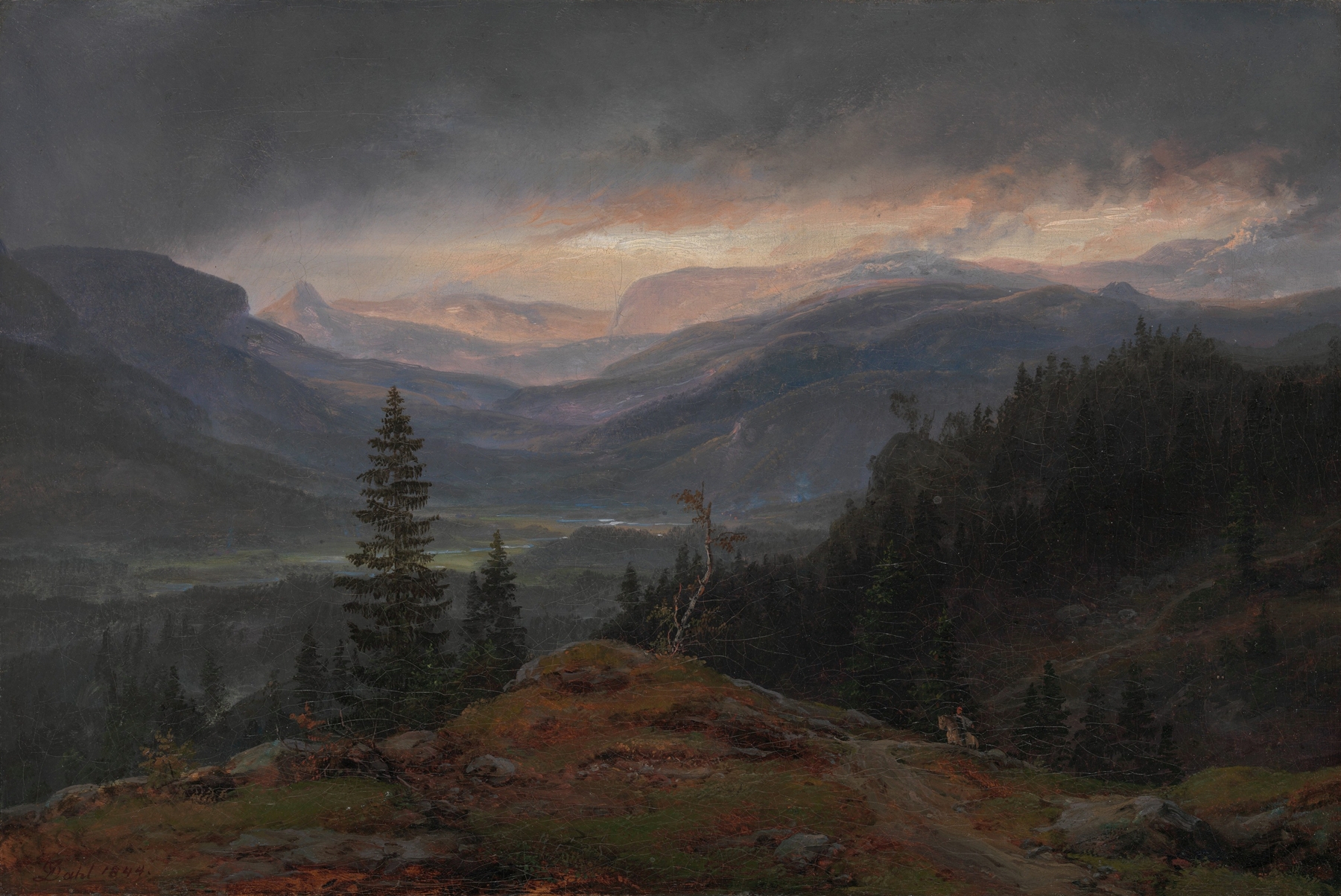
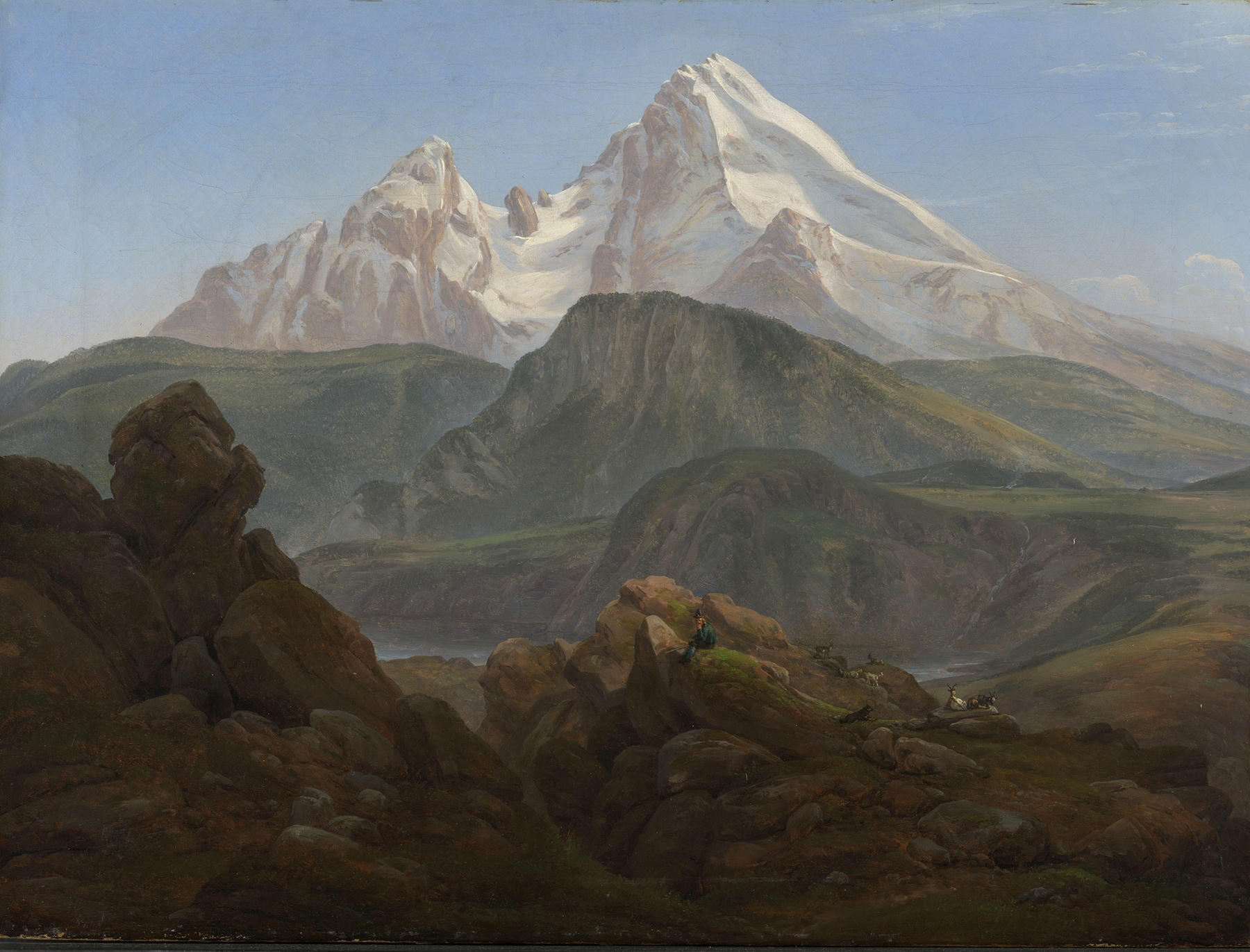
What secret hides in the quiet of the canvas? In the stillness of a Norwegian landscape, the essence of loneliness unfolds, inviting viewers to explore the depths of solitude. Look to the left at the jagged peaks, their rocky forms etched against a soft azure sky. The brushstrokes here are deliberate yet delicate, capturing the weight of the mountains while imparting a sense of ethereality.
Notice how the light spills over the snow-dusted summits, illuminating the rugged terrain and casting long shadows that stretch into the untouched valleys below. The subtle interplay of warm and cool hues draws the eye across the canvas, suggesting a quiet harmony amidst the starkness of nature. In the foreground, a solitary figure stands, dwarfed by the vastness surrounding him—an embodiment of isolation against the grandeur of the mountains. This poignant presence evokes a sense of longing and introspection, as if contemplating the silent beauty that envelops him.
The cascading stream, meandering through the landscape, symbolizes the passage of time and the fleeting connections we forge in life, contrasting with the eternal, unchanging nature of the mountains themselves. Created in 1819, this work emerged during a pivotal moment in the artist's career, as Johan Christian Dahl was establishing himself as a leading figure in Scandinavian Romanticism. Living in Dresden at the time, he was deeply influenced by the natural landscapes around him, and this painting reflects both his personal experiences and the broader shift towards nature-centric themes in the art world. Amidst the evolving Romantic movement, Dahl sought to evoke emotion through the raw beauty of the Norwegian terrain, capturing the interplay between solitude and the sublime.