A Shipwreck on the Coast of Norway — History & Analysis
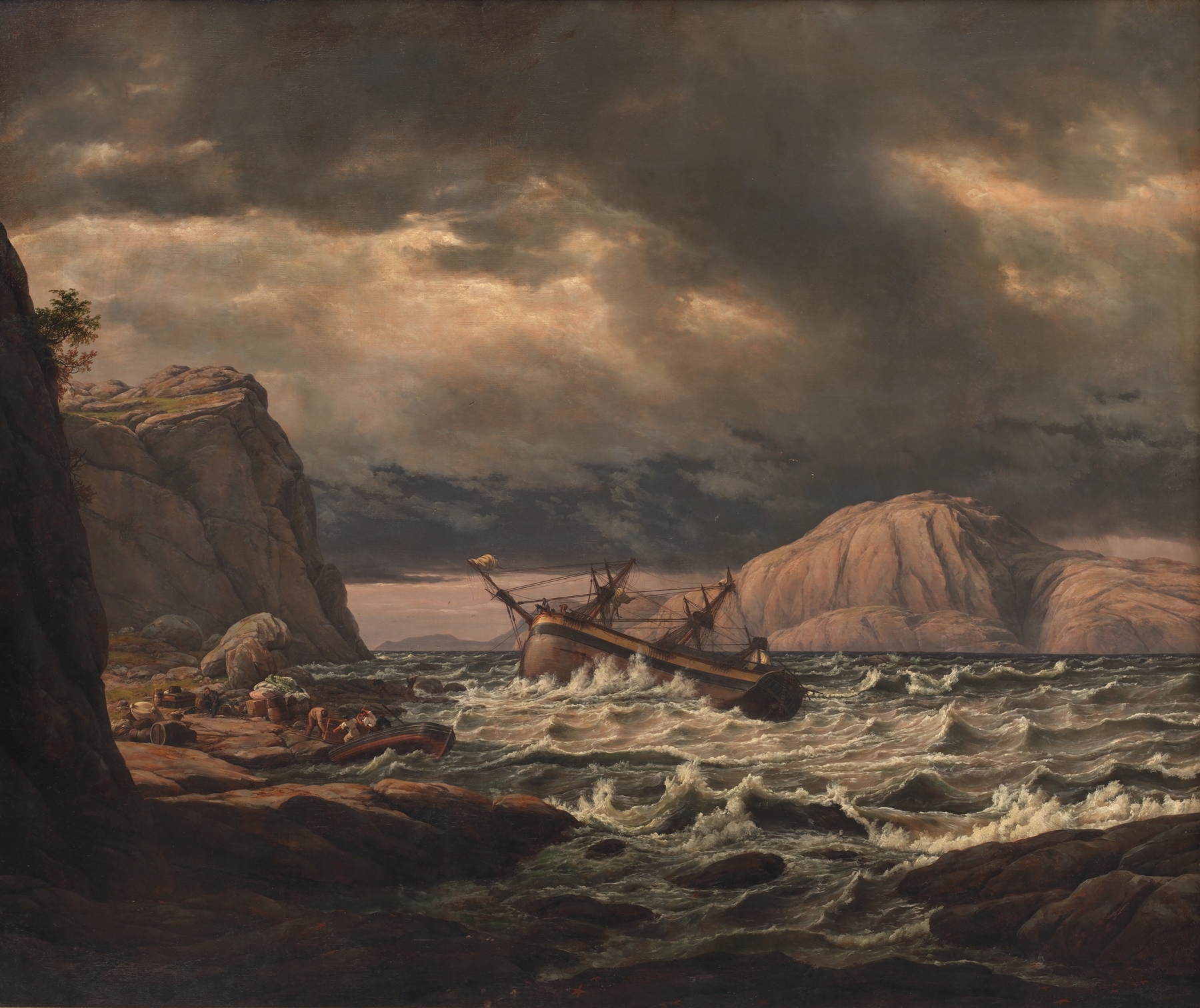
Art reveals the soul when the world turns away. In the midst of nature's fury, the quiet devastation of a shipwreck stands as a haunting testament to loss. Look to the left at the jagged, splintered hull, tossed ashore like a discarded toy. The muted grays of the ship contrast starkly with the tumultuous waves, rendered in deep blues and foamy whites, capturing the relentless power of the ocean.
Notice how light battles the dark clouds above, casting an eerie glow on the wreckage, illuminating the chaos while simultaneously hinting at a strange, melancholic beauty. The figures in the foreground are dwarfed by the scene, their expressions a mix of resignation and despair, drawing the viewer into the emotional gravity of the moment. Delve deeper into the contrasts present in this work; the violent energy of the sea juxtaposed with the stillness of the human figures creates a stirring tension. The stormy sky looms overhead, a metaphor for the unpredictability of fate, while the ship itself—a symbol of hope and adventure—lies defeated on the shore, embodying the fragility of ambition against nature's indifference.
Each detail invites reflection on the transient nature of life and the inevitability of loss. Johan Christian Dahl created this poignant piece between 1831 and 1832 during a time when Romanticism was flourishing across Europe, emphasizing emotional depth and the sublime power of nature. Working in Norway, amid a burgeoning appreciation for dramatic landscapes, Dahl's experiences in the wild served as a catalyst for his art, allowing him to explore the interplay between beauty and tragedy, reflecting both personal and collective struggles in a rapidly changing world.