Norwegian Landscape with a Rainbow — History & Analysis
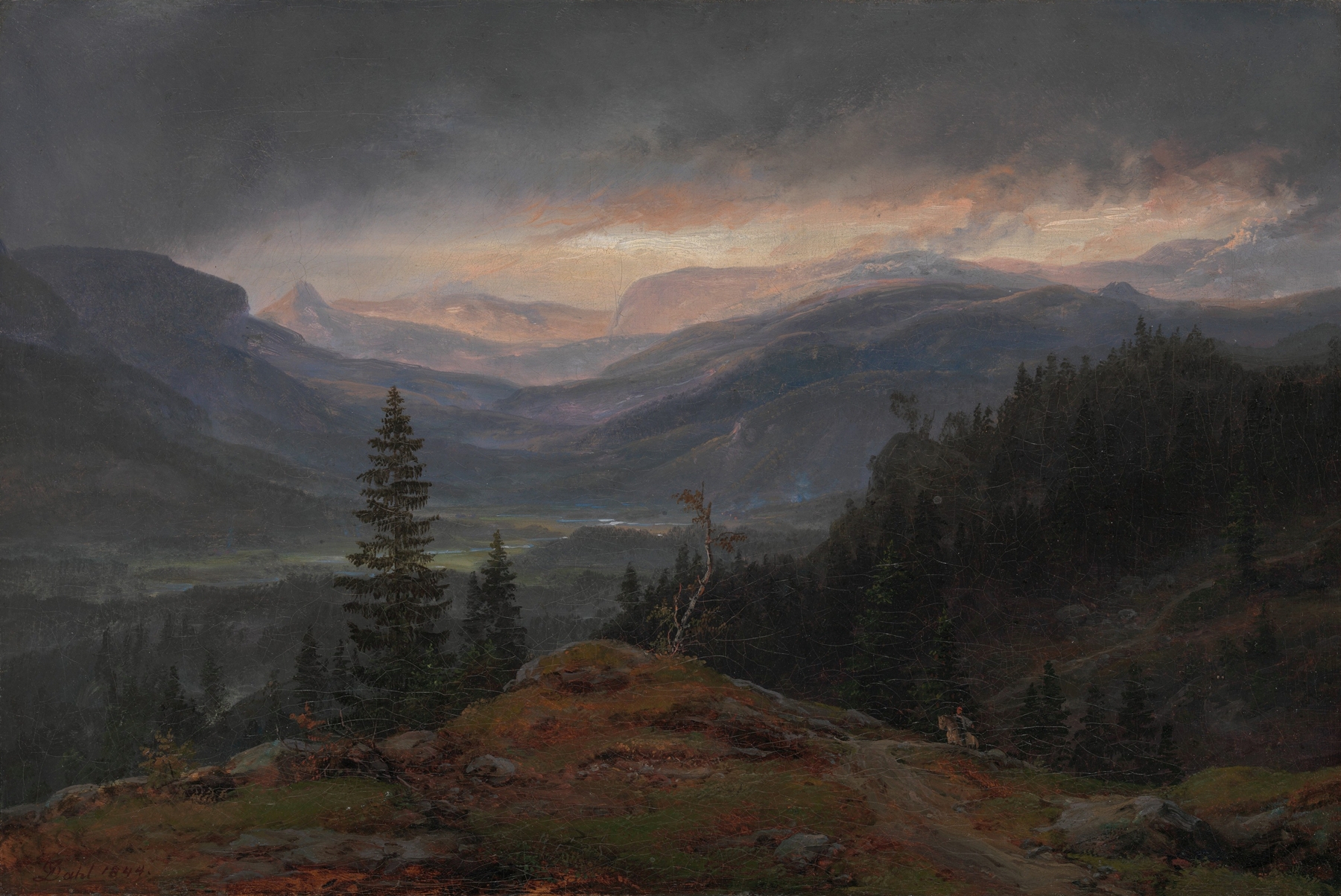
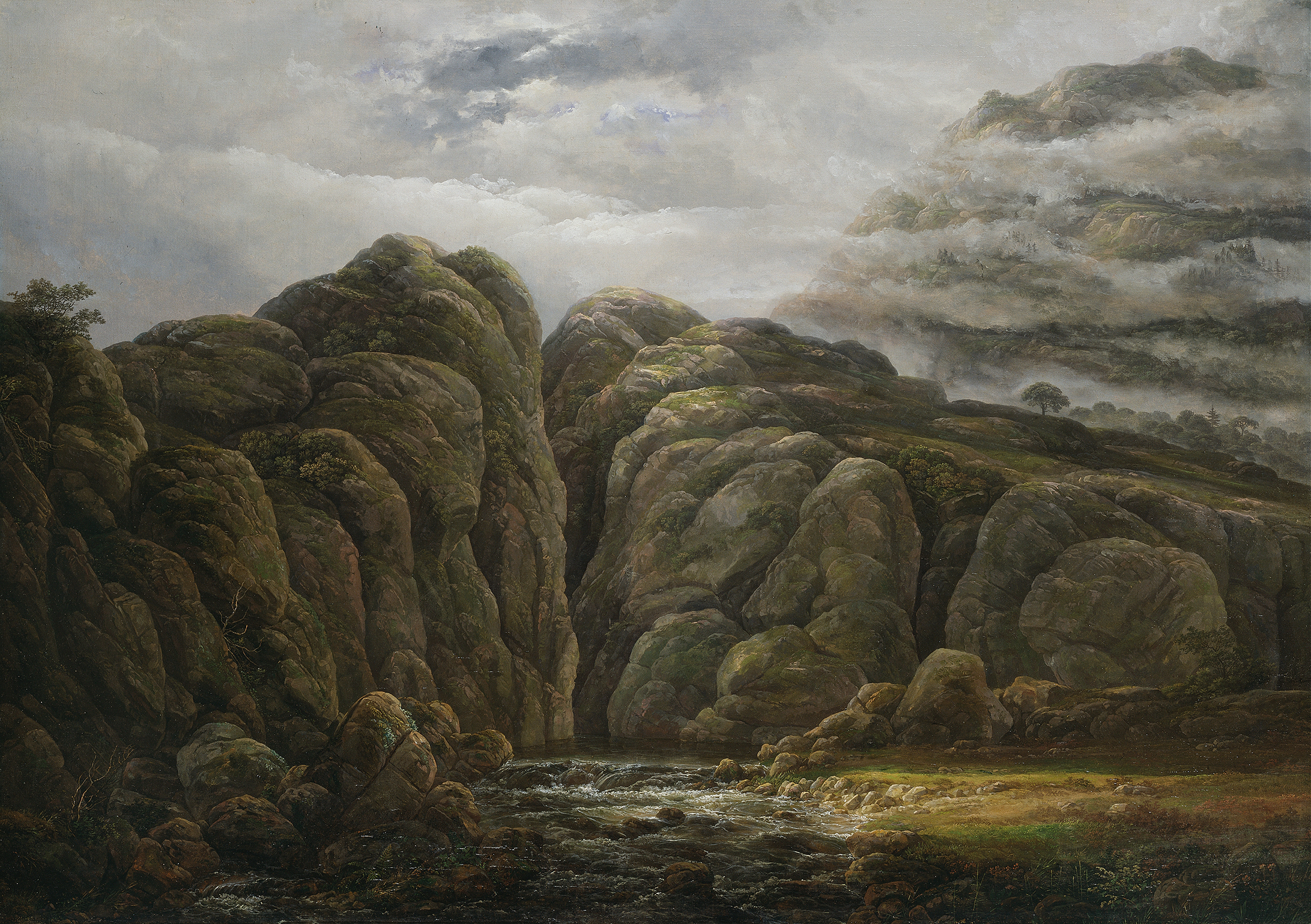
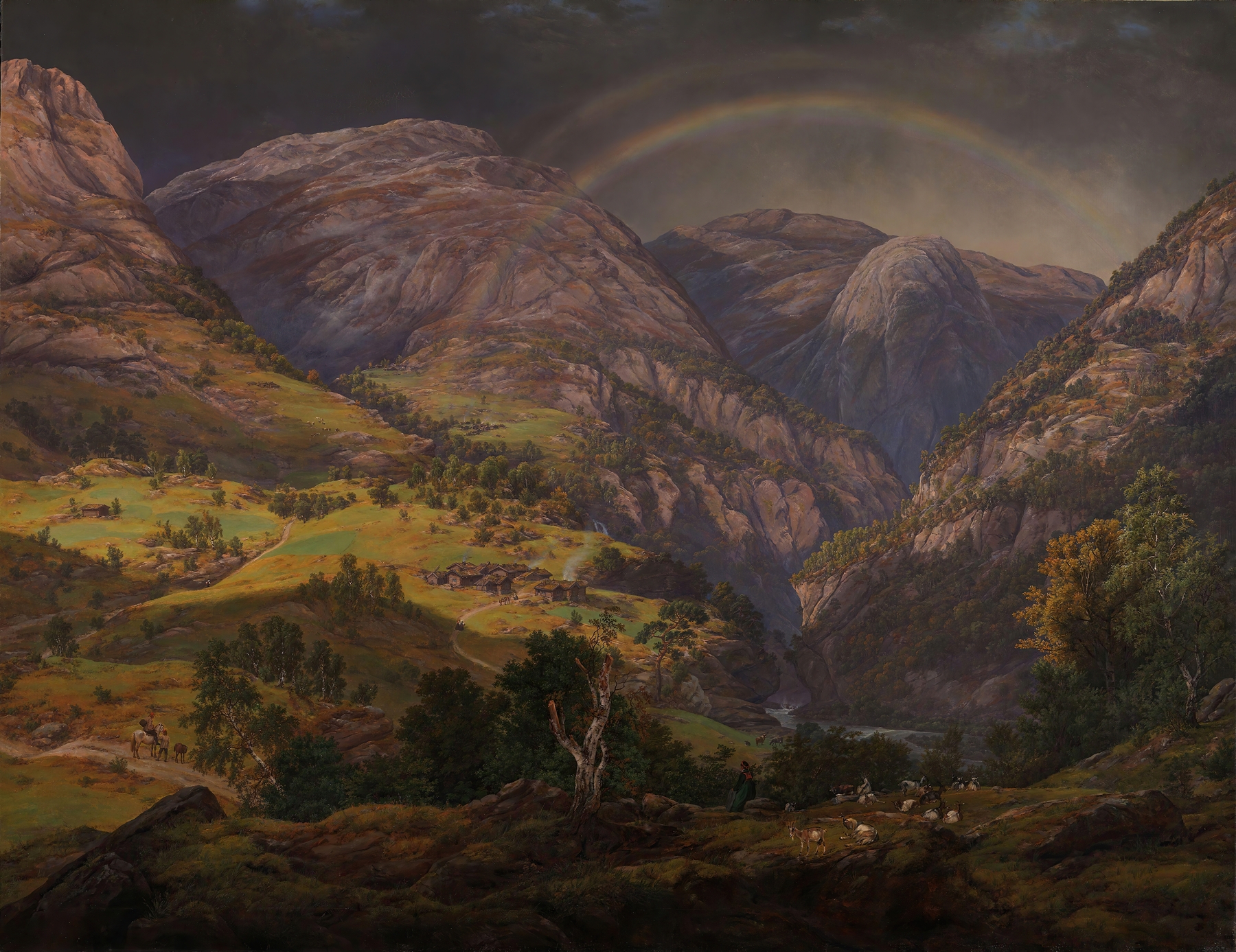
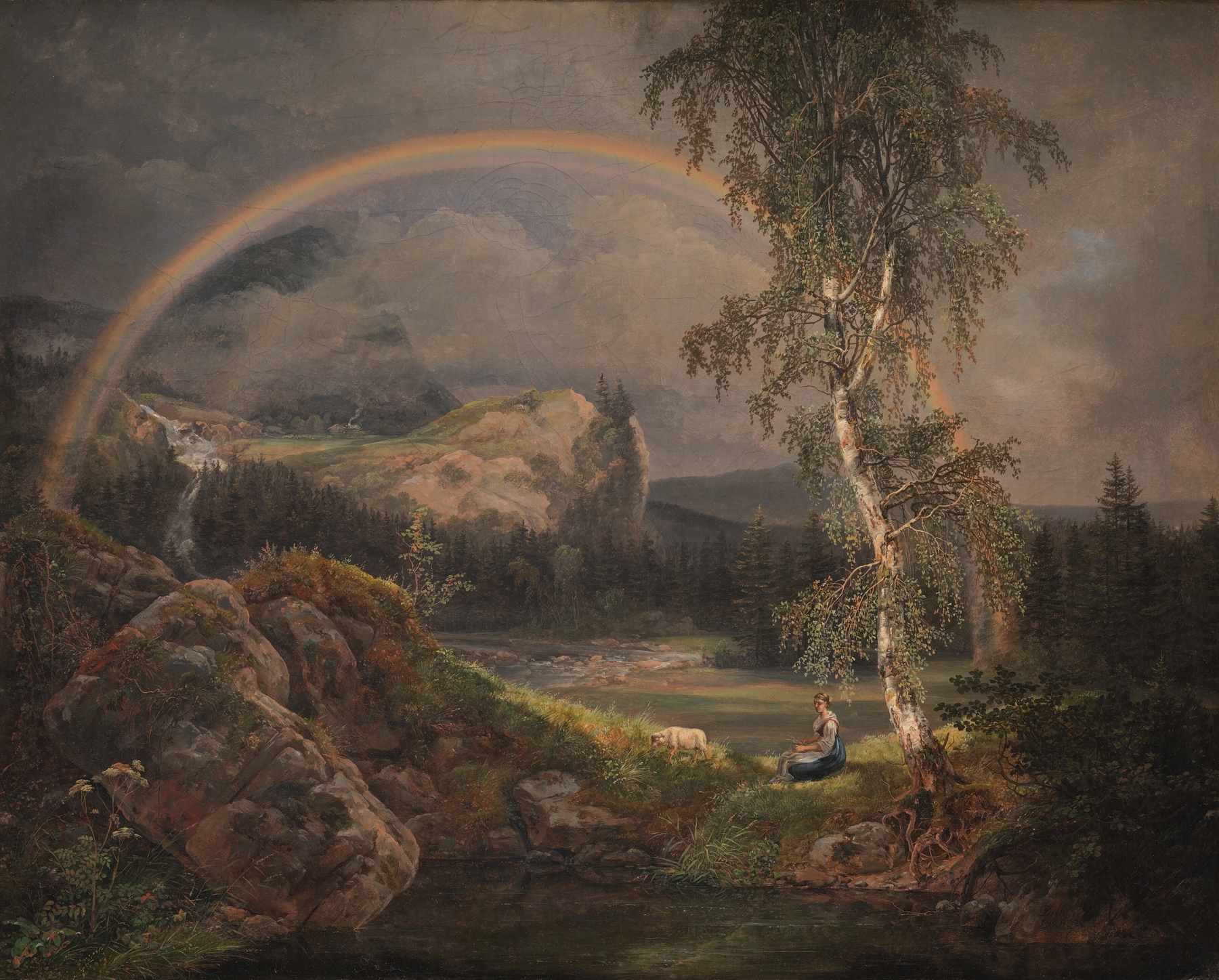
What if silence could speak through light? In Norwegian Landscape with a Rainbow, the scene unfolds like a whispered promise, where an expansive sky cradles the delicate interplay of nature's elements, hinting at the void between storm and serenity. Look to the left at the striking contrast between dark, heavy clouds and the vibrant arc of the rainbow. The artist employs soft, muted greens and blues, evoking a sense of tranquility that permeates the scene.
Notice how your gaze is drawn along the river's winding path, leading you through the verdant valley, and to the distant mountains standing sentinel under a dramatic sky. The brushwork captures the fleeting quality of light, inviting your heart to linger on the tension between the impending storm and the emerging calm. The juxtaposition of stormy clouds with the gentle colors of the rainbow reflects the complex emotions of hope amidst despair. The void, represented by the shadowy areas, suggests an emotional depth that invites introspection.
As you explore further, consider the interplay of nature and human emotion; the piece captures a moment of transition, where darkness gives way to light, echoing the struggles of life and the beauty that can arise from it. In 1821, Johan Christian Dahl was immersed in the Romantic movement, painting in Dresden, Germany, where he was influenced by the breathtaking Norwegian landscapes of his youth. This period marked a growing fascination with nature's sublime qualities, and Dahl's work epitomized the movement’s emphasis on emotion and the spiritual connection to the world. As he crafted this scene, he sought to translate the raw beauty of Norway into a visual symphony that resonates with both wonder and introspection.