Sick Woman — History & Analysis
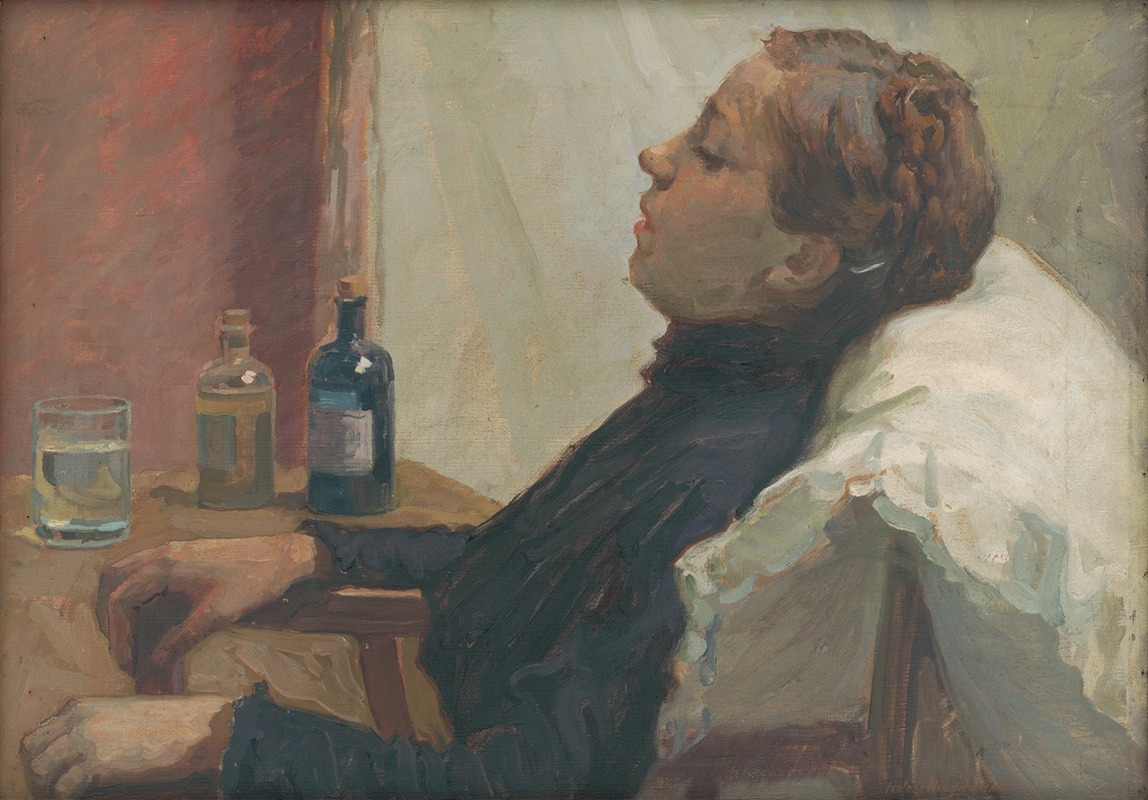
“Every silence here is a confession.” In the stillness of pain, chaos resonates with unsaid words, lending depth to human frailty and resilience. Look closely at the figure at the center, where muted colors swirl amidst a backdrop of disarray. The woman’s gaze is heavy, yet penetrating, reflecting a world of turmoil. Observe the ethereal quality of the light that drapes over her shoulders, contrasting vividly with the surrounding shadows, emphasizing her vulnerability.
The brushstrokes dance with disorder, mirroring her fragile state while inviting the viewer to explore the emotional landscape of her suffering. Dive deeper into the chaotic arrangement of elements surrounding her—a jumbled collection of objects that might symbolize the burdens of life and unfulfilled promises. The fragmented nature of the composition speaks to the dissonance between inner turmoil and external reality. Each detail—be it a discarded trinket or a stray fabric—holds significance, suggesting layers of unvoiced sorrow intertwined with the complexity of human experience.
In 1912, during a period of shifting artistic movements, the artist found himself grappling with personal and societal upheaval. Living in Europe amidst the tensions of pre-war existence, he created this piece not merely as a reflection of illness but as a poignant commentary on the chaotic essence of life itself. Halász-Hradil’s work resonates with the growing awareness of human emotion's rawness, capturing a moment where art becomes a vessel for collective experience and empathy.