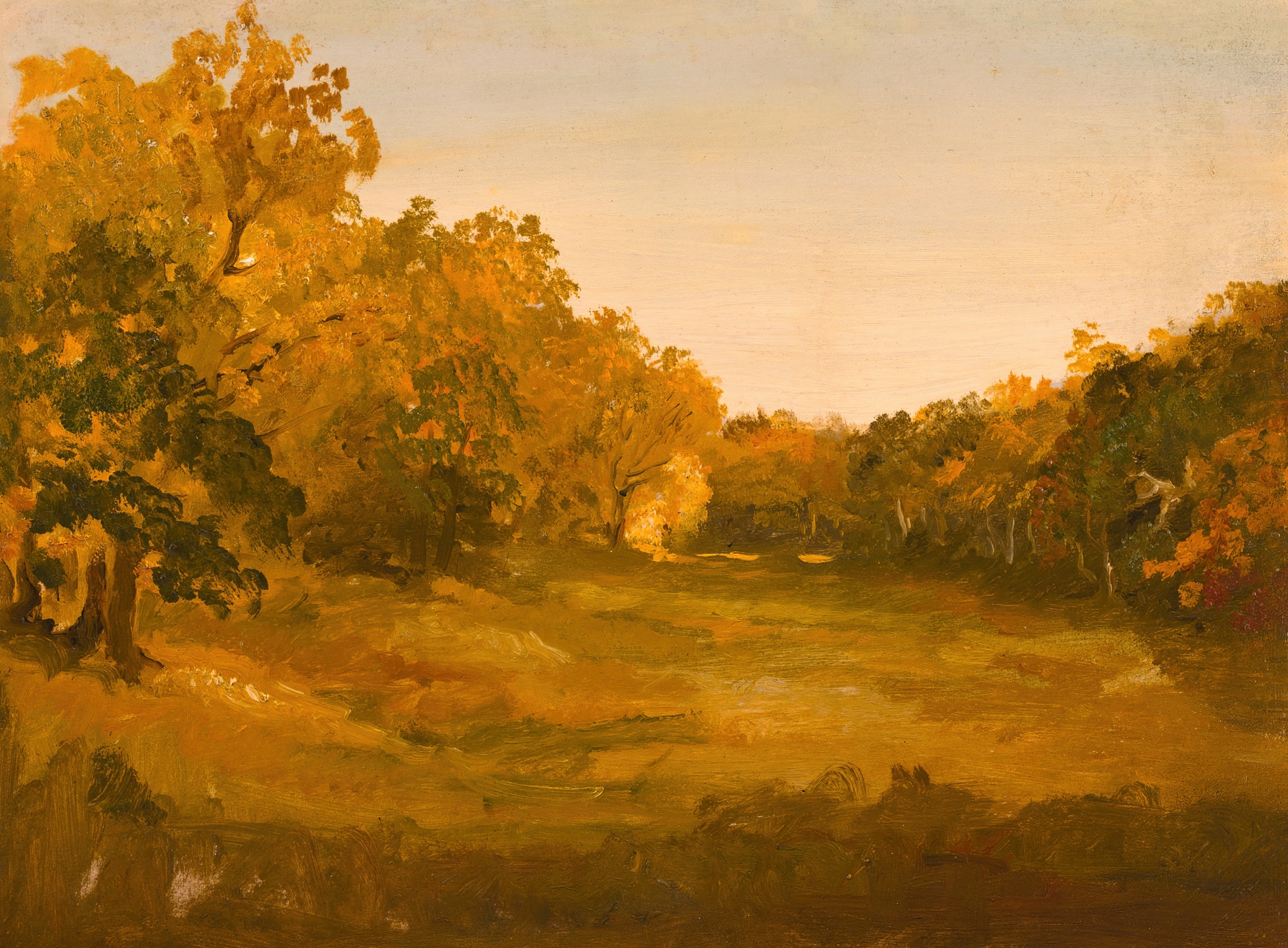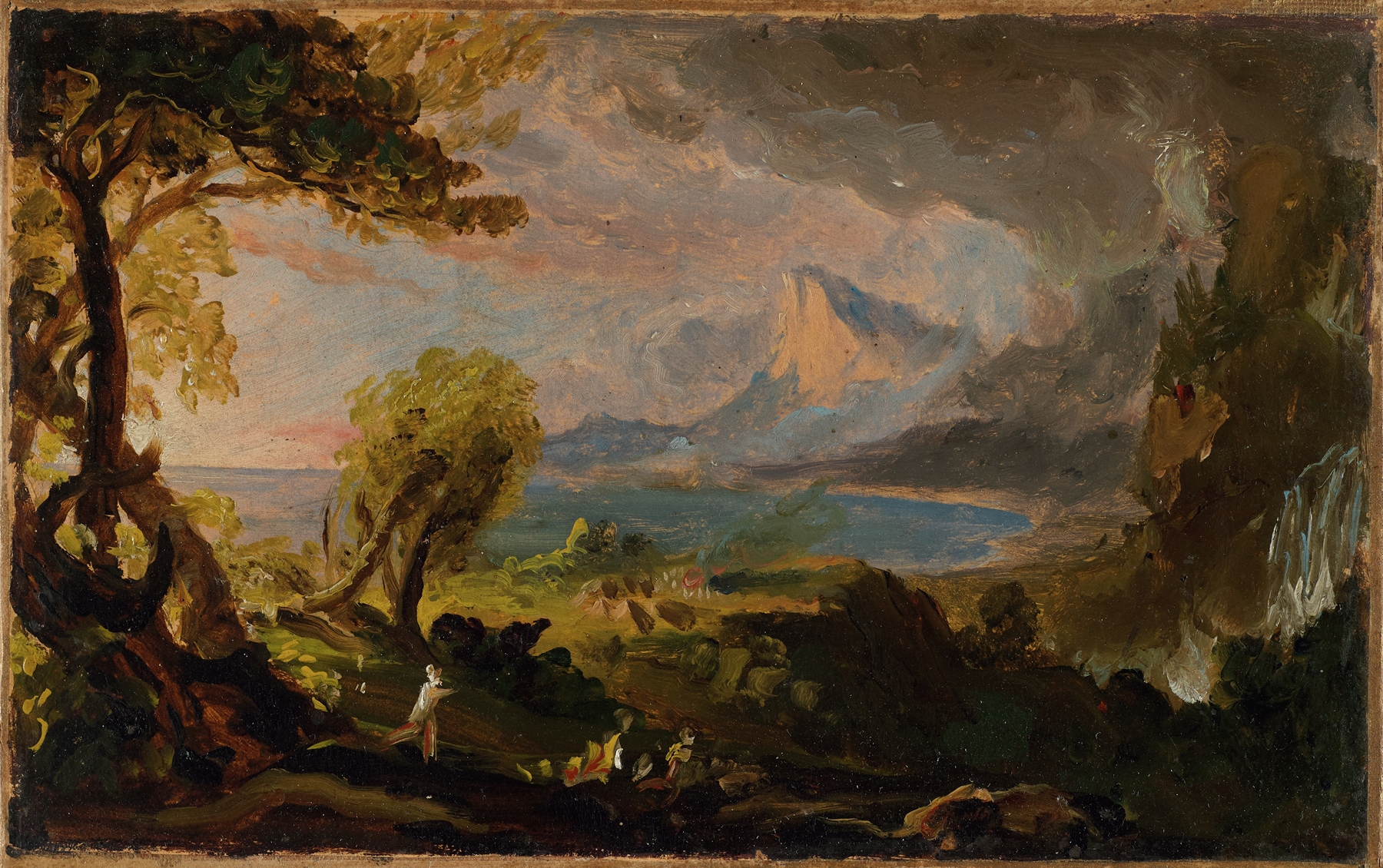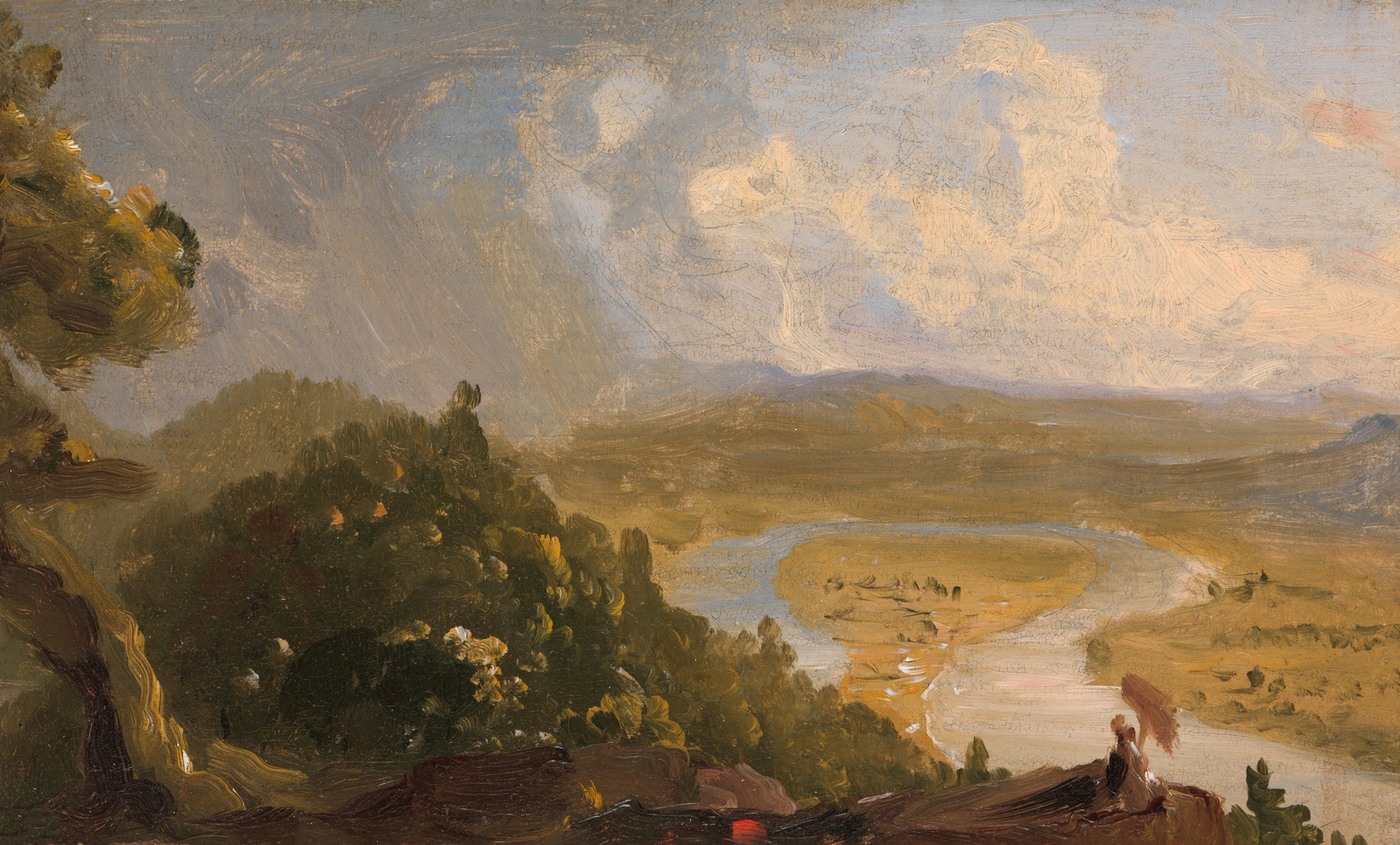
Sketch for View from Mount Holyoke, Northampton, Massachusetts, after a Thunderstorm (The Oxbow) — History & Analysis
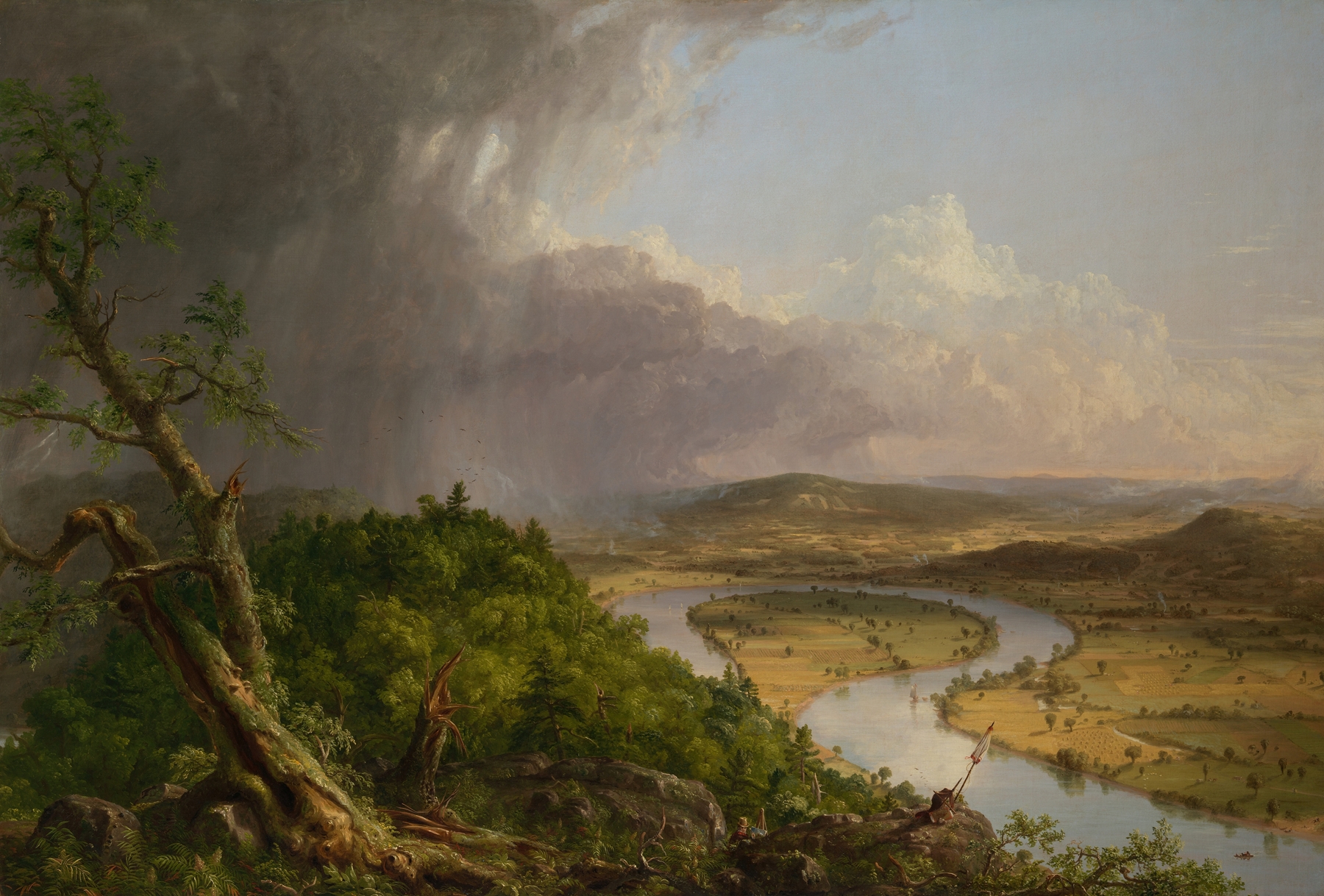
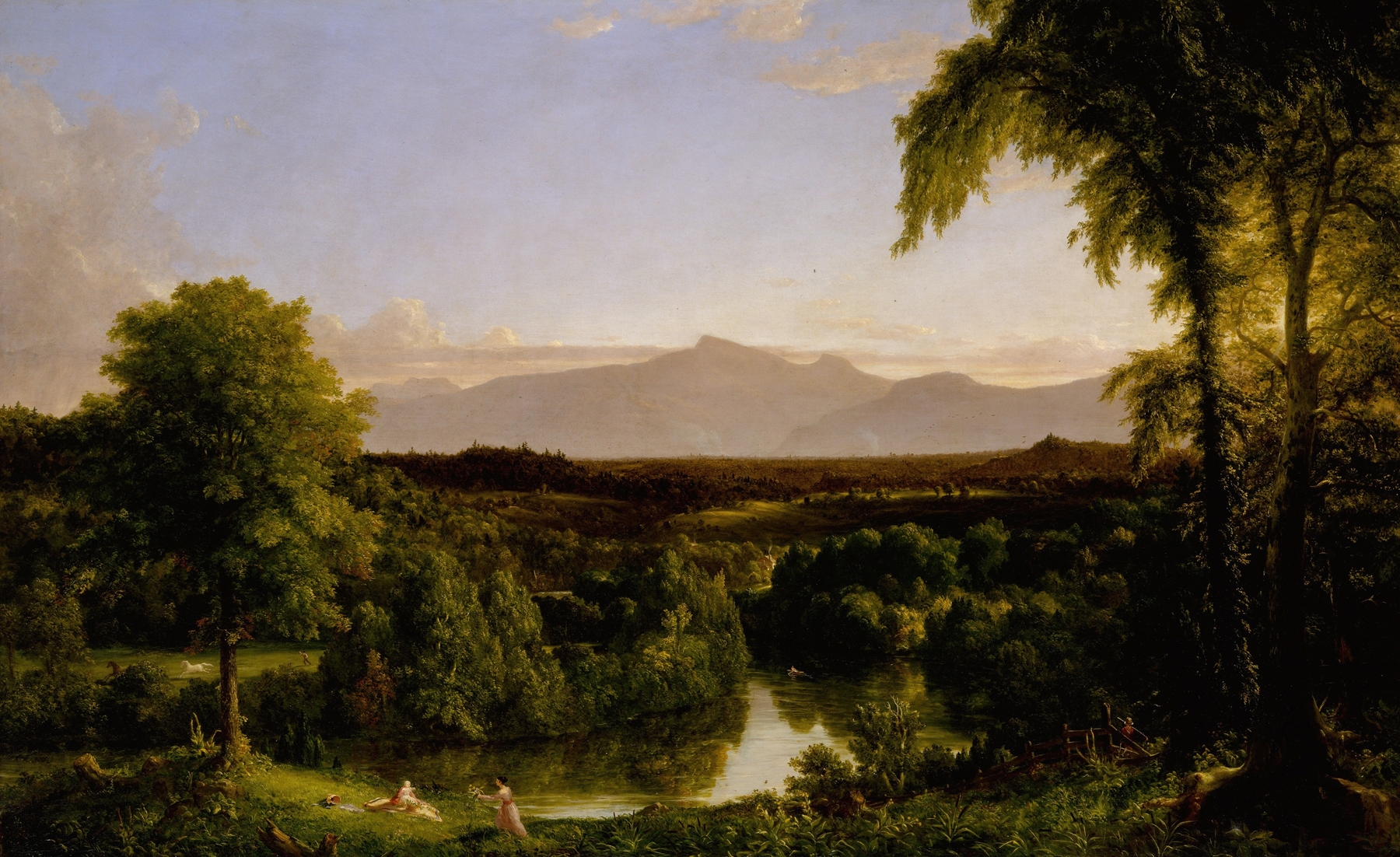
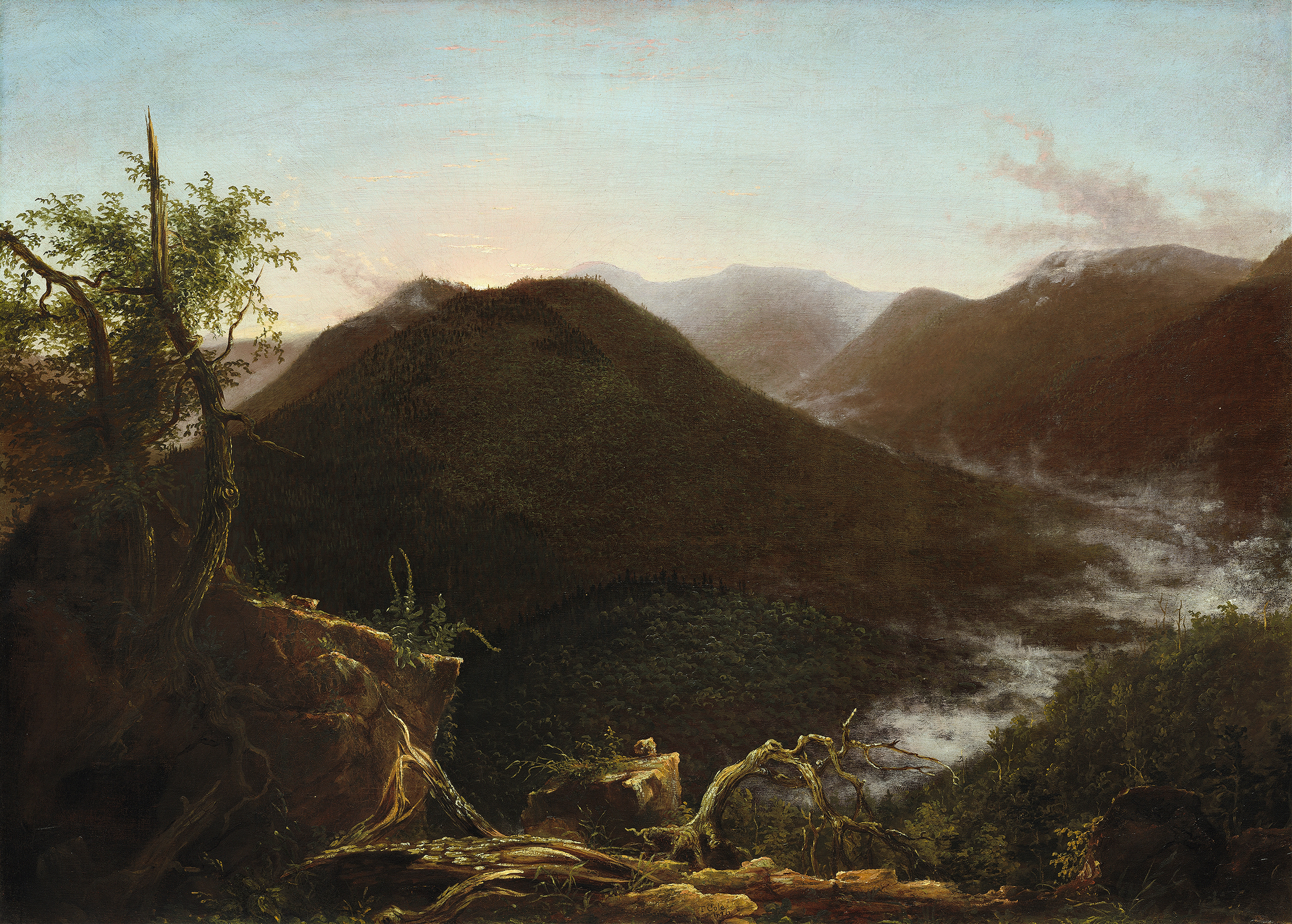
“Under the brush, chaos becomes grace.” In the wake of nature's fury, a breathtaking panorama emerges—a portrayal of tranquility born from tumult. The meeting of storm and calm invites contemplation on creation itself, revealing the delicate balance between destruction and rebirth. Look to the left at the dramatic dark clouds, their turbulence frozen in time, swirling with shades of deep gray and blue. The contrast is striking as your gaze shifts to the right, where the sunlight spills like liquid gold over the lush, verdant landscape.
Notice how the composition divides the canvas, emphasizing the dichotomy between the tempestuous sky and the serene valley below, rendered with meticulous detail that hints at both ferocity and beauty. Delve deeper into the lush greenery, where small figures work the land, symbolizing humanity’s resilience amidst nature’s whims. The winding river reflects a sense of continuity and life, while the jagged mountains stand sentinel over the scene, representing the eternal struggles between man and the wild. These elements coalesce to evoke themes of hope and the perpetual cycle of creation, inviting the viewer to ponder their place within this grand narrative.
In 1836, at the height of the Hudson River School movement, the artist found himself at a crossroads in both his career and the larger American art scene. Living in New York, Cole was deeply influenced by Romanticism, seeking to capture the beauty and sublimity of the American landscape. This work emerged during a period of increasing exploration and appreciation of nature, reflecting broader societal shifts towards environmental awareness and national identity.