Sommerliche Dorfstraße — History & Analysis
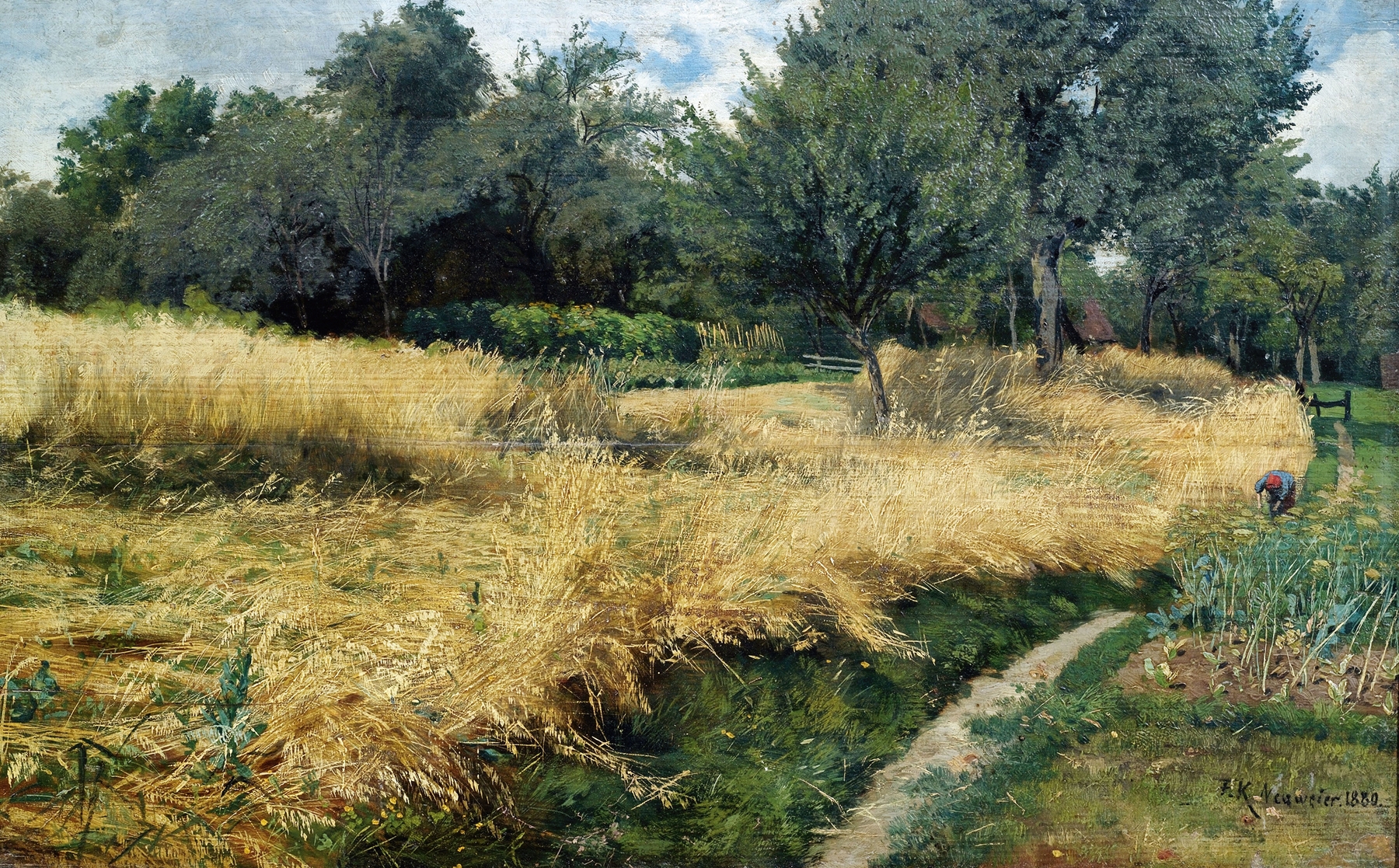
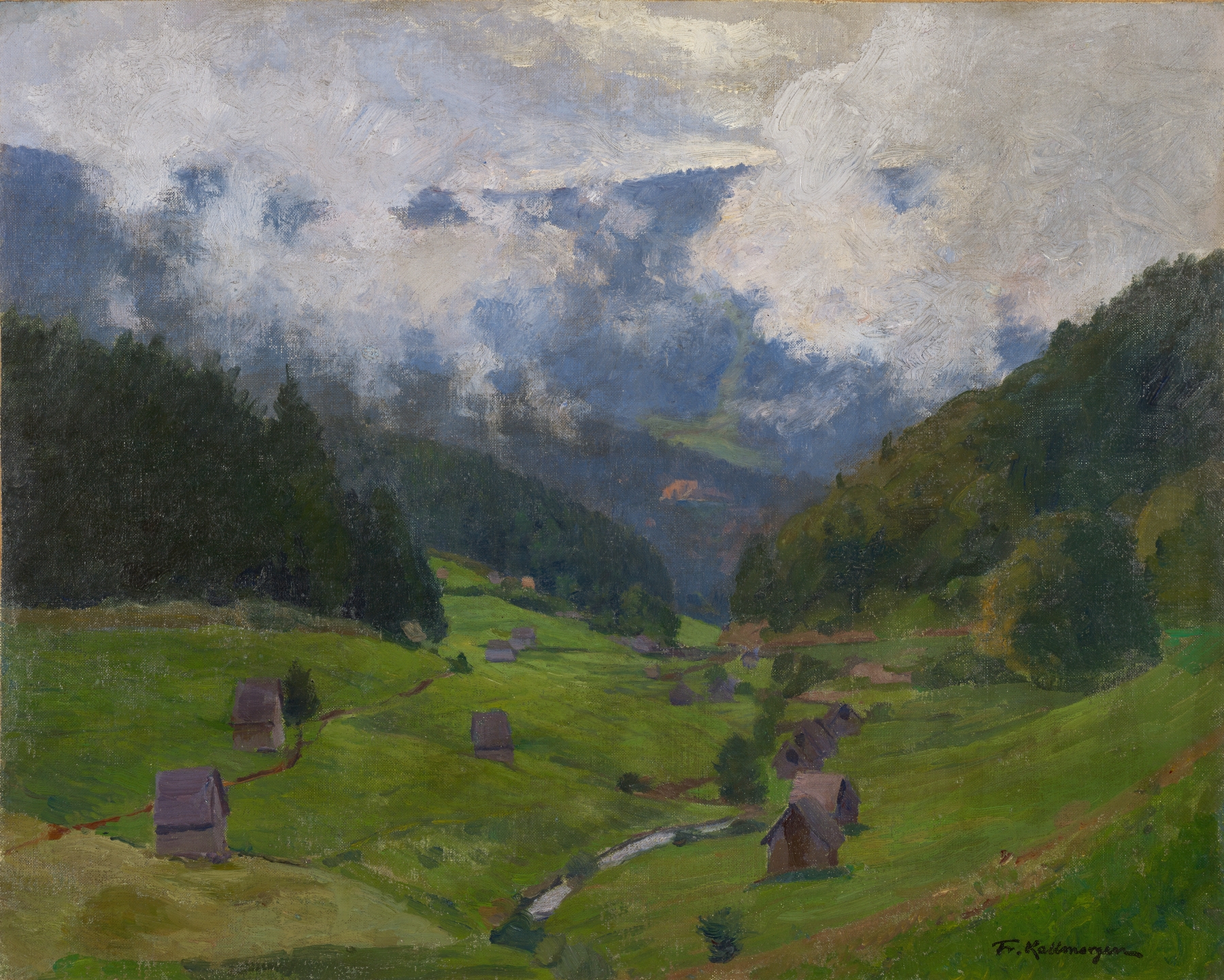
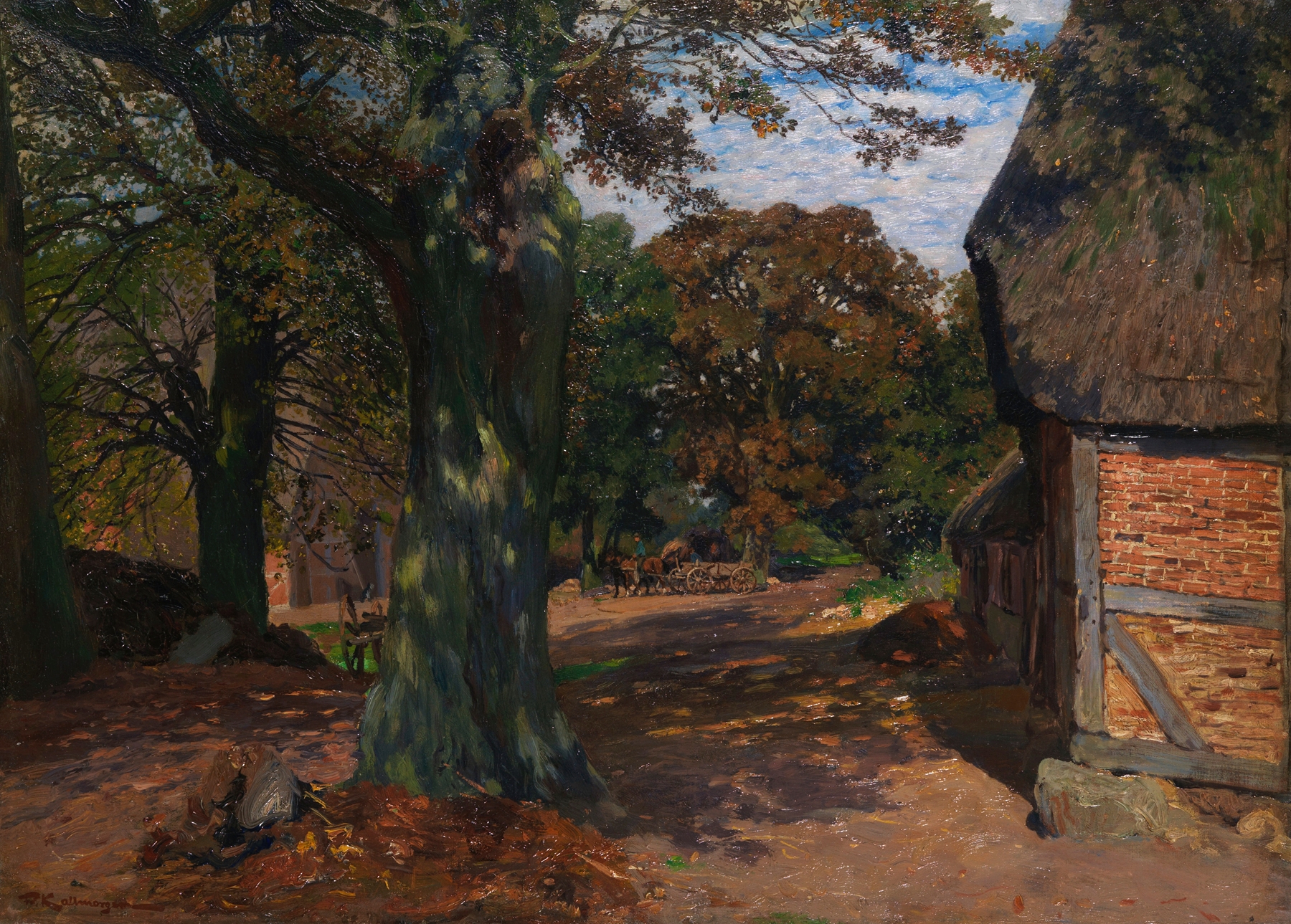
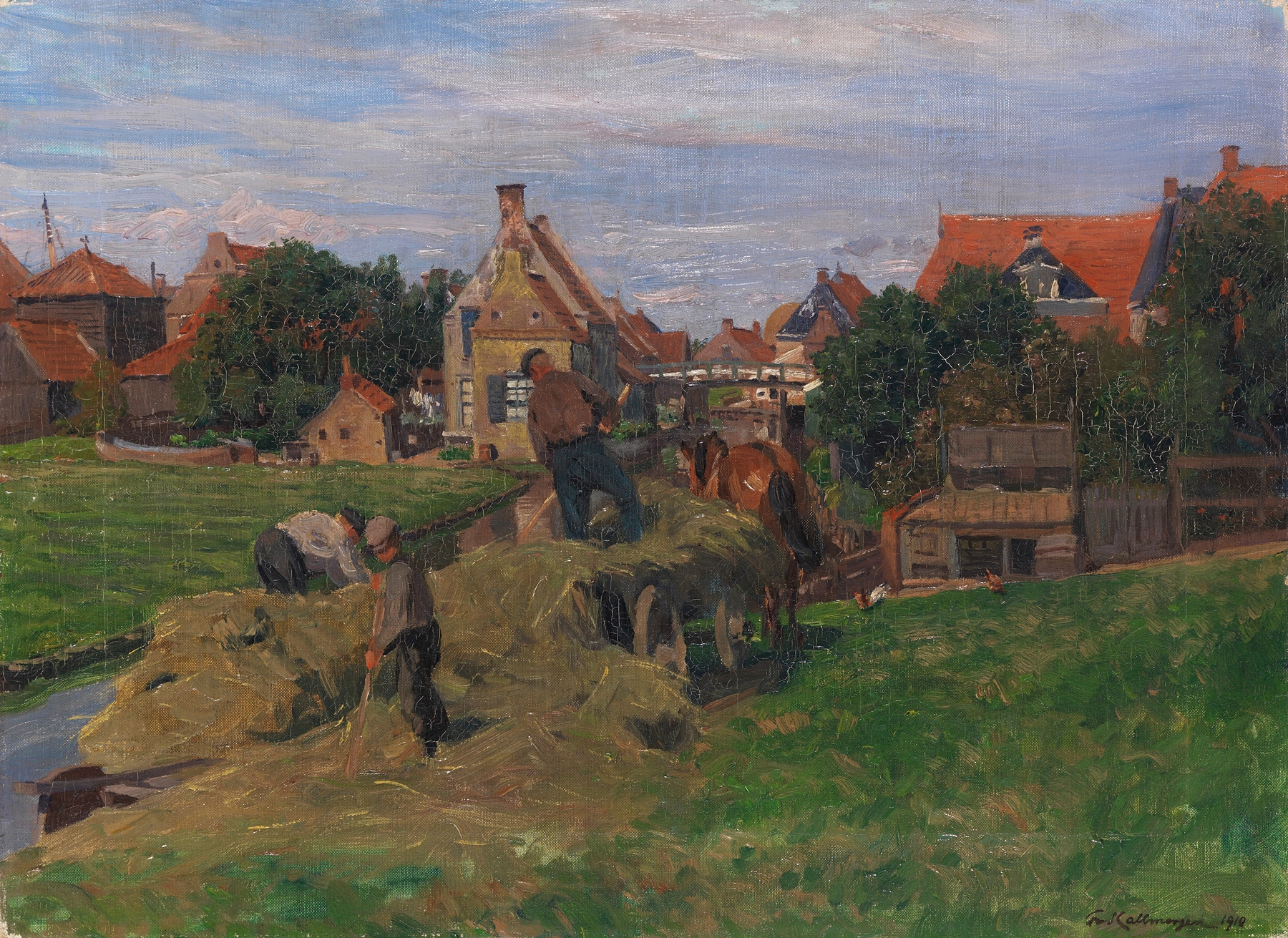
Could beauty survive in a century of chaos? This question resonates deeply within the gentle embrace of a summer village street, where serene landscapes juxtapose the turbulence of their time. First, look to the foreground, where a cobblestone path meanders invitingly under the golden light, inviting the viewer's gaze to wander. Notice the vibrant greens of the surrounding foliage, meticulously detailed, as they frame the scene with a lushness that feels both alive and nostalgic.
The quaint houses, adorned with blooming flowers, seem to whisper stories of simpler times, their warm hues contrasting against the cool blues of the sky that hint at dusk approaching. Deeper insights emerge as you observe the figures walking along the street. Their postures convey a sense of stillness, reflective of a collective pause amidst the rhythms of daily life. The shadowed corners and dappled sunlight create a dialogue between light and darkness, suggesting a bittersweet tension—moments of joy laced with the melancholy of impermanence.
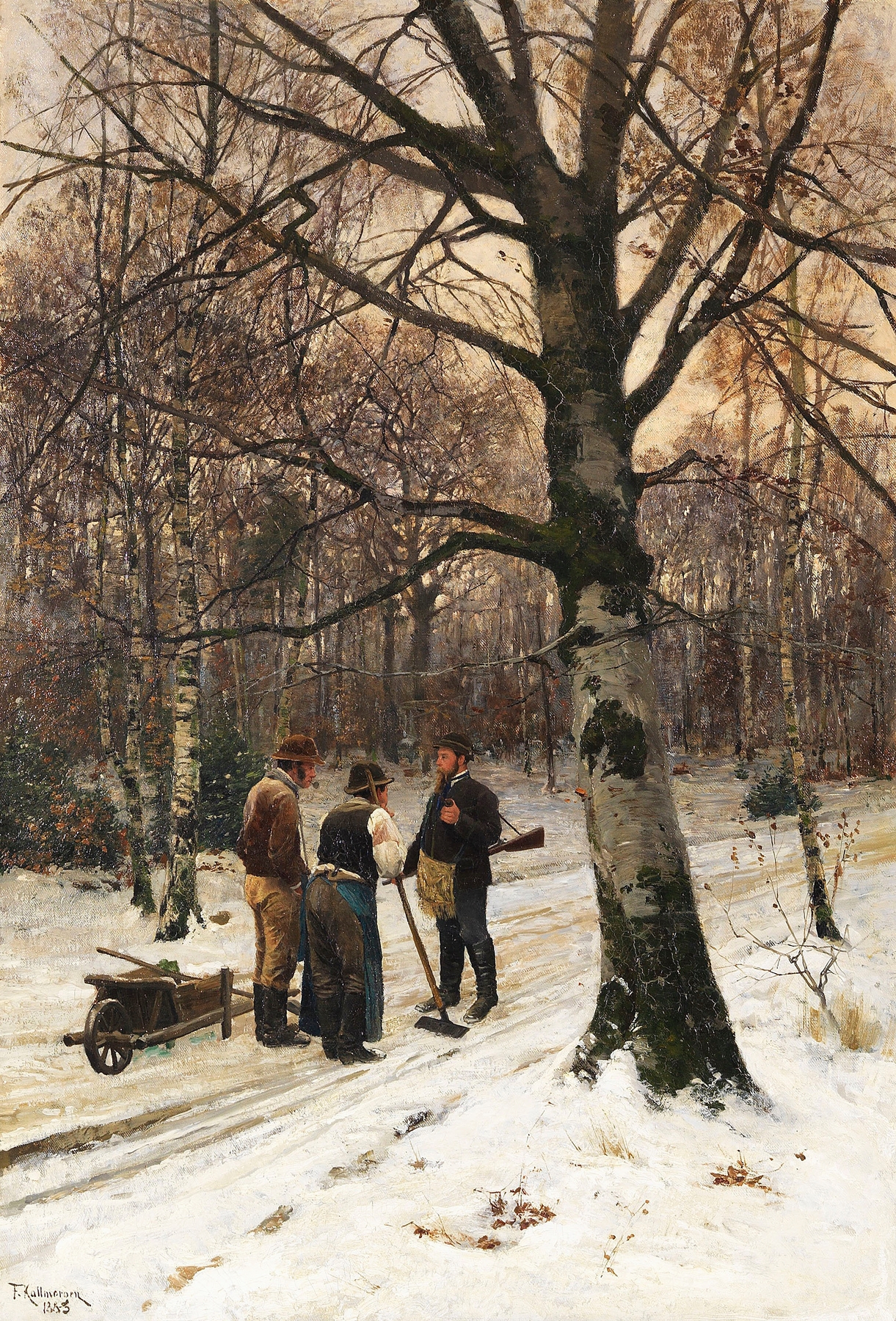
Each element in this idyllic setting invites contemplation on the fragility of beauty in the face of unseen turmoil. In 1885, the artist painted this work during a period of tremendous change in Europe, as industrialization began to reshape society. Kallmorgen, entrenched in the picturesque traditions of realism, sought to capture the quietude of rural existence against a backdrop of impending modernity. His commitment to depicting the beauty of ordinary life reflects both a personal and cultural yearning for solace amidst the chaos of an evolving world.