Southwark Bridge by Moonlight — History & Analysis
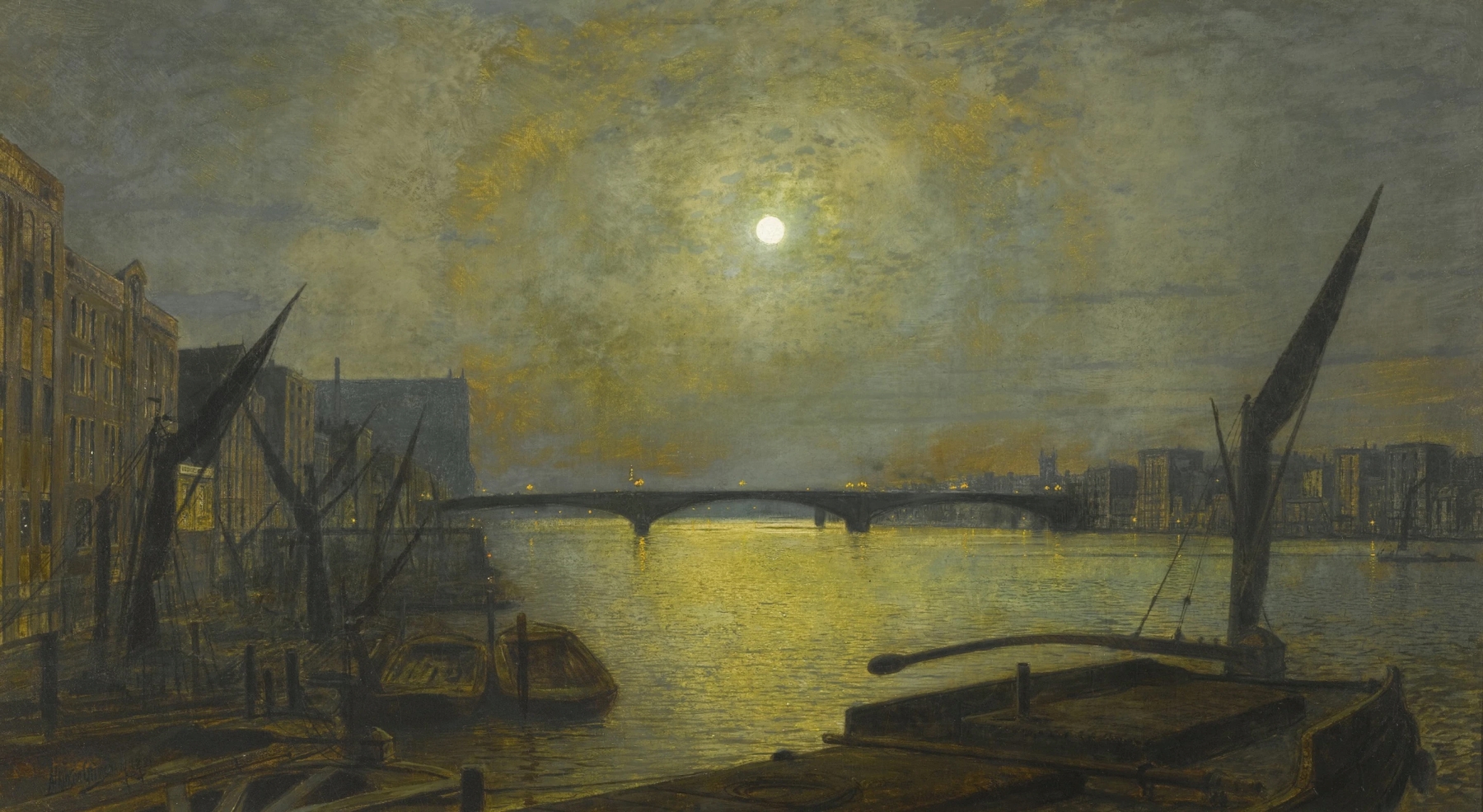
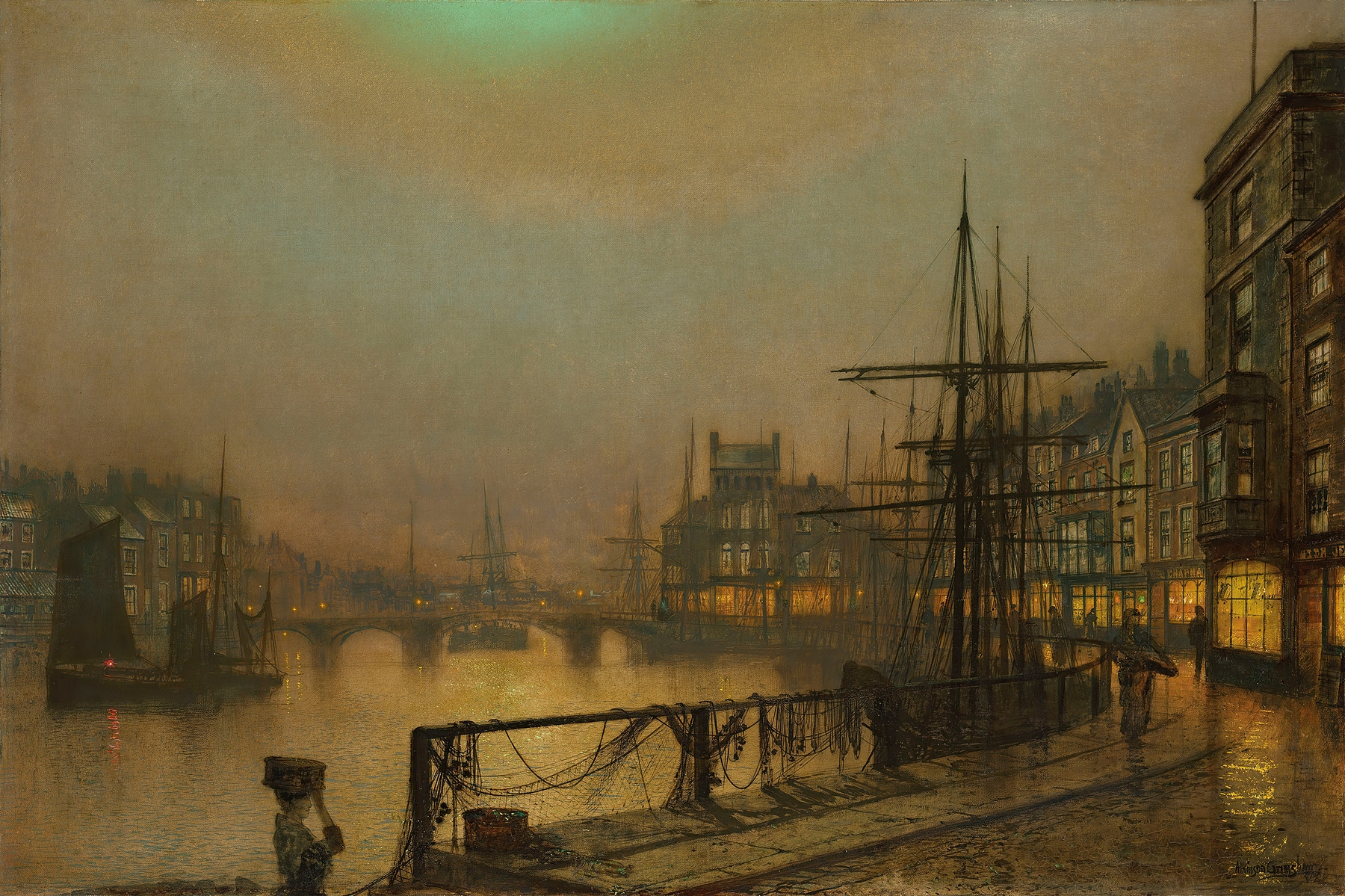
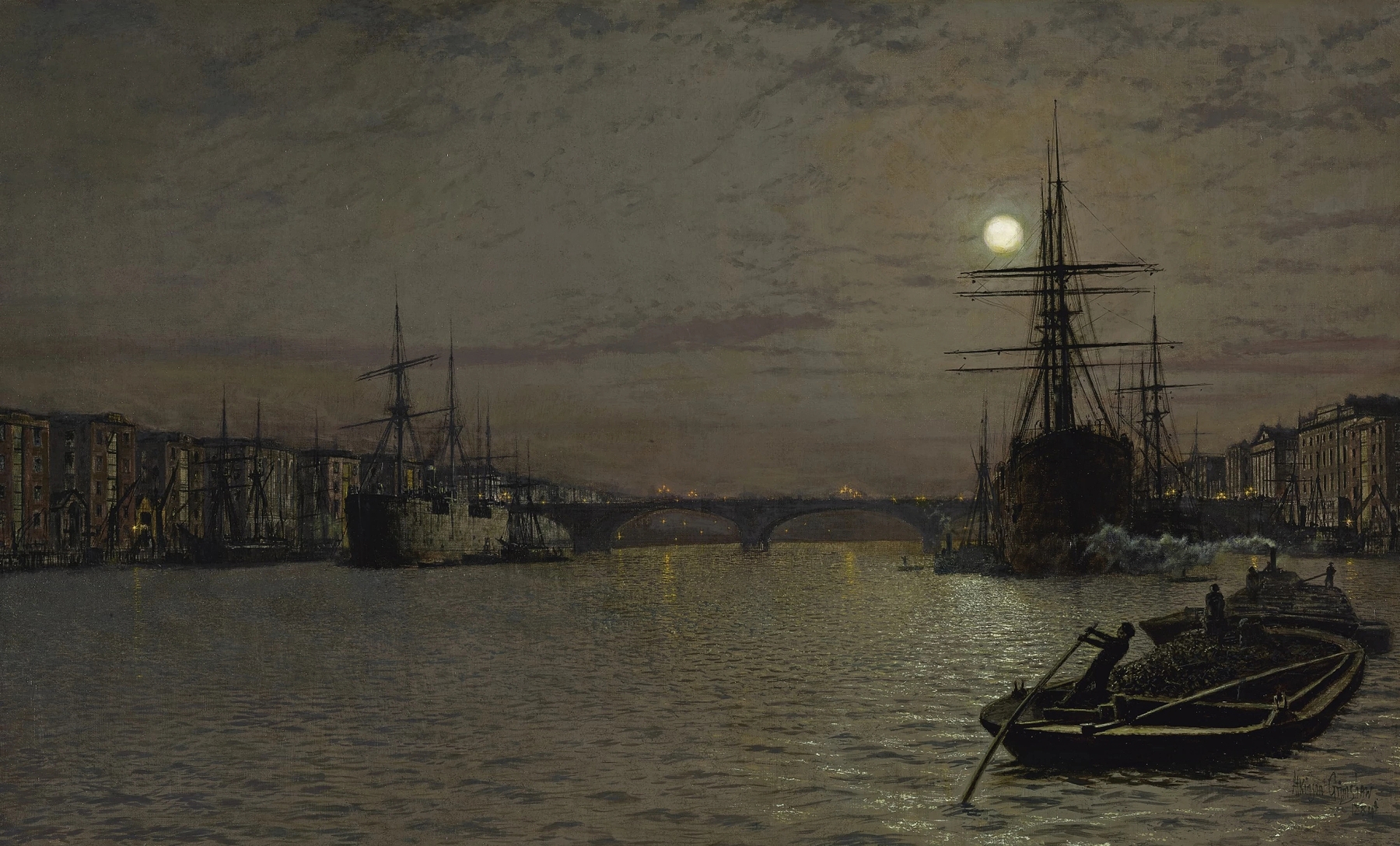
“Art reveals the soul when the world turns away.” In the stillness of night, a haunting moonlight beacons, casting an ethereal glow across the water, hinting at the turbulent emotions lying just beneath the surface. Shadows dance upon the bridge, whispering secrets of those who once crossed it, while something darker flickers in the corners of the viewer's mind. Look to the left at the luminescent orb bathing the scene in silver light, its reflection shimmering like fractured glass on the Thames. Notice how the deep blues and purples blend seamlessly into one another, evoking a sense of calm that belies the underlying tension.
The bridge, both imposing and inviting, stretches across the canvas, its arches curving gracefully, yet suggesting a barrier between the safety of the shore and the unknown depths below. Within this serene yet unsettling atmosphere, contrasts emerge: the stillness of the water against the towering, intricate structure above; the placid moonlight juxtaposed with the dark void of the night sky. Delve into the small details—the empty boats waiting listlessly, their absence hinting at stories of loss or departure, while the far-off lamplight flickers, suggesting both warmth and the potential for violence lurking in the shadows. This tension invites contemplation of the hidden struggles that lie beneath the beauty of the surface.
In 1887, Grimshaw was entrenched in a period of personal and professional challenge, navigating the changing tides of the art world. Living in Leeds, he was at the forefront of the late Victorian period’s artistic exploration, which often engaged with the themes of urban life and nature's haunting beauty. This piece reflects not only his technical mastery of light and shadow but also a deepening sensitivity to the emotional currents flowing through the rapidly industrializing society around him.