Spearing Eels — History & Analysis
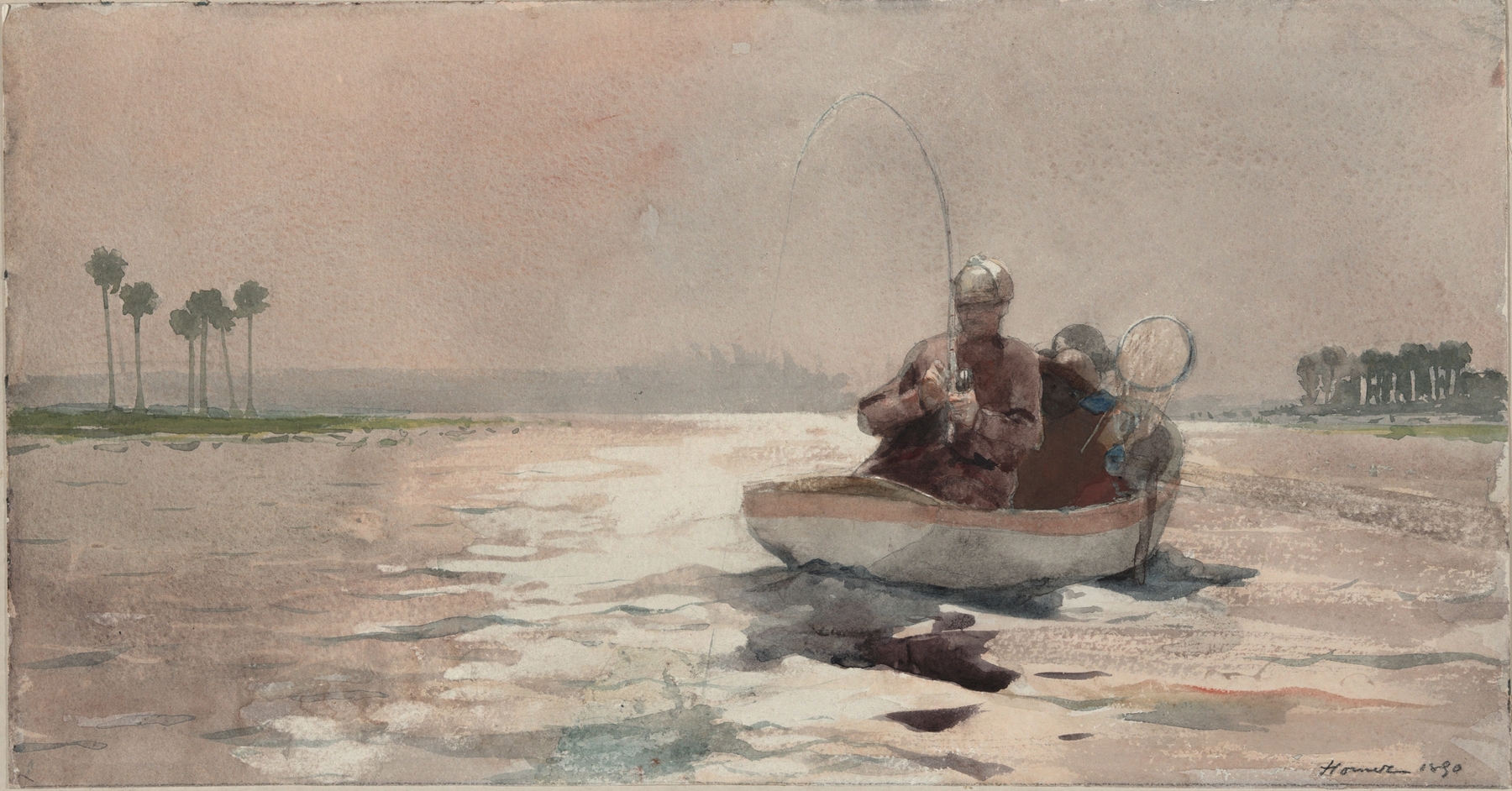
Can beauty exist without sorrow? In Winslow Homer’s Spearing Eels, the delicate interplay of life and struggle unfolds, inviting contemplation of the tensions that accompany quiet moments of existence. Look to the left at the figure poised in a small boat, sharply delineated against the muted, earthy tones of the water. The gentle ripples reflect a soft light, suggesting the early morning or late afternoon glow.
The artist’s meticulous brushwork captures the figure’s focused expression, a testament to the patience and skill required for this age-old practice. Notice how the subtle variations of blue and green in the water contrast with the warm browns of the boat, creating a harmonious balance that draws the eye toward the central action. Delve deeper, and you will find layers of meaning: the solitary figure conveys a sense of introspection amidst nature’s bounty, hinting at the isolation that often accompanies such endeavors. The act of spearing eels, while a pursuit of sustenance, also evokes a struggle against unseen forces—perhaps a metaphor for the human condition itself.
The stillness of the scene belies an undercurrent of tension, as nature's beauty and the harsh realities of survival intertwine. Homer painted Spearing Eels in the late 1800s, during a period when he was embracing the rugged vitality of American life. Living in Maine, he was deeply influenced by the coastal landscapes and the lives of those who inhabited them. This work reflects his shift toward realism, focusing on everyday labor with an appreciation for both its hardships and its inherent beauty, resonating with the viewer in a profound, timeless way.