Staande vrouw vastgepakt door man, andere man kijkt toe in herberg — History & Analysis
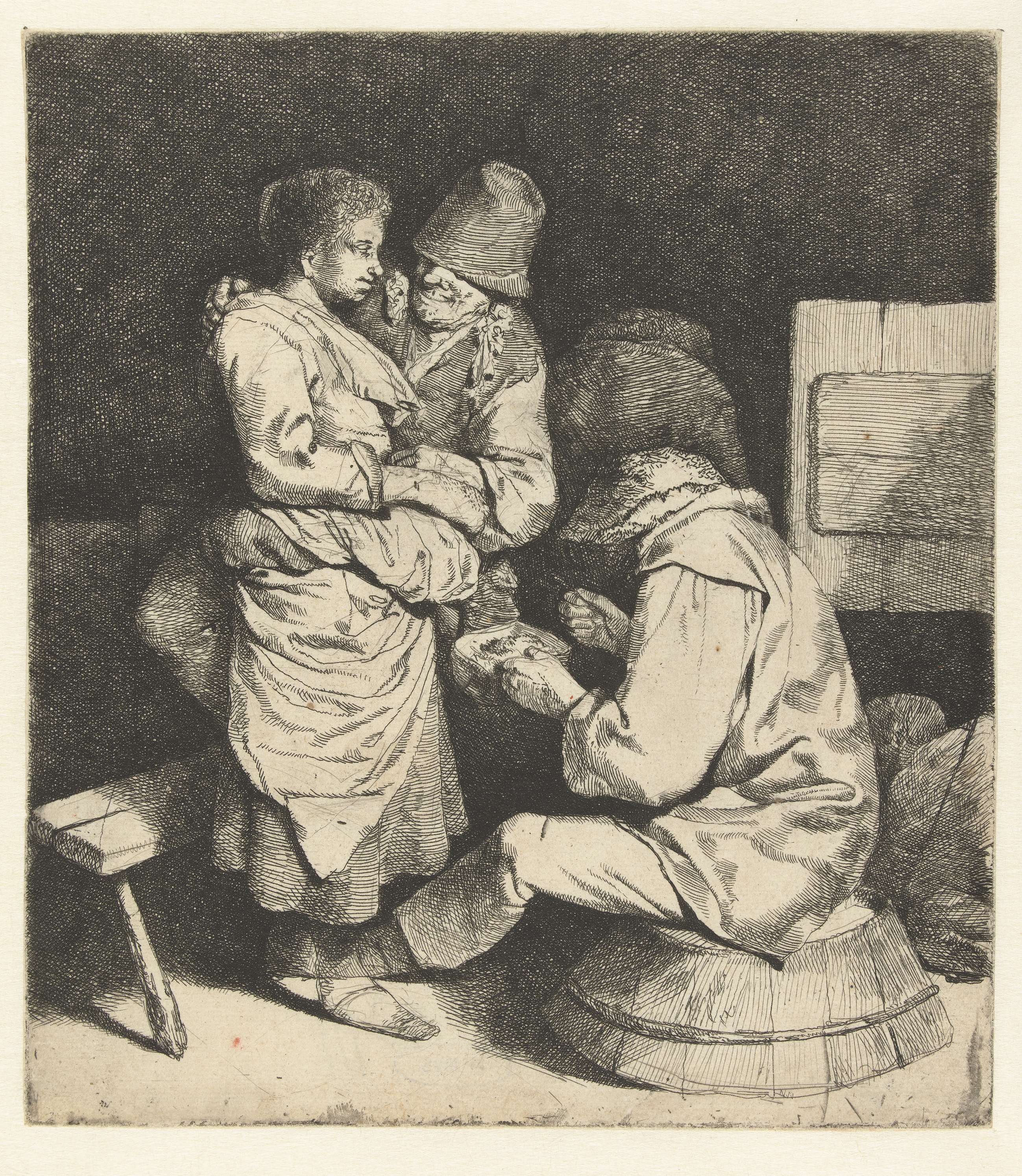
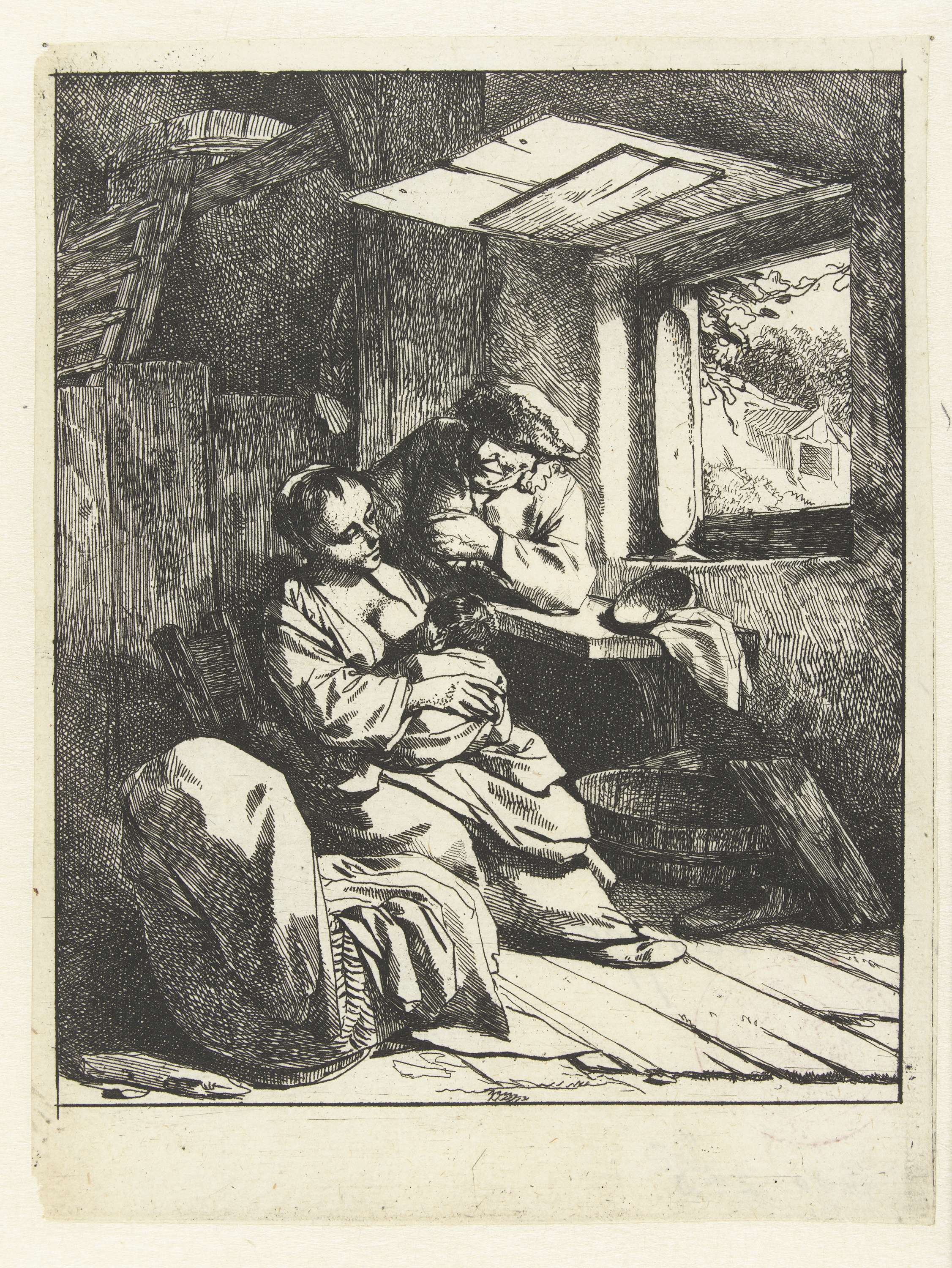
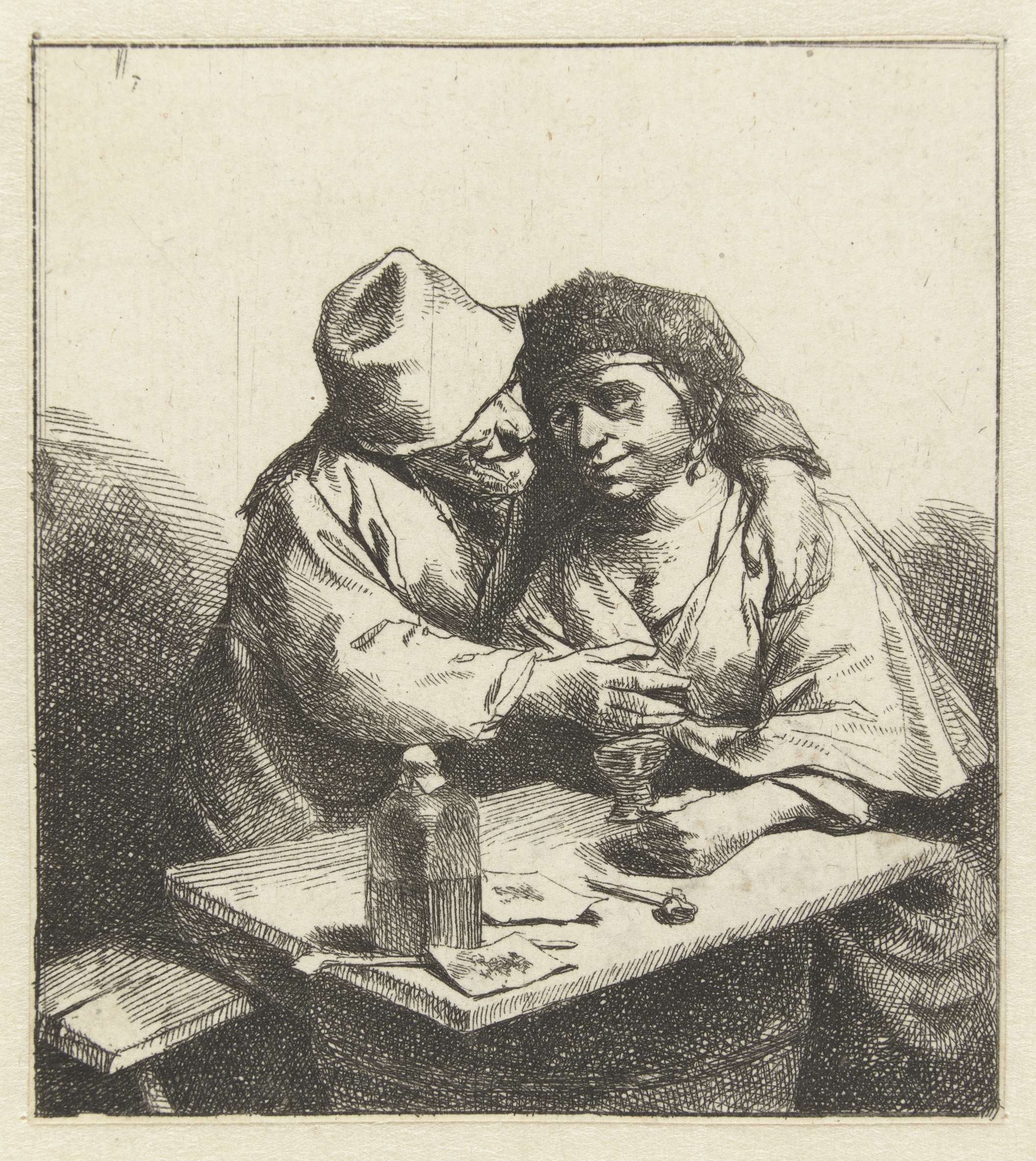
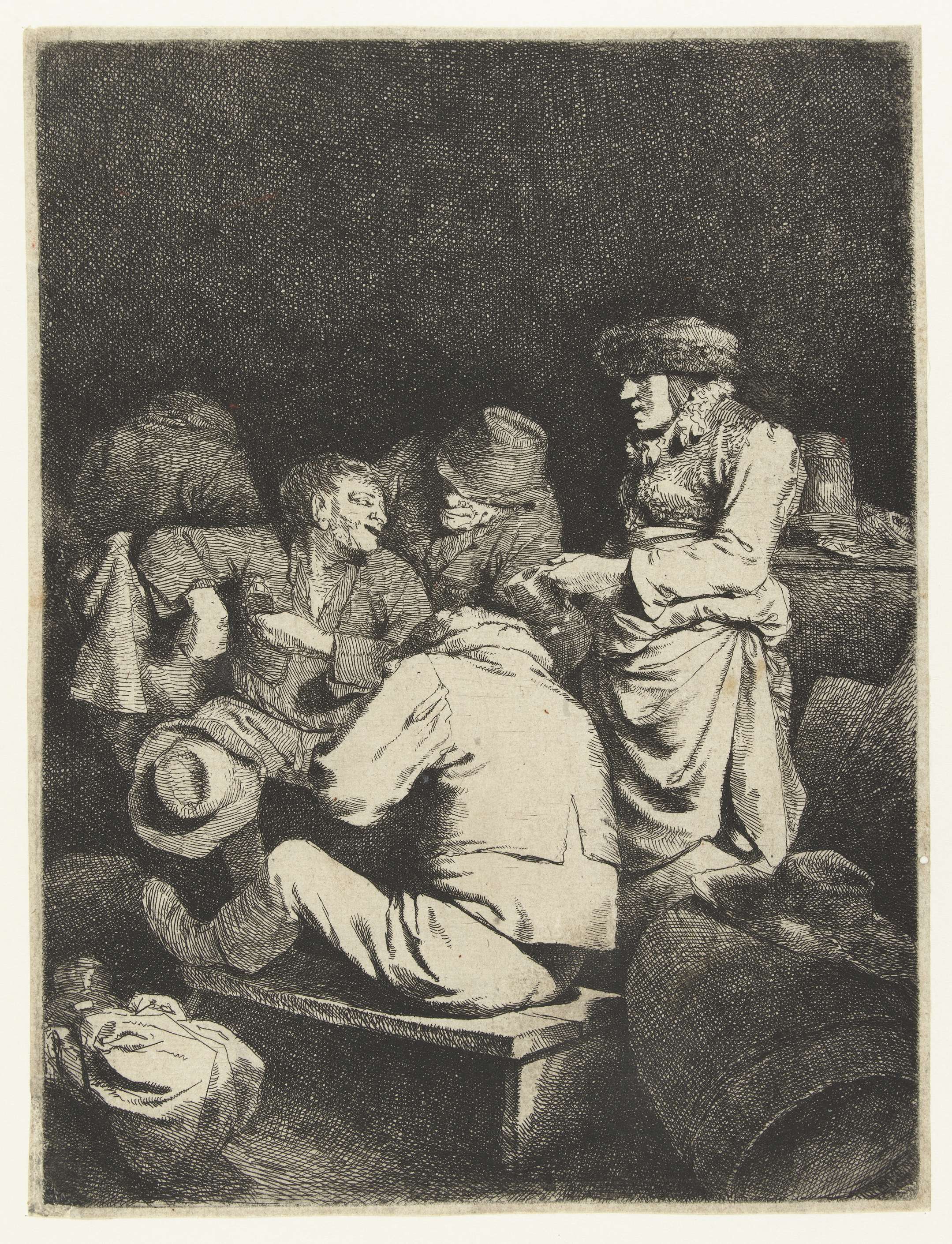
What secret hides in the quiet of the canvas? In Cornelis Pietersz. Bega’s work, the tension between innocence and aggression unfolds in a single moment, leaving viewers to grapple with the emotions concealed beneath the surface. Focus first on the central figure, the standing woman, whose startled expression draws immediate attention. Her delicate features, illuminated by soft light, contrast sharply with the imposing presence of the man who has seized her wrist.
Notice how the artist employs subtle earth tones to convey the warmth of the tavern setting, while the stark play of shadows enhances the sense of unease. The third figure, a passive observer in the background, adds another layer of complexity, inviting speculation about his role in this unsettling dynamic. Bega deftly captures a moment rife with hidden meanings. The juxtaposition of the woman’s innocence and the man’s aggressive grip creates a poignant commentary on power dynamics and societal norms. The observer’s detached gaze mirrors the audience's own complicity in witnessing this charged encounter, inviting a reflection on moral responsibility.
Every brushstroke reveals the fragility of human interaction, as the tavern, a space of refuge, becomes a stage for tension and potential conflict. Created between 1642 and 1664, this painting emerged during a time of profound shifts in Dutch society and art. Bega, known for his genre scenes that often showcase everyday life, found himself amidst the burgeoning Dutch Golden Age, where realism and psychological depth flourished. This period was marked by a focus on individual experience, a theme that resonates powerfully within the depicted scene, offering insight into both the artist's world and the universal struggles of humanity.