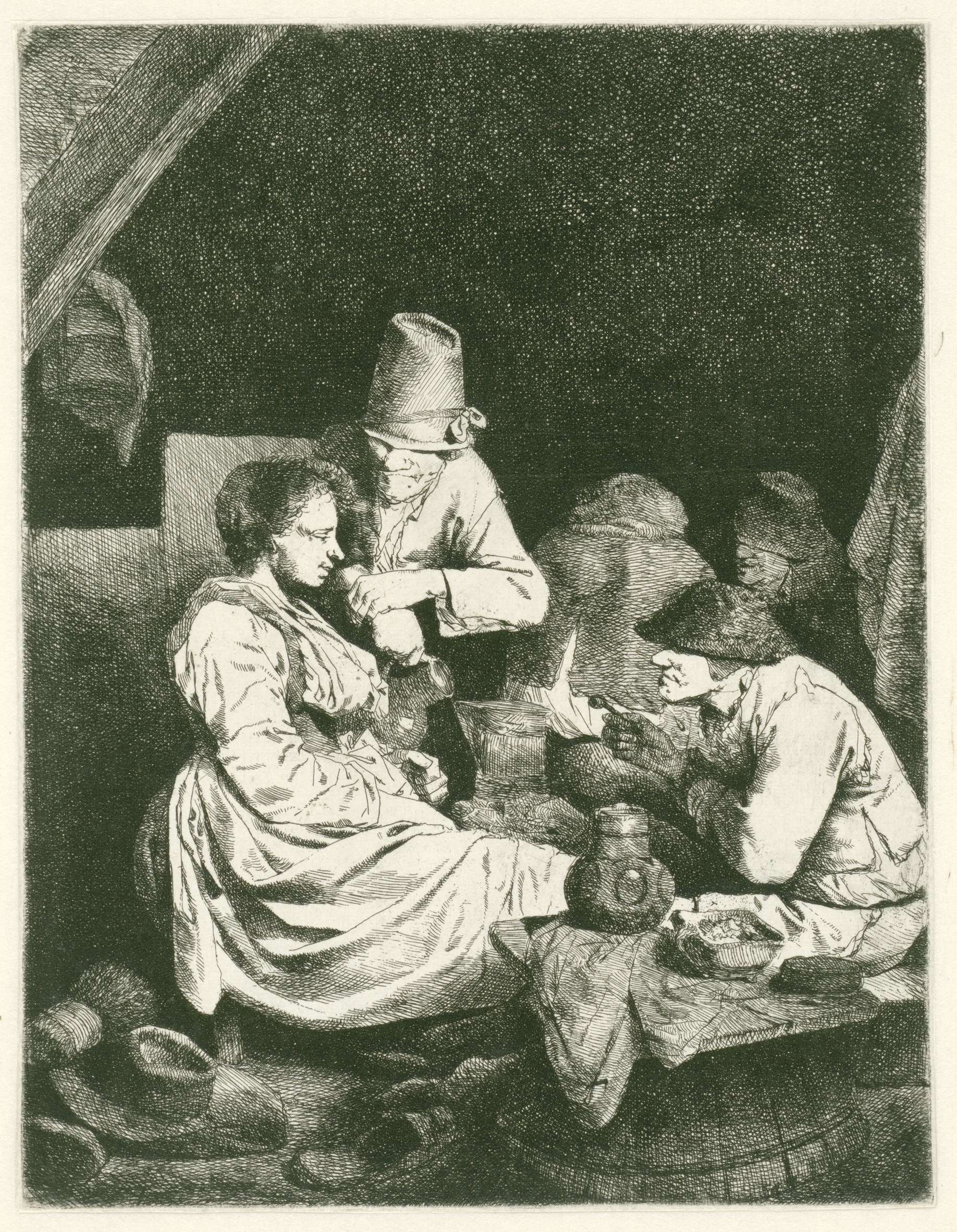
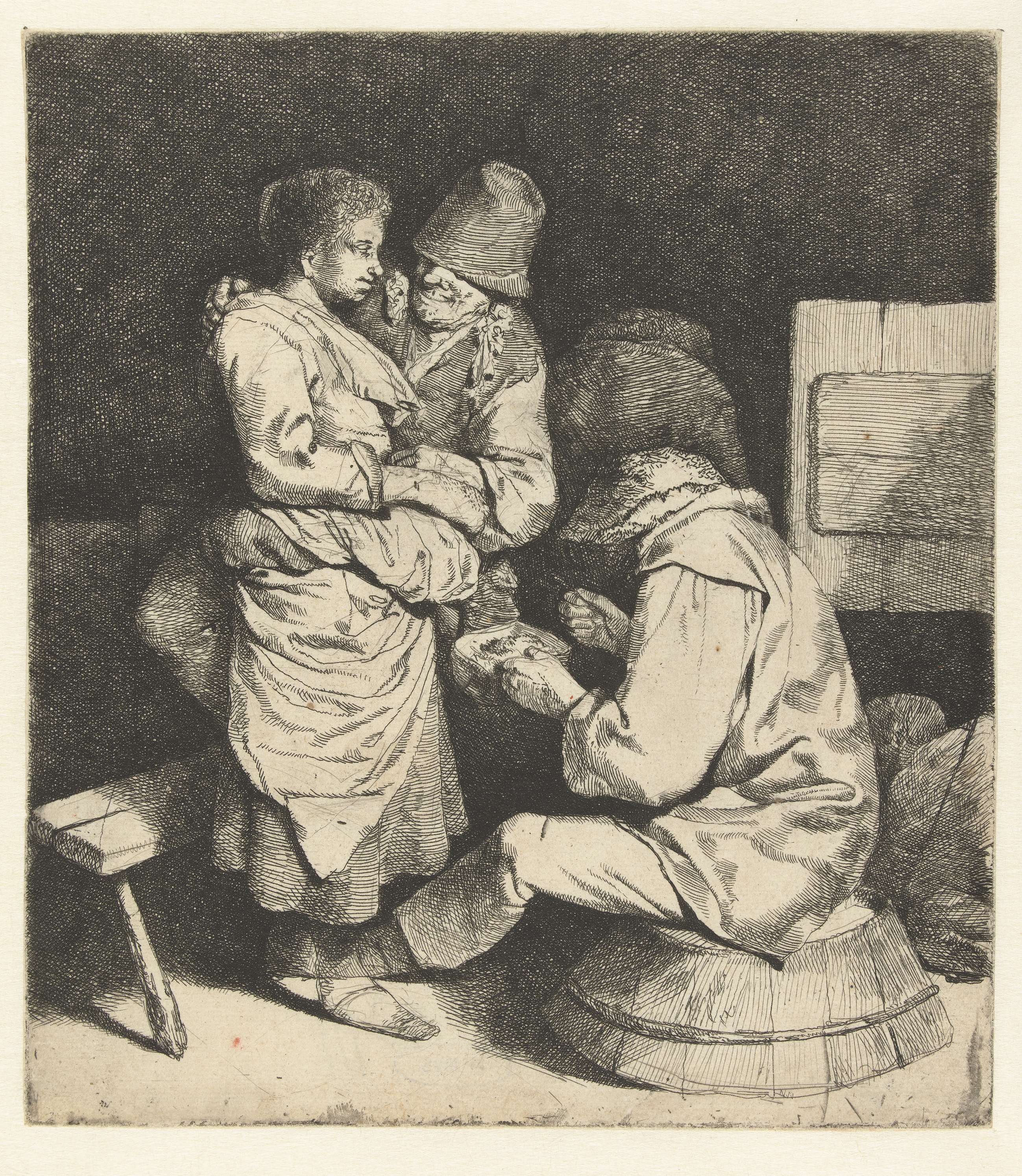
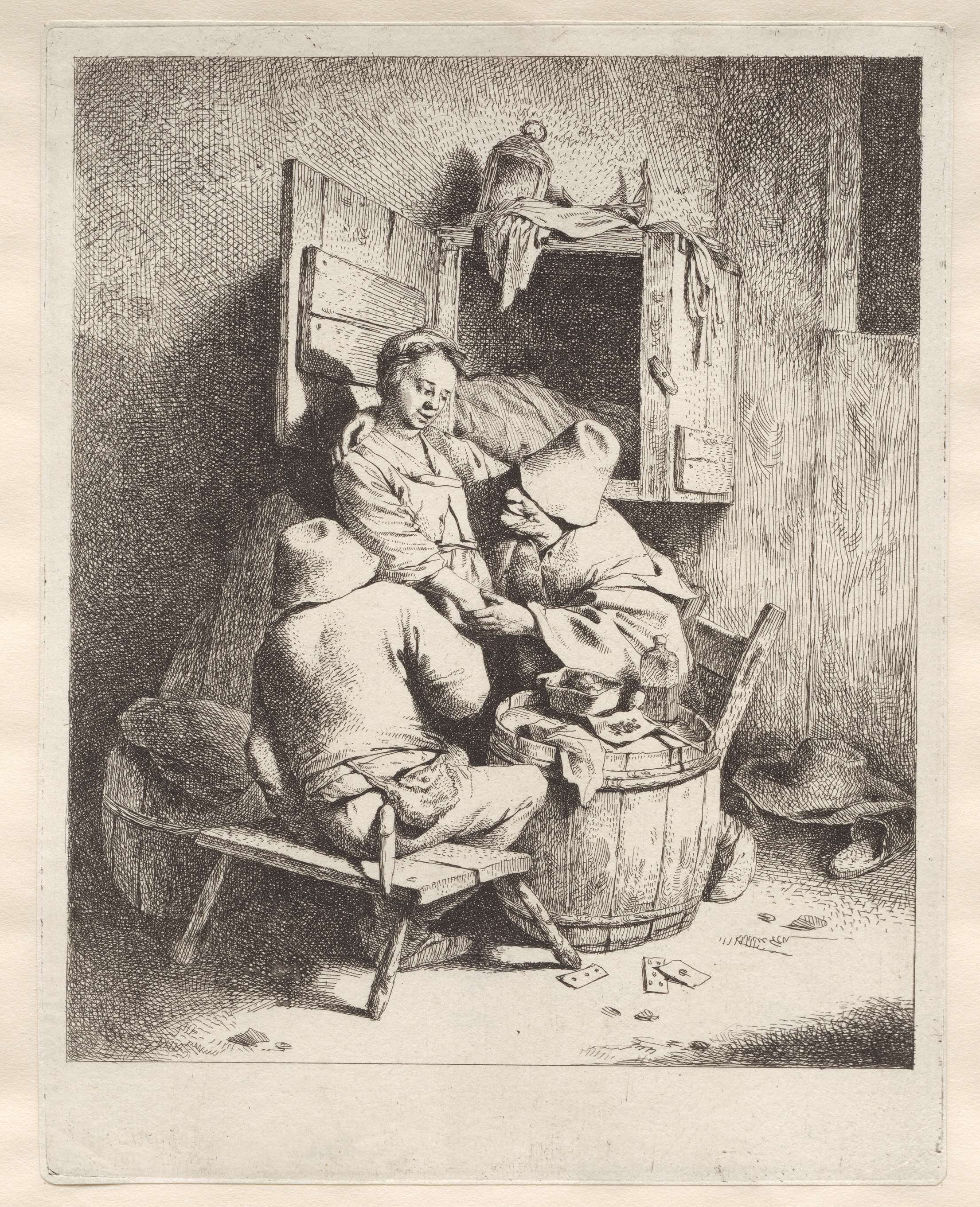
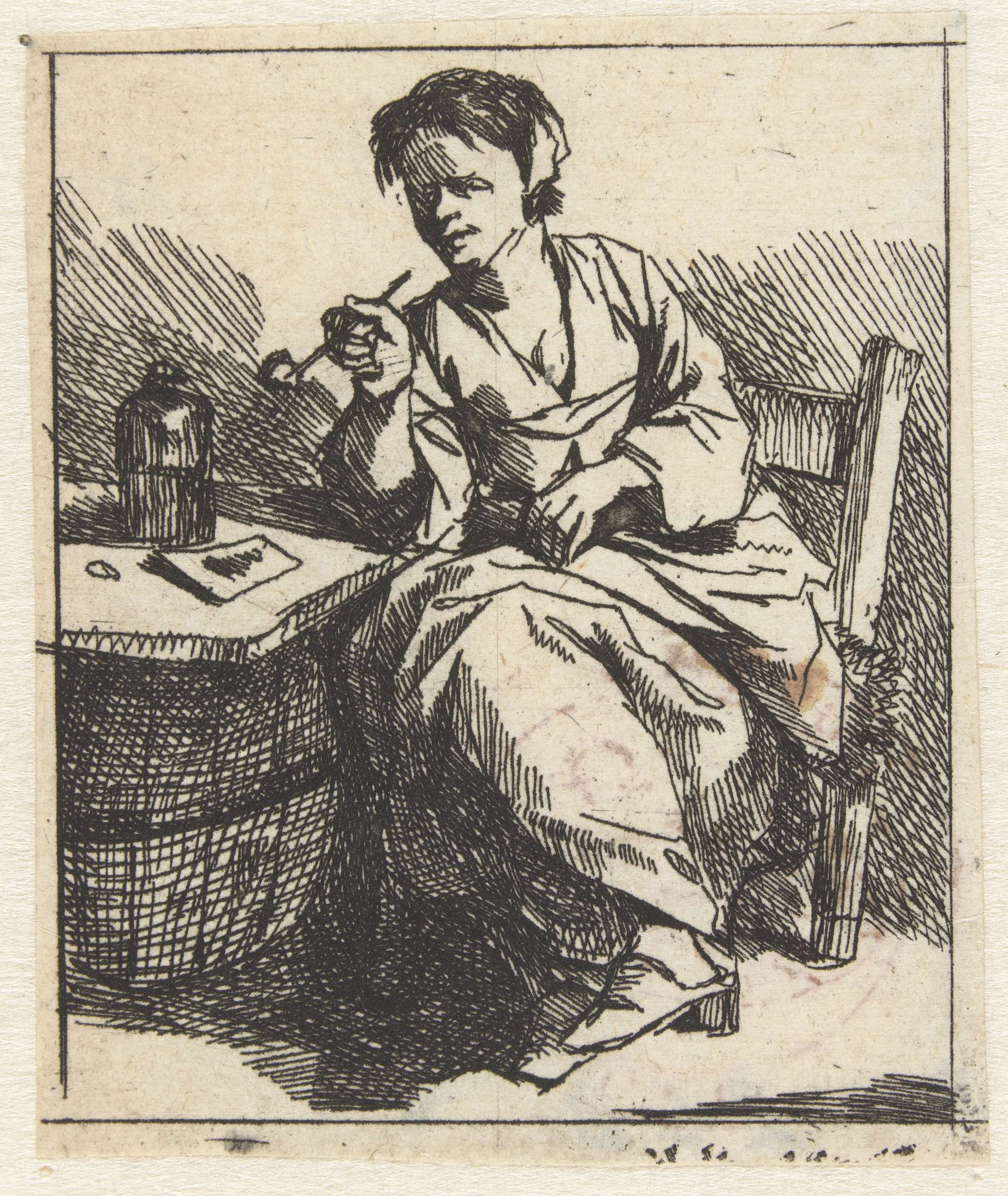
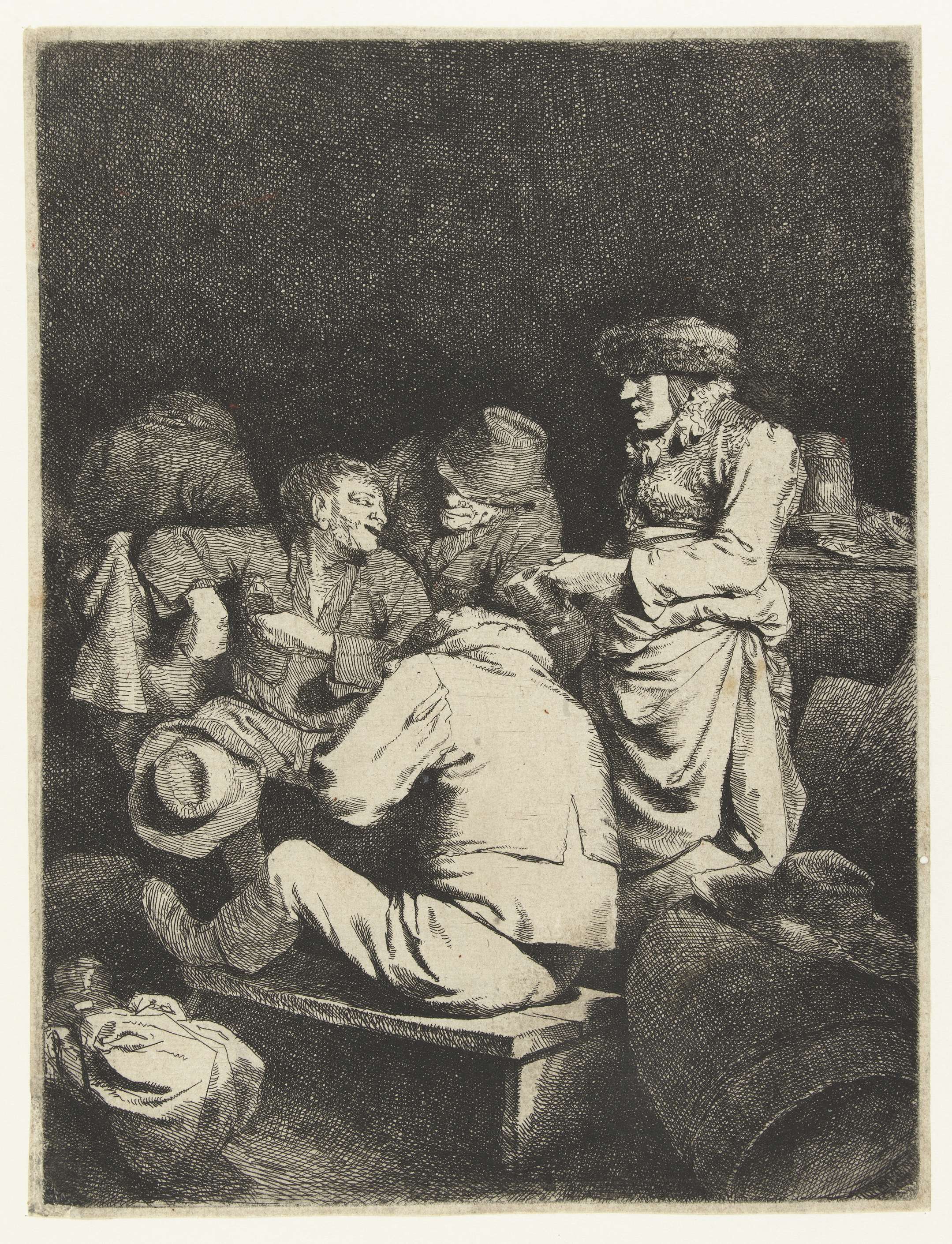
Twee mannen en vrouw met kind zittend in herberg — History & Analysis
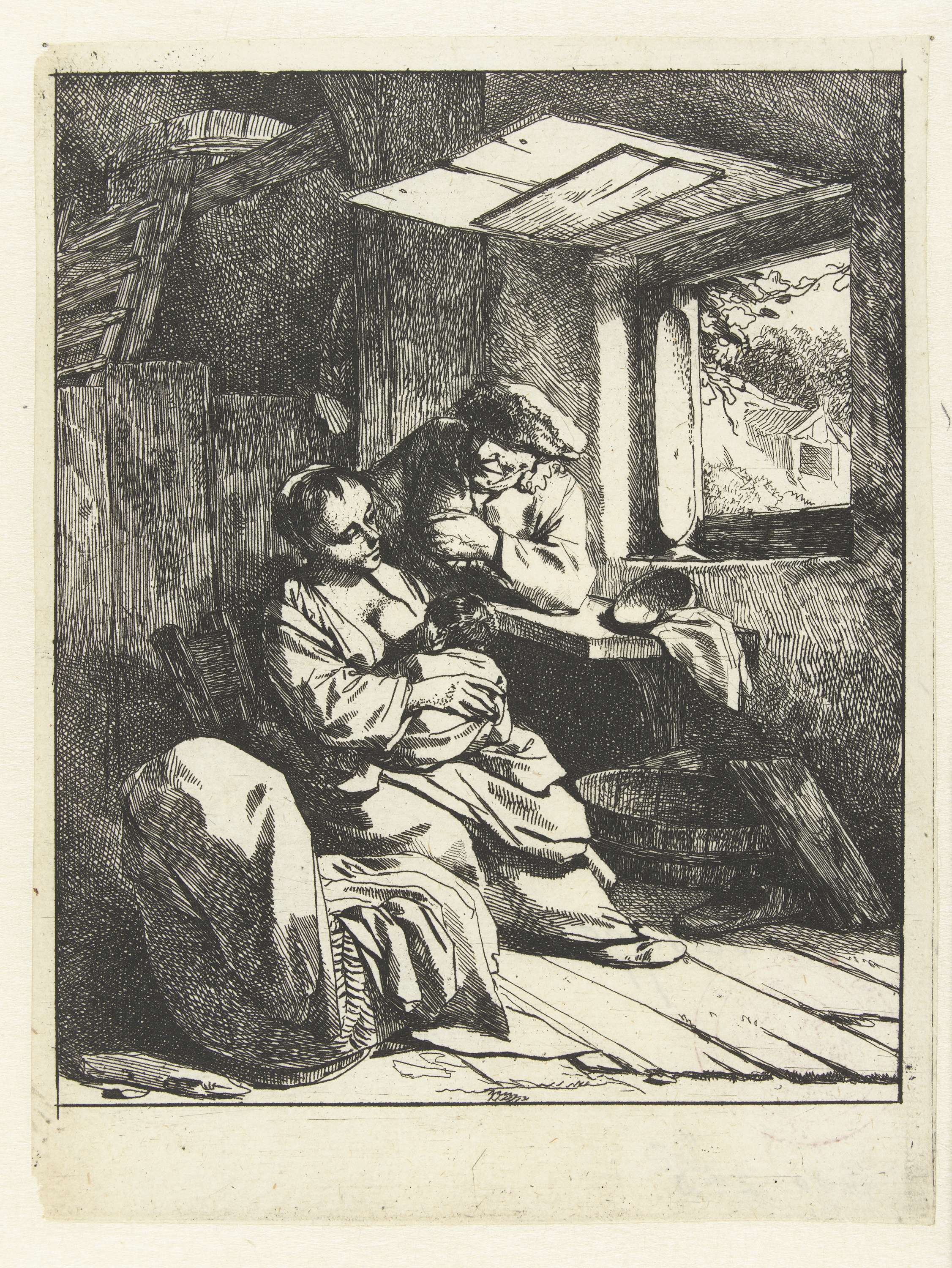
Who listens when art speaks of silence? In the hushed corners of a simple inn, the weight of unspoken truths hangs in the air, fostering a deep sense of longing. Look closely at the trio gathered around the table, their presence almost tangible beneath the soft, warm glow of candlelight. Notice how the figures are positioned, with the man on the left leaning slightly forward, absorbed in thought, while the woman cradles the child, embodying a protective grace. The muted color palette—earthy browns and gentle reds—creates an intimate atmosphere, emphasizing the emotional depth of the moment.
The delicate brushwork captures the subtle play of light, illuminating their faces and drawing your gaze toward the child, a symbol of hope amid the unfulfilled desires. The juxtaposition of the adults' solemn expressions against the innocence of the child evokes a poignant tension. It hints at unvoiced aspirations and the sacrifices made in the quiet shadows of life. The inn setting serves as a refuge, yet also a reminder of the world outside, filled with strife and uncertainty. Each detail, from the fabric of their garments to the arrangement of their hands, weaves a rich narrative of connection and longing, revealing the complexities of human relationships in a fleeting moment.
Cornelis Pietersz. Bega painted this work between 1642 and 1664, a period when Dutch art was flourishing with realism and emotional resonance. Living in Amsterdam, he was influenced by the dynamics of the burgeoning middle class and the themes of everyday life. This artwork reflects not only personal sentiments but also a broader cultural movement, where intimacy and reflection became central to the Dutch Golden Age's artistic expression.