Steam Ship — History & Analysis
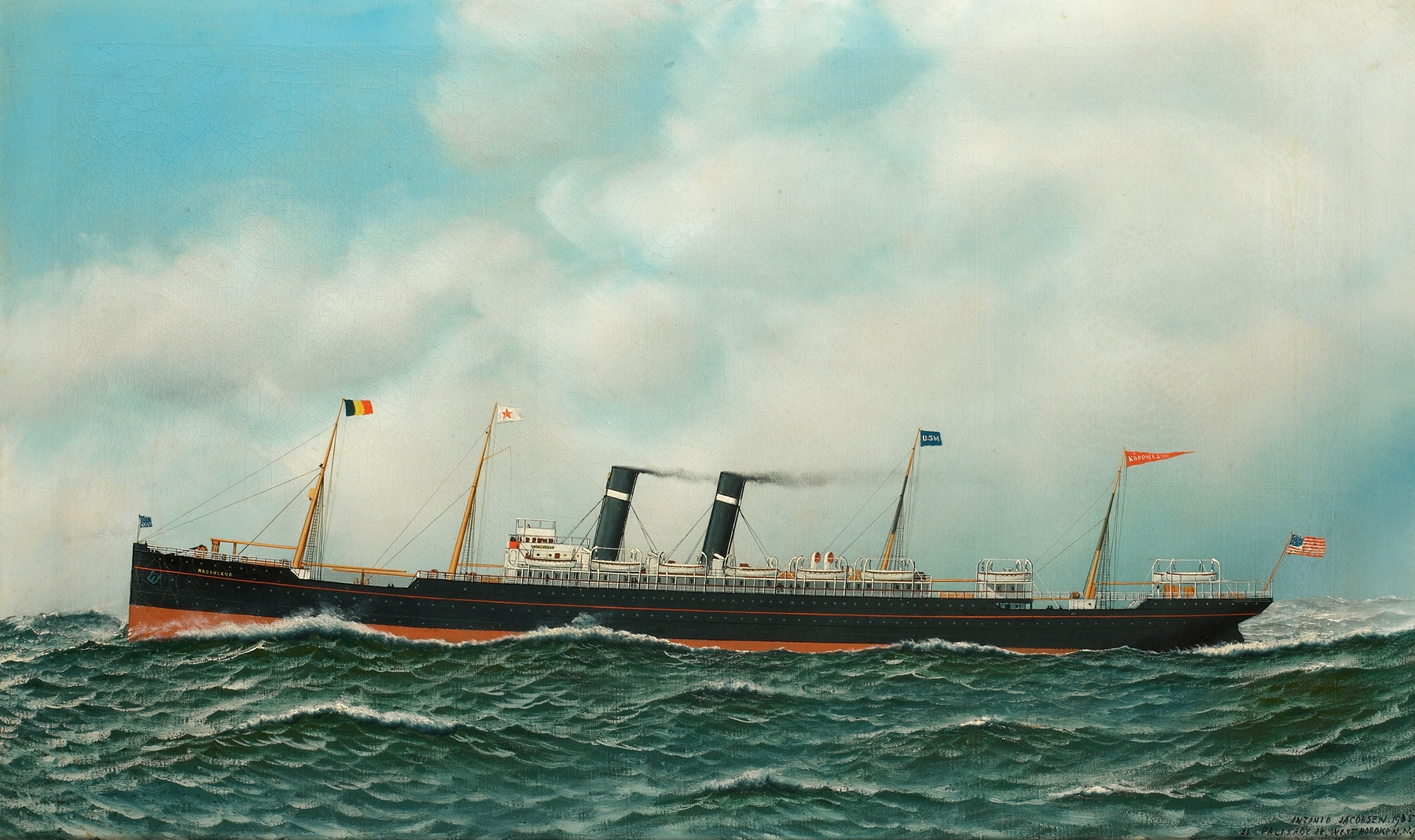
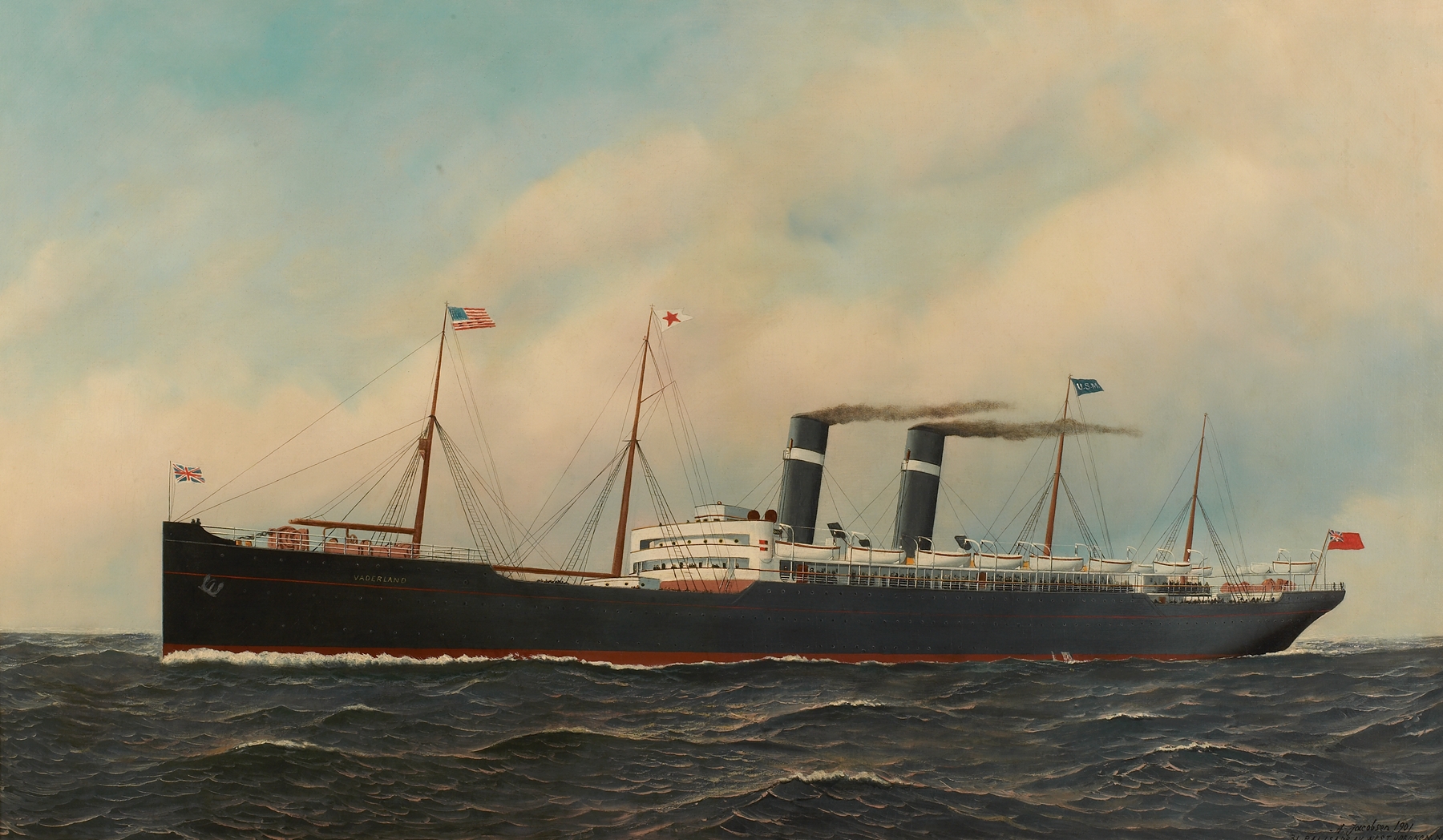
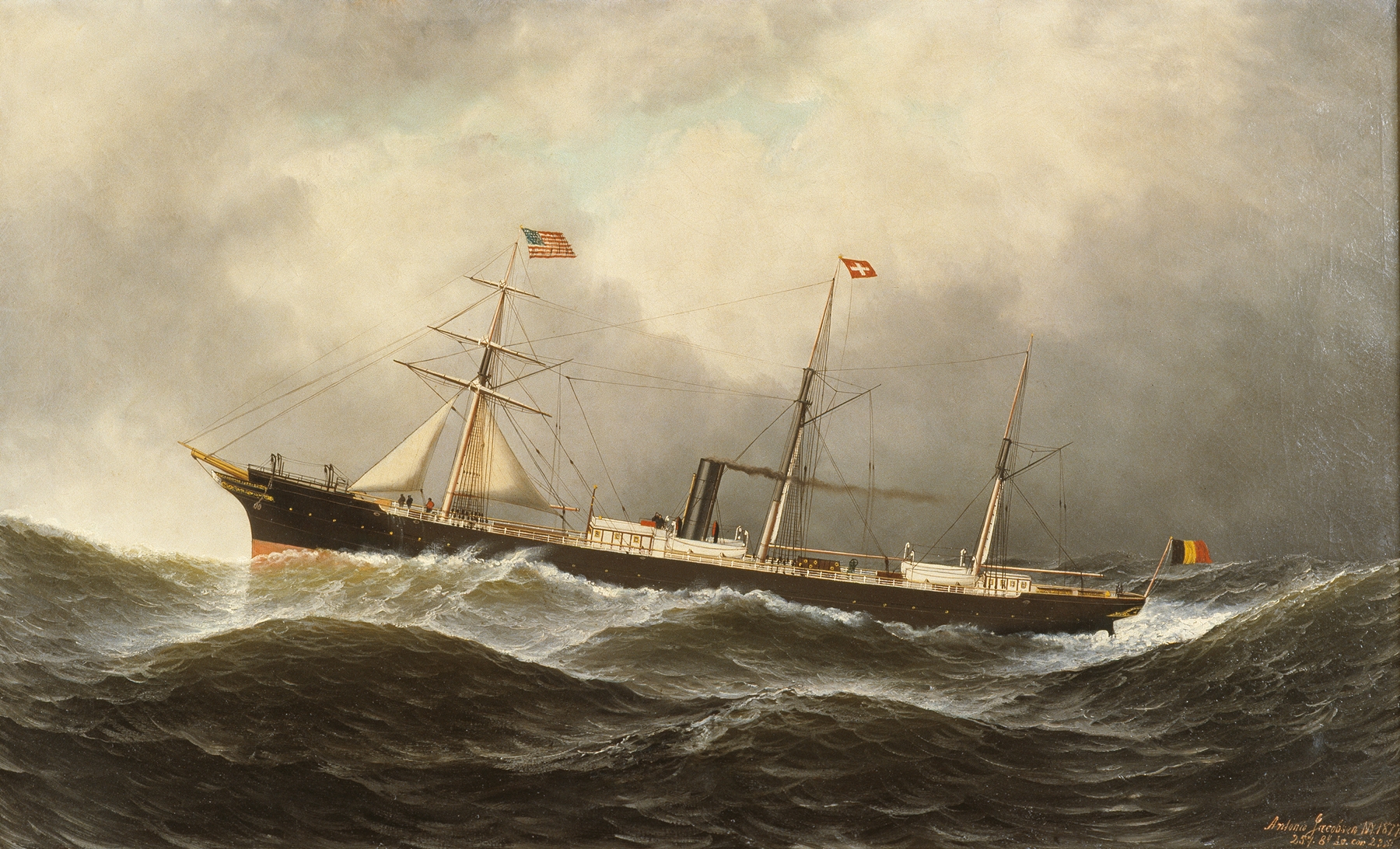
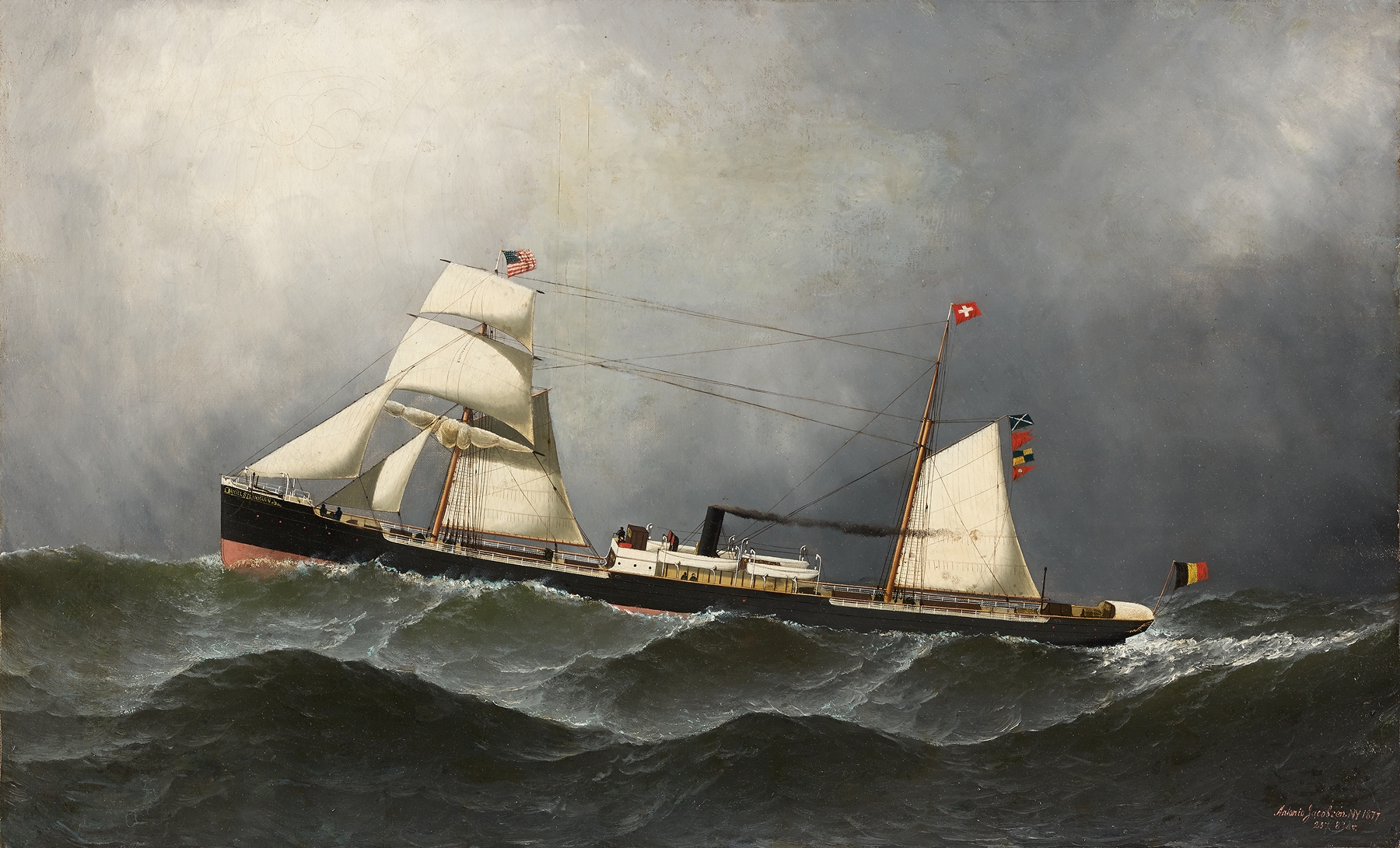
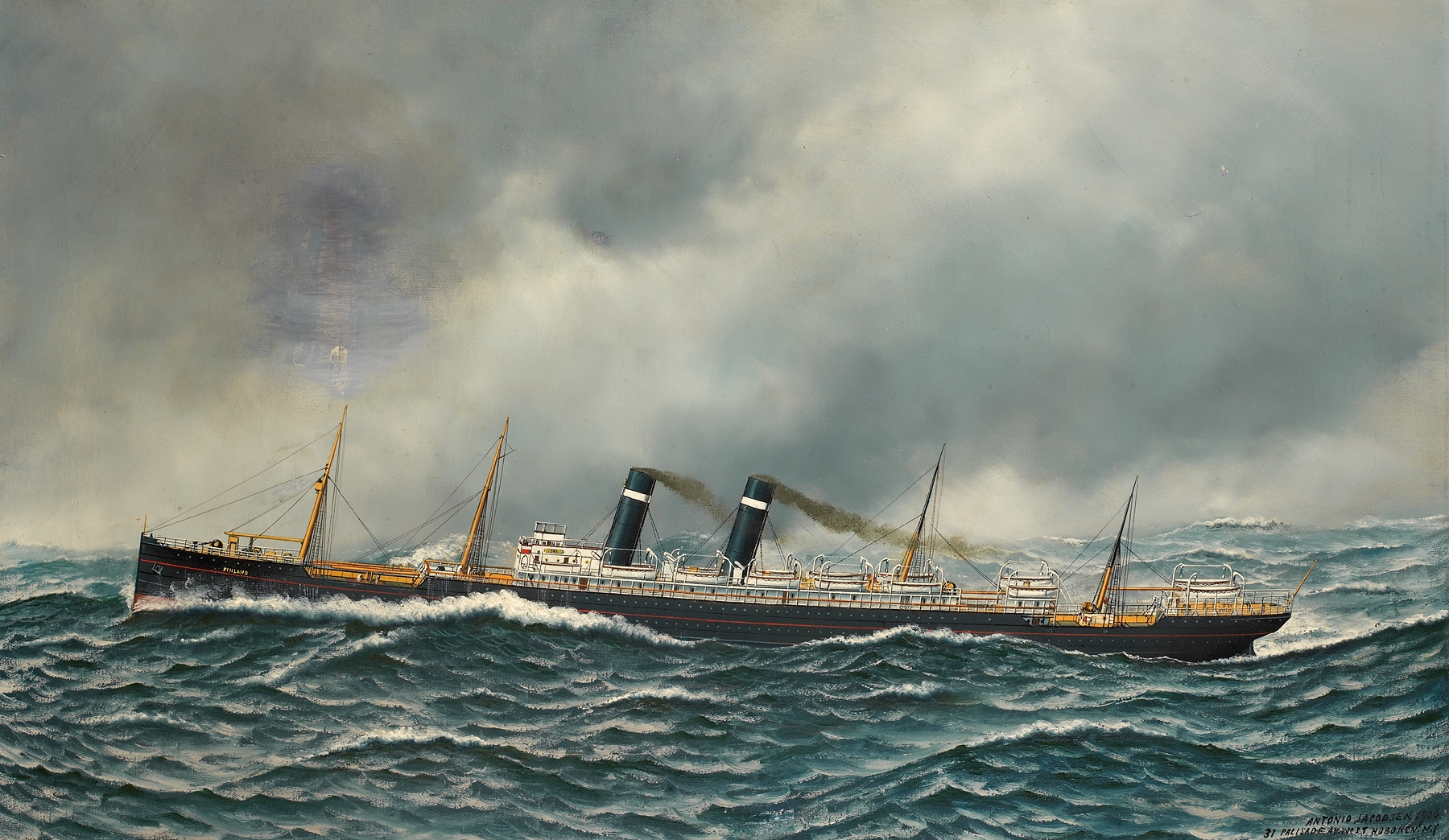
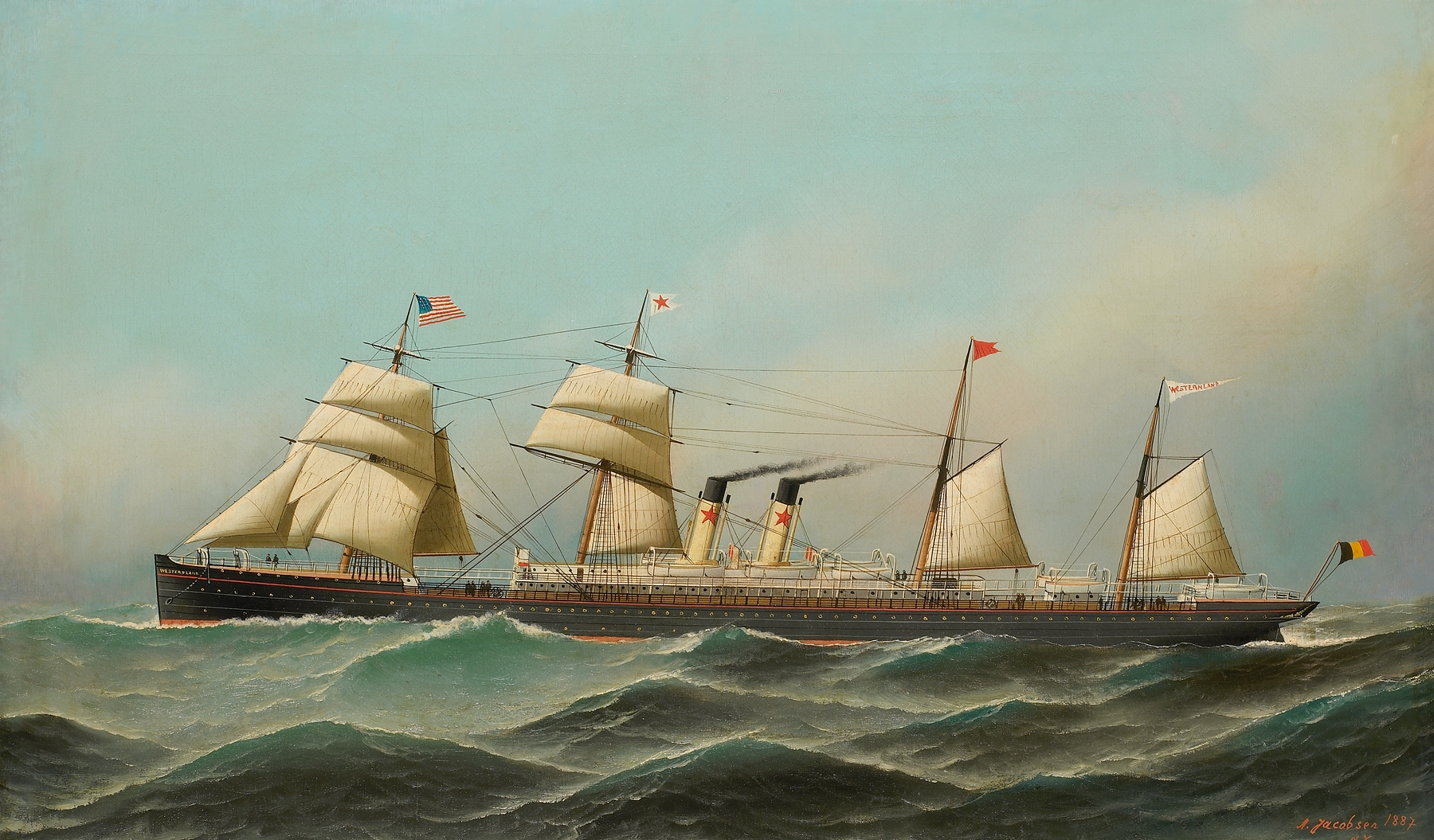
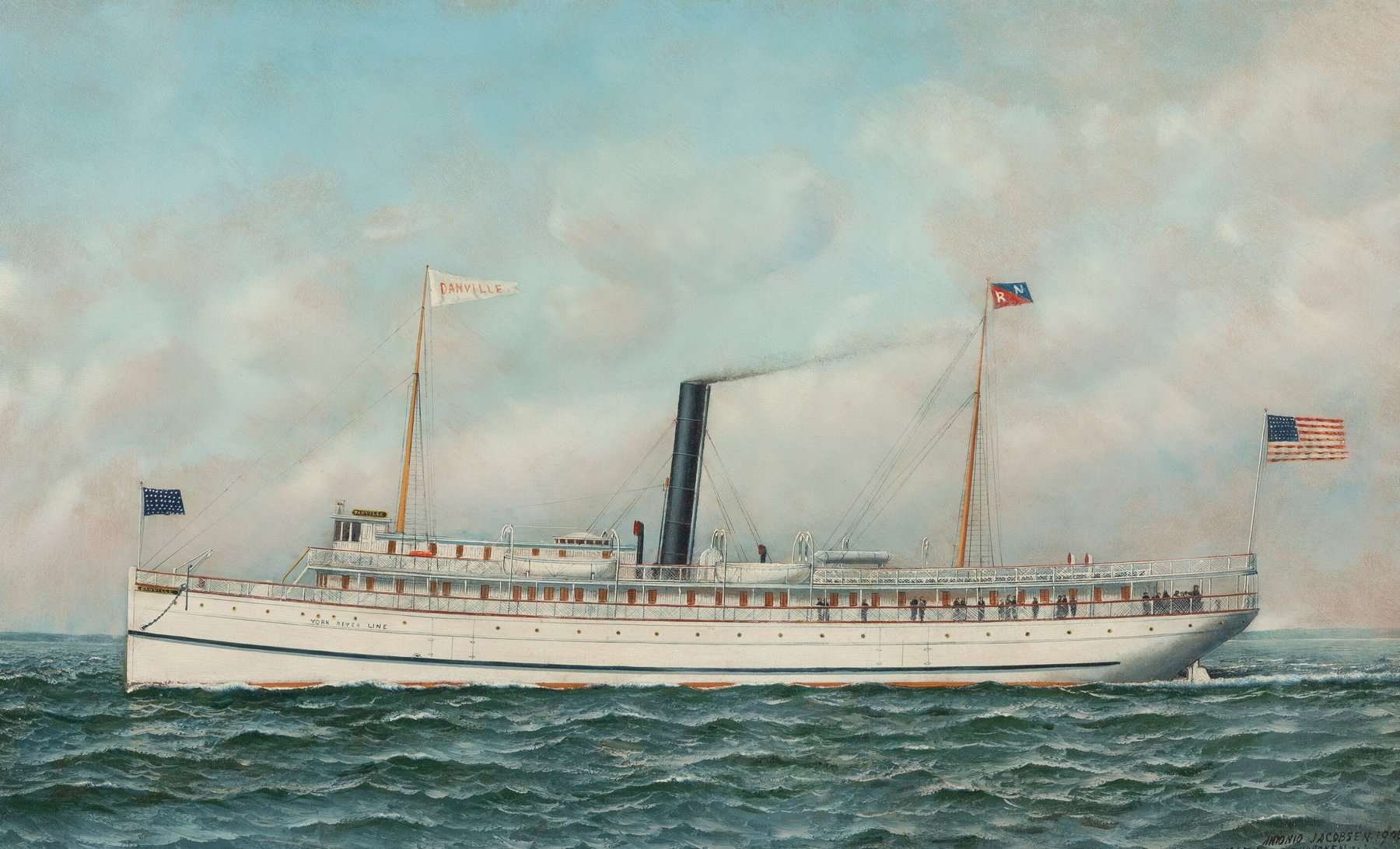
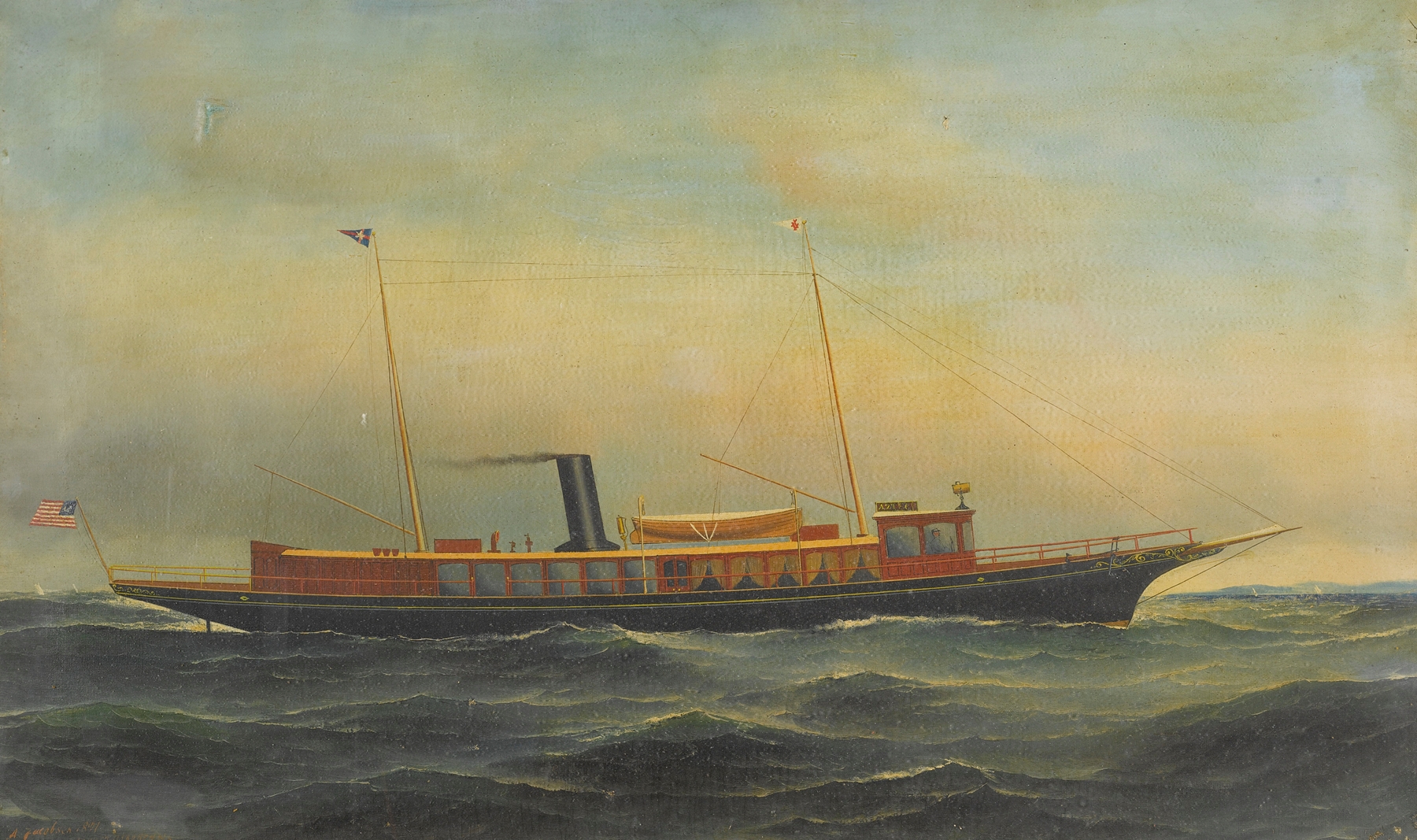
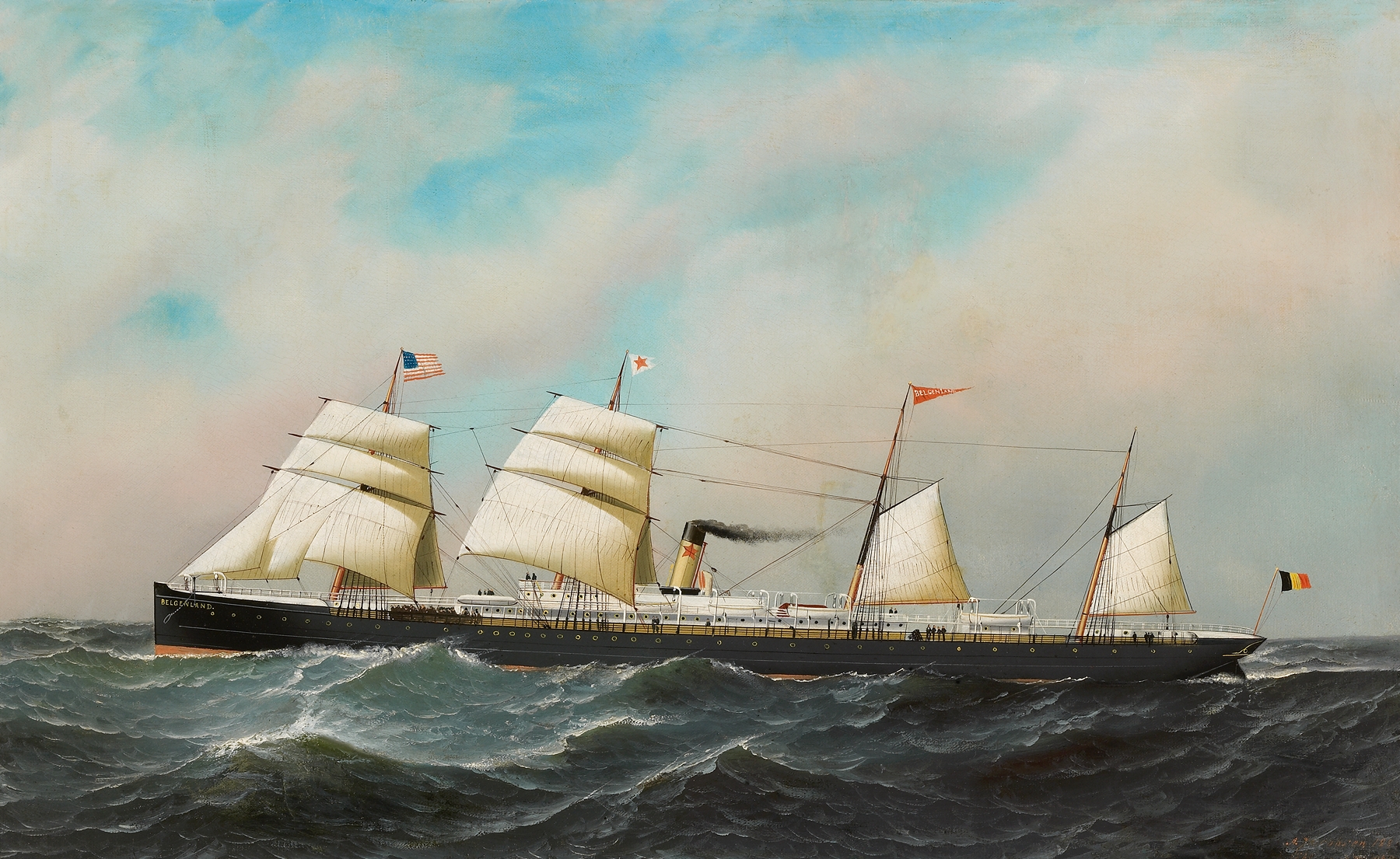
What secret hides in the quiet of the canvas? The interplay of light and shadow beckons the viewer to delve deeper into the heart of this maritime masterpiece. Look to the left at the steamship's hull, where the sunlight glints off the surface of the water. The artist employs a rich palette of blues and whites, capturing the essence of movement and the vibrancy of life at sea. Notice how the meticulously rendered clouds hover in the sky, contrasting against the ship's formidable presence.
Jacobsen's precision in detailing the vessel illustrates both strength and elegance, drawing the eye to its billowing smokestack, which almost seems to puff with pride. Beneath this serene setting lies an undercurrent of ambition and adventure. The steamship, a symbol of progress during the late 19th century, stands at the precipice of exploration and innovation. The gentle waves might hint at the challenges that await, while the calm atmosphere envelops the viewer in a moment of anticipation—a tension between the familiar and the unknown.
Each brushstroke invites contemplation of a journey, not just across the water, but into the realm of human endeavor. Jacobsen painted this work in 1877 during a period of burgeoning industrial growth and the expansion of maritime trade. Living in New York, he found inspiration in the ships that populated its bustling harbor. At this time, the art world was shifting, influenced by realism and impressionism, yet Jacobsen remained committed to his detailed, almost photographic representation of ships, solidifying his legacy as the leading marine painter of his era.