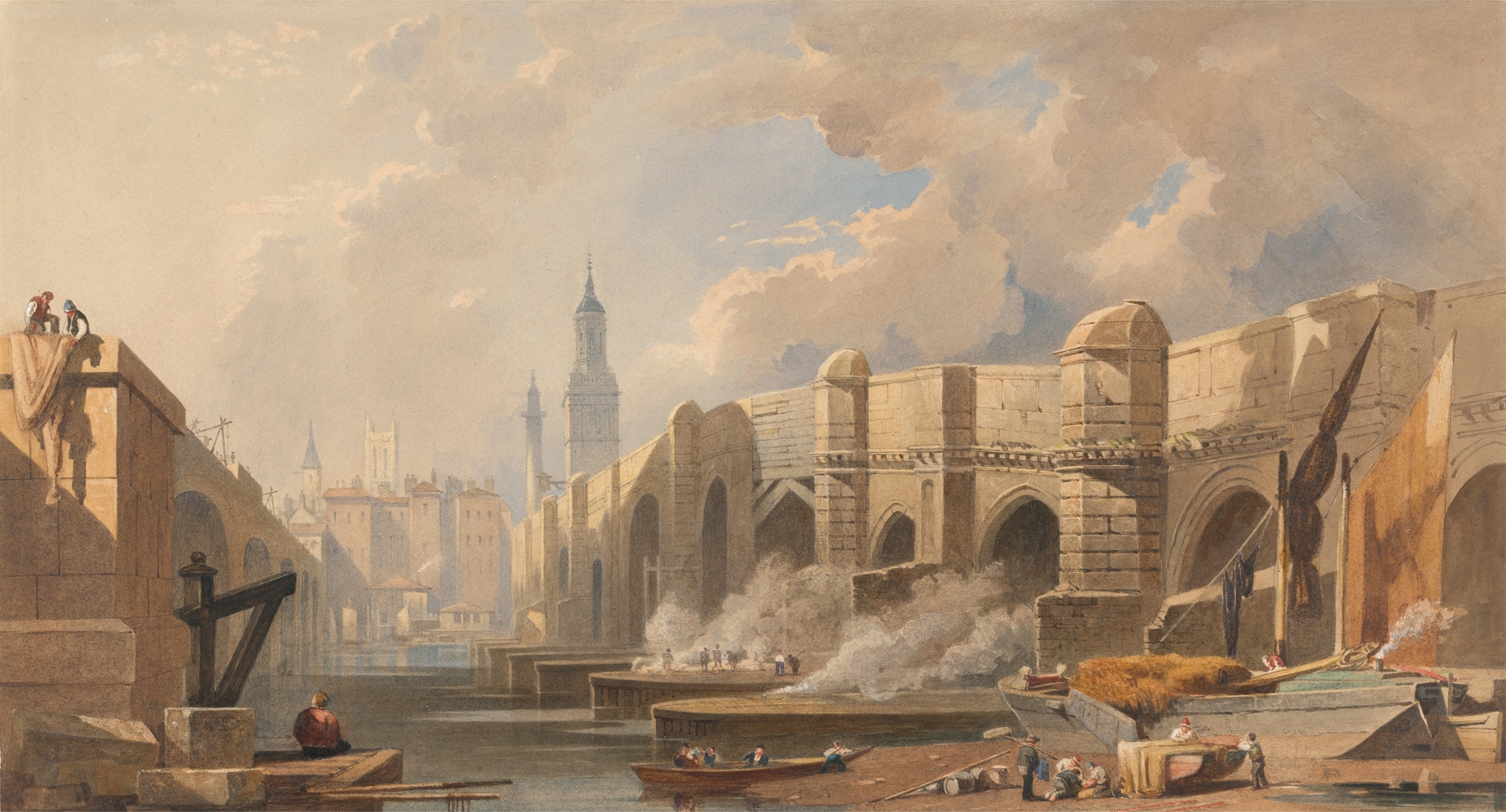
Steps of New London Bridge, St. Magnus, the Monument and Part of Old Bridge — History & Analysis
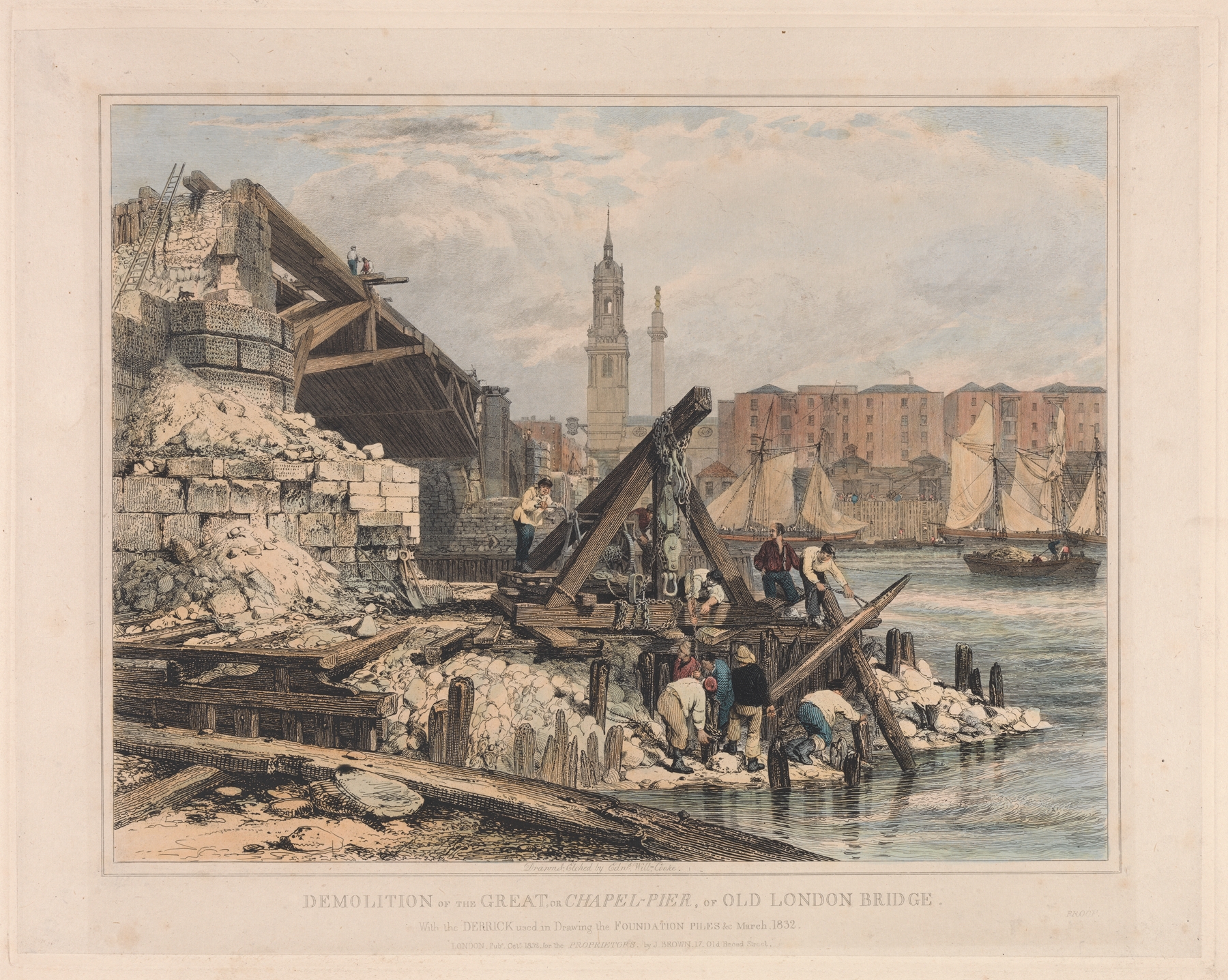
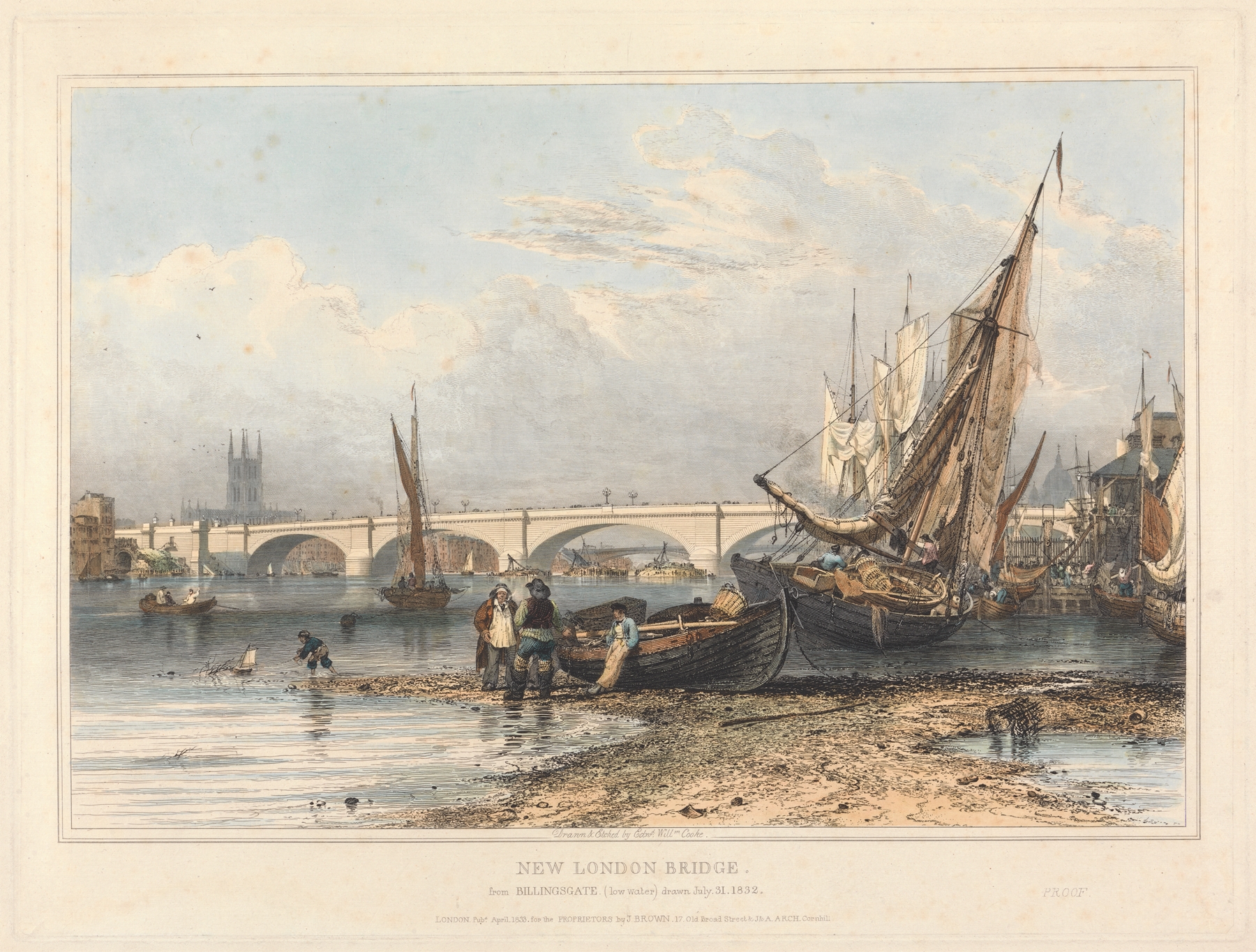
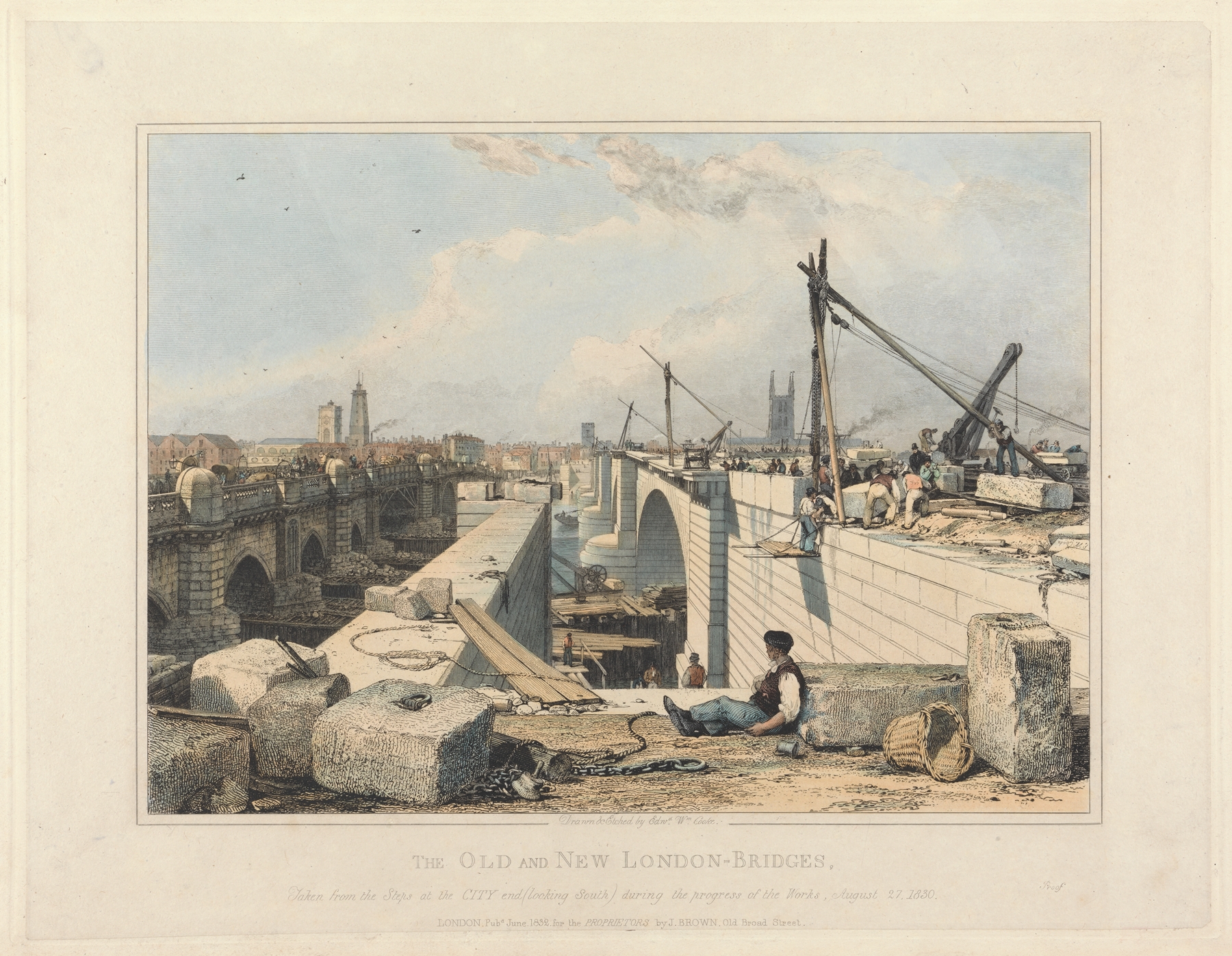
Where does light end, and longing begin? In the delicate interplay of memory and monument, Edward William Cooke captures a vivid narrative of urban transformation and legacy. Focus first on the sweeping expanse of the river, as it flows beneath the gaze of both the new and the old bridges. The vibrant blues and soft grays of the water create a shimmering pathway, drawing your eye toward the intricate architecture of St. Magnus and the resolute presence of the Monument.
The juxtaposition of bright sunlight against the cool shadows casts a dynamic energy through the scene, highlighting the convergence of past and present. Each brushstroke conveys a sense of movement, as if the viewer can almost hear the echoes of footsteps on the cobblestone. Delve deeper into the emotional tensions woven into Cooke's depiction. The new bridge stands as a beacon of progress, yet it casts a shadow over the remnants of history. The soft, fading outlines of the old bridge speak of nostalgia and loss, contrasting the bustling life of the present with whispers of what once was.
The architectural details of St. Magnus, with its arches and spires, evoke a sense of resilience, inviting contemplation on how legacies endure through time. In 1831, Cooke painted this scene amid the rapid industrial changes sweeping through London. The city was undergoing significant transformation, with modernity reshaping its landscape. As urban life thrived and the arts evolved, he sought to capture this tension between innovation and tradition, offering insight into the collective memory of the city's inhabitants.