Still Life with Peaches — History & Analysis
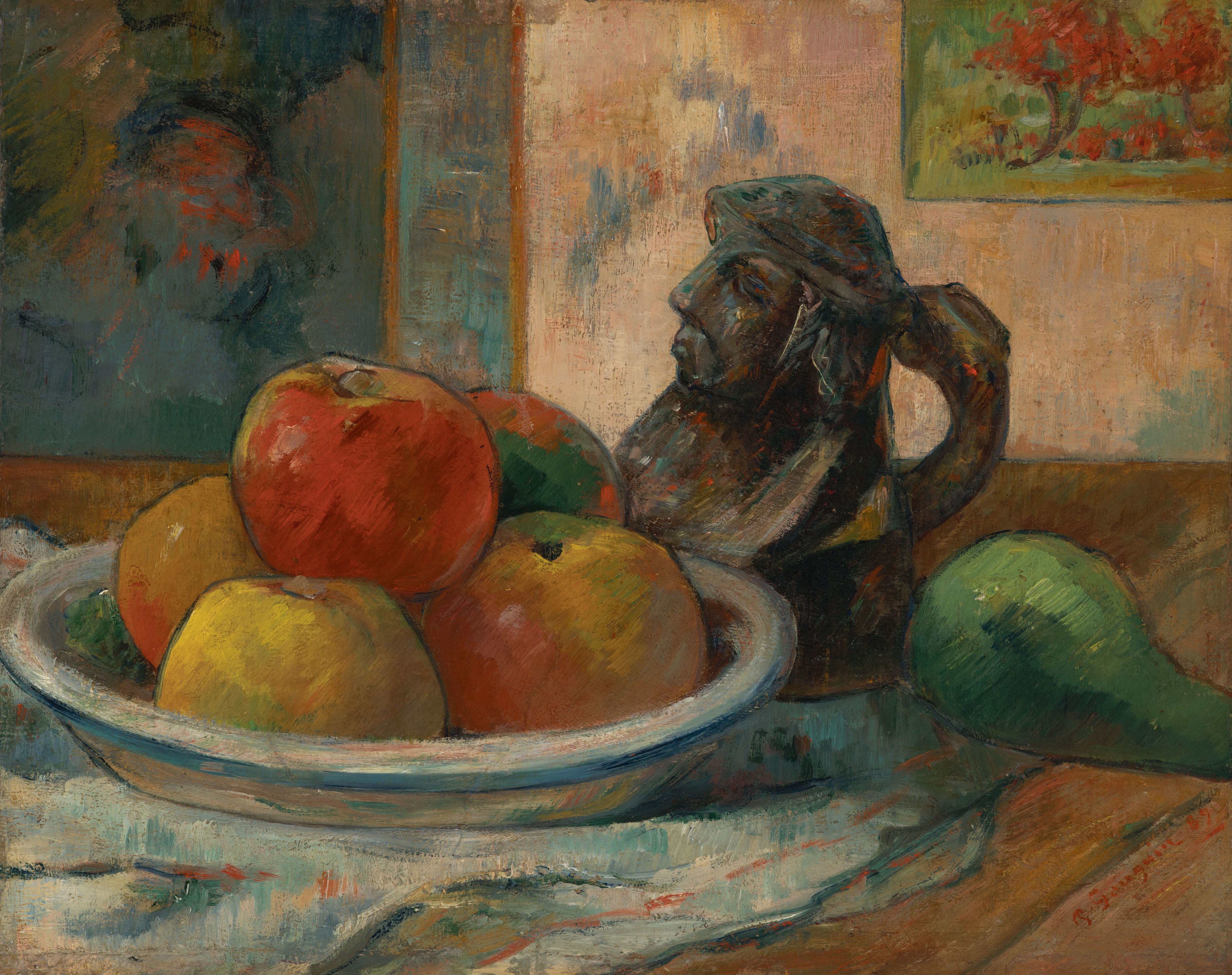
Who listens when art speaks of silence? In Paul Gauguin's Still Life with Peaches, the weight of nostalgia hangs like ripe fruit, waiting to be plucked from the canvas. Look to the center, where the plump, velvety peaches rest atop a wooden table, their rich golden hues contrasting with the deep, moody greens of the background. Notice how the soft, diffused light caresses their surfaces, enhancing the tactile quality of the fruit.
The composition is simple yet deliberate, inviting the eye to trace the delicate curves of the peaches, while the warm tones evoke a sense of intimacy and warmth. Yet beneath this serene exterior lies a complex interplay of isolation and longing. The stark, uncluttered space around the peaches emphasizes their solitude, suggesting a deeper yearning for connection. The muted palette hints at memories faded by time, evoking a wistfulness that resonates with the viewer.
Each brushstroke conveys a weight of emotion, transforming the ordinary into something profoundly personal and contemplative. Created in 1889 while Gauguin was living in Brittany, France, this work reflects his quest to escape European conventions and seek solace in simpler subjects. At this time, Gauguin was experimenting with bold colors and non-traditional forms, seeking to capture the essence of his surroundings and inner life. This still life stands not just as a testament to his artistic exploration, but as a poignant reminder of what it means to hold onto fleeting moments of beauty.