Study on Long Island Sound at Darien, Connecticut — History & Analysis
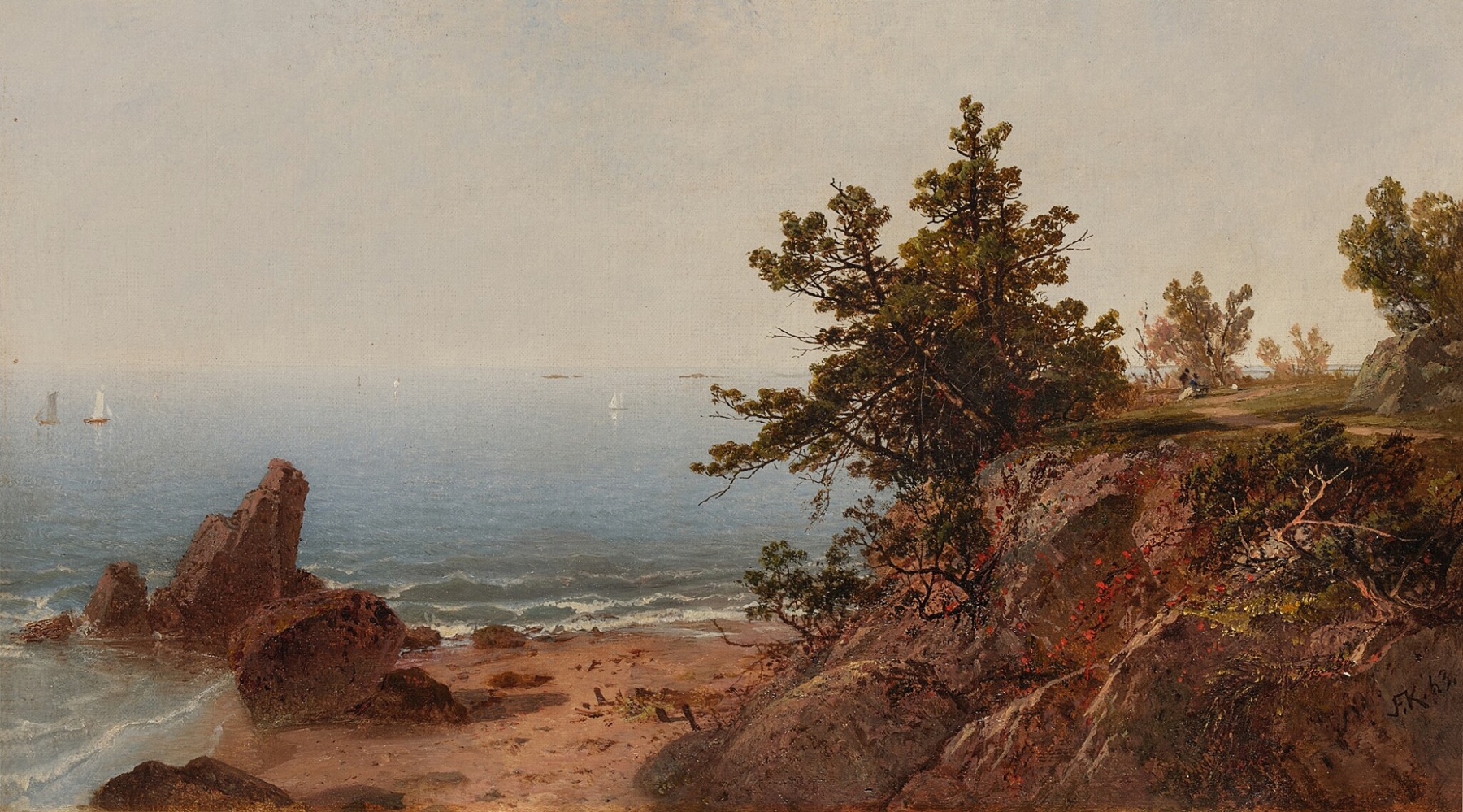
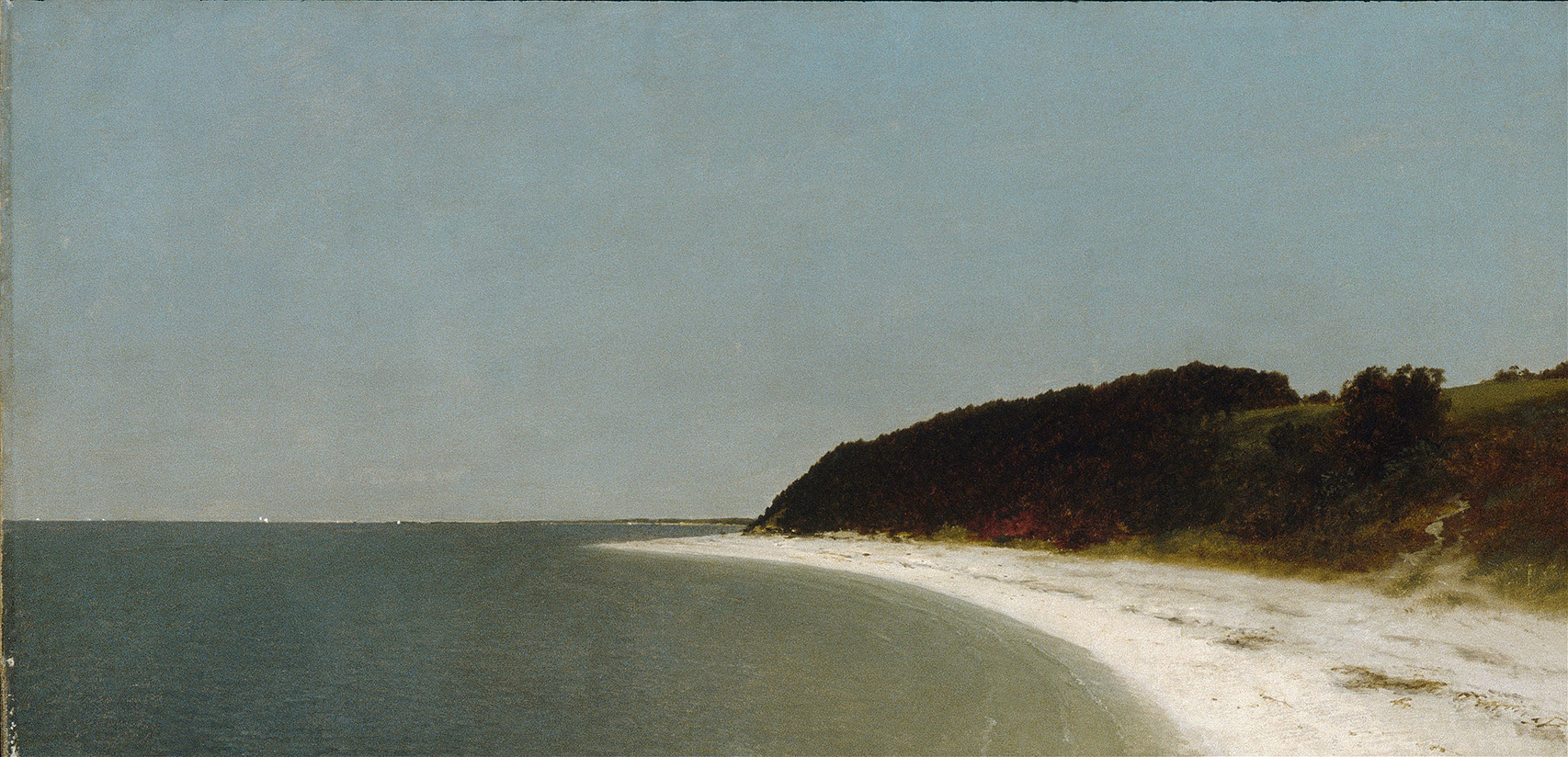
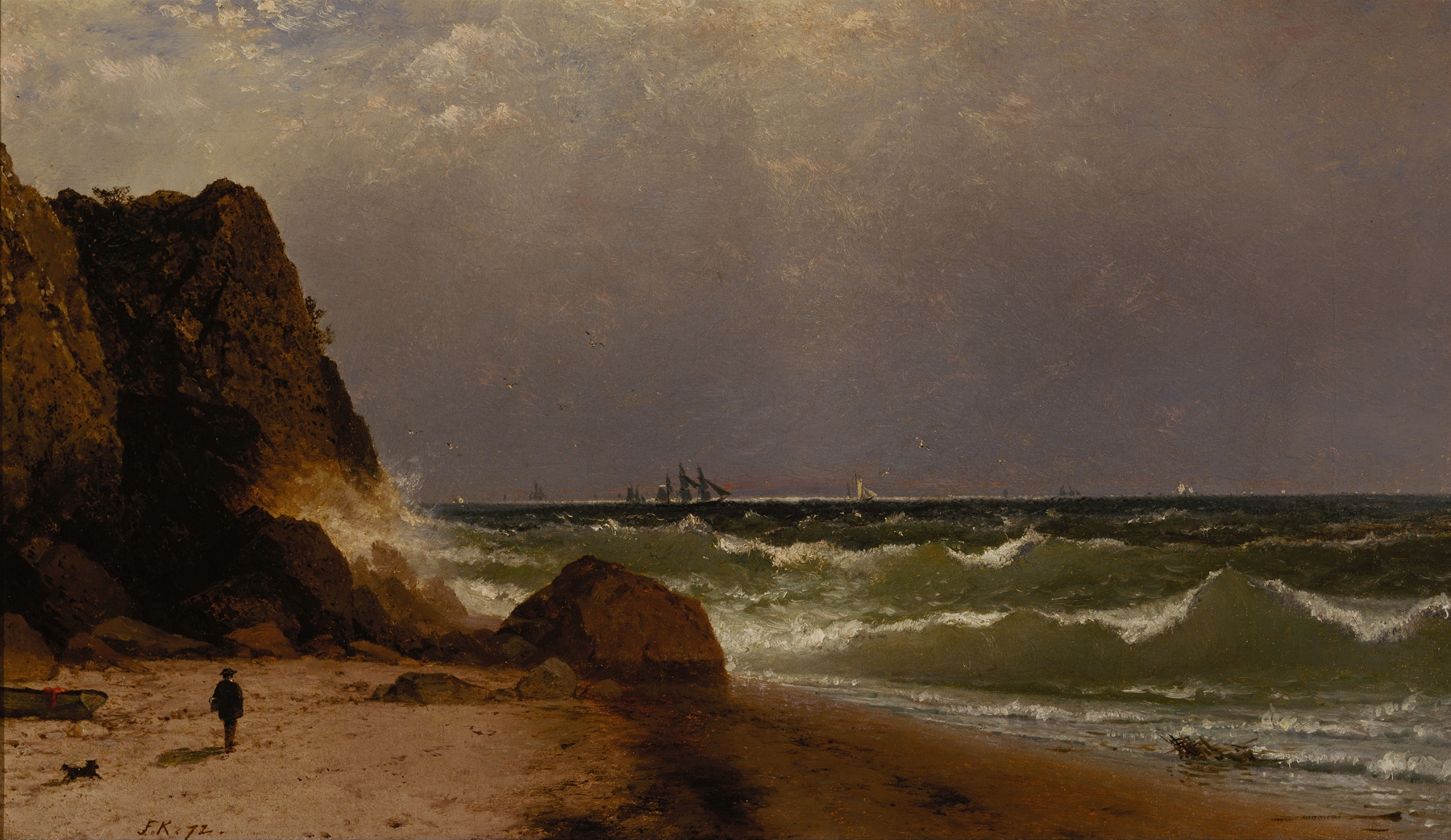
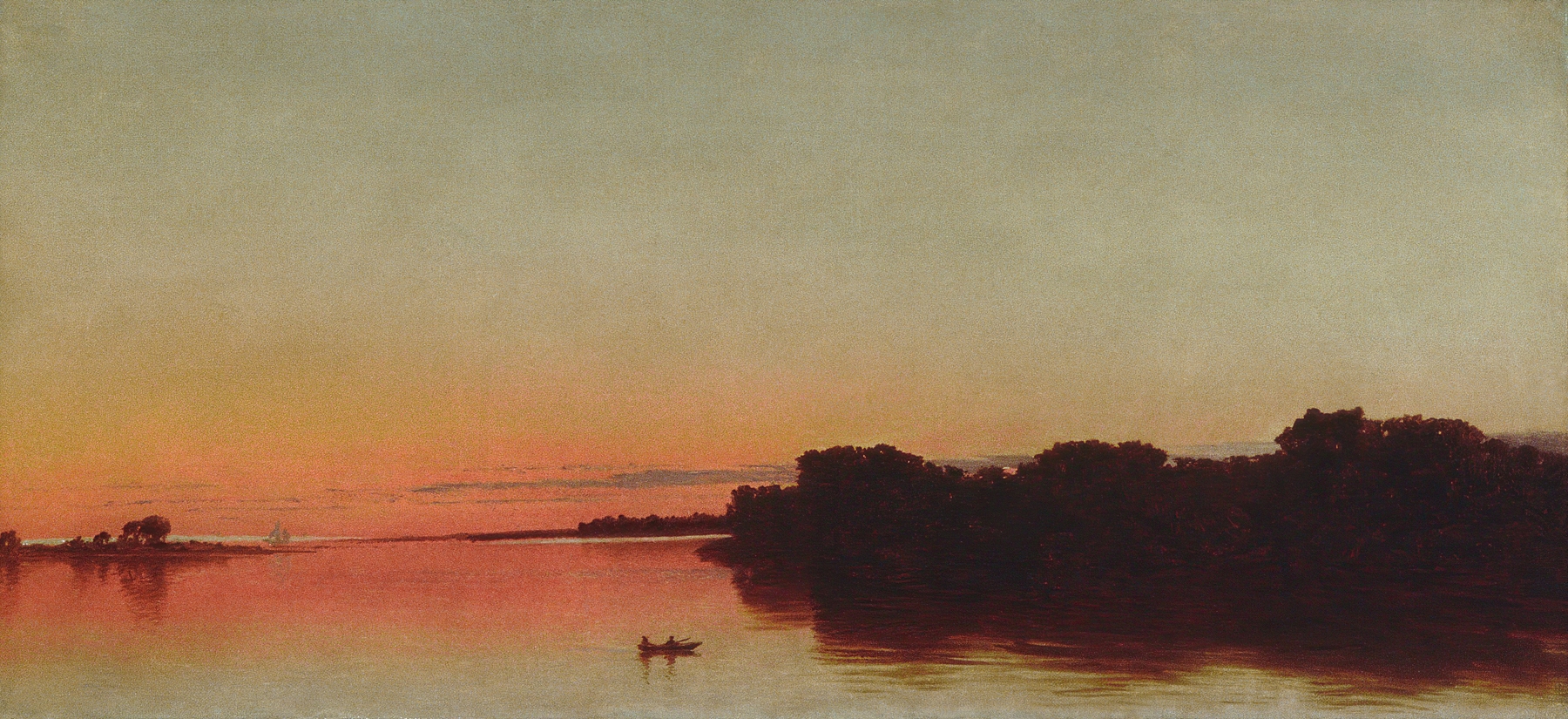
What if silence could speak through light? In Study on Long Island Sound at Darien, Connecticut, the stillness of the scene resonates with a profound sense of time suspended — an invitation to pause and reflect. Look to the serene expanse of water that captures your gaze first; its glass-like surface mirrors a sky brushed with soft blues and delicate whites. Notice how the sunlight dances across the waves, shimmering in a gentle caress that suggests movement even amidst tranquility.
The composition is masterfully balanced, with the horizon line drawing your eye toward the infinite, while the rugged shoreline on the left anchors the piece, providing a contrast of solidity against the ethereal qualities of the water and sky. Delve deeper, and you will find the interplay between light and shadow revealing emotional tensions. The subtle transitions in color not only depict the time of day but evoke a fleeting moment, where the day begins to yield to dusk. The warm hues of sunlight juxtapose with the cool tones of the landscape, suggesting the passage of time and the eternal cycle of day into night.
Each brushstroke speaks to the quiet majesty of nature, hinting at the tranquility found in moments of solitude. In 1872, while residing in Connecticut, the artist painted this piece during a pivotal time in his career, marked by a growing appreciation for the American landscape. Kensett was deeply influenced by the Hudson River School, embracing the Romantic ideals of nature's beauty and power. The work reflects both his personal journey and the broader trends in the art world as it evolved towards capturing the sublime American wilderness.