Stugunøset at Filefjell — History & Analysis
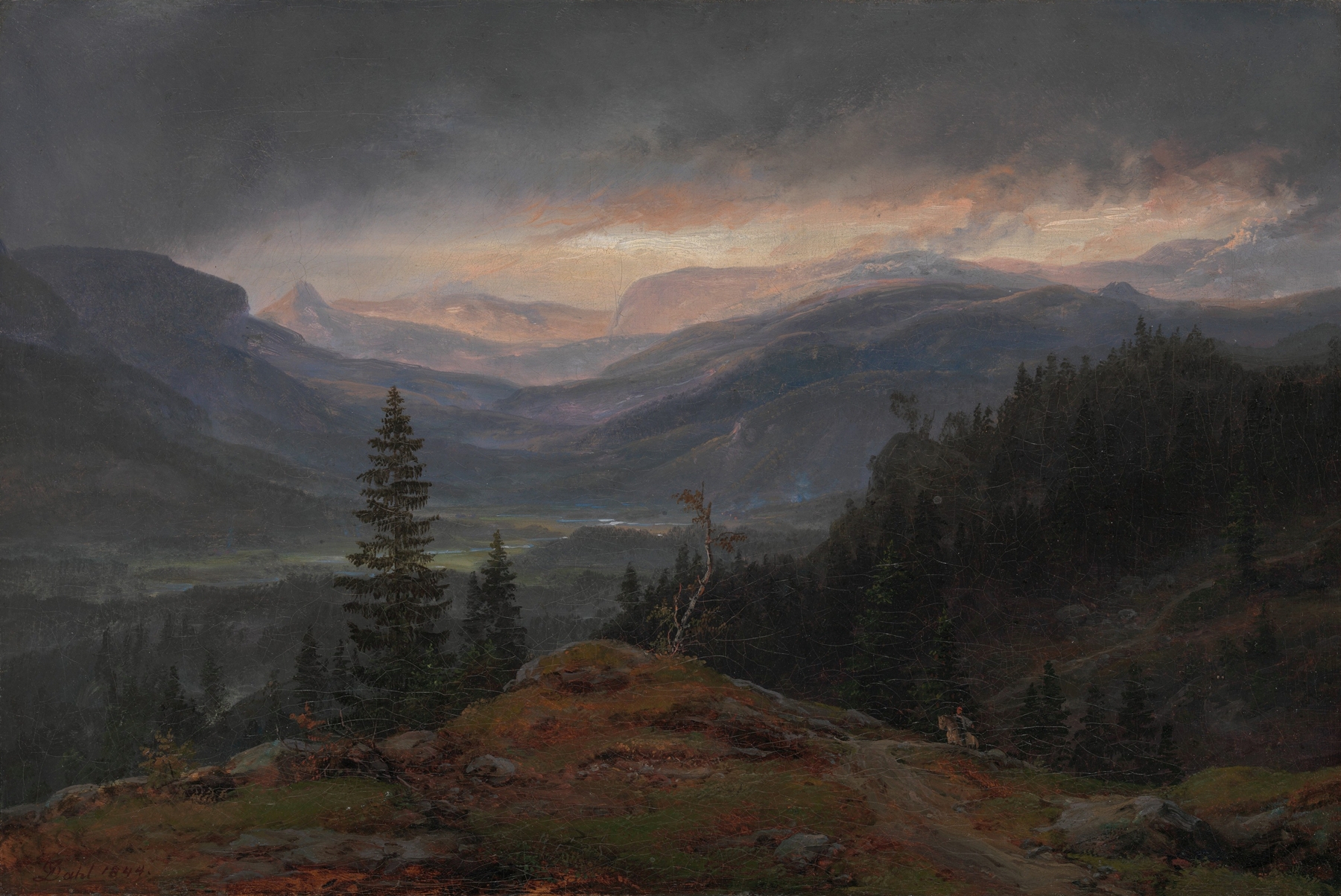
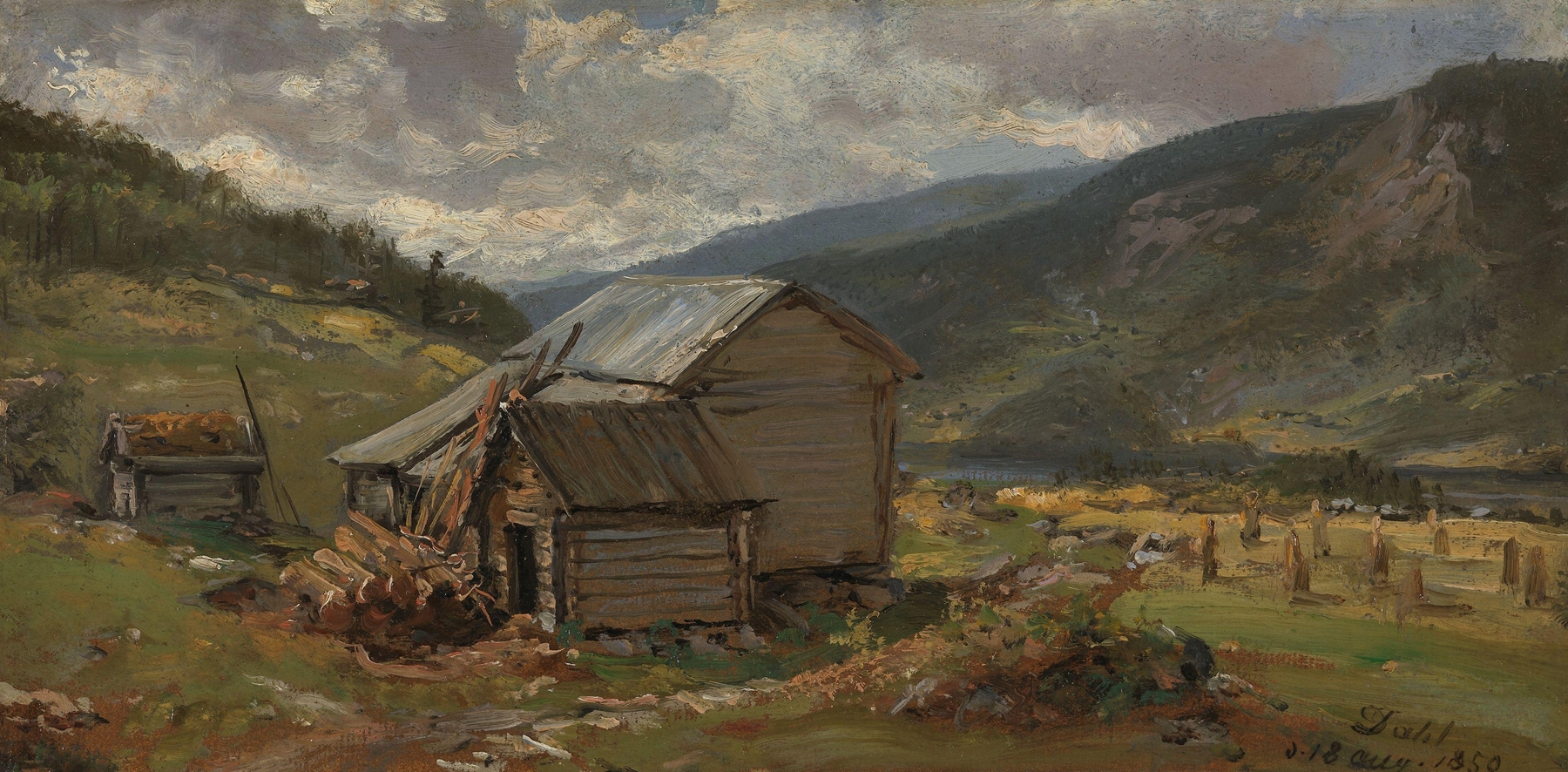
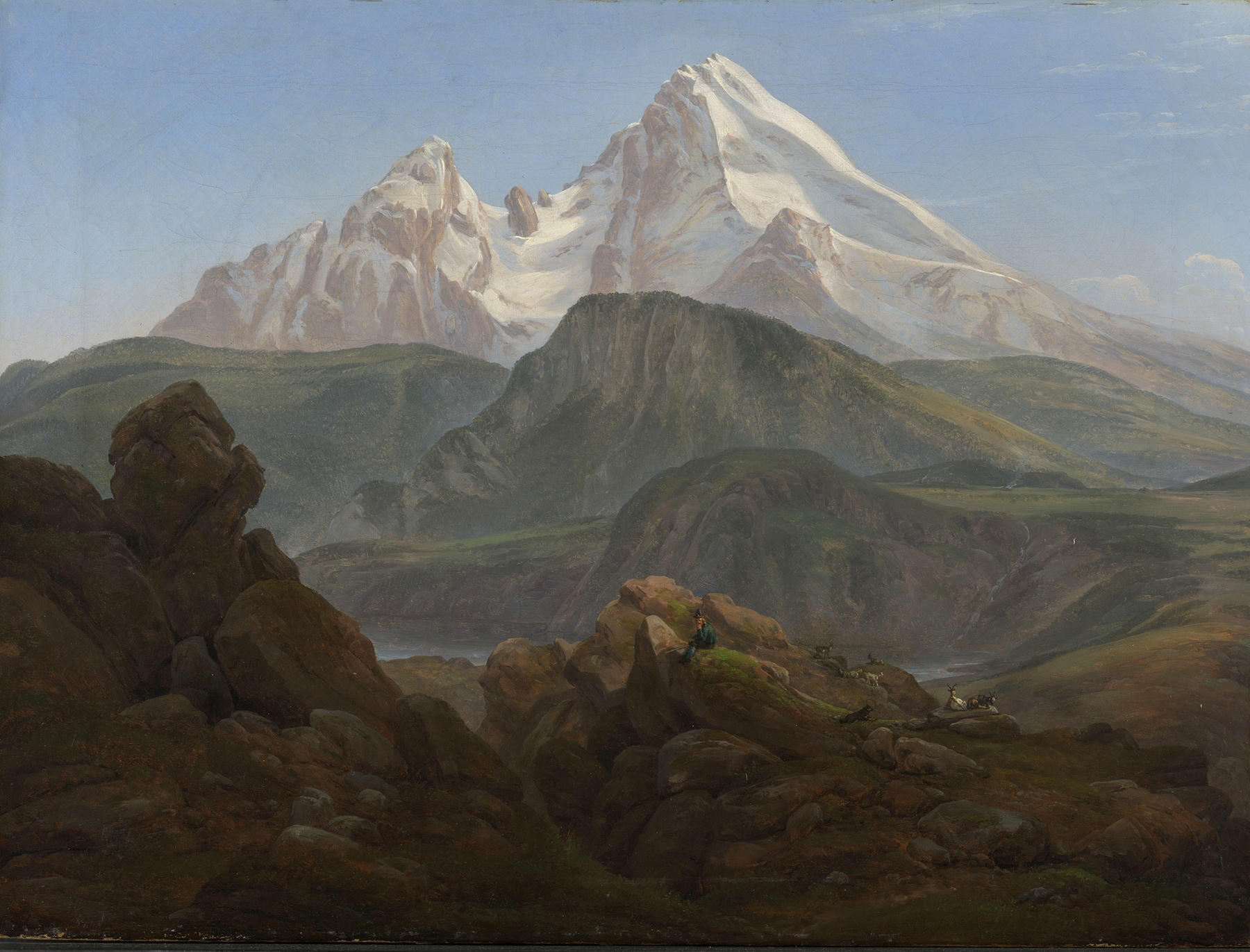
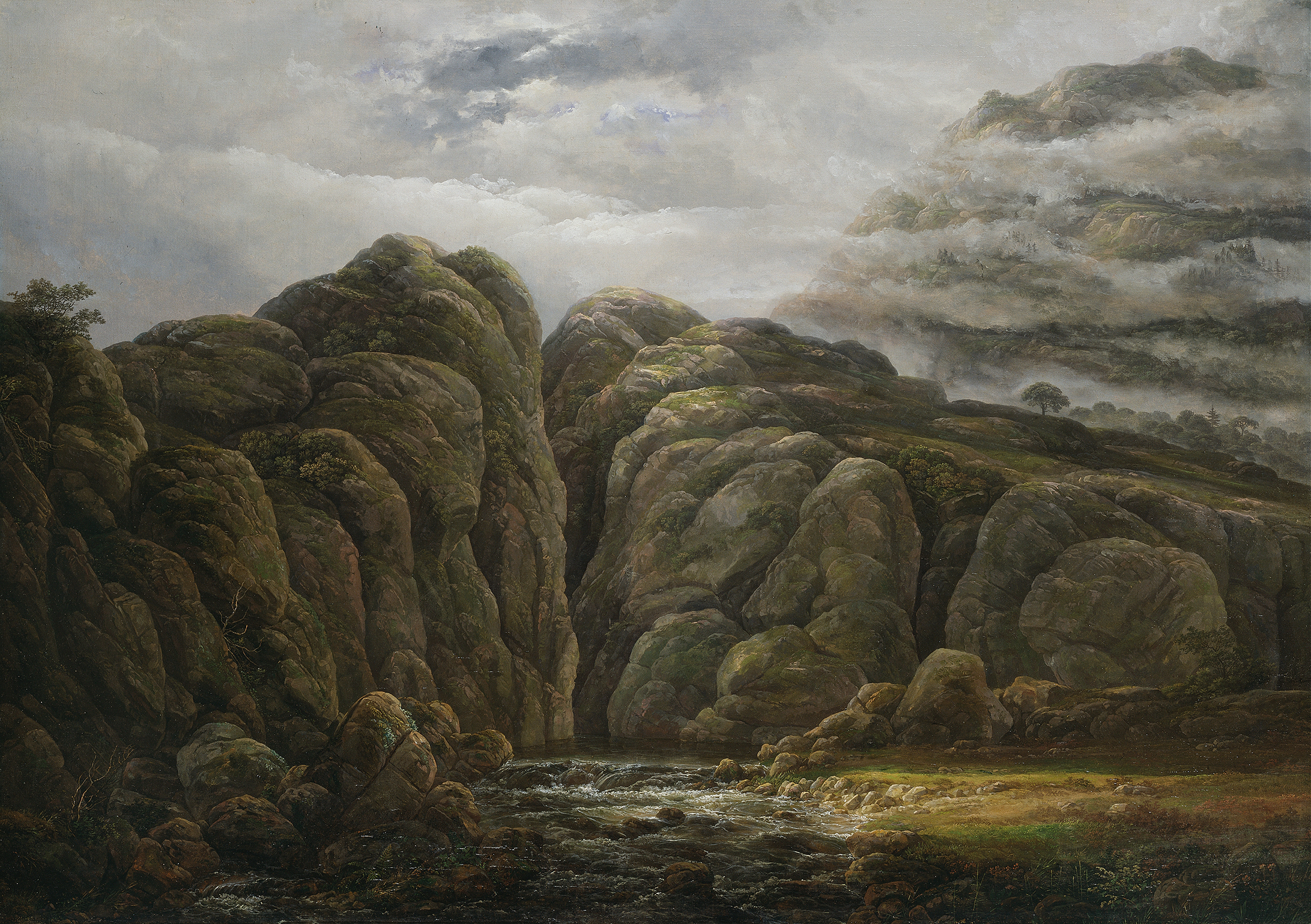
Where does light end, and longing begin? In the delicate interplay of nature and emotion, serenity seems to breathe from every brushstroke. Look to the horizon, where the soft hues of twilight embrace the rugged mountains. The artist masterfully uses blues and greens to evoke the tranquility of the landscape, while warm light spills across the scene, illuminating the verdant valley below.
Focus on the gentle gradients in the sky, where the fading sun casts a golden glow over the rugged terrain, creating a sense of depth. The attention to detail in the foreground, where the soft textures of the grass meet the rocky outcrops, invites the viewer to linger and immerse themselves in the peacefulness of the moment. As you delve deeper, consider the contrast between the serenity of nature and the isolation often felt in vast landscapes. The solitary cabin nestled against the mountains suggests a longing for connection and the human experience amid the grandeur of the wilderness.
Dahl’s choice of expansive skies juxtaposed with the intimate scale of the cabin speaks to a universal tension: the desire for solitude paired with the innate human need for companionship. In 1851, Johan Christian Dahl painted this work while residing in Norway, a time when Romanticism was flourishing across Europe. He was deeply influenced by the natural beauty of his homeland, which he sought to capture in his art. This period saw an increasing appreciation for landscapes as subjects, reflecting both the artist's personal experiences and the broader societal shifts towards valuing the sublime in nature.