Summer Winds, Long Branch Beach, New Jersey — History & Analysis
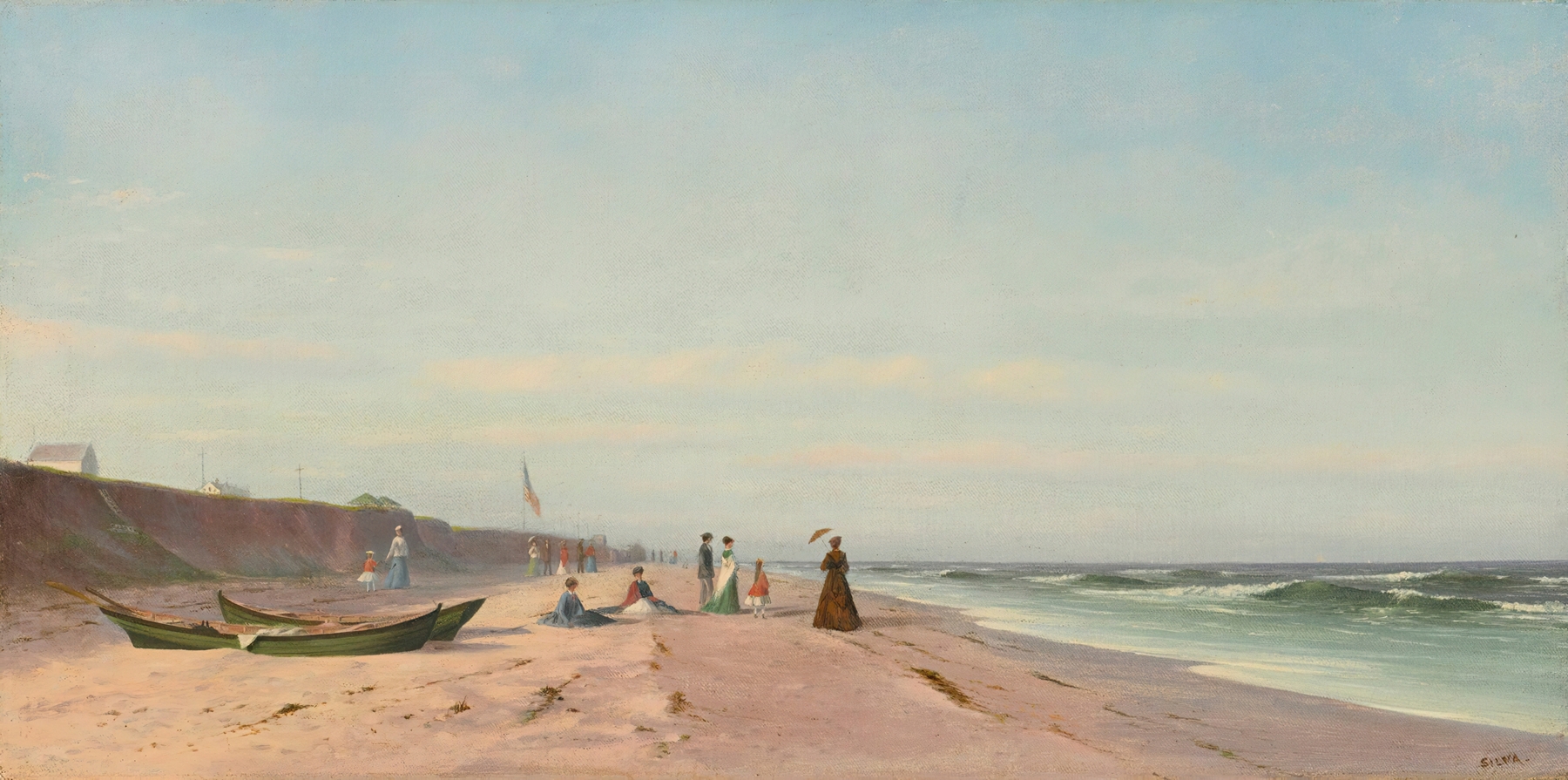
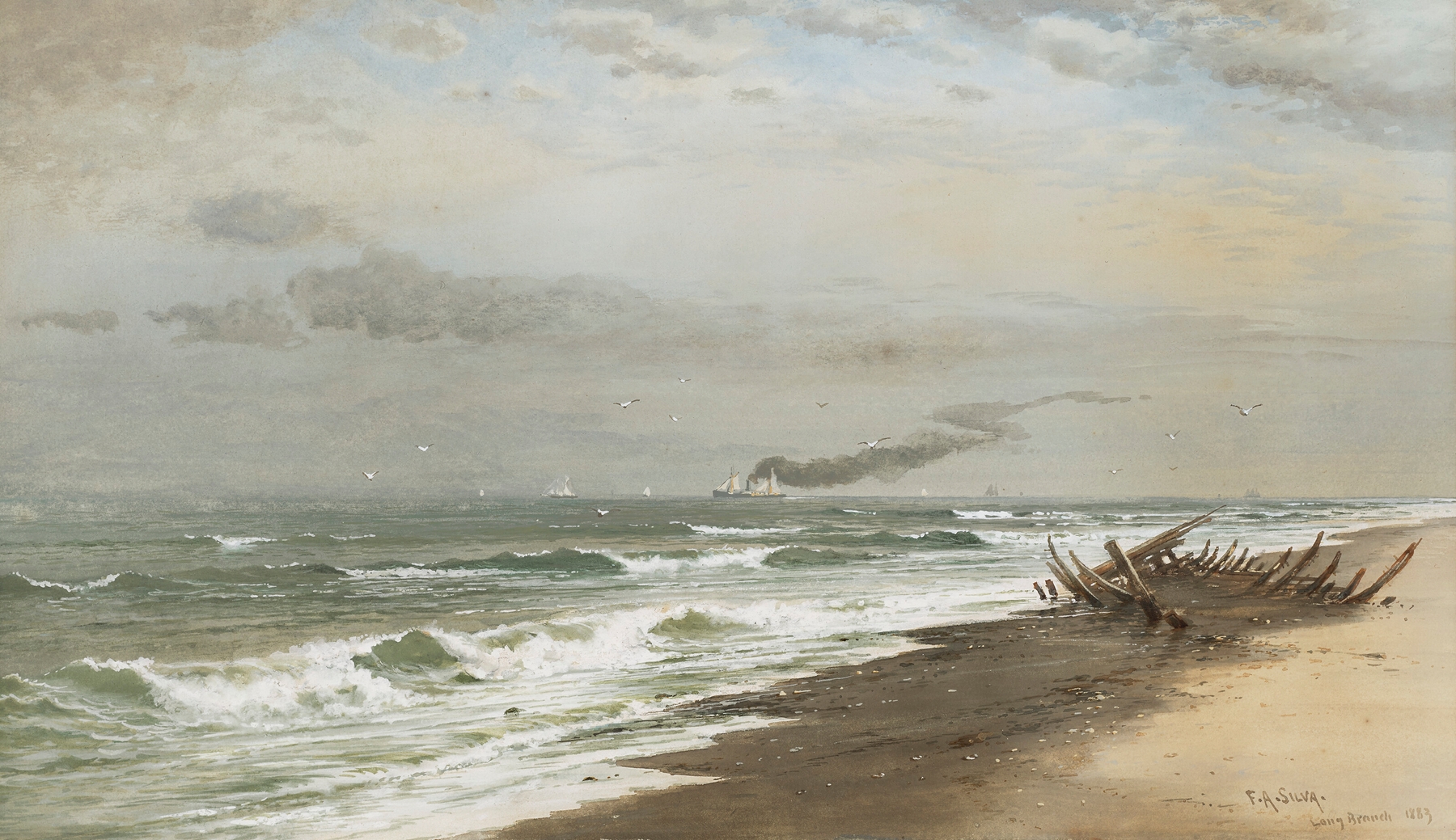
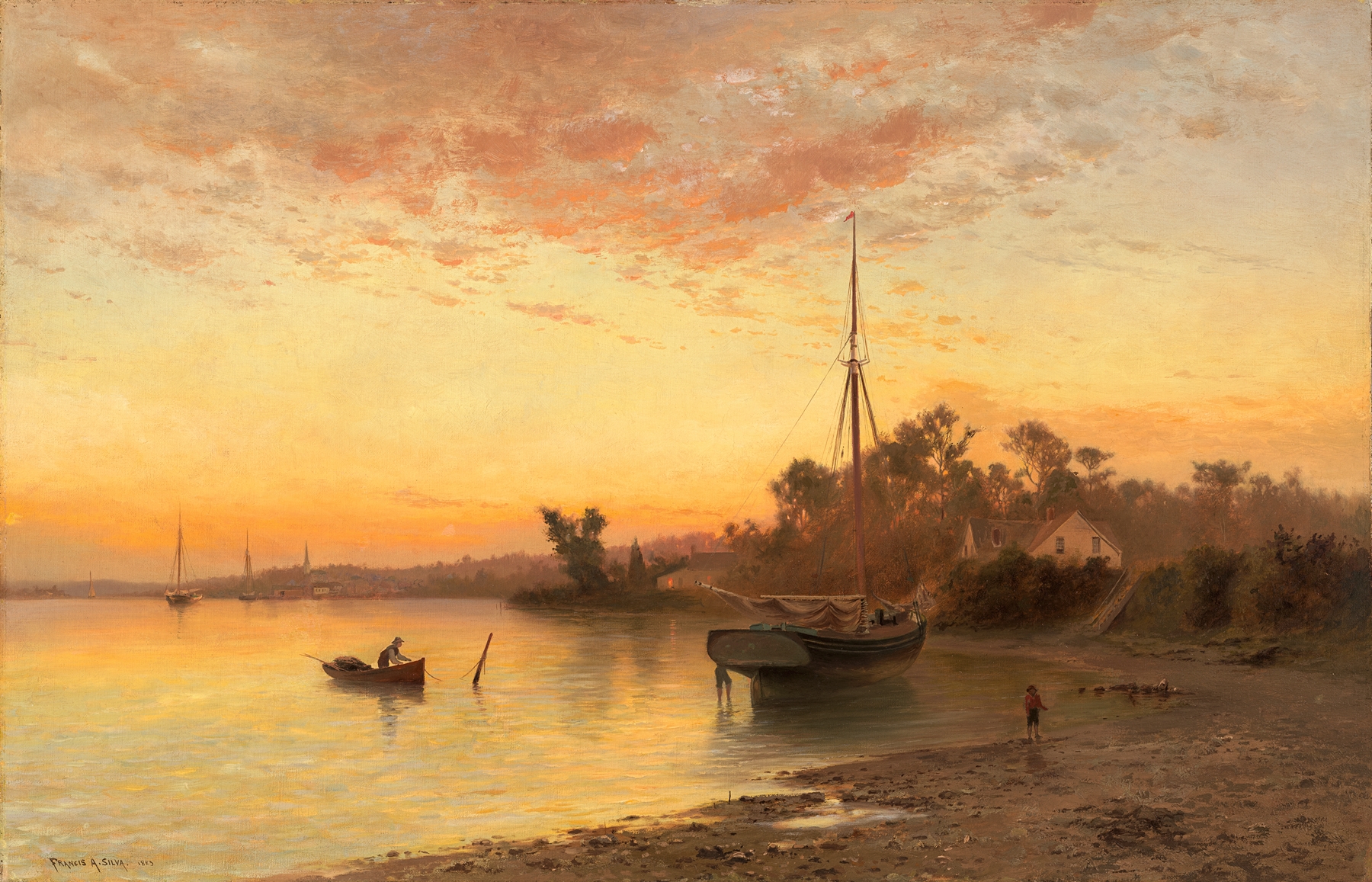
“To paint is to remember what time wants us to forget.” This sentiment whispers through the vibrant brushstrokes of a summer scene, evoking the bittersweet longing embedded in moments that slip away like sand through fingers. Focus first on the horizon, where the azure sky melts into the shimmering ocean. The soft, rhythmic waves kiss the shore, painted with gentle strokes that suggest both movement and tranquility. Notice how the light dances on the water's surface, capturing fleeting glimmers like memories.
The figures scattered along the beach, small yet significant, appear to drink in the warmth of the sun, creating a sense of camaraderie amid the vastness of nature. Within the serene landscape lies an undercurrent of nostalgia. The waving grasses sway in the wind, symbolizing the passage of time and the transient beauty of summer days. The scattered figures, isolated yet together, reflect the duality of joy and solitude, inviting contemplation on the fleeting nature of happiness.
Each element contributes to a larger narrative of longing, as the viewer is drawn into an emotional landscape that transcends its picturesque surface. In 1883, Francis Augustus Silva created this work at a time when the American art scene was beginning to embrace a more impressionistic approach to capturing nature. Living in New Jersey, he was influenced by the burgeoning art movements and the growing popularity of seaside leisure among the middle class. This painting encapsulates both personal reflection and the broader cultural shifts of the era, as he sought to immortalize an ephemeral moment in time.