The Beach At Long Branch, New Jersey — History & Analysis
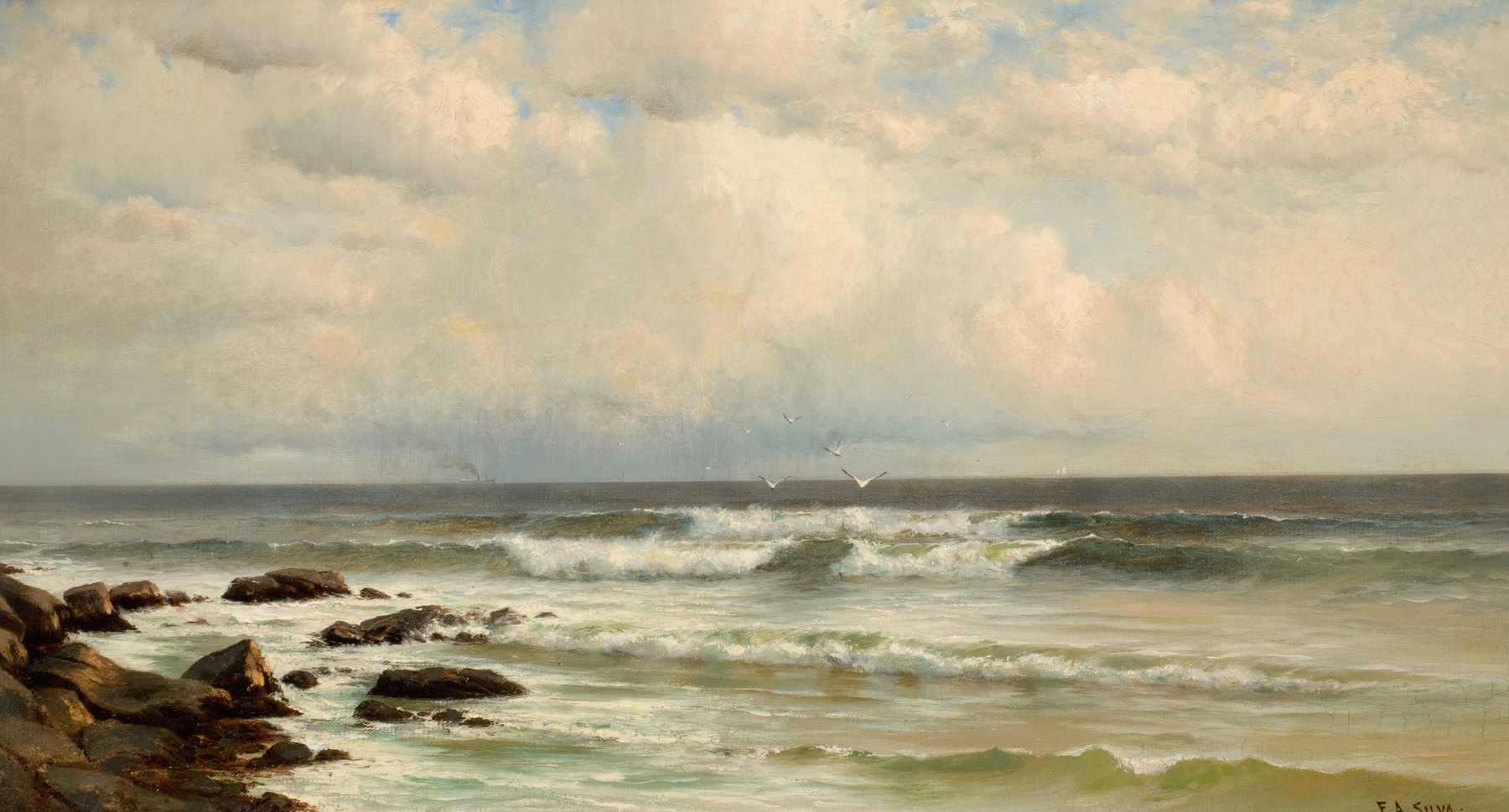
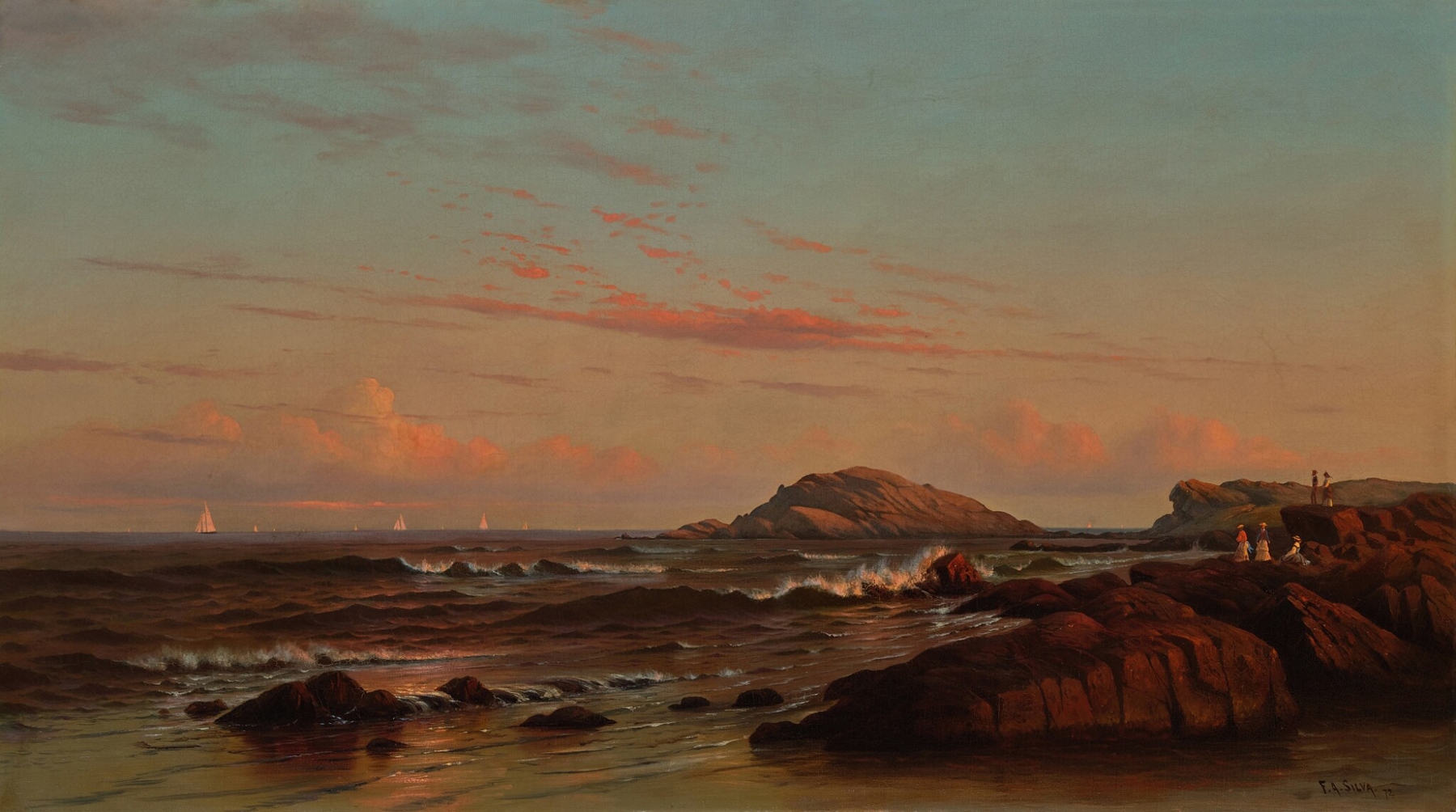
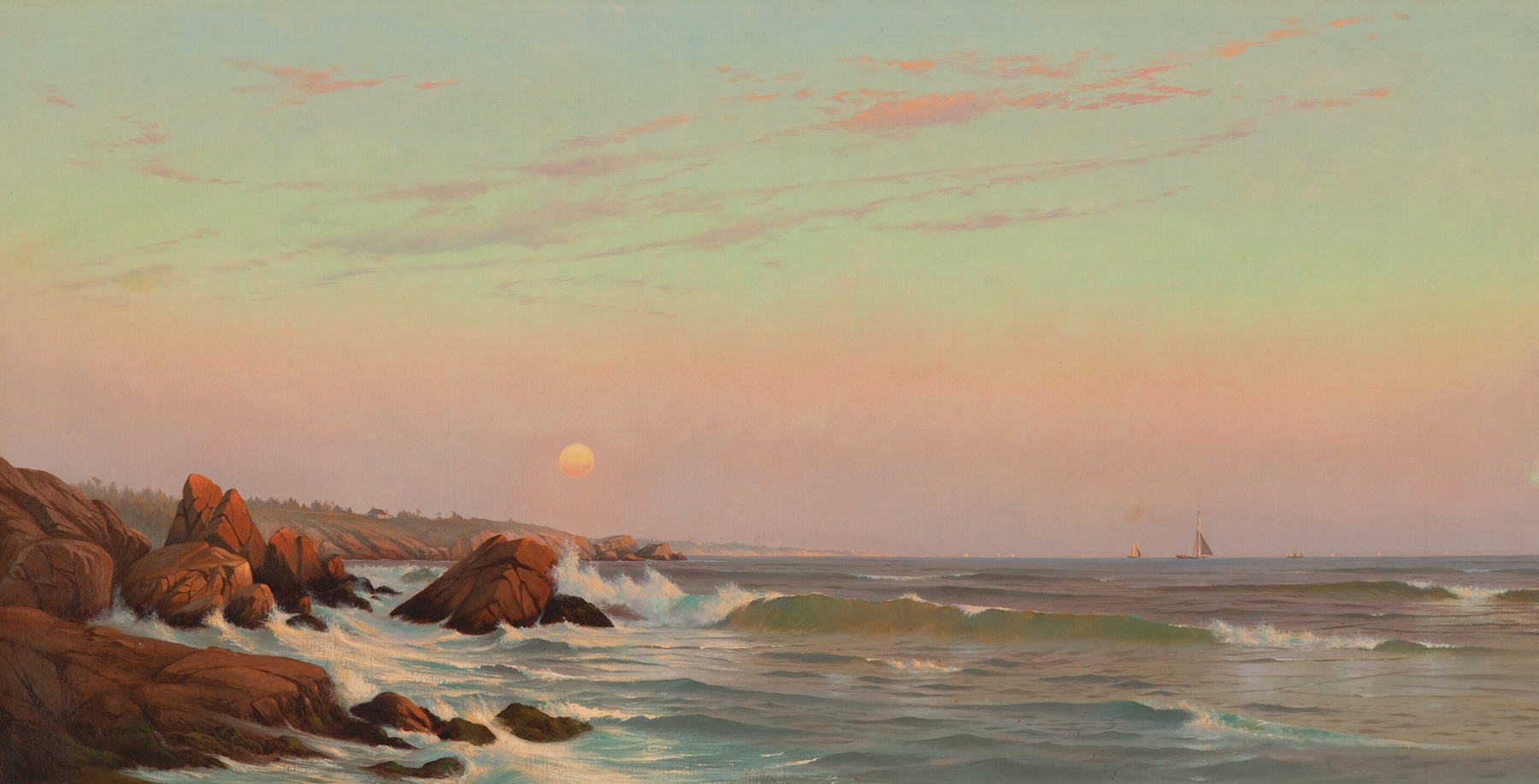
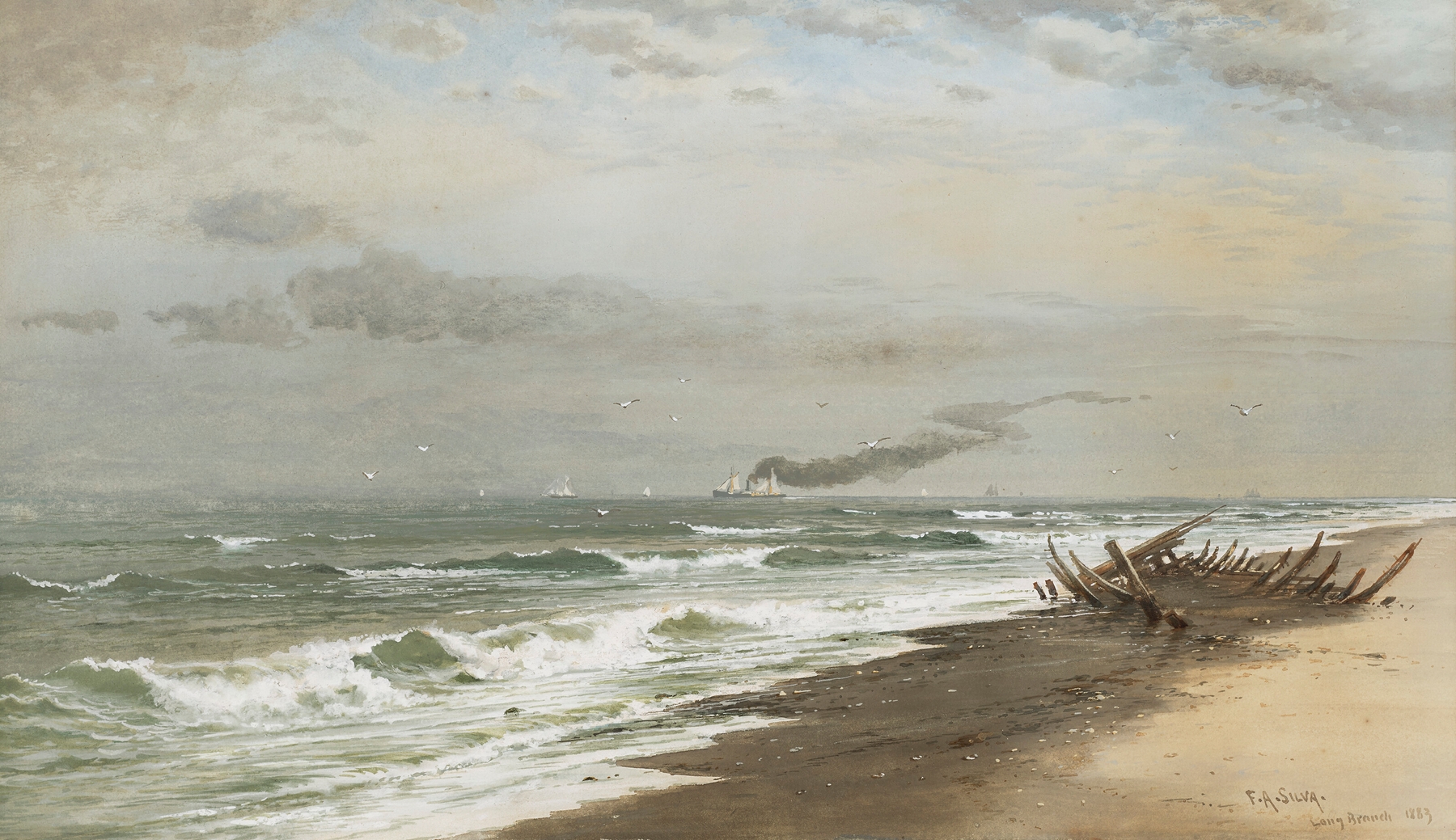
Who listens when art speaks of silence? The passage of time is captured in stillness, where the ebb and flow of life unfolds quietly beneath an expansive sky. Look to the horizon, where the soft blue of the ocean meets the pale sky, a delicate gradient that invites the viewer into a timeless moment. Focus on the gentle waves rolling towards the shore, their edges touched with glimmers of white foam, as if they are whispering secrets of the past.
Silva's careful brushwork creates a sense of tranquility, allowing the sunlight to dance off the water’s surface, illuminating the scene with a warm embrace that balances serenity and motion. Amidst this serene beachscape, subtle contrasts emerge: the stillness of the sand juxtaposes the fluidity of the water, suggesting a dialogue between permanence and change. In the foreground, solitary figures dot the beach, their soft silhouettes embodying a fleeting presence against the expansive backdrop, while the distant sailboats hint at exploration and escape. This interplay evokes a reflective tension, reminding us of the ephemeral nature of both moments and memories.
In 1869, Silva painted this captivating piece during a time when American artists were beginning to explore the interplay of light and landscape in a more impressionistic manner. He created this work in New Jersey, surrounded by a rapidly changing world, where burgeoning urbanization contrasted with the enduring allure of natural beauty. As he captured this tranquil beach scene, he was part of a broader artistic movement seeking to articulate the relationship between nature and the human experience.