View on the Hudson, the Catskills in the Distance — History & Analysis
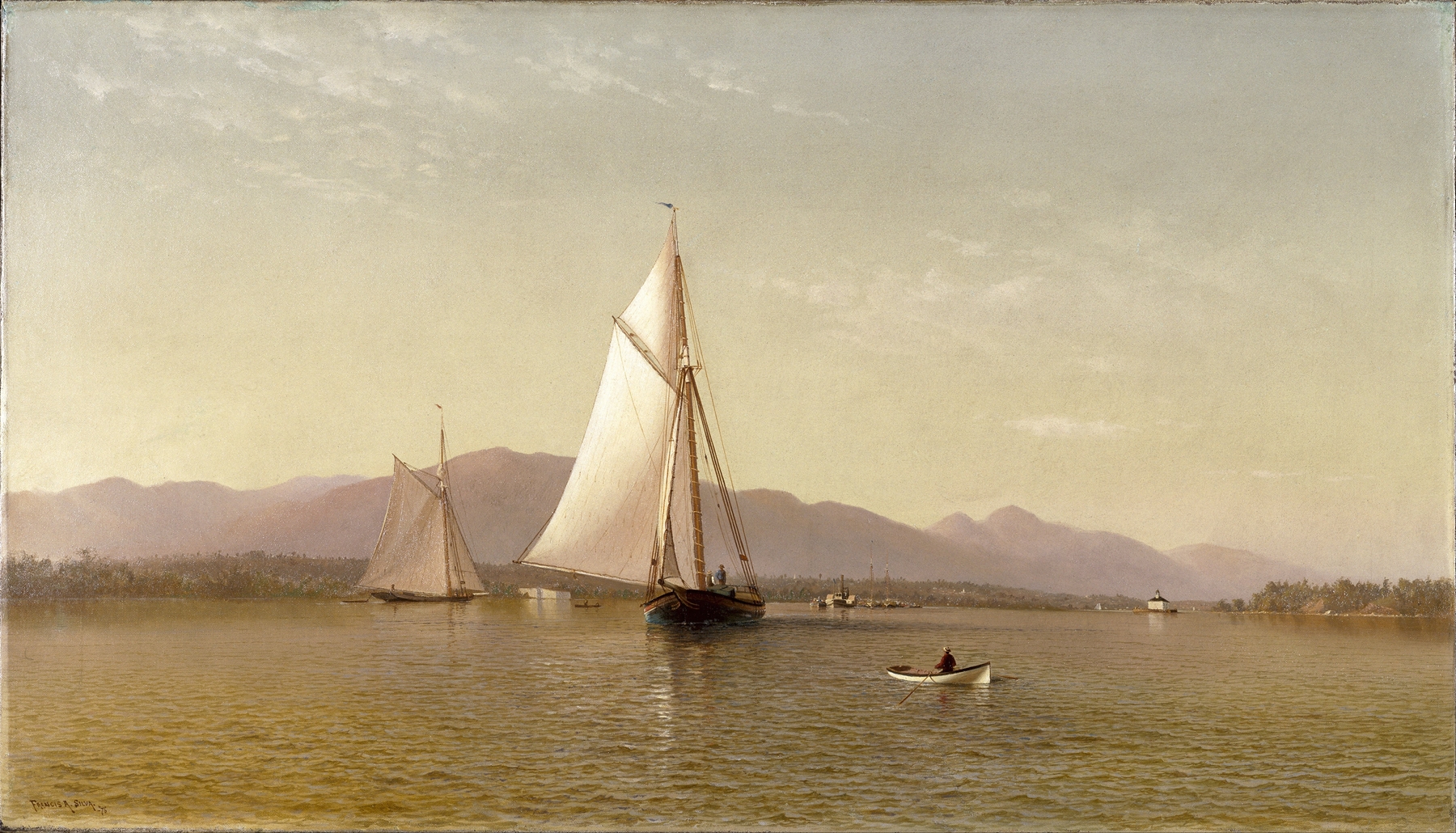
Where does light end, and longing begin? In the expanse of nature, the quest for serenity intertwines with the echoes of memory, encapsulated in an artistic embrace that transcends time. Focus on the horizon where the soft blues and greens of the Catskills dissolve into a misty embrace, inviting the viewer to wander into the depths of the landscape. Notice how the light dances upon the water, rippling in delicate strokes, creating a shimmering pathway that seems to lead to another world.
The composition balances the rugged mountains with the tranquil river, drawing attention to the interplay of silvery clouds above, suggesting a fleeting moment caught between reality and reverie. Delve into the contrasts that lie within this serene scene. The juxtaposition of the calm water against the steadfast mountains evokes a sense of permanence amidst the transient nature of light and shadow. Each brushstroke resonates with nostalgia, as if echoing the artist's own yearning for a time and place forever out of reach.
The ethereal quality of the landscape speaks to the universal human experience of longing, capturing both the beauty and bittersweetness of memory. Francis Augustus Silva painted this remarkable piece in 1873, a time when the Hudson River School was flourishing, celebrating the American landscape's natural beauty. Residing in New York, Silva was deeply influenced by the romanticism of his contemporaries, seeking to encapsulate the sublime qualities of the environment around him. This work reflects not only his artistic vision but also the broader cultural appreciation for nature that defined the era, marking a pivotal moment in American art history.