Surf and Spindrift — History & Analysis
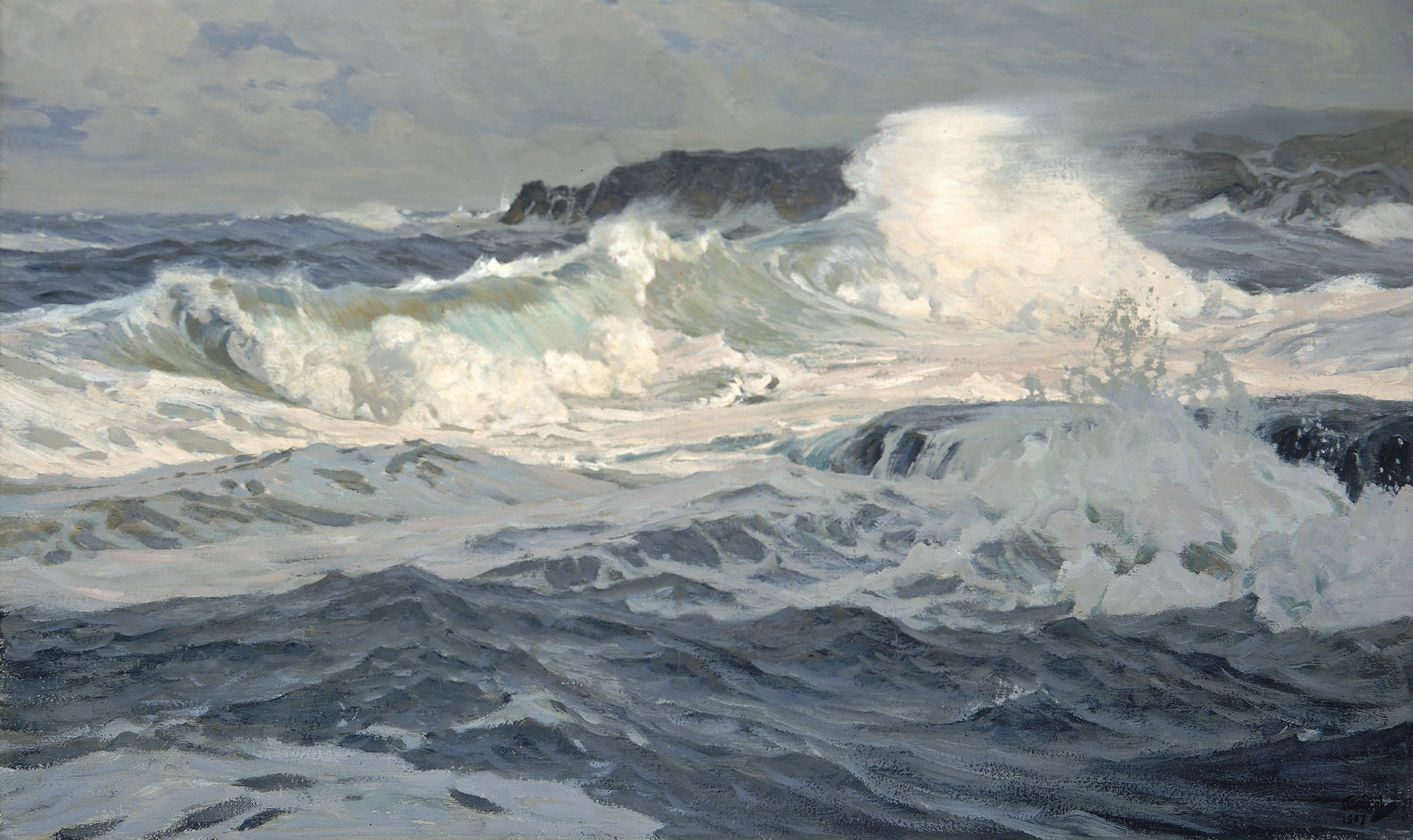
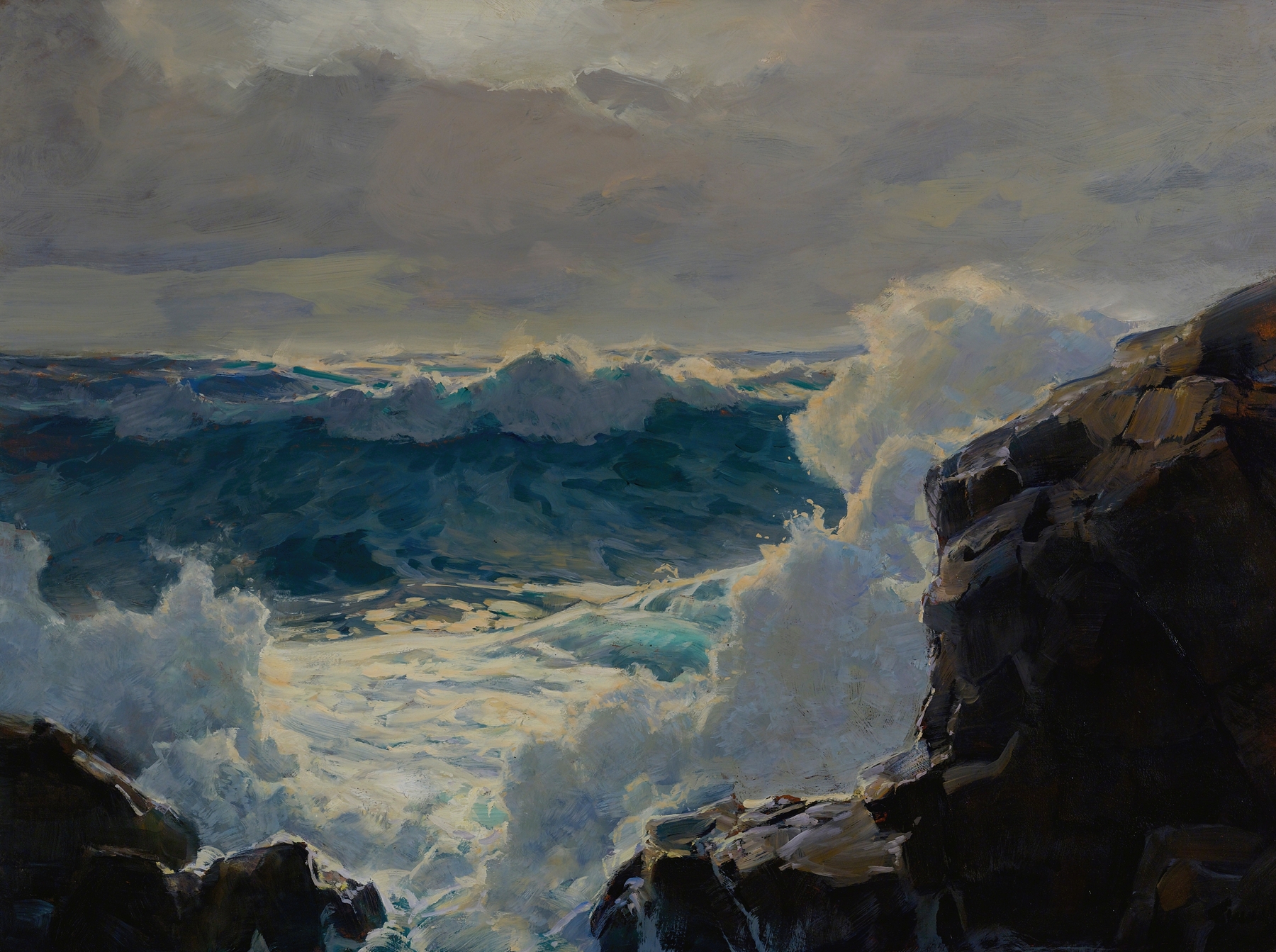
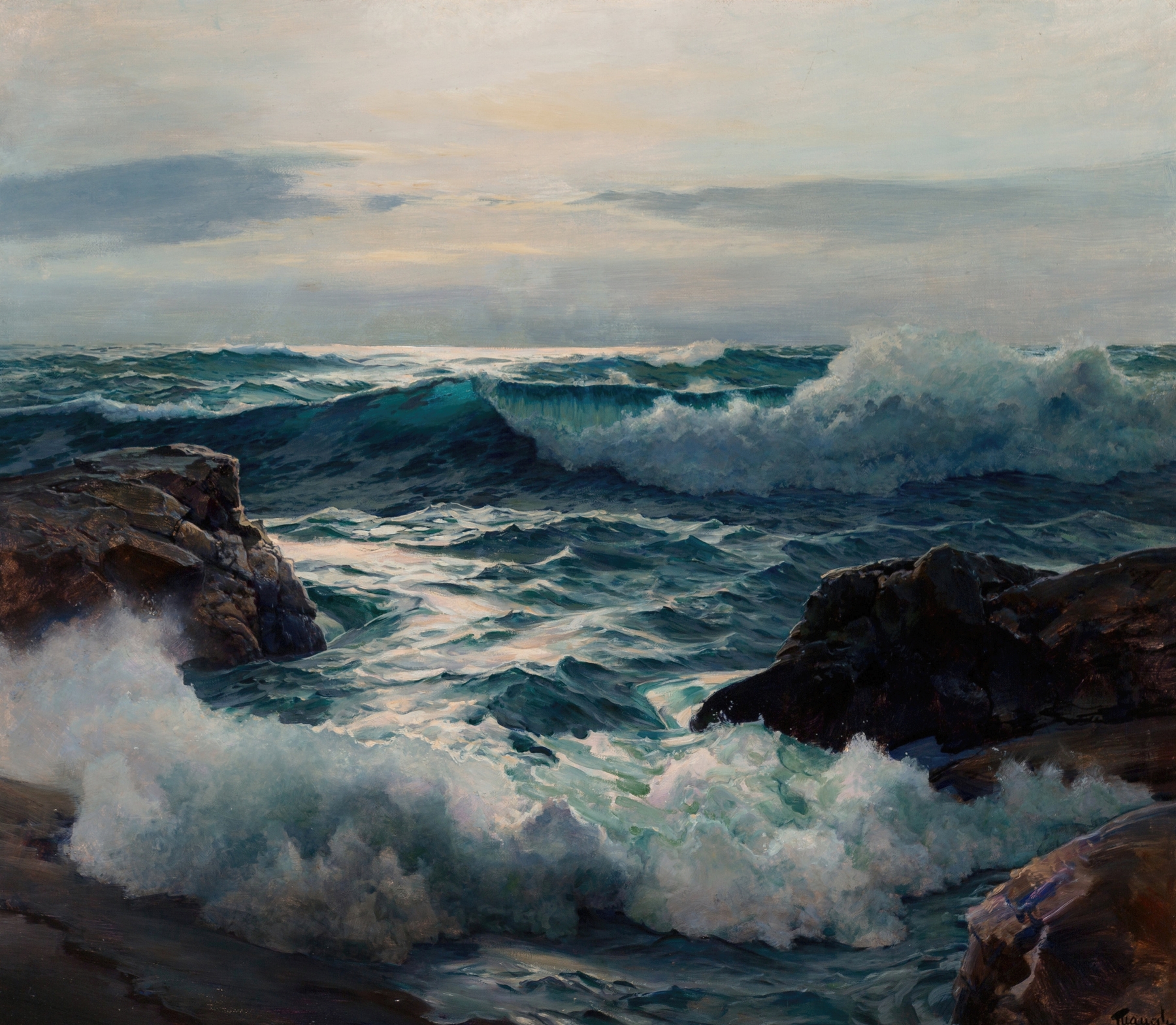
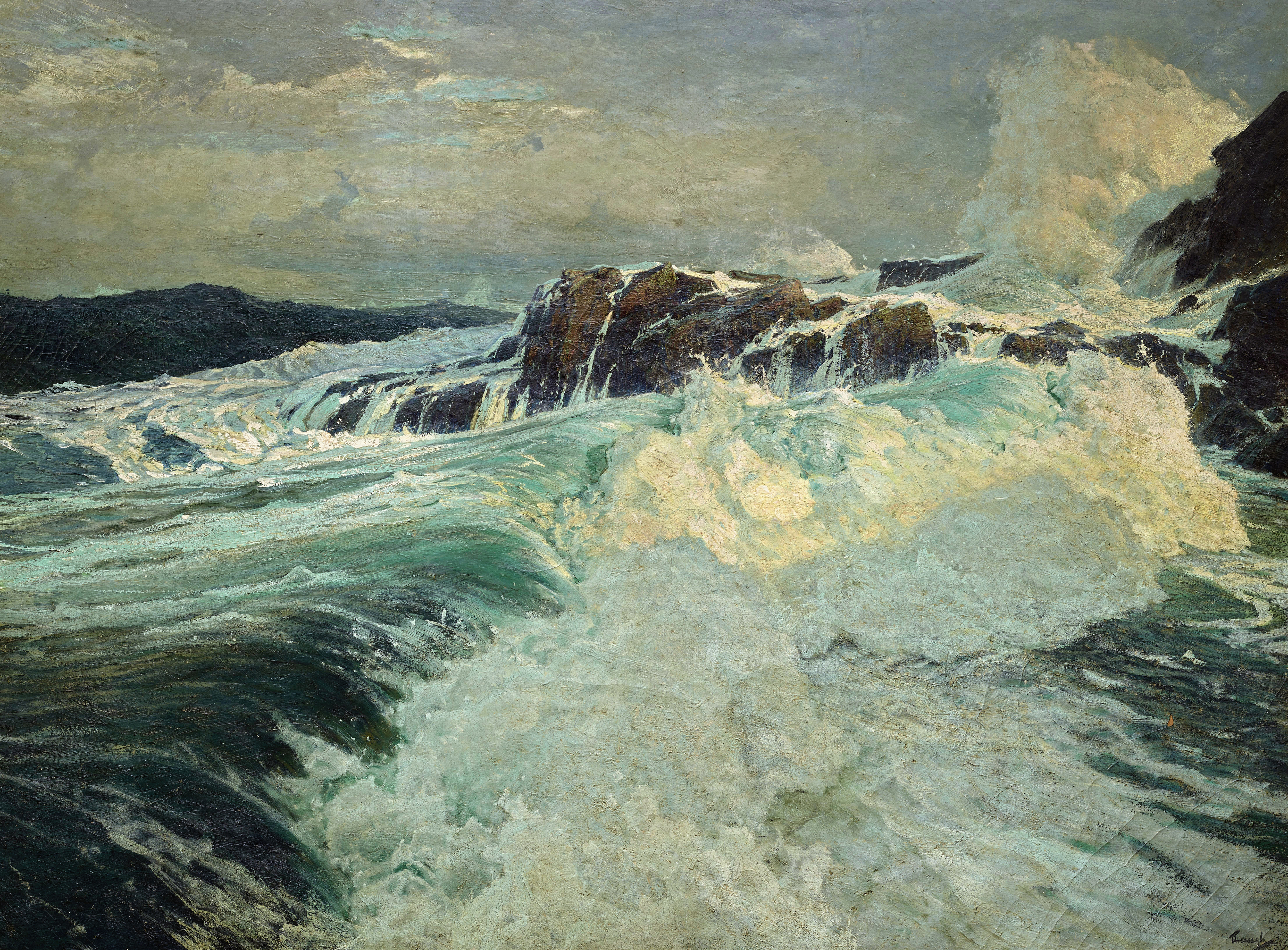
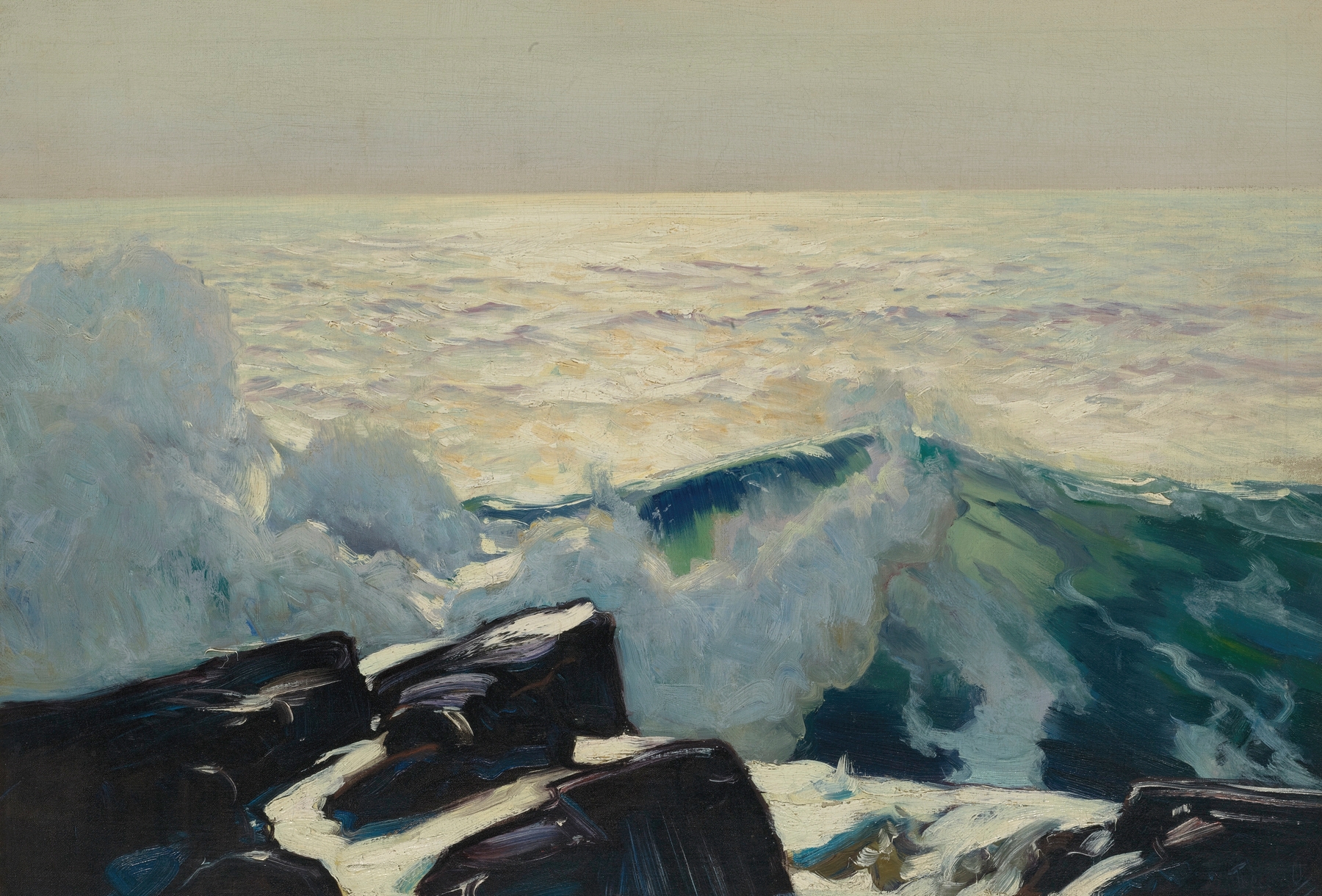
Could a single brushstroke hold eternity? In Frederick Judd Waugh's Surf and Spindrift, the tumultuous dance of ocean waves captures both the power of nature and the ecstasy of its fleeting beauty. Focus first on the sweeping, frothy waves that command the viewer's gaze. Notice how the artist employs a palette of deep blues and whites, contrasting the tumultuous sea with the vibrant energy of the crashing surf. Each stroke appears both deliberate and spontaneous, as if Waugh seeks to encapsulate the transient nature of the moment.
The textures created by short, lively brushstrokes evoke the motion of the water, drawing us into the scene's visceral dynamism. Delve deeper into the interplay of light and shadow, which reveals hidden emotional depths. The sunlight illuminating the peaks of the waves contrasts sharply with the darker undertones lurking beneath, symbolizing both the exhilaration and danger inherent in the ocean's majesty. This duality reflects the tension between ecstasy and chaos, inviting contemplation on the relationship between humanity and the natural world.
Each wave serves as a reminder of our own fleeting moments of joy and struggle. Waugh painted this piece during a time when American Impressionism was gaining traction, likely in the early 20th century. Rising from his studio in Massachusetts, he sought to embody the raw beauty of the ocean, drawing upon his experiences as a sailor. As Waugh immersed himself in the aesthetic exploration of nature, he contributed to a growing appreciation for the subtleties of light and movement in American landscape painting.